The idea that England is a candidate to host the 2030 Football World Cup is being touted by some. What world of fantasy do these people live in? There’s zero chance of it happening, and for good reason.
There is not the slightest chance that Britain, let alone England, will host an international sporting event for decades – if ever again. Next year is the tenth anniversary of the immensely successful London Olympics.
London2012 was the reputational high point and since then the nation has retreated behind nationalist walls, eschewed international cooperation, banned fellow Europeans from working here, deported at random people it doesn’t like, savagely cut international aid, denied the checks and balances of international courts and gratuitously insulted foreigners and nations who dare to criticise it. All this whilst spouting hubristic lies about “Global Britain”.
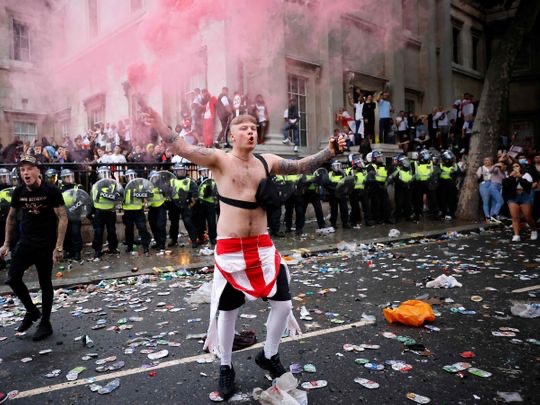
When given the chance to host the final games of the Euros we booed the opposition, rioted in the streets and tried to break down barriers to get into Wembley. We shone laser lights into the eyes of goalkeepers, insulted anthems and racially abused our own players. You can’t have it both ways – we have chosen insularity and boasted about it. We can’t at the same time be potential good hosts to visitors. We are a pariah nation and the Sporting authorities of the world will ignore us. And who can blame them?
The lazy use of language is everywhere in modern discourse – regular readers will know my hatred of the word “Iconic” which is frequently used , and never correctly. But today I’d like to look at “hero” which, whilst often used correctly, is also all too often used gratuitously and inappropriately.
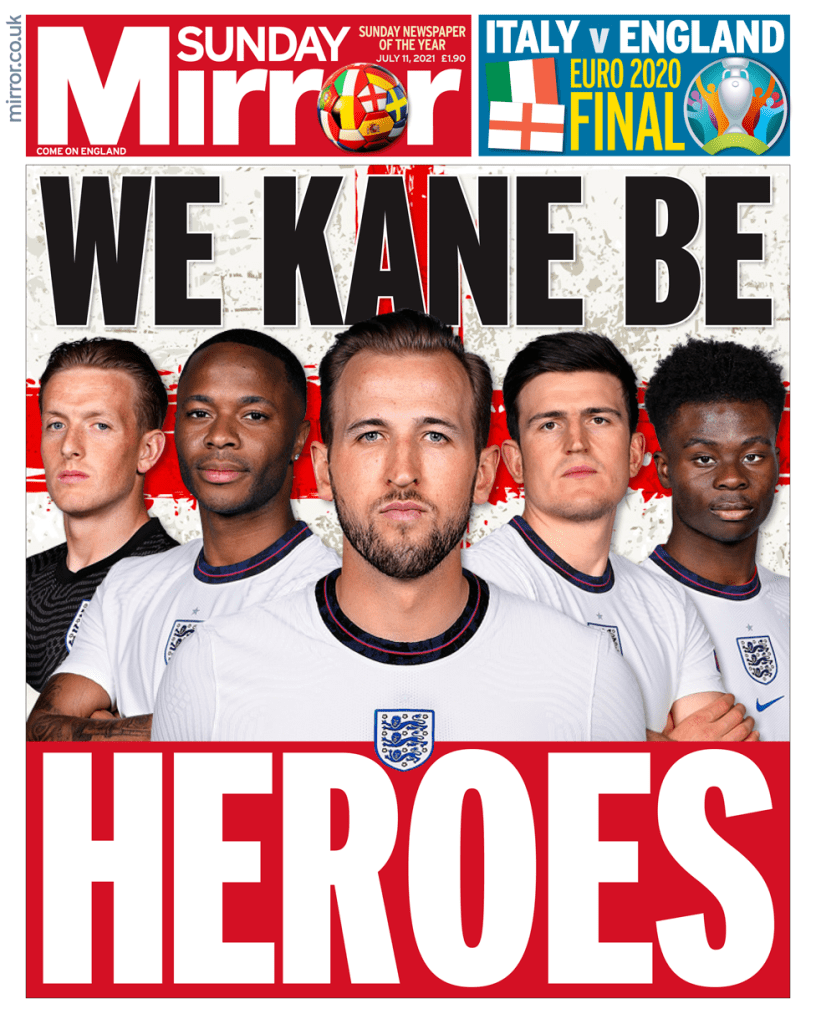
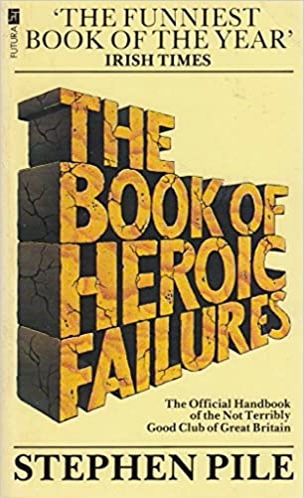
Sport is perhaps the main culprit. If a footballer is one of our own he becomes a hero – by playing football. That’s it. Period. He doesn’t have to win. Many years ago Stephen Pile published a book that was a salute to the “Not Terribly Good Club of Great Britain” – to the concept of “Heroic Failure”.
But whether heroism is ironically about failure (The Charge of the Light Brigade. The retreat from Dunkirk) or about sporting “heroism” (including the heroic failure of losing a Cup Final) we are in danger of obscuring the true meaning of heroism. Boris Johnson, never a man to miss a chance for populist rhetoric, said after England lost to Italy “This England team deserve to be lauded as heroes.” Well of course he did.
My father was for more than three years a prisoner of the Japanese on the Burma railway. In some people’s eyes that fact alone makes him a “Hero”. I don’t think that, and nor did he. My researches tells me that as a POW my Dad did, actually, do some brave things. He hid part of the Camp radio in his boot for example. This was certainly courageous but “heroic” ? Not really.
The problem is this. There are true acts of heroism from time to time – the sort of things that win a Victoria or George Cross. The workers of the New York Fire Department on 9/11 for example. If we ascribe the descriptor of “hero” to Harry Kane what have we left for the firemen?
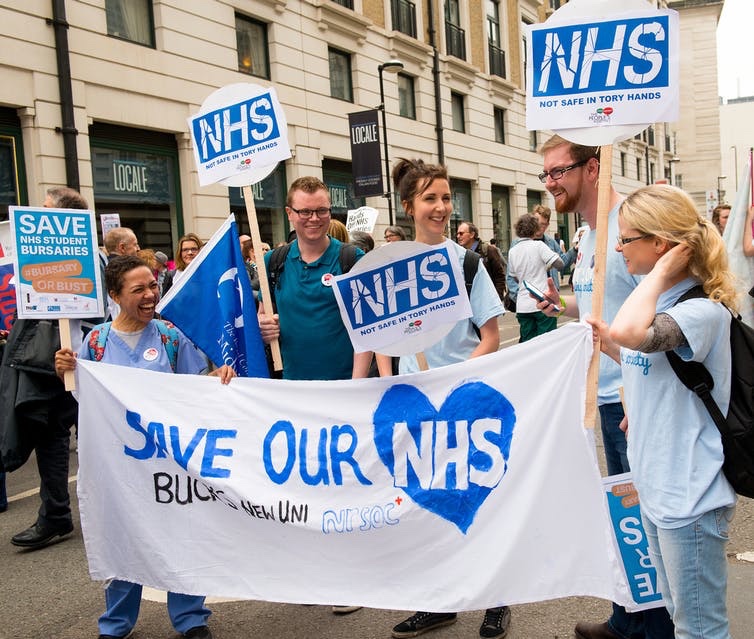
The NHS is one of the worlds biggest enterprises and us such it requires adequate and complete funding security. This can only come from an appropriate means of collecting income from the Service’s beneficiaries – we the citizens of the United Kingdom.
At present that income comes primarily from The Treasury whose principal means of raising revenue are taxes and borrowings. Taxes ultimately we pay. Similarly the cost of borrowing – servicing debt. Some taxes are progressive – the wealthier the taxpayer is the more they pay. Some taxes are regressive, the poor pay the same as the rich.
This means as far as the NHS is concerned the poorer you are the higher the percentage of your income you pay for the service. If we maintain the principle that the NHS is “free” at the point of consumption, but maintain the current structure of funding, then we are implicitly accepting that indirectly the poor pay more for healthcare than the rich.
The element of regressive indirect taxation in the Treasury’s income ensures that this is the case. This is, of course, true of all national expenditure, not just the Health Service. It is possible to devise a model in which healthcare funding is progressive – income and/or wealth related. This would be more than creative accounting – it would be socially just.
One way to do this would be to introduce a Healthcare tax separate from Income tax but far more progressive. This would help make NHS costs explicit and improve their management. To make this work there would have to be no cross funding from general taxation. So, for example, if the cost of the NHS was increasing more than general inflation Government would seek buy in from the public at large to increase the Healthcare tax appropriately.
If this Healthcare tax is truly progressive the wealthier taxpayers would fund budget increases more than the poorer – potentially much more. The social merits of this are obvious and whilst it discriminates against one section of the community there is a natural justice in this.
But let’s be clear. This proposal does not mean lack of controls on NHS spending. Rather the reverse. By making NHS costs very explicit, and by making a direct link to funding, debate would be facilitated. “Yes we can do that , but it would mean a 1% rise in the Healthcare Tax” is a constructive debate – surely an improvement on the current lack of debate and polarisation of positions.
James Marriott muses on patriotism in The Times today. Really he’s reflecting on the time when we Brits stopped knowing who we were. About the time sex was invented on these islands and the Beatles released their first LP.
We’d noticed the decline of Empire obviously but we didn’t realise that this also meant the decline of Britain. Some of us still don’t. Only the Empire defined Britain. Back here we had a couple of centuries during which the component part countries did what they had always done and their peoples remained resolutely English, Scottish, Welsh and Irish.
The English used “English” and “British” interchangeably and preferred their Englishness to be signalled with the Union Flag rather than the flag of St George. The Celts stayed robustly independent, celebrated their patron saints (whilst the English ignored theirs) and only became British when they were abroad on some Imperial adventure. The Scots were particularly good at this being proudly British when ruling the natives in some colonial outpost but distinctively Scottish back home.
But once the Empire was dead or dying there was no need really for the artificial construct that was “Britishness”. We were told to find a post Imperial “role” and it was suggested to us, not unreasonably, that that should be in Europe. We did, and now we don’t.
As a major, active and commited European nation the U.K. might have held together. But once we chucked that away there really was nothing to hold us together. British cultural icons from the flag to the anthem – even to the Monarch – just look like antiquated symbols of history.
The Empire was the glue and without it there’s nothing to unite us. Devolved governments in Belfast, Edinburgh and Cardiff formalised the dissolution of the Kingdom and now all that is left is to complete the job. The Irish, if they can stop bickering, will all rediscover their Irishness where (in the North) they need to. The Scots have a return to proper independent statehood within their grasp. And the Welsh , arguably the most culturally distinctive of them all with a strong foundation provided by their language, should have few problems in restoring their independence.
The United Kingdom has outlived its usefulness. The Commonwealth is another hangover from Empire that will fade away. As, no doubt, will the preposterous anachronism of free and independent countries that were once Imperial possessions having the British monarch as Head of State.
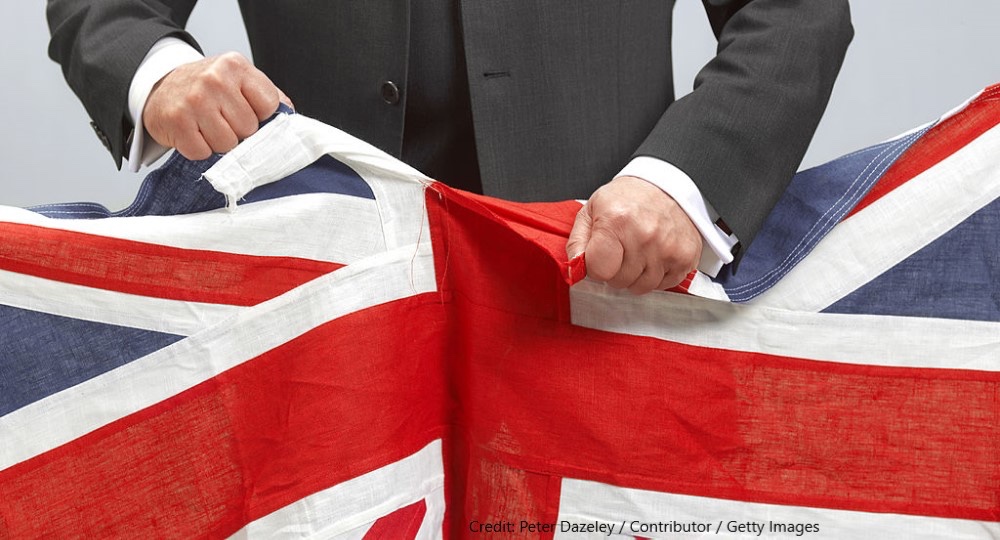
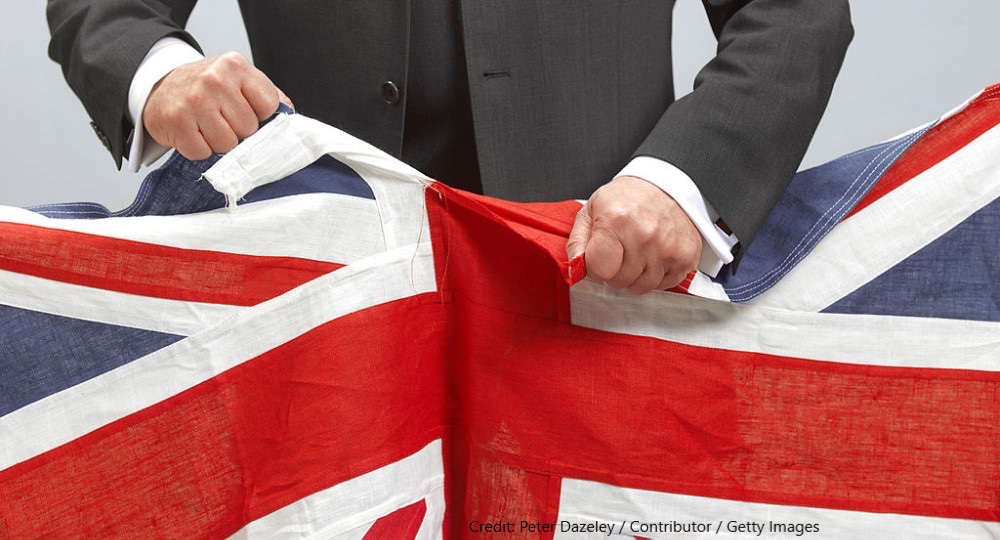
There can be no new Pax Brittanica in these islands. The Kingdom is not United. History is often decided by accidents rather than by design. Brexit was the accident that pushed us apart and there is no going back. The prospects for Celts to regain their historic identity as well as being modern and European is too attractive to them – they won’t let it slip from their grasp. And then it will be for Little England to put its Union Flags away and decide what it wants to be.
Matthew Parris yearns for a new “moderate leadership” in The Times today. Without major political change from the Opposition parties I fear that he will be disappointed. When Britain voted for Brexit (not even mentioned in his article) the die of extremism was cast.
When Theresa May failed to even attempt to get a soft Brexit or to aim for a confirmatory referendum we were launched down the slope from moderation towards unprecedented division in politics and society. We are still there sliding further from tolerance and the slightest vestige of togetherness.
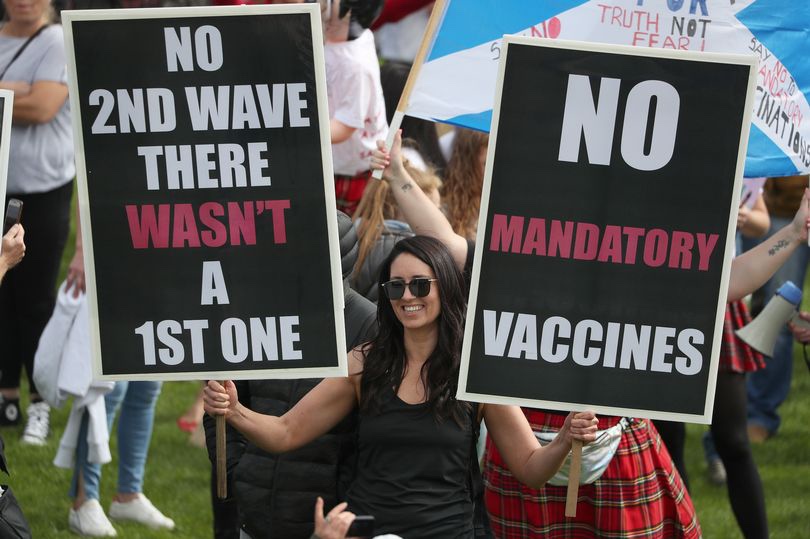
The pandemic, unconnected to Brexit, has shown that the virus of division has spread from the Europe disagreements to other areas. The streets fill with lockdown deniers and anti vaccers , preposterous fools whose only achievement is to tie up police forces who surely have better things to do than attend their dimwitted protest marches or defend civil servants from attacks.
England is irreparably split, Scotland wants out and Northern Ireland on the cusp of another disaster. There are no votes to be garnered by the peacemakers generally – though Chesham and Amersham and Batley and Spen may just be hopeful signs. But pessimistic me sees false dawns unless dramatic change happens.jn
Looking at the G7 leaders one could only have pity that six nations have sane leaders whilst we have a buffoon. Boris Johnson creates every opportunity to hang out the flags because he has nothing else. The recourse of the scoundrel is of course patriotism – utterly contrived and populist in the Prime Minister’s case.
Johnson’s Cabinet must be the most intelleftually deficient in living memory and when a rare vacancy occurs he appoints someone who pronounces policy before he’s even visited his office, let alone been briefed on the subject by experts. When Michael Gove railed about experts he knew what he was doing. It was part of the Brexiteers campaign. The experts were 99% against leaving the EU, so Gove insulted them.
Keir Starmer is a decent and moderate man, but labelled insultingly as a “centrist” by the mad Corbynites of the Hard Left. His choice is to segue towards them or to be true to Labour’s solidly social democratic tradition. If he does the former he’s finished, if the latter he’ll maybe struggle.
A Progressive Alliance ? It’s the only way forward
A moderate message hasn’t won many votes for some time in our divided nation – until the two recent by-elections. Can Starmer break the fetid mould of extremism? If he works with the LibDems and the Greens he has a chance. We urgently need a “Progressive Alliance” to combat the extremists of both sides – one of which happens to be in Government.
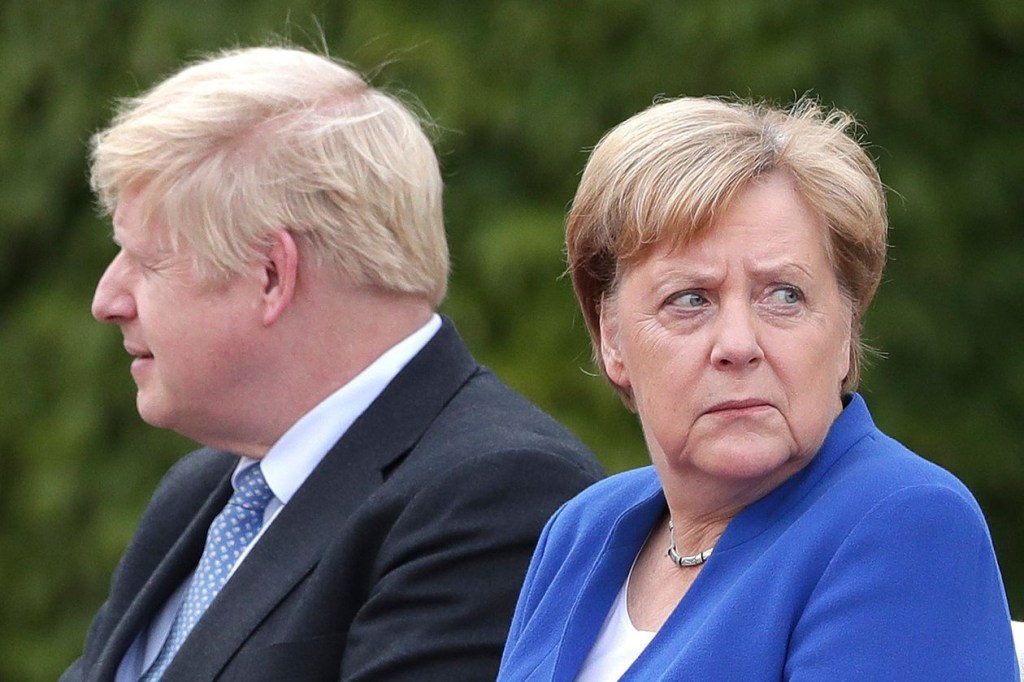
Angela Merkel is damned with faint praise in an article in the Times today that attempts, unsuccessfully , to link her with Boris Johnson. “Merkel’s and Johnson’s approaches” writes James Forsyth, “have more in common than people realise. They share the same political strategy: to sprawl across the centre ground and deny opponents oxygen.” Ho Ho !!
“Sprawled across the centre ground” – I don’t think so !
Merkel is a Christian Democrat and her core beliefs are consistent with the pragmatic, free enterprise economic liberalism that party has always endorsed. If you ask her what she believes in you will get a rational, internally consistent explanation of the benefits of free trade (etc.) decoupled from ideology.
Merkel’s early years were in East Germany and her rejection of State control is based on experience. She is no ideologue , she just knows from experience what works – and what doesn’t. That Europe at a high level of abstraction follows the German example is no coincidence. Frau Merkel has moulded the EU in her own image. Not out of ego but, again, because it works.
The contrast with Boris Johnson could not be greater. He is also no ideologue, but there the similarities end. If you ask Boris what he believes in you’ll get waffle. The attempt to portray Johnson as “sprawling across the centre ground” is comical. He sprawls alright, but anywhere he hangs his hat (left, right in his lady’s chamber) is home.
Boris once wrote amusing political sketches but he never wrote, nor contributed to, any sort of high level political manifesto. He doesn’t do detail or gravitas. Johnson reminds me of Rex Mottram in “Brideshead Revisited”. Mottram has to convert to Catholicism to marry Lady Julia. Under instruction he is asked by the Priest “Does our Lord have more than one nature?” To that, Rex replies, “Just as many as you say, Father.” So it is with Boris who will say not what he believes but what he sees as being to his advantage.
In an age when the old realities of Right and Left have disappeared Boris is in his element. That’s why it’s the polls and focus groups that tell him what to do. Johnson is to an extent trapped by his class but it doesn’t really matter. The Old Etonian Bullingdon Boy defeated “ men of the people” Ken Livingstone and Jeremy Corbyn not because of the clarity of his arguments but by conveying an image the focus groups told him the voters like. He doesn’t need the common touch and isn’t embarrassed about not having it. Merkel is classless partly because modern Germany is a meritocracy and partly because her upbringing was based on intelligence and hard work rather than privilege. She and Johnson have nothing in common.
The Union is dead. Brexit killed it. It may be a while before the formal funeral but to all intents and purposes the United Kingdom is no more. The clue is in the name. The nation isn’t “united” any more – in fact its barely a nation.
When a new Gibbon describes the Rise and Fall of the British Empire the final chapter will be about England’s failure, having lost everything else, to even hold on to its Celtic fringe. Little England will be forced to retreat behind its historic borders. Sans Empire. Sans Europe. Sans Scots, Irish and Welsh. Sans everything.
North Britain will go away comparatively peacefully. They only have to look at their Irish cousins to see the viability of an English speaking independent state of five million people. And our once friends in Europe will welcome them with open arms and a sackful of cash to smooth the way.
The Welsh will do the same – their road signs have long signalled their cultural distinctiveness . In a uniting Europe that already has small nations like Malta as credible members the Welsh will be as welcome as the Scots.
Ireland is more problematic – for most of the Irish people reunification will finally end their subservience and John Bull will lose his grip on a small part of his “other island”. The Orange folk of the North will protest and will need to be bought off . It won’t be cheap but the prize of a united Ireland, a reborn Scotland and a resurgent Wales in Europe, alongside twenty-seven other sovereign states, is a big one. The EU27 won’t miss the chance to welcome the Celts, and to embarrass the English.
And what of the English when they are forced back behind Offa’s Dyke and below Hadrian’s Wall? Well England is on its own a wealthy country of 56 million people – if we were still in the EU we’d be the fourth most populous country in the Union. Globally on its own England would be comfortably in the worlds top ten national economies. But that is clearly under threat after Brexit.
The Financial Services sector, based in the City of London, drives the British economy and decline is underway as jobs move to locations like Paris, Frankfurt and Amsterdam which enjoy the four freedoms that Britain has abandoned. To say that the City is too big to fail is complacent – Global financial institutions don’t do sentimentality.
So the future of the British Isles and the tribes that occupy them is clear. Scotland and Wales will become small but authentic and viable sovereign European states. Ireland will reunite and if they can, in the North, put sectarian strife behind them they will prosper. And England will increasingly struggle. Having not just lost an Empire Perfidious Albion will now have to put the Union Flag in the trash bin and try to make a success of being the only nation, Belarus aside, in the European mega-Region with no friends and no meaningful alliances. Good luck with that John Bull.
The Times today has a good article about Xi Jinping , the dictator of the People’s (sic) Republic of China. China is not driven by ideology – Communist or any other sort. It is a totalitarian state without democracy , human rights or any significant freedoms. Such states, history tells us, have all-powerful figurehead leaders.
Xi JinPing – a modern Emperor
The origins of modern dictatorships were the divine right of kings monarchs and emporers of the past , a model that was not culturally dependent. Henry VIII, Louis XIV, Emporer Hirohito, the Tsars of Russia, Joseph Stalin, Adolf Hitler, Benito Mussolini…the historic norm was dictatorship everywhere. So it is not the pseudo-ideology of Communism that is at fault here, it is the iniquity of dictatorship.
China is not alone today in being governed by a despot. Even in Europe we have countries on the cusp of totalitarianism. Will Xi (or Putin) cede power? Why would they ? The young people of Tiannamen Square in 1989 tried – a more significant event than it is given credit for by some today. That brutal suppression of the flowering of freedoms went way beyond the tanks in the Square.
Similarly the rise to power of Putin was facilitated by terror – the method of dictators across history. Dictators fall but rarely is it to democrats. They usually are overthrown by another of their ilk or, like Mao or Stalin, die in harness.
For ultimate power to be replaced by a democratic system and legal freedoms takes time – though America managed it (partly at least) in 1776. And many of the nations released from the chains of being a Soviet Republic, like the Baltic states or Romania, have constructed admirable democratic systems. It can be done.
But the reality is that if you examine the world today you will see many countries (maybe a majority) with rulers more akin to Xi than to a Western elected leader. And if you look at the democracies you will see not a few with leaders with dictatorial tendencies and without adequate checks and balances. Our democracies, Britain included, are very fragile.
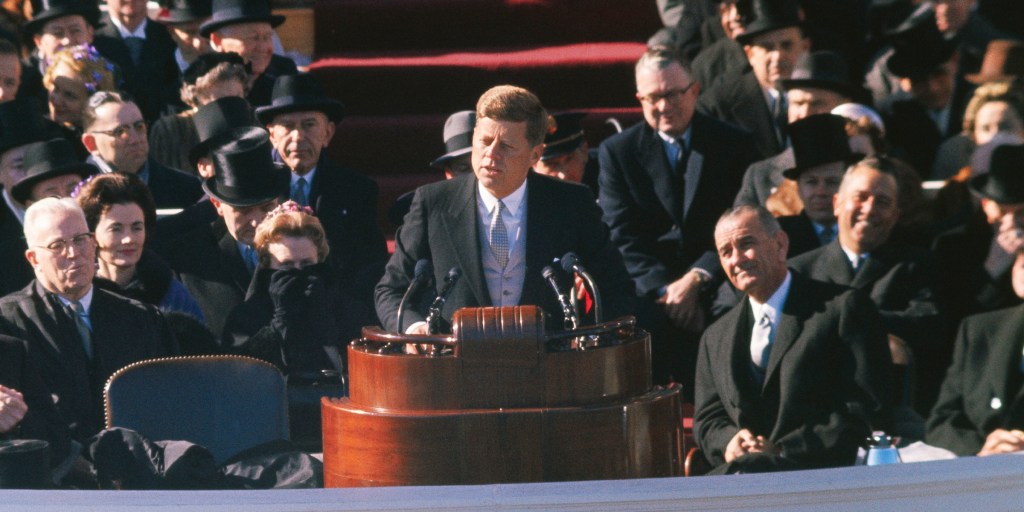
Kennedy’s inauguration – empty rhetoric
John Kennedy’s inauguration speech in 1960 said this: “Let every nation know, whether it wishes us well or ill, that we shall pay any price, bear any burden, meet any hardship, support any friend, oppose any foe to assure the survival and the success of liberty.” These ringing words were I’m sure well meant as well as eloquent. But in the sixty plus years since they have, I’m afraid, been shown to be empty rhetoric.
You do not need to search hard to find the failure of liberty – two of the worlds largest states, China and Russia, have none and in others like Brazil and India and Pakistan the democracy is fragile. In Europe there are troubling developments in EU member states like Hungary and Poland. Turkey is virtually a dictatorship and every country in the Middle East is an autocracy.
It is right to bemoan the Chinese dictatorship and it’s contempt for human rights and freedom. It’s right to deplore the threat the PRC poses to Hong Kong and Taiwan. In no way does the fact that there are many dictatorships elsewhere justify the obscenities of Xi and his band of pirates. But let’s be careful not to be sanctimonious. We have commercial alliances with the Chinese that are impossible to untangle. The factory in Shenzhen making Apple products, including the iPad on which I’m writing this blog, has 230,000 employees.
The factory in Shenzhen, China making Apple products
The modern world is based on a mutual interdependency between the consuming West and the manufacturing East. Much of the latter is in China where mammon has long since triumphed over the “success of liberty”. In the main the PRC is not a military threat to the West – they have no need for Lebensraum. But in what they see as their legitimate backyard, in Hong Kong, Tibet and the Uighur autonomous region in Xinjiang, no challenge to Chinese hegemony will be tolerated. And the threat to Taiwan is very real. This is the new world order – and we better get used to it.
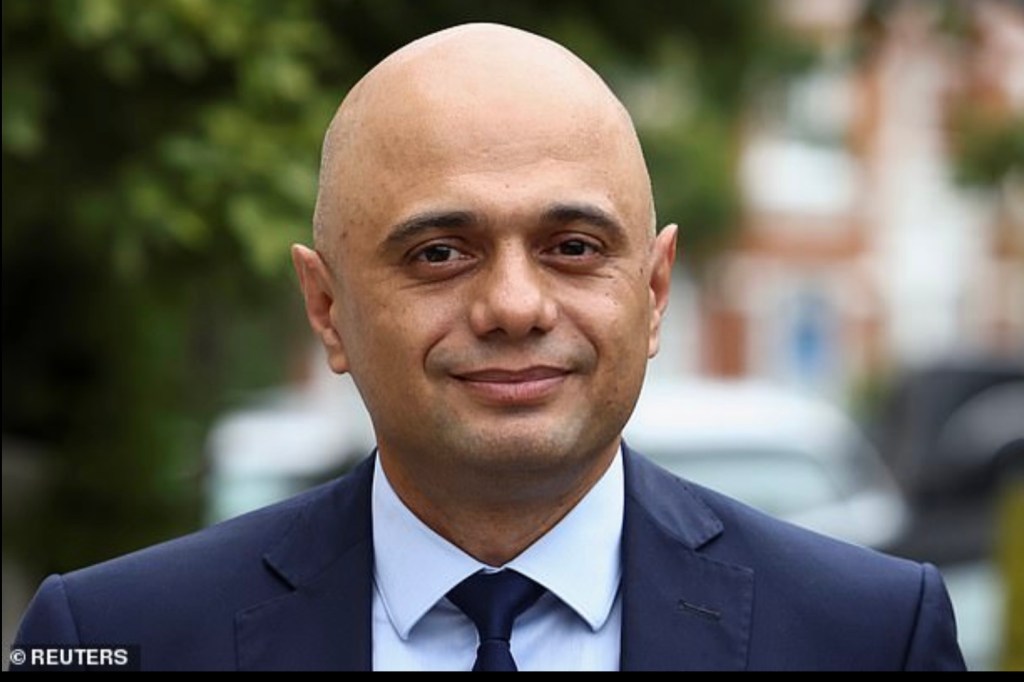
The Times reports that Sajid Javid is “…more hawkish than his predecessor” about easing lockdown restrictions on July 19 “We are still in a pandemic and I want to see that come to an end as soon as possible, and that will be my most immediate priority.” he is reported as saying
Javid has not been in Cabinet and has therefore not been party to any confidential briefings. He has not even got his feet under his desk at the DoH. He has not spoken with his officials, medical scientists nor anyone at the NHS. So his statements are political not based on hard information or expertise.
In short Javid has no idea what he is talking about. His premature remarks are narrow and self-promoting – he sounds like an ex-Chancellor not a competent Health Secretary. Hardly surprisingly.
This is a job requiring in depth briefing from experts not top of the head platitudes. Of course everyone wants the pandemic to “come to an end as soon as possible”. The goal is clear, it won’t be reached by popularity seeking wishful thinking. He would have been well advised to get up to speed with the realities before opening his mouth.
Lockdown restrictions should only be lifted when it is prudent to do so – have we learned nothing over the past eighteen months? The lack of competence in Government is as I have argued a direct consequence of sub-standard Ministers. Javid has taken no time at all to descend to their level. Not a great start.
It isn’t (just) that Matt Hancock is a grubby little man with the morals of a polecat that matters. If moral rectitude was a requirement for senior office the current incumbent in Number 10 would be nowhere near the place. No, Hancock’s manifest failings relate mainly to his lack of competence and his shameless mendacity rather than his adultery.
Political commentators with long memories struggle to find any parallels to the weakness of the current Cabinet – arguably Hancock wasn’t even the worst of this gruesome crew. The hard Right blog site ConservativeHome has regular surveys to produce ranking tables of the members of the Cabinet. In recent times Liz Truss has been at the top. See what I mean?
A political job is not like a normal job, especially at the top. It must be uncomfortable to be constantly in the public eye – but fame no doubt brings its rewards and makes it worthwhile. Egomania is a driver of political ambition along with, in some cases, ideological fanaticism.
Matt Hancock has no discernible political ideology and to understand him you have to see only his “Vaulting ambition, which o’erleaps itself”. Like Macbeth Hancock was sucked into the belief that ambitions can be undisturbed by realities. In 2019 he briefly ran to be Leader of the Conservative Party. He alone believed he had the qualities needed in the job. But, to be fair, he must have looked at the other candidates and thought “Why not?”.
Before becoming Health Secretary Hancock’s brief political career was full of minor infelicities and a few pretty disreputable actions. His Wikipedia entry lists some of these. But being appointed to what turned out to be Britain’s most important political job in 2020 was soon to reveal how “hopeless” he was. As we know that was the Prime Minister’s description of him. Though he kept him in the job.
Confident, able men and women generally don’t need to lie nor indulge in cover up. Perhaps Matt Hancock realised that he was a classic example of the “Peter Principle” and then tried to bluff and bluster his way through. His boss is, of course, the true master of that dark art.
Under stress people do odd things sometimes and that is true of the Prime Minister and his cabinet. It isn’t just Hancock who was “hopeless”. Stress magnifies our insecurity so, for example, Priti Patel has become more illiberal and more bullying in her certainty since her dysfunctional leadership style was exposed. The Chancellor of the Exchequer is visibly under huge pressure as well with public spending out of control and inflation rising. Not to mention working for a Prime Minister who wants to spaff £200m on a vainglorious yacht.
The Hancock affair could be the beginning of a realisation that we just don’t have people of quality at the top. For example compare and contrast the preposterous Lord Frost, a dithering confused mess of a man, with his suave and clearly able EU counterparts.
Perhaps Hancock’s ex Cabinet colleagues will in a perverse way be encouraged by his very public failure. It’s quite likely that in their private moments they say to their loved ones “But I’m not as bad as Matt”
Maybe the blogger and broadcaster Sophie Eggleton (above) has got it right. It’s not just the “poor man” Matt Hancock who is out of his depth.








 Paddy’s Blogs in a crazy world