National Insurance – a regressive tax by any other name. A closet Marxist explains

It’s not new but we are conned by it every time. When you do something nobody likes you pretend you are doing something everybody likes. Boo to tax increases. Hooray for increases in social and NHS expenditure. Like Income Tax was once a temporary measure to pay for some war or other. That went well.

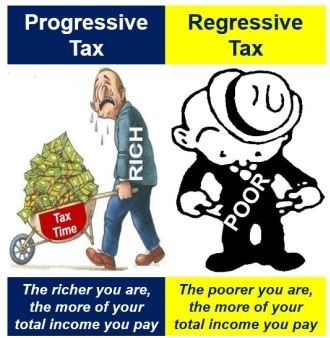
“MPs will be asked today to approve the biggest personal tax rise in two decades to pay for a £12 billion-a-year package for the NHS and social care reform.” says The Times today. Whether the writer actually believes this Government propaganda or whether Rupert Murdoch has sent the Editor a message who knows? The truth is that National Insurance goes to the Treasury like every other tax. It will be spent on Trident as much as on Healthcare (etc.) There’s only one pot. And many eager to dip their fingers in it. The tax is regressive – something else that Tories like.

There are two things wrong with the descriptor “National Insurance”

1) It isn’t National

2) It isn’t Insurance

National taxes affect everyone. In theory anyway. Most of us pay Income Tax, VAT, excise duty…. A lot of us don’t pay NI. Me, as a non-working pensioner, for one.

Insurance is when there is a direct link from a premium to a benefit. NI is no longer that, if it ever was. NI is a payroll tax. Not really a stealth tax , though not far away. And certainly not insurance.

When Margaret Thatcher introduced her “Community Charge” we all saw it for what it was – a regressive Poll Tax. Tories don’t like progressive taxation (like income tax) so they try for a tax which can be sold as equally affecting all – VAT for example, and National Insurance. Even the uber Free Market Adam Smith Institute said that the Government is asking “ poorer workers to bail out millionaire property owners”

Natural Justice would lead us in another direction to “From each according to his ability, to each according to his needs” for example. Tories won’t like that , not least because Karl Marx said it. Seems good to me – perhaps I’m a closet Marxist after all !

Public services need a new pragmatic model which places public accountability and the citizen ahead of ideology

The politics of the past was a battle between those favouring the State and those committed to Private Enterprise. The latter won – most notably as a result of the Thatcher/Major’s privatisation programmes. These changes were made inviolable once Blair/Brown decided not to unravel any of them. In the battle of ideologies free enterprise triumphed.

In selling off the family silver Governments rewarded their class friends. In particular where privately owned and run monopolies were created. Some public services such as water and the railways became private fiefdoms where competition (nominally the driver of free enterprise) was absent. Fat cat profits and salaries for the head honchoes followed.

Analyse the provision of public services and you will find that they are all, in reality, public/private partnerships. Subsidies abound and the State often owns much of the infrastructure. When attempts were made to privatise the rail network with Railtrack it was an unmitigated, incompetently managed disaster. The NHS remains overwhelmingly State owned and run, but the private sector plays an important part throughout – and increasingly so.

In effect we are in a post ideology age. Jeremy Corbyn’s hankering after increased State ownership was antediluvian and the “hands off the NHS” brigades are equally shortsighted. What is needed is a new pragmatic model which places public accountability and the needs of the citizen foremost.

A crucial element now missing almost entirely from the private sector and under threat in the public sector is collective bargaining and union representation. Part of public accountability has to be respect for the employed. A problem is that for decades pre Thatcher Trades Union power became fiercely political with some Unions (notably the National Union of Mineworkers) exercising power way beyond their remit of defending the interests of their members. Though Thatcher’s coining the phrase “The Enemy Within” was offensive and hugely partisan there was an element of truth in it.

Union power is now almost entirely confined to the public sector , and selectively so. The NHS unquestionably needs efficiency improvements if it is to deliver value but the Unions (including the hugely powerful British Medical Association) rarely participate in reform. Meanwhile, as we have seen, some privatised service industries like Water and the Railways put profit and executive pay ahead of customer service.

Working together surely better than binary conflict ?

Our society is so divided that the very idea of cooperation in, say, improving the NHS seems alien. Binary structures are recipes for conflict . Ideology never helps. The moves towards the creation of an integrated railway service were forced on government by private sector failure. To think that the quality of the railway service you receive depends serendipitously on where you live is preposterous, but it’s true. A national network, national standards, a national fare structure (etc. etc.) is common across Europe. In comparison in Britain there is utter confusion.

As we gradually become aware of environmental threats the need for expanded and efficient public transportation becomes all the more important. HS2 will be a start taking customers out of their polluting cars and putting them in far more efficient and greener fast moving railway carriages. Again look at Europe to see the model. Note: We shouldn’t really care who actually owns the services so long as they are publicly accountable and deliver value. A properly constructed National Railway Service (NRS) is as necessary as a similar NHS. And it equally needs to be a public/private partnership.

I realise my “solution” will probably antagonise both sides in the public/private debate though as it seeks to put customers (the general public) ahead of ideology it shouldn’t. Our society shouts a lot, we need more mature debate and search for agreement and cooperation. Too much to expect? Probably.

.

The greatest abuse of power of all is sometimes to do nothing

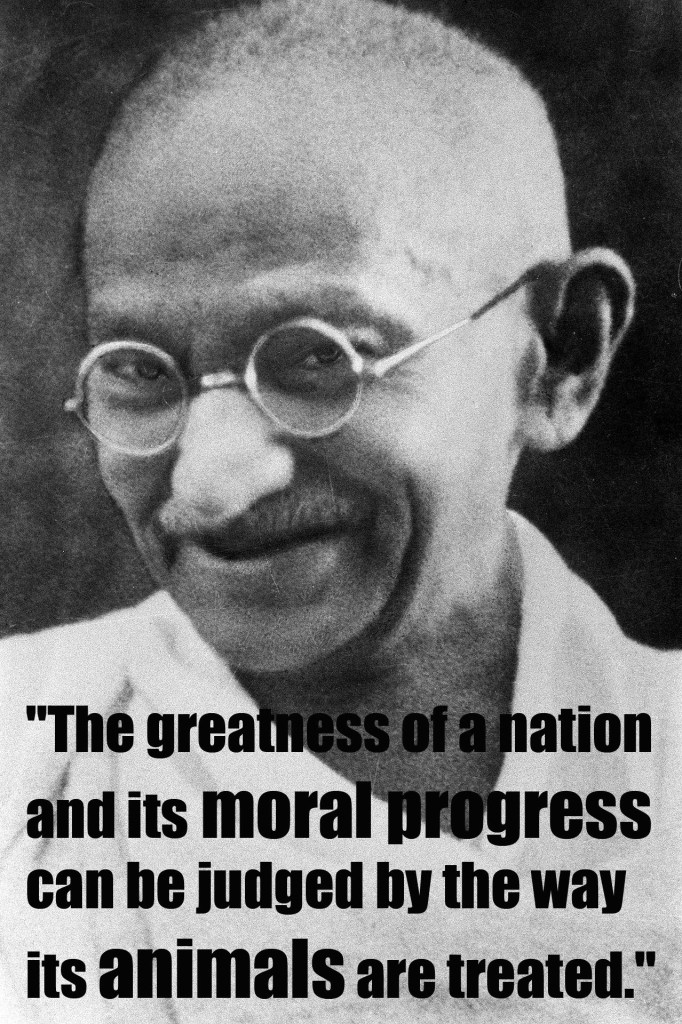
If you express the view that we share our planet with the animal world and that they have as much right to it as we do someone will accuse you of sentimentality. But for millennia wise men like Ghandi have sought to challenge the conventional hierarchy that places Mankind at its top.

Animals have always served man. Sometimes the relationship has been mutually beneficial , but often the animal has been a slave not a partner. Or worse. Industrialised livestock farming treats the animals as a commodity in which the cattle or sheep or pigs have no recognised identity.

At the other extreme our pets or “companion animals” do become part of our family, are recognised for their individuality and are looked after as well as the family’s human members.

Geronimo and his owner

The paradox of an arbitrary divide between a pet and a wild animal was seen at its most chilling in the case of Geronimo the alpaca. This delightful animal was clearly a loved companion. Four years ago he twice tested positive for TB. The tests are known to be unstable. TB kills within six months, but four years later he was still a fit, lively animal. And yet the bureaucrats of the Department for Environment, Food & Rural Affairs (Defra) killed him.

To be concerned about the destruction of Geronimo is not to be sentimental it’s to bemoan the inflexibility of a Government Department, it’s ministers and its civil servants. And the cruelty where at its heart lies the assumption that we humans have the right to treat animals pretty much how the hell we like.

Animal welfare is something that, as Ghandi said, is a measure of a nation’s decency. Where the lines are drawn is complex and can be hypocritical. I eat meat though if I visited an abattoir I might decide not to. I abhor horse racing, especially National Hunt, but I understand it’s appeal. Trophy hunting and bullfighting are clearly repellent, but they still go on.

At its simplest it comes down to personal choice. Would you help an injured bird if you could ? Most of us would. Would you try and save a drowning dog or cat. Likewise. Do you have a mental hierarchy of the animal world with your pooch at the top and the annoying snails who eat your petunias at the bottom. Hmmm.

The test is “Does it feel right?”. In the case of Geronimo it doesn’t. The law was clearly an ass in this case. Worse nobody who had the power to stop it did so. The greatest abuse of power of all is sometimes to do nothing.

Angela Merkel is not an ideologue she is a Stateswoman. Practical, thoughtful, honest and decent.

Excellent piece in The Times this morning by Danny Finklestein about Angela Merkel’s departure “ World’s centre-right lacks a unifying figure” . But it is missing the key factor as far as Britons are concerned. Here the “mainstream Right” has been routed by the “populist Right”. A few remnants of traditional One Nation conservatism remain but they are out of power and office and reduced to heckling impotently from the sidelines.

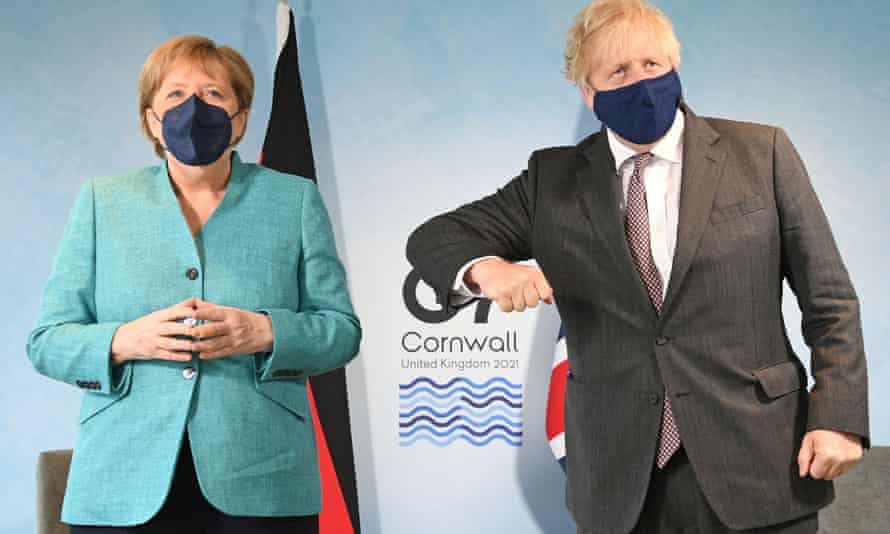
Merkel v Johnson. Pragmatic politics versus shallow populism

Sir Keir Starmer is struggling to rebuild the “mainstream Left” but as in the Conservative Party the heavy feet of populist extremism stand on him. Corbyn may have gone (probably not, actually) but his simplistic ideology lives on , and not just in the shadows. In the Conservatives the simplistic ideologies are firmly entrenched in power.

The Clinton/Blair “Third Way” was a bit misleading. Actually both leaders were pretty firmly of the pragmatic centre. Bush Mark Two, not the sharpest knife in the drawer, found himself after 9/11 being steered by the NeoCons – not a group that the Bushes had ever joined. Dubya’s Dad had been Reagan’s Vice President and was arguably a restraint on Ronnie who was not really a NeoCon anyway.

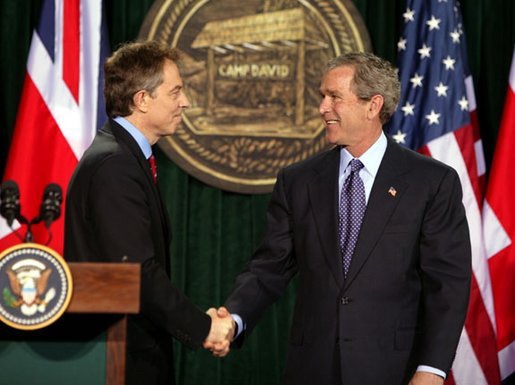
Tony Blair was as equally prepared to fly the flag as George Bush

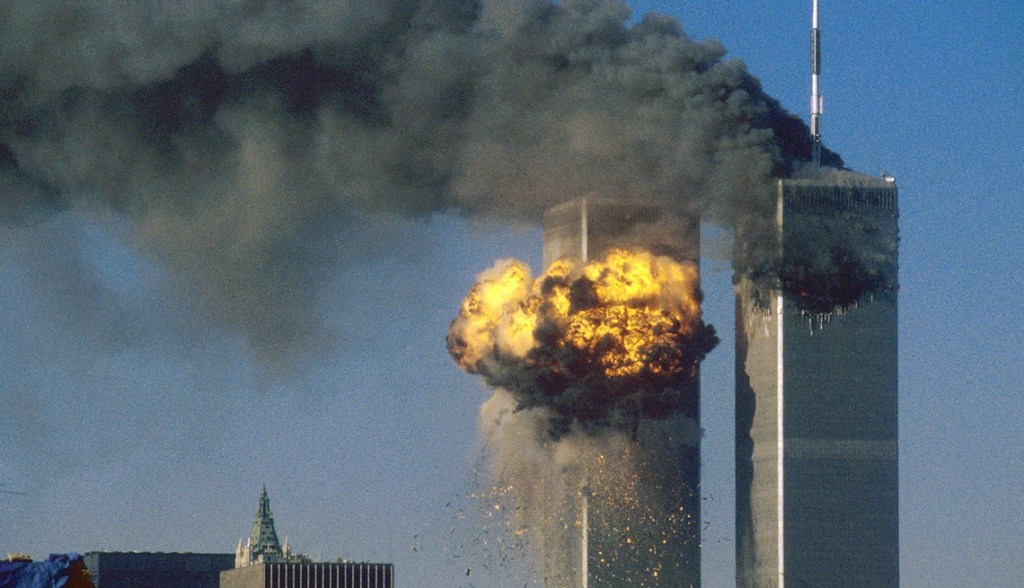
Twenty years ago 9/11 gave the NeoConservative movement a shot in the arm in America and, in due course, in Britain. The disasters of Afghanistan and Iraq showed the foolishness of western military intervention which is so very visible today. Driving the military adventures was raw nationalism. Here Tony Blair was no less nationalistic and equally prepared to fly the flag.

If I’d been German I’d have voted for Angela Merkel and I’m a liberal – the SDP was the last political party of which I was a member. Like Lord Finkelstein I was also a Social Democrat – though I can’t imagine taking the step towards the Tories that he did! But the Conservatives of John Major and, to a much lesser extent of David Cameron, were not the rabid Rightists who are in power today.

Angela Merkel is not an ideologue she is a Stateswoman. Practical, thoughtful, honest and decent. And very capable. Her political position eschews ideology – she is an internationalist, a free Marketeer, and a supporter of a mixed economy balancing the public and private sectors in a pragmatic way. Under her leadership, almost for the first time, Germany has atoned for its past – a past which had put Margaret Thatcher off reunification. Without that atonement a reunited Germany would have been difficult to sell.

No British politician would atone for Empire in the way that Angela Merkel has not only for the Nazi era but also for the gross crimes of East Germany, the country in which she grew up as a child. In Britain the mythical “glorious past” has to be rhetorically present in any ambitious politician. Tell the truth about imperial motives and excesses and you’ll find that there are no votes in it.

So in bidding farewell to the excellent Frau Merkel I would less be seeking a “Centre Right” replacement but more someone from Left, Right or Centre who has her internationalist outlook, honesty and pragmatism. The Germans learned the very hard way indeed about the dangers of inflexible, nationalist ideology. It’s a lesson that we in Britain need to learn very quickly as well.

In modern times demand is never created by oil companies but merely satisfied by them

Dilemma over new North Sea projects” reports The Times today. Not for the first time, though, there is an underlying but false assumption that oil consumption is supply rather than demand driven. It isn’t.

Oil/Gas production responds to consumer demand, it does not create it

I spent forty years with Shell and have received a Shell pension for nearly twenty. This may not make me objective, but it does make me informed ! In my early years we had three options for increasing sales. The first was to respond to market growth caused by lifestyle changes. The second was actively to seek to convert users of one form of energy (usually coal) to oil. The third was to gain business from our oil company competitors. Let’s see how this has changed.

Market growth. There is a correlation between economic growth and oil demand. As countries get richer they use more oil. To focus on countries like China makes sense. That demand is not created by the oil companies it is supplied by them.

Conversion. In my youth I worked on initiatives like “Mrs 1970” which created the oil-fired central heating market. Coal burning in a grate gave way to an oil-fired boiler and radiators. Here we were certainly creating demand and new markets. This rarely, if ever, happens today.

Competition. To gain a customer from a competitor has no effect on the size of the market. The demand is not created, just supplied by a different company.

In modern times demand is never created by oil companies but merely supplied by them. If we don’t develop new oil fields it will have zero effect on demand because somebody else will. Oil consumption is entirely demand driven. If you want to reduce consumption focus on the users not the suppliers.

Modern cities like London hugely benefit from their multiculturalism

According to Clare Foges in the Times today “…we are a nation that values its culture.” Note the use of the singular. And we must avoid “monocultural ghettos”. Aside from the value driven use of the word “ghetto” the implication is clear – that people of the same ethnicity, culture, religion, heritage choosing to live together “monoculturally” in the same location is a bad thing. Has the writer ever been to Woking ? Or Hartlepool for that matter.

I’ve lived as an ex-pat in three or four places where my nationality placed me in a minority. As with all the other Brits I generally socialised with people like me. It’s what you do as a “ Gastarbeider”. If a move is more permanent the same applies. Look at the Brits on the Costa del Sol.

Stamford Hill

The “melting pot” is sentimental tosh. We tend to mix with, marry with and live with people like us. Human Nature. This doesn’t mean that we reject pragmatic integration or consider our way of life superior. A city is enriched by variety and the fact that London, for example, has Asian, Jewish, West Indian and many other districts is a plus.

There is no template of “normal” Britishness. The inhabitants of Southall or Stamford Hill are no less British than those of Wimbledon. To suggest that these people “belong” less, as Ms Foges does is pretty offensive. Try telling the Hasidic Jews of North London that they should integrate and not have parallel lives. Good luck with that.

The Amazing Mr Johnson and his gang of dissemblers

They really don’t care do they? From the dissembling team that lied through their teeth in order to persuade a gullible public that we should leave the EU we have had more than five years of reputation shattering mendacity. It’s not their reputations that have been destroyed, it’s ours as a credible nation.

Truth is what they can con us into believing is true. Johnson has being doing it all his life. To his school, his university, his employers , his spouses and his friends. It would take a Barbara Highsmith to imagine the Amazing Mr Johnson , fantasist to his bootstraps.

And what about the Cabinet ? They’ll have what Boris is having. Not one of them has the guts to stand up for principled governance. Do the wrong thing. Lie about it. Do it again. Denial is their watchword.

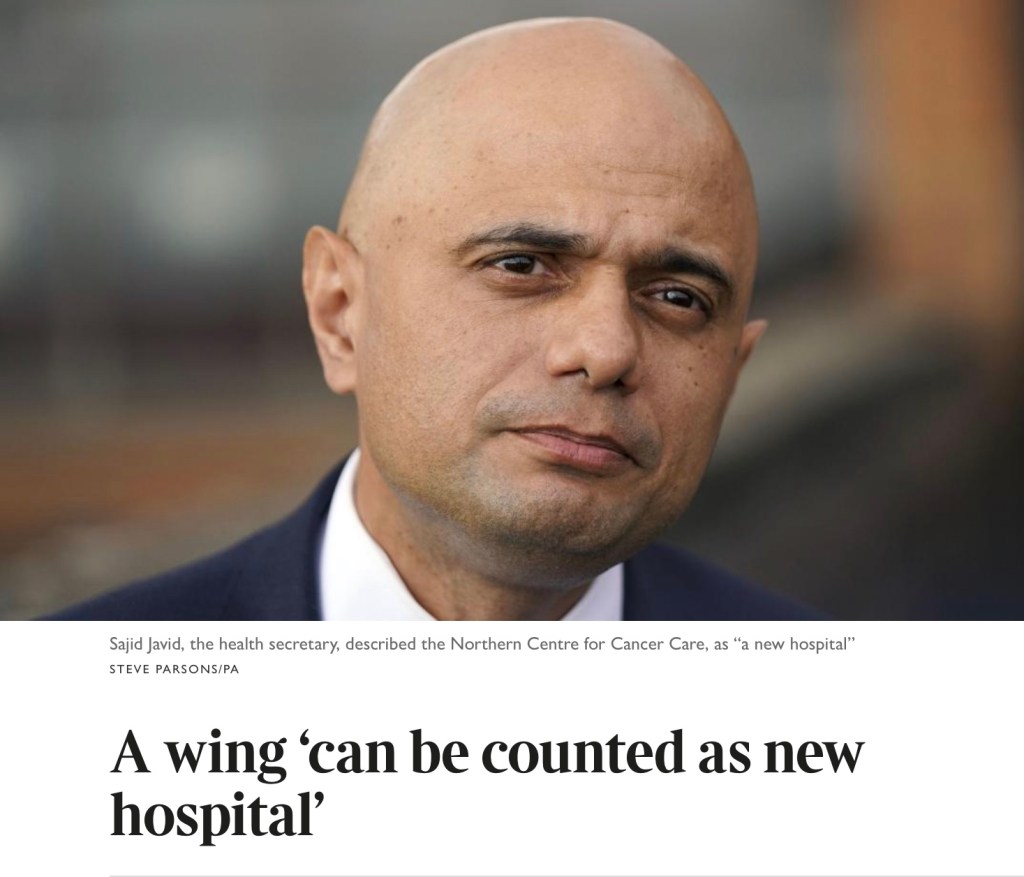
Modern governments have powerful propaganda tools at their disposal and when there is largely a lapdog media nobody holds them to account. The hospital nonsense is a classic. I think most of us know what a new hospital is despite their rarity. It isn’t a new wing any more than a new classroom would be a new school. But heigh it is because we say it is.

Will the ignominious defeat of the US and Britain in Afghanistan finally put the Neoconservatives back in their box?

Back in 2001, the Bush administration identified two objectives for its response to the attacks on the Twin Towers and Pentagon. First was suppression of international terrorism, explicitly al-Qaeda. Second was a cynical exploitation of the outrage as a pretext to deploy American might, to secure control of the region.” Max Hastings in The Times

Whilst the objective of the Iraq war in 2003 was openly “Regime Change” in the very early days after 9/11 the objective for the American (and Allied) military action in Afghanistan two years earlier was more limited – the pursuit of Al- Qaeda , especially, it’s leader Osama bin Laden. As the Taliban, the de facto Government of Afghanistan, refused to hand over bin Laden in effect regime change became the goal – as it was to be later in Iraq.

The false dawn of effective Regine Change in Iraq was been matched in countless other failed and deadly interventions

“Regime Change” is the foreign policy part of an ideology often referred to as “NeoConservative”. NeoConservatives believed that military power can legitimately be used by America and other democracies to target anti-American/Western regimes especially those with “leftist” or ideological Islamic militant governments/dictatorships in control.

Historically the Regime change imperative is sometimes traced back to President Wilson who “wished to make the world safe for democracy” and more recently to President Kennedy who in his inaugural address said “Let every nation know, whether it wishes us well or ill, that we shall pay any price, bear any burden, meet any hardship, support any friend, oppose any foe to assure the survival and the success of liberty.”

Both Wilson and Kennedy were Democrats so we are in theory well away from any Hard Right Neoconservatism. But we could in the past definitely observe an underlying political bias in the US in favour of “liberty” and against anti democratic forces. The American organised Bay of Pigs failed invasion of Cuba in 1961 was anti Fidel Castro who was a self-proclaimed Marxist-Leninist. But Castro was in reality a liberty-denying dictator for whom power was far more important than ideology – as it usually is.

The nobility of Kennedy’s words looks less so when you look at the reality. Was there “liberty” in the Soviet Union. Of course not. Did the US “pay any price, bear any burden” to establish it ? No again. The war remained “Cold” – the survival of the human race required that it did, though the Cuban Missile Crisis was a close run thing.

Sanctions can be effective as can western military expenditure in part designed to bankrupt the “enemy” who hasn’t the capability economically to match it. The West did force the end of the USSR in this way, but Russia remains a liberty-free zone. As, of course, does its fellow world power China.

The “deployment of American might”, as Max Hastings calls it, ensured back in the 1940s that Europe became free from tyranny, or at least the Western part of it did. But this selectivity left Eastern Europe under the yoke, albeit a different yoke. Since then it’s been mostly downhill. From Korea, via Vietnam to Afghanistan and Iraq American military intervention has been disastrous. If the NeoCons had had their way Iran would have joined this list.

Will the ignominious defeat of the US and Britain in Afghanistan force a change of tack and finally put the Neoconservatives back in their box? It should. Meanwhile it’s China which is quietly establishing a hegemony. It won’t be long before we see the Chinese bearing not Arms but Gifts in Afghanistan. The two countries actually share a common border in Afghanistan’s Wakhan Province. Not many people know that.

If “The Hundred” becomes established it’s rivals, especially in domestic cricket, will wither and die. Yes each man kills the thing he loves.

In 1978 the London Symphony Orchestra released the LP “Classic Rock” which was a collection of pop songs given the symphonic treatment. It wasn’t pop music and it wasn’t classical music. It was a hybrid and a tremendous success. A success based on some good tunes, well arranged and well marketed. Around the same time there were many other similar offers like the RPOs “Hooked on Classics”.

Purists were sniffy. They shouldn’t have been. Running an orchestra is a costly business and if “Beethoven’s Greatest Hits” sells (it did) what’s not to like?

These thoughts came to mind when I was considering my response to cricket’s “The Hundred”. Could it be argued that the adaptation of cricket that this tournament has been and its repackaging of the game for the elusive “new audience” is just like what happened to music as it was popularised (vulgarised some would say of course). Up to a point, but there is a crucial difference.

“Hooked on Classics” did not mean that there were fewer Symphony Concerts or Orchestras. Classical music fans could largely ignore it and the vast majority did. There was space enough for the bastard child whilst Symphony concerts, opera, the Proms and the rest carried on unaffected.

But with “The Hundred” it occupies space in high summer and the school holidays which was previously occupied by the Counties. Grounds and players are turned over to a tournament played by teams with no traditions and in a format played nowhere else in the world.

Many of us will ignore “The Hundred” because of what it is – a vulgar parody of the historic great game of cricket. But it’s there – noisy, simplistic, trivial and trite. It’s the Andre Rieu of cricket without the subtlety. Once you let the Goths and the Vandals in you’ll never get rid of them.

Cricket has always been more than just a business. But as T20 tournaments in India, Australia and elsewhere have shown there’s a buck to be made. The irony is that if a new audience has in part been tapped they haven’t experienced real cricket but a mutant variety of it. They won’t say “I enjoyed that, I’ll go to a County Championship game or a Test Match”.

County cricket at Taunton. A thing to love.

English cricket has been impoverished by The Hundred. Evolutionary science shows that the stronger species always wins. If the Hundred becomes established it’s rivals, especially in domestic cricket, will wither and die. Yes each man kills the thing he loves. And when it’s gone – that’s it. RIP.

Extinction Rebellion – strong on opposition, weak on solutions

Extinction Rebellion

Extinction Rebellion will be having one of their often very aggressive protest demonstrations this week. They are usually loud on what they don’t like but quiet on solutions. They certainly tell us who they don’t like – it includes people like me who spent my whole career working for an oil company!

The key consideration in almost any public policy issue is to have a realistic grip on timescale. For climate change and its effects that timescale is very long term indeed. Some actions taken today may not have any noticeable effects for a decade or more. Politicians doing “good things” want instant results so that they can boast about them. Equally they are reluctant to take tough decisions that could be electorally unpopular. So there’s often a lot of hot air, but very little action.

We could cut road mileage by 4% overnight as the Tony Blair Institute suggests if we had the guts substantially to raise tax/duty on road fuels (petrol and diesel). Blair himself introduced a freeze on tax increases in the light of protests. This measure would be fair in that the biggest polluters (high mileage drivers) would have the biggest incentive to reduce their journeys, switch to public transport or electric vehicles.

Extinction Rebellion are either ignorant or disingenuous (probably both) in attacking Oil companies. These corporations are very small scale polluters themselves and their activities are very energy efficient. It is Big Oil’s customers that are the contributors to climate change – that’s you and me by the way. The days of oil companies creating demand are long gone. Their role is to satisfy demand not create it. This fact is largely ignored by the protesters as Shell, BP or Exxon are easier targets.