I think that Lionel Shriver is deliberately missing the point in her condemnation of “Black Lives Matter” in “The Times” today.
For the first time in my (long) living memory a response to institutionalised racism is having an effect. Her very article is proof that the establishment cage has been rattled.
Here and in the United States the cultural norm excludes people of colour. To break through ( many do) BAME citizens have to ensure that though they might be black or brown they have to adopt the mores and appearance of the white majority.
Multiculturalism is traduced by many who are discomforted by behaviour and appearance different to their own. This is particularly true of British muslims whose religion and dress can set them apart from the white mainstream. Spend a day tracking the abuse and Islamaphobia on social media if you doubt this.
Mankind is diverse, creating a hierarchy in any society based on colour is inhuman. And to think that it doesn’t matter is offensive. I support the premise that black lives matter – how can any civilised person not? I do not support the “Black Lives Matter” movement which has some odd political goals that I don’t endorse. I find no paradox here.
The time has hopefully come when the rich and well-armed West stops thinking it has the right and capability to interfere in the internal affairs of far away countries of which they know nothing. Virtually every arrogant act of military action of modern times has left the United States with egg on its face.
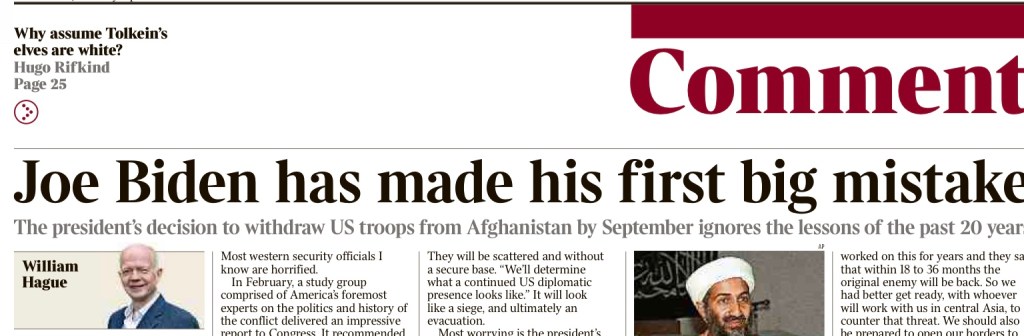
Osama bin Laden’s legacy was not just the horror of 9/11 but the subsequent grotesquely failed Western military adventures in Afghanistan and Iraq. America’s global policeman role was selective. Where a Government was evil but all powerful – Russia in the Crimea and presently potentially in Ukraine and China in Tibet for example – America sat on its hands. Thankfully.
Where American power was thought to be all powerful the lessons of Vietnam were not learned. And where commercial interests dominated – the Saudis in Yemen for example – the US let their business partners do what they liked. Don’t worry about a bit of genocide when there is a harvest of petrodollars to haul in.
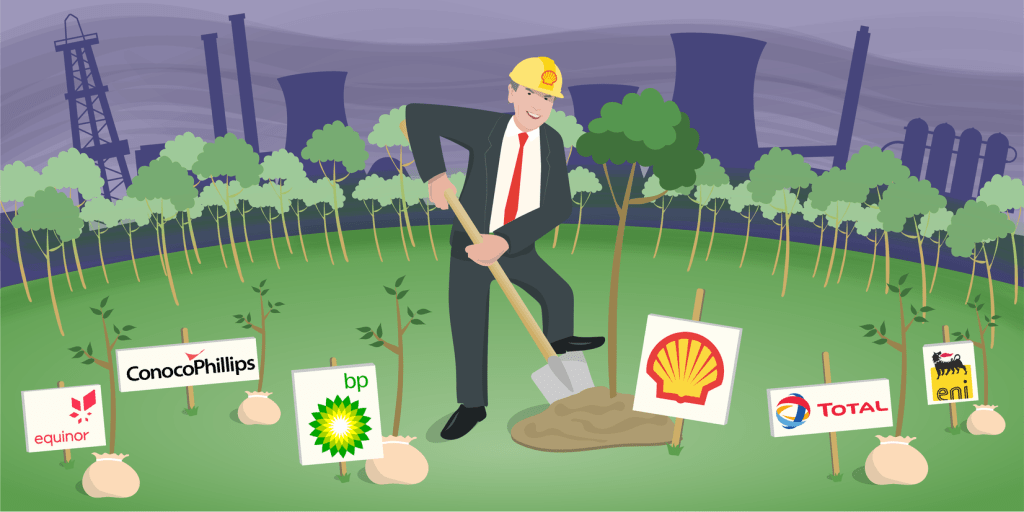
The Times has a piece today about oil company moves into renewables. But the reality is that 95% of the Oil/Gas multinationals’ time and efforts are focused on their traditional hydrocarbon businesses. None of them has the corporate memory and mindset to be serious players in renewables. It is difficult to see their investments in non hydrocarbon business areas as being anything but token.
Shell has a very long history of tentative experiment in step out activities none of which survives today. From Nuclear Power, Coal, Agrochemicals, Metals, Forestry, Power Generation, Solar, Wind, Shell has stepped in and out in an almost whimsical fashion.
The necessary skills and experience to run (say) a wind energy business are almost entirely different to those to run a virtually integrated oil or gas operation. Of course the financial clout of an Exxon, BP or Shell means that they could buy a company in a new business area. But it never works. Look at Shell with Billiton. The strategy was that the mining and exploitation of metals was analogous to hydrocarbons. It took Shell more than a decade to find out that it wasn’t.
The truth is that these companies are not energy corporations at all but oil/gas giants. The do the search for, production, transportation, refining, trading and marketing of hydrocarbons well. But, in truth, not much else.
And the sun shined – oh how it shined. The images from Windsor Castle today were sensational the powerful natural light illuminating the ancient walls and towers. And when the mourners and the catafalque arrived they too were bathed in natural light. If Steven Spielberg had been directing it it could not have been better lit.
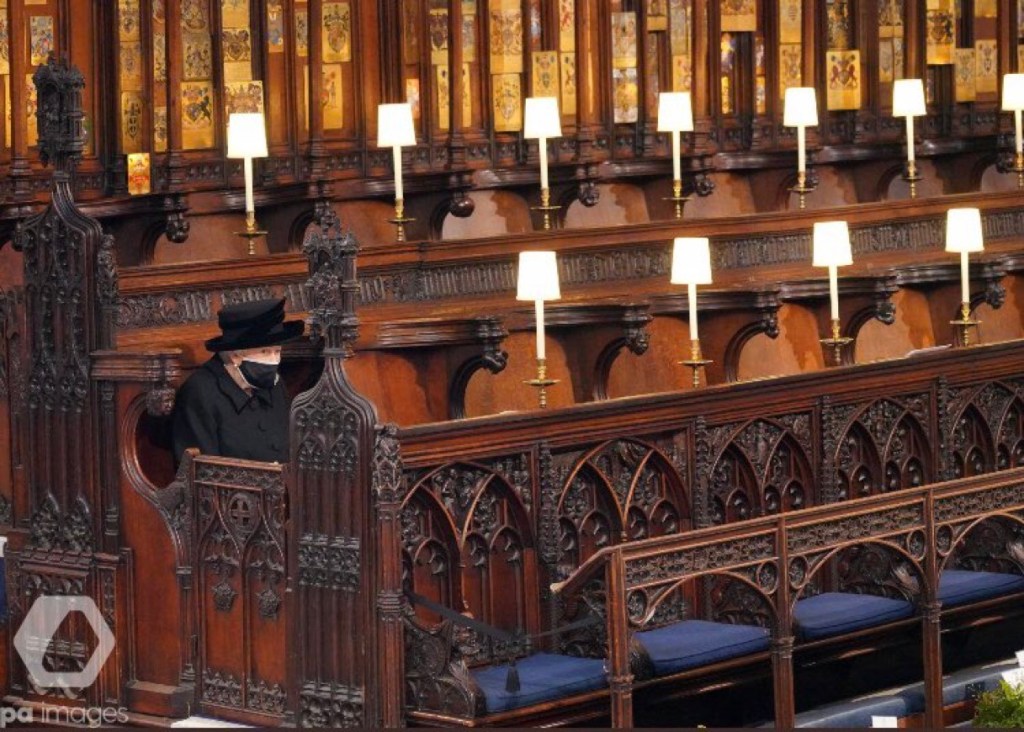
We were in unknown territory today in more ways than one. The first funeral of a reigning monarch’s consort since Prince Albert. Did Victoria have to sit alone at the funeral as her successor did today? I doubt it.
The Duke apparently choreographed what happened and by doing so revealed a wicked sense of humour and a rejection of the sentimental. The converted Land Rover that transported his coffin was a Pythonesque master stroke. The lack of triumphalist bombast was equally impressive.
I defy the gutter press to find much to object to. Peter Philips, The Duke’s grandson, cleverly walked a half pace behind his fellow grandsons William and Harry and whatever visual divide there might have been between the two Dukes was eliminated. Even Piers Morgan will struggle to find evidence of a rift there.
The music was well chosen and the ceremony was low key, but appropriate to the times. The wearing of masks, including by HMQ, was a leveller. As was the Queen’s decision (allegedly) to ban her offspring from the wearing of uniforms. If Andrew had appeared as an Admiral it would have turned an impressively classy event into a Gilbert and Sullivan opera.
Quite how Queen Elizabeth had to sit on her own I’ve no idea. Maybe it was her choice but it went beyond the poignant into the tragic. Did her suffering have to be quite so intense and visible?
There will be those who will say that the funeral was quintessentially British. This would reek of English exceptionalism to me. It was respectful and well organised and moving. I don’t think that any nation has a monopoly on those virtues.
More “Something must be done” bollocks about China from Matthew Parris in The Times today. I’m not personally particularly fond of blame apportionment but let’s be clear who is responsible for China’s place in the world today. Look in the mirror. I was in Tiananmen Square a couple of weeks before the Chinese murdered thousands of their own young people in 1989. It wasn’t my first visit to Peking – I’d been there several times pursuing my multinational employer’s interests. I got back safely to Hong Kong and eventually all my colleagues who were based in the capital did the same. Our MD had to be dragged away – his whole career seemed threatened if our grand ambition to profit mightily from China’s economic opening up was thwarted.
The evils of totalitarianism were for all to see well before the violent crackdown in 1989. The morality of seeking to do big business with the Chinese was rarely questioned in the western businesses pushing open the door to the market of well over a billion people. And not just a market either – a huge workforce resource. “China is Very Big” was the mantra of my MD. “China is an evil, repressive dictatorship” was not a message he wanted to hear.
The Chinese are famous for taking a long term view. “One Country Two Systems” was a comforting slogan for those negotiating the Hong Kong handover but the PRC was being artful and disingenuous. It would take a decade or two to turn China into by far the world’s largest manufactory as well as biggest market – fine, they said, we’ve got time on our hands.
Later in 1989 I presented to my management team colleagues the reputational risks of returning to China so soon after the massacre. I was told to get back in my box. It wasn’t too long before it was back to normal – Western bees around the Chinese honeypot.
The crackdown on Hong Kong didn’t happen until the economic dependency of the West on China was in place and not capable of being unravelled. The hand wringing now about Hong Kong and about the People’s Republic’s repression of the Uighurs or Tibet will not shift the Chinese one little bit. We in the West created this, without us the transformation of China into an economic powerhouse wouldn’t have happened. Look in the mirror.
There’s good and bad in all of us isn’t there? It’s the human condition. When we pop our clogs we’d expect those doing the obituaries and the eulogies to focus on the good rather than the bad and the ugly. And who is to judge anyway? And the longer the life the greater the evidence of our light and shade. Of our generosity , and of our selfishness. Of our worthiness and of our less worthy moments. No good biography is a whitewash, but nor is it just a sensationalist exposé.
The good that men do – the art of biography
We aren’t saints. Who amongst us can say that we haven’t had adulterous flings with ballerinas or attended dodgy parties organised by our osteopath? We all wear a mask from time to time – but usually metaphorically (or as a virus prevention tool) rather than as a sex orgy accessory.
Writing a life is a satisying thing to do. I’ve written a couple of full biographies as well as dozens of profiles. None of these is a hagiography but none is an intrusive search for scandal either. But at what point does a biographer fail to do his job if he doesn’t probe and dig. I once interviewed a Minister of State who I knew hated the Cabinet Minister boss – for good reason. I elected not to ask the Minister about this and it was not mentioned in the article. I guess I would never have made a tabloid hack.
At times the obituaries of “National Treasures” invert Shakespeare so that they become “The good that men do lives after them. The evil is oft interred with their bones.” Then later – generally much later – a new biographer stumbles across the “evil” and reveals it. This is sometimes not very popular!
Revisionism is a legitimate element of biographical writing. Revealing newly discovered facts, or putting a new spin on known ones, is a well established biographer’s technique. Not speaking ill of the dead is a respectful thing to do. But sometimes the passing of a public figure is the beginning of a period of disclosure without the fear attached to the making of inappropriate revelations during the subject’s life. Or immediately after their death.
Oscar Wilde said “Formerly we used to canonise our heroes. The modern method is to vulgarize them.” And that was 120 years ago! My plea is that we neither canonise nor vulgarise. That’s the biographer’s real challenge.
When Dean Acheson told us more than 60 years ago that we had “lost an Empire, but not found a role “ he could scarcely have imagined how well into the 21st Century this would still be true. I am a baby boomer born the year after WW2 ended. So my lifespan has seen the change from Great Power status to where we are today – which is what?
Acheson pointed Britain towards Europe – a direction that was, for other European countries big and small, largely uncontroversial. One can debate the nature of the model and the extent of the “ever closer Union” in Europe — but not the strategy. To argue that Britain should withdraw from the integration project you need some pretty powerful arguments to back up the exceptionalism. They don’t exist.
The Munich analogies live with the Great Power analogies and they should all be confined to the dustbin. Instead, post Brexit, we’ve put out more flags. The Tom Moore story was a fin de seicle hanging onto our fading memories of a time when Britain alone was not just true, but commendably honourable. He symbolised the emergence from “Our Darkest Hour” at a time when the skies were darkening again.
“Britain alone” today fails as a model because unlike in 1940 it has been a choice without any logic and makes us look petulant rather than brave. If after more than seventy years our role is defined by what we were rather than what we could be we’ve got a problem !
It is Easter, and it is Spring. For those with Faith a time of optimistic renewal when hope rises from suffering. For those for whom the natural world is a greater inspiration than the gospels a time when green shoots begin to appear and the birds start to build their nests. You don’t nest if you’re a pessimist, you don’t not have hope either.
For Easter I received “The Hill We Climb”, the poem read by the young poet Amanda Gorman at Joe Biden’s inauguration. It’s an astonishing , optimistic work. It is driven, I think, by a confident belief that good can triumph over evil.
Winter is not evil, but it can be a struggle. Spring is in the air and the days are lighter and warmer. The robin in her nest is busy but her call is also a warning. Take nothing for granted. Don’t cast a clout for yet awhile.
We are impatient, that is not a sin. We want the leaves to return in all their verdant glory. But we know, how vividly last year taught us to know, that as never before uncertainty is still in the air.
The young Miss Gorman was celebrating political change not because her side won but because all Americans won. As Oprah Winfrey put it in her Foreword “A nation, “bruised but whole” climbed up off her knees.”
Can we learn not to be binary? Can we learn to rely not on the ephemera of sentiment and flags but on belief in the common good ? Can we even agree what the “common good” is ? Can we also try to “compose a country committed to all cultures, colors, characters and conditions of man” or will that task be beyond us? Again.
Ultimately what it takes is leadership. Someone who can turn the green shoots and the hope into action. In our homeland, as much as in Joe Biden’s America, there is a need to “rebuild, reconcile and recover”. Or will strident divisiveness stifle the hope and the new bright leaves wither and die?
I believe we are at a crossroads. We seem full of notions about what we are against (though we disagree) but can we agree what we are for? Is there more that unites us than divides us or is that a forlorn hope to be drowned out by cries of WOKE when we try to express them?
My Easter and springtime wish is to draw a line as America has drawn a line. Can we also see ourselves as a “nation that isn’t broken, but simply unfinished.” The problem with the “glorious past” can be if we believe that it didn’t really ultimately lead anywhere. Can we still be accused of having lost an Empire but not found a role? Is there any doubt at all that we can?
So bruised Britain’s need for rebuilding and reconciliation is no less than America’s – and just as great a challenge. To look at the blue skies and green leaves and hear the robin’s call on of a bright Spring day should make me optimistic that we can rebuild. But can we? Can we?
The level of naivety about China is extraordinary. As someone who was actively involved in the opening up of China in the 1980s I have seen Chinese ambition and Western greed close at hand from the start. It was always a pact with the Devil, and the Devil was always going to win, and some !
Gradually, over 30+ years, a dependency on China both as a market for British goods and services and as a key supplier to Britain of a very wide range of manufactured goods has been put in place. This is not going to change, indeed it is certain to expand further.
Hand-wringing over Hong Kong will rightly be treated with disdain by those of us who saw close at hand the iniquity of Thatcher’s “Joint Declaration” sell out in the 1980s. After Tiananmen Square in 1989 British businessmen couldn’t wait to get back to Beijing and to pick up where they left off. We had neither a principled foreign nor trade policy at that time and we haven’t developed one since, or even tried to.
Without exception my HK friends thirty years ago, having been rejected by British abandonment sought the citizenship of friendlier nations who saw the contribution they could potentially make. Visit the vibrant Hong Kong communities in Canadian or Australian cities if you doubt that. A new generation will surely take the same path. Britain’s hugely belated offer of residence will be treated with the contempt it deserves.
To be “proud of empire” as Matthew Parris declares he is in The Times today is frankly astonishing and one would not expect such a remark from someone usually as sensitive as Parris. As his article has not even a modicum of balance – to say the Empire’s “motives were mixed” is almost laughable in its insouciance – it’s up to us readers to tell him what offensive bunkum he’s peddling.
Cecil Rhodes Imperial colossus and founder of Matthew Parris’s birthplace Rhodesia
If you believe in Empire you believe that it is right for a nation and it’s citizens to travel to another place, sequester its land and subjugate its people. There are no ifs and buts about this – that is what you believe. Further you believe it’s right that you introduce a system of government that concentrates power in the hands of the conquerors, along with their culture and even religion.
If you believe in Empire you do not believe in the rights of man, what you believe in the rightness of power. The collateral damage of your power – spreading diseases and destroying First Nation cultures and way of life – you shrug about. And if you find, as mostly was the case, that your sequestered land has value you exploit that value by theft. Whatever the riches are you mine them greedily and enrich yourself and those who enabled you to commit the larceny.
Then there is the value of the human assets that your imperialism discovers. You don’t have to go the whole hog of colonisation in order to capture people and ship them to one of your other possessions to work as slaves. Slavery and later indentured Labour was a direct consequence of imperialism – indeed they drove it.
In the Empire there was a racist hierarchy which placed white Britons unequivocally at the top. The native peoples were just a factor of production – the workers that avoided the necessity for the white man to do any physical work themselves. And the smarter of your subjugated peoples could help you with the administration of your illegally acquired assets – so long as they spoke English and conformed to your norms of dress and behaviour of course.
To exploit assets – physical and human – you do need infrastructure. Railways and roads (etc.) need to be built but let’s be clear. We are not in “What did the English do for us?” territory here – it was what the English did for themselves. Every imperial action was for the benefit of the imperialists even though there may have been some consequential benefits for the local people. Far too high a price to pay for subjugation surely.
That the Dutch and the Spanish and the Portuguese and even the French were at the same game as the Brits is irrelevant. You don’t justify having a criminal gang by saying there’s another one up the road.
We need to come clean about the past not indulge in flag waving about it. We need, as Susan Neimann called it in her book, to “Learn from the Germans”. You cannot unravel the past but you can reveal the truth about it and be contrite. Imperial symbols matter and if they “honour” slavers you do need to consider whether they should still stand in modern times.
Matthew Parris and other modern day apologists for Empire are indulging in the defence of the indefensible – I’m surprised that Parris chooses to do this.






 Paddy’s Blogs in a crazy world