“Just Stop Oil” undermines our right to protest

The Right to Protest.

The right to protest is one of the cornerstones of democracy. Without it we slide towards autocracy with the state having absolute power over citizens. And protestors in history have succeeded – from the Chartists to the Suffragettes to Gay Rights activists (and hundreds more) protest has secured change.

When I was a student in the late 1960s we protested against the Vietnam War and Apartheid in particular. In the main we didn’t break the law and our marches and rallies were peaceful. I remember the Establishment close to home (my parents) admonishing me for my strong support of the protesters and my occasional participation. This confirmed to me that I was right.

That we were right was confirmed further when the last helicopter left Saigon and later when Nelson Mandela was released and few today would defend the obscenities of American aggression in South East Asia or the institutionalised racism of South Africa. But the forces of conservatism, as now, were strong and you needed a bit of courage to take them on. At twenty years old many of us didn’t have to dig deep to find it.

Protest needs to be credible

Roll forward fifty years and there are still iniquities to protest about and young people prepared to do it. But the protest needs to be credible. So why given my personal experiences long ago do I unreservedly condemn the “Just Stop Oil” protestors ? “Because you worked forty years for Shell and are a Shell Pensioner” you might retort, and you are right but not in the way you might think!

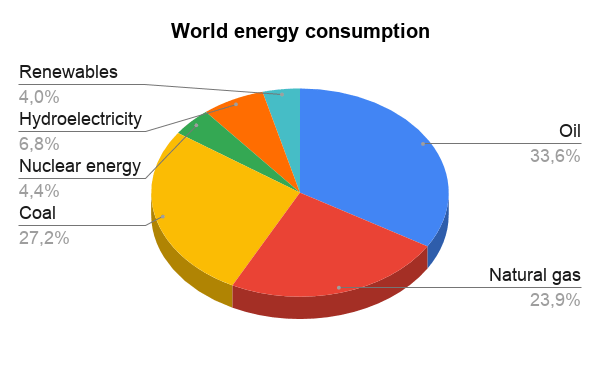
It is not self interest, the protection of my Pension, that makes me challenge the protestors. It is that the protesters do not understand the subject they are protesting about, except at a superficial and emotional level. My employment years taught me a bit about Energy supply and demand. And first and foremost I learned that “stopping oil” is literally impossible in the foreseeable future. At the current time, around 84% of the world’s energy is still derived from fossil fuels.

In the past the oil companies did seek to create demand

I started work for Shell in the mid 1960s at the tail end of what was called the “Coal to Oil conversion programme ”. We actively encouraged the environmentally beneficial replacement of coal burning in industry and elsewhere by fuel oil. It was in our interests to do so of course, but there were collateral social benefits. As there were when we pioneered central heating fuelled by oil. Mrs 1970 gave us warm homes and eliminated burning coal in our living room hearths. Social benefits again.

And in those days the oil companies encouraged “Happy Motoring” and we did “Go well with Shell”. The post war economic recovery increased disposable incomes and car ownership. And at Five shillings a gallon motoring was a bargain. But the days of oil marketers seeking to expand the market are long gone. The competition is only for market share.

Technology and economics drive change in Energy consumption

Energy is an industry in constant change. Petrol driven cars are infinitely more efficient and economical than they were in the past. Aircraft use far less fuel to fly a passenger from A to B than they used to. Power Stations burn fossil fuels far more efficiently than before and pollute far less. But there’s a long way to go.

The goal of reducing our reliance on hydrocarbons is an honourable and supportable one even for someone as “oily” as me. But unlike my protests of fifty years ago it cannot happen overnight. We stopped the planned South African cricket tour of 1970 with a few months of active protest. And we never glued ourselves to the Lord’s gates to do so.

But structural change to our Energy economy will take much longer and it’s not mainly a lack of will. Sure there are some silly folk who deny the reality of man made climate change, but the scientific reality is clear. The planet is being damaged by our burning of fossil fuels and we need to do something about it.

The opportunities for switching to greener energy vary from sector to sector

The best way to approach a quite complex subject is to look at energy consumption sector by sector and see the potential for change. Let’s start with Power Generation. Electricity is essential to our lives but we can both use and generate it more efficiently and with greater concern for the environment. At a domestic level solar panels are worthwhile and new developments in , for example, solar PV roof tiles can make them invisible. That and similar technologies for new builds need investment and perhaps. subsidy. More efficient domestic appliances can also held reduce our reliance on the grid.

But it is at the sources of large scale electricity generation that the greatest changes are both desirable and possible. Hydrocarbon fuelled power stations (mainly gas) can be significantly replaced by renewables and nuclear. This change is, of course, underway and there are few if any downsides. The aesthetics of onshore wind turbines are an issue and siting decisions need to take care of this. It is not nimbyism not to want to look out on a field of giant turbines from your home!

Nuclear is a classic example of the energy paradox. Countries like France have shown what a valuable source it can be but others worry on environmental and safety grounds. But even the once strongly anti nuclear power Dutch have recently committed to building two nuclear power stations.

Transport is heavily reliant on oil and the potential for substitution by greener fuels varies enormously. But let’s start with the hidden energy source – conservation. As we have seen all oil powered transport from private cars to ocean going ships have seen large improvements in fuel consumption over the years and there is still potential for more fuel efficient engines. Another crucial change would be further investment in public transport which is massively more fuel efficient that private cars. We still operate many diesel powered trains and electrification of their routes would be beneficial.

Modern societies including Britain have come to take the ownership and use of private cars for granted. Any challenge to this, including rises in fuel duty, is seen as threatening liberty! There wouldn’t be many votes in a “Give up your car” manifesto commitment. So how can we improve the environmental friendliness of the private car sector? Obviously electric-powered vehicles are part of the solution.

All energy situations can be described as either production or consumption (supply or demand). Motor vehicles are consumption and whatever the fuel source that is the constant. With petrol or diesel vehicles upstream of the consumption is supply which comes from the production of crude oil and its refining into useful products. (Even further upstream there is exploration but that needn’t trouble us for the moment). For electric vehicles the production is in power stations or other electricity generation sources like Hydroelectric, Nuclear or Wind and other renewables.

When you drive an electric vehicle you are transferring battery stored electricity into motive power and that electricity can have come, as we have seen, from a variety of sources. For electric cars to be truly “green” the electricity they use needs to have come from renewable sources. If it was generated in a fossil fuel power station then all that is being done is that the pollution is being passed upstream. A switch to electric cars needs to run parallel to a switch to renewables.

Some energy consumption sectors are oil or gas specific

It is useful now to discuss the concept of “Oil Specific” energy consumption/demand. Above there are some examples of where we can realistically diversify from oil/gas. But the inescapable reality is that many parts of our economy are “oil specific” – where oil consumption cannot within known technologies be replaced by “greener” fuels.

Let’s start with marine transport, ships. The global economy relies on the movement of goods by container ships. There are around 5,500 of these globally and together they are capable of carrying around 25 million 20ft (6m) containers. Ships run on Fuel Oil which is, of course, one of the products produced when Crude is processed in a Refinery. As well as container ships marine is a crucial element of transport around the world. Close to home cross channel ferries and to British islands in Scotland, the Channel Isles etc. A country like Greece is held together by its ferry system. And cruise ships (like them or loath them!) can only run on Fuel Oil.

Another key oil specific transport is aviation. As with marine not only do all aircraft run on oil (a variant of kerosene) but there is absolutely no prospect of this changing. Today the UK has the third-largest aviation network in the world, with a turnover of over £60 billion and a contribution of over £22 billion to our GDP and almost one million UK jobs are directly or indirectly supported by it. Obviously our lifestyles could change and we could fly less and be less reliant on the airlines for business and/or leisure. Some journeys could switch to other transport. But realistically we are going to be reliant on this crucial transport sector for the foreseeable future and we will need lots of kerosene to run it.

Commercial Road Transport (CRT) is another overwhelmingly oil specific sector. The transport of goods by road in lorries and trucks is in vehicles fuelled by diesel or petrol both of which fuels are products of crude oil refining. As with private cars substitution by greener fuel must be a goal but the technology breakthrough necessary hasn’t happened yet. Power to weight ratio realities mean that battery stored electric power is not feasible, within known technologies, for large commercial vehicles. The same applies to other essential larger road transportation vehicles like buses, ambulances, fire engines etc.

Alternative fuels for CRT are at the experimental stage – fuel cells from hydrogen show promise but commercial exploitation of this is some way away. And moving goods by rail rather than truck is green. But the reality is that CRT is going to be oil dependent for a long time.

Let us now look at the uses of natural gas which is analogous to crude oil geologically (gas is often produced alongside crude oil in “associated” fields). Gas does not need to be refined and generally can be used pretty much in the same form in which it is produced. Gas, however, is less easily transportable than crude oil. Historically natural gas was transported through pipelines to the points of consumption though transport by specialised ships of liquified gas (LNG) is increasingly common today, and growing.

Gas is a hydrocarbon like oil but it is generally seen as being preferable to oil, harmful emissions are lower. But Gas burning does produce carbon and is clearly a contributor to global warming. The problem is that much gas consumption is both essential to our lives and, at least in the short to medium term, not replaceable by other more “green” energy. Space Heating is the main use. Northern Europe, most of North America and parts of Asia gas heats our homes, offices, hospitals and the rest. Modern gas-fired boilers are very efficient , but gas burning is damaging to the environment.

Changing our gas heated homes (etc) to alternative fuels is a very long term project indeed. New build homes can be equipped with heat pumps in some cases but retrofitting in existing properties is problematic technically and economically. Electric heating is an option for many homes but as with electric cars is only “green” if the power comes from renewables sources. Our space heating needs are likely to be fulfilled by gas for at least a decade or more. Once again the best green option for now is conservation – better insulation and more fuel efficient boilers.

All the above is not a pessimist’s nor a climate change denier’s view. The problem with “Just Stop Oil” and the remarkable Greta Thunberg is that they seem ignorant of these realities. In times of high energy prices nobody uses oil or gas wilfully. And, I would argue, it is wrong to lambast the oil and gas producers whose production and transportation of oil and gas satisfies demand.

The crucial point here is the distinction between supply and demand. It is the users of oil and gas who contribute to global warming not the producers. This is more than semantics. Students of Supply/Demand economics know what happens when availability of a commodity changes. In unregulated markets if supply increases prices go down. If supply decreases prices go up. Glut reduces prices, scarcity increases them.

Crude Oil and, to a rather lesser extent Natural Gas, are classic commodities where prices are set at the intersection of the supply and demand curves. The “equilibrium” price. In the short to medium term demand for hydrocarbons cannot change anything but marginally assuming that no rationing is introduced. We have seen recently how prices rose when the perception was that supply was limited by the Russian military action against Ukraine. It’s happened many times before.

We have seen that much of our oil and gas consumption cannot be substituted, we certainly cannot “stop oil”. And the reality is that Global Warmng is not caused by hydrocarbon (oil/gas) producers but by consumers. Shell and BP and the rest do not create demand they satisfy it. In normal times levels of consumption are not affected by supply, there is no cause and effect. So the “Just Stop Oil” protestors are wrong. You can’t reduce consumption by reducing supply. You just put the price up.

Modern Energy economies like Britain’s are not impervious to change. Much has been done in the past thirty years or so to reduce energy consumption per unit of useful output. This has mostly been for pragmatic reasons – lower consumption means lower cost. Across the economy from large scale power generation to home heating and private cars the incentive to use less fuel is obvious.

“Just Stop Oil” wants to stop the further development of North Sea oil and gas. But if Britain’s hydrocarbon resources are not exploited consumers, collectively, will buy from elsewhere – we will import. Importing oil/gas rather than using our own resources negatively affects our balance of payments, damages our employment in the sector and increases our energy dependency. And has zero effect on pollution, global warming or anything else. In short it’s economically irresponsible virtue signalling.

As I said at the beginning of this piece the right to protest is essential. But if you seek to protest it is incumbent on you to get your facts right. This needs to be done not just at the high level of generalities supporting switching to greener energy use. It also needs to be done at the level of the Art of the Possible. And that means studying the subject at a much more detailed and practical level than “Just Stop Oil” does.

The Left should campaign for an end to our “antiquated electoral system”

“It is impossible in any broad way to dissociate Liberalism from Labour. They have the same root in aspiration and purpose, the same resolve at all cost to place the welfare of the community above that of any class – Labour as representing by far the most numerous class may sometimes tend to forget this, but not for long … At present they are forced into an unnatural antagonism by the limitations of an antiquated electoral system wholly unsuited to the needs of the day, but the moment that is reformed and proportional representation gives us a true mirror of the nation the truth will emerge … They [Labour and Liberals] may never combine, but they should always understand, and in the main support each other.” C.P. Scott 1922

The great liberal journalist C.P. Scott wrote this just over one hundred years ago and it remains as true today as it was then. In particular Scott’s support for PR rings a very audible bell in these binary times. To be “of the Left” does not mean that we share a precisely similar ideology. There are large overlaps in our beliefs but there are subtle differences as well. Socialists are different from Social Democrats who are in turn different from Liberals but our electoral system fails to reflect this.

When the Gang of Four founded the Social Democratic Party (SDP) in 1980 it was a practical manifestation of the differences between the collectivist Socialism of Foot and Benn and the democratic socialism of Jenkins and Shirley Williams. When the SDP combined with the Liberal Party to fight elections it demonstrated Scott’s premise that they shared the same “roots and aspirations”.

The Foot and Benn takeover of the Labour Party, which forced the creation of the SDP, was broadly similar to Jeremy Corbyn’s takeover of Labour in 2015. Both were rejections of the Croslandite leadership of Labour by Wilson/Callaghan in the 1960s and by Blair/Brown in 1997 and the first decade of the new millennium.

The merger of the Liberals and the SDP which created the Liberal Democrats was actually a takeover by the Liberals and a defeat for the social democrats who returned to Labour in droves. Roy Jenkins, arguably always a closet Liberal, was comfortable in the LibDems because they were, as he was, anti Socialist – if fairly quietly so!

Blair and Brown were anti Socialist as well – at least the Bennite version of it. Tony Crosland’s “The Future of Socialism” in 1956 was in effect a social democratic tract – he had argued that Labour had to be less collectivist, less obsessed with public ownership and more pragmatically leftist. More “Liberal” you might say by C.P. Scott’s definition.

If we had PR the various strands of Left thinking and beliefs would have clearly separate political parties. You can divide this variously but my own model would be:

▪️Socialist – collectivist, pro public ownership, strongly redistributive, anti NATO and (probably) EU. Pacifist and pro disarmament. Ideological.

▪️Green – heavy emphasis on environmental issues, broadly collectivist. Pro EU.

▪️Labour – Socially democratic, mixed economy supportive, internationalist and pro EU and NATO. Non ideological. Pragmatic on environmental issues.

Liberal – pro regulated free enterprise. Strongly internationalist and pro EU and NATO. Strongly environmentalist.

Proportional Representation does, as Scott said, give us a true “mirror of the nation”. It leads to coalition and moderation. If my Party model prevailed many combinations of coalition are imaginable – that would depend, of course, on election outcomes. And it would depend on how those of the Right organise themselves – but that’s a topic for another day!

It’s no surprise that Shell apparently plans to return to oil and gas

Reference this story in the Telegraph today I would add that my forty years in Shell taught me one thing – it is a Corporation that’s very good at oil and gas, but hopeless at anything else! In my time here’s a partial list of things we tried but couldn’t make work:

  • Nuclear
  • Metals
  • Coal
  • Forestry
  • Solar
  • Wind
  • Agrochemicals
  • Electricity Generation
  • Convenience Stores
  • Biofuels
  • Fast food
  • Home insulation
  • Natural Gas retailing… 

The way to the top in Shell is based on the skills of finding and extracting of hydrocarbons occasionally augmented by those who can refine, market or trade and transport them. If in doubt the top management always retreats to its oily comfort zones. We dipped a toe in many waters but diversification was not really what we did.

Shell is not a conventional multinational that can comfortably diversify. It’s basically an oil and gas company. There is little transfer in of people from outside oil and gas at the higher levels of general management. Virtually all the top jobs are filled from internal promotion. So oil and gas people promote oil and gas people. The performance parameters in oil/gas are subtly different from those of other global businesses. The valued skills are heavily technical knowledge based – engineering, geology etc.

In Retail (petrol stations) where I worked for a time we found that above the mid to senior level there was no comprehension at all of what a consumer or a brand was among the Board level top management (or those a rung or two down). Fortunately at my level we did know what we were doing. Mostly!

Back in the 1970s and 1980s diversification was underway on a fairly large scale. In 1974 Shell lost about $290 million on its Nuclear Energy joint venture with Gulf Oil. Whilst the scale of this was exceptional the underlying causes were similar to most of the other later failed diversifications. Shell simply did not understand nuclear and had few if any competences in house to manage it.

The Metals corporation Billiton was acquired in 1970 the logic of this being that like upstream oil Metals was also a raw material extractive business. You looked for minerals deposits and if you found them you extracted them. You then, again like oil, you converted the raw material into useful products that people wanted to buy. Billiton stayed a Shell company for quite some time but eventually it was sold, largely I think because it was a distraction from the core oil business.

Around the same time as Billiton Shell Coal was created. Here the logic was similar (it’s an extractive business) with the added bonus that there was a logic in the corporation becoming an Energy rather than “just” an oil operation. But, as with metals, there was little corporate memory in Shell on coal and despite some considerable injections of capital it was eventually disposed of. (Concerns about the difficulties of managing the environmental aspects of this increasingly unpopular energy source also played a part).

Shell has been in the Chemicals business for nearly a hundred years but in recent times has moved out of anything, like Agrochemicals, which they determined was not core or which required high capital investment or had high operating costs. Research was significantly reduced and Research laboratories like those at Sittingborne in Kent were closed. The activity in this sector remains significant and it is the one business that endures outside the core oil/gas sector. That said petrochemicals are a logical extension of refining which until recently was also part of Shell’s core business.

Multinational energy companies, like Shell, grew on the back of vertical integration. Everything from the wellhead to the petrol station was Shell branded and often Shell operated. In the supply chain Refining was a key link and certainly part of Shell’s traditional competences. With closures in the United Kingdom (where Shell once had three refineries but now has none) and elsewhere this is reducing and it remains to be seen whether the corporation will continue to feel that it needs to refine crude oil when others have business models that enable them to do it more efficiently and at lower unit cost. For Shell refineries have always been cost centres whereas for independent refiners they are profit centres. Shell never really managed to make money out of refining.

As far as marketing and trading is concerned Shell petrol stations remain ubiquitous around the world but increasingly country Retail operations are franchised and Shell is no longer hands on – this applies across Africa for example. This is different from diversification exits, but the drivers are similar. Where diversification fails it is often because of an unwillingness to invest or to spend revenue costs in maintaining and/or expanding the business. So it is sometimes in Retail where it is often seen to be preferable to try and keep the brand presence by franchising and let someone else incur the operating costs.   

Around 1990 and onwards Shell sought to increase income flows from petrol stations by diversifying into Convenience Stores under the “Select” brand. The strategic logic of this was powerful as was the initial design and branding. The problem was that actually to build a standalone C-Store brand which could potentially be successful in up to one hundred countries would have required a massive effort. Other oil companies built local partnerships with experienced C-Store and Supermarket companies (BP with Marks and Spencer in the UK a good example). Shell’s initiative was half-hearted and under-funded and the C-Store policy around the world is now confused and incoherent.

One of the most instructive stories about Shell and diversification was the creation, and eventual sale, of the Power generation company Intergen. This initiative lasted ten years and again it became a victim of not being a core business.

Shell dipped its toe into Renewables with its “Shell New Energies” initiative. Its worth reading the interview with previous CEO Mark Gainsborough here. In many ways the enthusiasm he showed was, in my experience, typical of Shell’s positioning at the start of a diversification. Gainsborough left the job after four years and was replaced by a renewable energy expert from outside, Elisabeth Britton. She lasted only two years. Shell’s culture clearly wasn’t conducive.

Shell’s biggest diversification success was not a diversification at all really! The growth of the natural gas business has been impressive and Gas is now right at the heart of the corporation’s future, and has been for some time. The Gas supply chain, whilst different technically from oil, has many similarities with it. This is home soil for Shell though its attempt to stretch the involvement into the marketing to end users was less successful. Shell Gas Direct marketed gas in the UK for a time before, like so many other diversifications, being sold.

Shell’s brief involvement in Forestry throws some light on one of the motivations for Diversification. PR. This Forestry advertisement is instructive. It claims that “One day it [forestry] may be our biggest business”. Shell withdrew from Forestry the year after it was aired!

I do not know the full facts about Shell’s Renewables plans but the Telegraph story has the ring of truth about it. Under its new CEO the Lebanese-Canadian Wael Sawan it would not be entirely surprising if the corporation became distinctly more North American . American oil multinationals are not enthusiasts about diversification. Shell’s history of botched initiatives suggests that they may have been right.

The trouble with Rishi…

It is a legitimate criticism of the House of Commons and its MPs that they live in a rarefied world dominated by Party politics and disconnected from the real world most of us live in. In short it is a cult with its own language, behaviour and mores. In response to this some have argued that we need more MPs who have demonstrated achievement in non political spheres and take up politics mid career.

Back in the early 1970s a once big boss of mine in Shell-Mex and B.P. , John Davies, left the world of business where he had been successful to become Edward Heath’s Secretary of State for Trade and Industry. He was no politician and though he continued in Parliament for eight years despite his business experience he cannot be judged to have been a success.

John Davies

It is rare for people to change career in mid life and succeed in politics. Davies had never been any sort of grass roots politician and he clearly found the political world hard to fathom and the culture incomprehensible. Whereas the business world can be confrontational and tough there is nothing like the adversarial sub culture of the House of Commons. Which brings us to Rishi Sunak.

Like John Davies Sunak had been very successful in the world of business – high Finance in his case. He had become a Conservative at University but he was never active. He has no grass roots political experience and the first time he was elected to anything was when he became MP for Richmond, Yorkshire in 2015.

Rishi Sunak, no political hinterland

That Sunak was well educated , smart and successful – and very richno doubt appealed both to Conservative Central Office and to his well-heeled constituents in prosperous and leafy Richmond. Perhaps they thought that being clever and well off was sufficient qualification to make him a politician.

Sunak’s rise to the top from 2015 onwards was phenomenal. To become Prime Minister after just seven years in parliament was extraordinary – were we seeing a superstar politician in the making ? Well the only way to judge was to wait and see. Now nine months into his premiership it is fair to make an early assessment.

The first thing to say is that unlike his two immediate predecessors he is not mad, bad or dangerous to know. And he seems to work hard. But his lack of a political hinterland is obvious to see. In some ways his political naivety is quite refreshing. But this is based mainly on the fact that the only air he has ever breathed is refined. At Winchester, Oxford and Goldman Sachs he was among the elite. And from the public school’s Head Boy to the nation’s Head Man was a pretty effortless rise.

Grass roots politics requires you not only to get your hands dirty and relate to all in your constituency. Even the rich rolling hills of Richmond have their areas of deprivation. Twenty thousand voters in Richmond didn’t vote for Sunak in 2019. How well does Rishi know them and their priorities and needs?

You can’t blame a man for his schooling and upbringing, out of his hands. But once he presents as an educated adult it’s a different matter. That’s where opportunities like becoming a county councillor come in. When David Cameron and Boris Johnson left University it seems it didn’t occur to them to learn about politics ground up. As a consequence they never saw how the other half live.

Like two of his recent Tory predecessors Rishi Sunak then has no local level experience. But unlike them he served no political apprenticeship at all. He rose without trace to become an MP and became a junior minister within two years. Politics is a rough and tumble profession but Rishi never had to rough and tumble. It was laid on a plate for him.

So the Prime Minister lacks even a modicum of what might have given him a bit of the common touch. Wykehamists are less socially superior than their Etonian counterparts, but they are infinitely intellectually higher in rank. And to have been Head Boy demonstrated his smartness not his social rank. Unlike Dave and Boris he could never have been a Buller.

Rishi Sunak seems increasingly out of his depth in Number 10. He is not a toff nor a compulsive liar nor bonkers which distinguishes him from his immediate predecessors. But he is politically unqualified for high office and he has no social experience to suggest he understands the British people, except at a rarefied level.

The lady with her fingers crossed…

Ruth and Andrew Strauss

May 20th 2004 saw me at Lord’s Ground for the first Test Match of the summer England v New Zealand. The run up to the match had been confused by England Captain Michael Vaughan twisting his right knee in net practice and the uncapped, but promising, Middlesex opener, Andrew Strauss – not in the original 13 man squad – was called up as cover.

On the morning of the match before the eleven was announced I went to the members’ shop and started chatting to a friend wondering whether young Strauss would make his debut. One of the staff heard me and said, pointing to a lovely looking young woman by the window, “That lady might know!” I looked at her and she smiled beautifully and held up her right hand with her fingers crossed.

The young woman was Ruth McDonald an actress from Australia who Strauss had married the previous October. Ruth was a few years older than Andrew but it was a love match. Well her fingers crossed worked and Andrew did indeed play, Not only play but he scored a first innings century and could have had one in the second as well if there hadn’t been what Wisden described as a “Keystone Cops mix up” run out when he was on 83.

Strauss’s international career had started spectacularly, cheered on of course by Ruth who eventually uncrossed her fingers. The rest, as they say, is history. Strauss played in 100 Test Matches in half of which he was Captain.

Red for Ruth Day 2023

Ruth Strauss was diagnosed with terminal cancer in 2018 and died later that year. In recent times Andrew has driven the “Ruth Strauss Foundation” which offers emotional and practical support to families when a parent is diagnosed with a life-limiting illness. At Lord’s last week “Red for Ruth Day” raised hundreds of thousands of pounds in donations for its work. I was there and my own thoughts drifted back nineteen years to the lady with the crossed fingers…

Welcome to the new Peacock Throne

Pomp and Circumstance designed to emphasise “them and us”. The overt premise of the photographs is to reinforce the right to rule because of inherited privilege. None of those featured are where they are because of effort or achievement but solely because of the accident of their birth.

Dress is a key symbol of class and entitlement. This is symbolism at its most overt, “We are different” from you, they say, and you better know your place. In the wild some creatures, mainly male, signal their importance with colourful coats or feathers. This is peacockery saying “look at me in my finery you peasants”.

An earlier Prince George

There is a governance debate to be had about the Monarchy and its place in the modern world. The case for a constitutional monarch as Head of State is not helped by images like these which suggest a royal family stuck in a Regency time warp like Prince George IV in “Blackadder”.

“A nation scared stiff of becoming modern”

The quote in the headline above, on Twitter, is from the writer David Head and when I saw it it immediately struck a chord. The context was the weird Coronation which had largely incomprehensible pageantry which, it seems, was pretty random. The invention of tradition played a big part in the costumes, rituals and the rest.

We are a conservative nation whatever our politics are. We revere the past and don’t like change. Much was achieved in the immediate post war years with the creation of the welfare state. Then that became part of the tradition and as such became immutable to change, especially of course the National Health Service. So threaten the NHS, for example by suggesting a greater role for the private sector, and you’ll be vilified. Conservatism (not the political sort!) in action.

The reason our public services are such a mess is that they haven’t modernised enough. There are many reasons for this. Botched privatisation (The Railways, Water, Gas and Electricity…). Inadequate investment. Union intransigence. Nimbyism. Myopia.

The railways are one of the worst examples of Britain’s failure to modernise. Virtually every country in Europe has High Speed Railways. Paris to Lyon, Milan to Rome, Barcelona to Madrid, Berlin to Munich… quick, safe, clean affordable rail travel is taken for granted. Here zilch. Old tracks, slow trains, confused timetables, incompatible fare systems…

But it’s attitudes that are stuck in the past as well. The insane “Sovereignty” argument that gave us Brexit was like something out of Victorian and Imperial Britain. The idea that going it alone gets better outcomes than working with others is not just absurd but quantifiably bonkers. The delusion that it matters more where a decision is made than the quality of the decision underpinned the Brexiteers’ campaigns.

Sticking a union flag on something is meant to confer value as in the above campaign from a while back to try and persuade people (mainly ourselves) that Britain is Great. It was the sort of thing somebody with a self-confidence problem does.

In the past military and imperial power was such that “Land of Hope and Glory” with its confident assertion that “wider still and wider shall thy bounds be set” was probably true of its time. The Victorian era was a time of British dominance which is why we retain its symbols despite the dominance long since having faded away. That was the essence of the Coronation pageant.

With the exception of the United States and China no nation is large enough to be entirely self-sustaining. Europe together rivals these two great powers and the underlying transnational cooperation imperative in the EU is one that other nations are grouping together to follow. Japan and the ten ASEAN countries have economic and trade treaties and alliances. The Swiss, not in the EU, have an arrangement that gives them benefits in the same way that Japan, not in ASEAN, has them in the Far East. Meanwhile Britain goes it alone.

We are like the characters in “Fiddler on the Roof” where tradition is everything:

“Because of our traditions,
We’ve kept our balance for many, many years.
Here in Anatevka we have traditions for everything…
how to eat, how to sleep, even, how to wear clothes.”

For “Anatevka” read “Britain”.

People and Nations scared of change hide behind traditions or invent them. The past becomes a better place so our visions are backwards rather than into the future. “Why do you do that!” is answered with “Because we always have”. And utterly illogical behaviours are retained in part because nobody else has them. Resistance to change is endemic we are, as David Head rightly says “Scared stiff of becoming modern” or, I would add, taking a lead from other nations who do things better.

Multinational Oil Companies profits are largely determined by factors beyond their control

Cartoon in The Tines 3rd May 2023

This is an unpleasant cartoon and misleading as well. Multinational oil companies’ profits are driven by the crude oil price and that is determined by supply and demand. It’s a free market and there are many suppliers/producers. Russia is a major player but she did not choose to restrict exports, that was western sanctions. Sanctions reduced supply and as a consequence spot prices rose.

Crude Oil Prices March 2020 – April 2023

Prices peaked a year ago as sanctions were applied but have fallen back in recent months though they are still well above the levels of three years ago. Russian exports, especially at a discount to China and India, are back to pre war levels but their revenues per barrel are lower as these are to some extent distress sales. Nevertheless Russia’s war in Ukraine is substantially being funded by oil sales, though not to the West.

However big a multinational oil company is it does not determine the price it receives from its customers except on the margin. All supply contracts have a market price link in them – broadly if supply goes up prices fall and if it is constrained they increase. 

Oil companies are the wrong target, there is little they can do about the price of crude oil or refined products. And around 53% of current pump prices that the motorist pays go to the Government in Duty and VAT. Only 34% is Wholesale – i.e. Crude price influenced by supply and demand.

Companies like Shell and BP are woefully bad at explaining the realities of the oil economics I’ve summarised here.

Private Lives : Can love be lovelier the second time around?

Stephen Mangan and Rachel Stirling in the Donmar’s “Private Lives”

Private Lives” , like much in Noel Coward’s oeuvre, is a work that can be seen at more than one level. Sheridan Morley called it the “lightest of light comedies” but today Oliver Soden sees a great deal more in it, and I think he is right. The depths are not particularly psychological, we are not into Freud here. But Soden says that to miss Coward’s seriousness is to miss his wit. If the play is light it is deceptively so – another mask obscuring some hidden truths.

The truths include what Coward said about marriage – that it is a “fatal curse”. Sex is at the heart of the play and, no doubt in Noel’s eyes, at the heart of the curse. As he wrote to Gertrude Lawrence “Copulation has been the basis of the dear old British Drama for so long, we might as well salute it…”

Any production of “Private Lives” has to place the mutual physical attraction of Elyot and Amanda central. It was the basis on which their marriage was built and is suddenly driving their behaviour again “You don’t hold any mystery for me darling, do you mind? There isn’t a particle of you I don’t know, remember and want.’ says Elyot.

So why did marriage for Amanda and Elyot fail first time around if, to put it crudely, they couldn’t keep their hands off one another. Their suggestions to each other that it was infidelity are unconvincing. If they were unfaithful that was likely to have been effect rather than cause.

The chilling “That was the first time you hit me” from Amanda in Act Two is really the clue and the subsequent all out fight confirms it. Who started the violence in the marriage, and now again, is almost incidental. Gentlemen don’t hit women no matter how provocative they may feel them to have been. That Amanda, an emancipated woman, fights back and gives as good as she gets doesn’t justify the initial violence. Elyot’s line “Certain women should be struck regularly, like gongs” suggests a misogyny on his part inappropriate if the play was just a “light comedy”.

The actors portraying the characters in this very physical psychodrama need exquisite timing in both the love and the fight scenes. Stephen Mangan and Rachael Stirling have this to perfection. In the close confines of the Donmar everything is visible to the audience and there is nowhere to hide. Some reviewers have been uncomfortable with the violence but for me it was a legitimate counterpoint to the passion. That at any rate was surely what Noel Coward intended.

The Donmar is a wonderful venue and the play is cleverly staged both on the hotel balconies of the First Act and in the Paris apartment subsequently. “Private Lives” always entertains but in Michael Longhurst’s courageous direction it does more. As they creep out together at the end surely Elyot and Amanda will have learned that they need more than Solomon Isaacs to make it work the second time around.

Less isn’t more in this pared-down “Oklahoma!”

I guess we all have favourite plays, operas, movies where “Meddle with that at your peril” is top of our mind. Some years ago there was a staging of “High Society” at the Old Vic which was so gruesome that lovers of the movie (me) fled at the interval to rush home to play the DVD to remind ourselves how great it was. I wouldn’t put “Oklahoma!” in Daniel Fish’s production quite in that category, I stayed to the end.

Bare with me as I explain why Rodgers and Hammerstein’s classic musical means a lot to me. When I was a child we only had two Long Playing records at home one of which was the Broadway cast recording of “Oklahoma”. Then in 1955 I saw the film and was hooked. In accessing R&H for the first time I sought out their other works and became a Rodgers and Hammerstein groupie, quite young. It’s a cliché to say it but “Oklahoma!” transformed musical theatre, it also transformed me.

The best stage performance I saw was that by the National Theatre in 1998, later filmed. But a concert-style staging at the BBC Proms in 2017 under John Wilson’s musical direction was vibrant despite the limited stage room in the Albert Hall (above).

And it’s the staging that for me most disappoints about the Daniel Fish directed production at Wyndham’s Theatre. The top picture shows the “set” just before the show starts. A bare stage with a few wooden tables and chairs. That memorable opening with Curly singing “Oh, what a Beautiful Mornin’ has him not starting offstage or riding in on his horse, as in the movie, but sitting with the rest of the cast as if he’s in a casual dress audition. This set and staging stays like this throughout the first Act. There is no attempt to in part tell the story with set or scenery.

Musical theatre has certainly become more full of elaborate sets and special effects since “Oklahoma!” was first seen in 1943 and in some respects this understated and under-staged production may be seen as an attempt to get back to the original. But actually it doesn’t do that. The downsizing applies to the band as well. Instead of anything like a full orchestra (as, appropriately, at the Prom) we have an eight piece string instrument ensemble. They were very good but it was a long way from the customary Big musical theatre sound.

The acting and singing was exemplary. Anoushka Lucas as Laurey and Arthur Darvill as Curly were very good and overall if you were listening to a radio broadcast you’d be impressed. The script of Oscar Hammerstein’s book is followed to the letter (though Jud’s final moments come differently as if there is some concern about exculpating knife crime in today’s youth machete-wielding gang times).

Gary Naylor has written a tough but fair review here which adds to my misgivings about this production. If you shut your eyes you can imagine the bright golden haze on the meadow. But if you’re paying £100 or more for good seats you want your eyes to be wide open and to see a bit of spectacle.