The Decision of Boots to dispose of its £4.8bn Pension Scheme to Legal and General is significant because with 53,000 members this is the largest such scheme to move to an insurer. You can read a specialist view of the decision here:
“The trustee and Boots have written to members to inform them of the changes, confirming that savers in the scheme will be provided with individual annuity policies issued by L&G, who will then be responsible for paying members’ benefits directly.”
In effect every Boots pensioner will cut their pension links with their former employer and, I assume, nominally receive a DCF value lump sum based on their pension value. The value is a function of the current annual amount of their pension and their age related (but otherwise unspecific) life expectancy. The lump sum is notional in that it can only be used for the purchase of a L&G annuity. Whether the annuity is inflation linked, isn’t clear. I would assume so.
Could Shell follow the Boots example?
The current company backed model for our pensions is in my opinion infinitely preferable to having an insurer buy in. However there are more than straws in the wind that Shell’s commitment to its pensioner stakeholders is shaky, at least in the U.K. The failure to meet its promise to ensure pensions meet inflation, the removal of elections for trustees and the overt flirtation with the Consumer Price Index are among these straws. I also sense that the Pension Fund trustee boards see their role primarily as mouthpieces for the company rather than representatives of the pensioner community.
In a conventional Defined Benefit pension scheme, such as the SCPF and SOCPF , the guarantor of the scheme is the Sponsor, Shell. The very high financial strength of Shell in assets, profits and share value, makes this as close to gold standard security as one could imagine. In the event that Shell followed Boots’ example (there is no current suggestion that this will happen) the security for members would, in my view, be less. In the past famous financial services companies like Lehman Brothers have folded. The unexpected has happened.
My gut feeling, without any direct hard evidence, is that Shell would wish at some point in the future to follow Boots’ example and divest itself of its DB Pension Funds. Put bluntly but truthfully the funds are of no value to the company and require management to devote some time to their management. Cost without Benefit is unattractive in the modern day world of business !
I am in receipt of the latest issue of “The Source” for which many thanks. It does, however, raise as many questions as it answers not least in your own “message”. In this you say that “we… benefit from continuing robust support from Shell. The pensions promises made to members in their working lives are supported by this.” I wish to contest this most strongly. But first let me comment on the fact that this statement reinforces the reality that “Shell” is a separate entity from the “Shell Contributory Pension Fund” which is indeed legally and morally the case.
The separateness of the SCPF management has been weakened in recent times. Sadly, I see no evidence that the Trustee Board fought on behalf of members to ensure that our 2023 Pensions increase matched inflation – in fact the reverse seems to be the case. It would not be putting it too strongly to say that you and the Board meekly kowtowed to the Company’s wishes. Whether the increasing control that the Company has over the Board is a reason for this I can only speculate but the gradual disappearance of independent elected Member Nominated Trustees and their replacement by Company selected apparatchiks is evidence that this is the case.
The statement “The Pensions promises made to members” reminds us that there were indeed once-upon-a-time promises of “robust support”. But, regrettably, in 2022 and 2023, these promises have, for the first time in recent memory, not been met. The promise I received as an employee was made explicit in the “Your Pension” booklet (above) I received in 1995, some years before I retired. This booklet stated (page 14) that “The SCPF provides a high degree of protection to pensions against inflation, so that the real value of your pension is maintained”. In 2023 to honour this promise my pensions would have had to increase by 13.4% rather than the 7% I actually received.
Pages 12 and 13 of the “The Source” tell us that there are 26,394 SCPF members in receipt of pensions and that in 2022 Benefits paid amounted to £549m. This means that the average Shell pension last year was approximately £20,000 allowing for the fact that some pensioners have much lower-than-average pensions because of short service and that you include commutation lump sums and death benefits in the figure. But based on £20k the 2023 annual increase should have been £2680 if the real value of the average pension was to be maintained as promised. In fact, it was £1400 meaning that the average pensioner has suffered an annual lost of £1280 in real terms. This is a clear and culpable breach of promise.
Under the heading “Pension Increases and Inflation” you duck the issue that the company had the discretion to match RPI rather than restrict the increase to the Trust Deed minimum. Whilst the Trust Deed does “mandate” the minimum increase the Company can, of course, add to this to bring the increase up to the level of the RPI – as has happened a number of times in the past. There is in your “message” no apology for the impoverisation of the Pensioner consequential on the company’s decision and, it seems, the Trustee Board’s failure to challenge it. Instead, you indulge in an irrelevant statement about the “unreliability” of RPI as an index. You must know that the whole subject of Price indices is a contentious and debateable one and that it is entirely a matter of conjecture which is the better or worse measure for any subset of the population. No index is wholly reliable, certainly not as a measure of Pensioner cost of living. The fact is that the SCPF is formally linked to the RPI and that your references to CPIH are disingenuous and irrelevant. I am surprised that the SCPF is indulging in this misleading sham.
You will now be aware that in The Netherlands the Stichting Shell Pensioenfonds (SSPF) has increased the pensions of Dutch Shell Pensioners by a total of 12.1% matching inflation. They were not obliged to do this but exercised discretion in the light of high Dutch inflation – an inflation which was coincidentally close to that in the UK. Quite how Shell plc can justify matching inflation for Dutch Pensioners and falling well short in the UK is beyond me. I assume that the Trustee has been aware of this anomaly – has it been raised with the Company?
Finally, I find it regrettable that “The Source” reports on the Pension Fund as if it was solely a Financial entity. And some of the decision-making seems to emanate from this presumption. Of course, the financial health of the Fund is important to us all but for 26,000 Fund members in receipt of pensions being a member of the fund is as much a social matter as it is a financial one – just as in our days of employment there was more to being a Shell employee/stakeholder than the monthly pay cheque. All the Shell pensioners I know – quite a few of them (!) – take pride in our status and our continued links with our once employer. And many of us feel let down.
I apologise for the strong tone of my letter – there is nothing personal! But there has been a mean failure of judgment by those in the decision-making loop. I hope that you can find a way to put it right.
It is hard to recall someone becoming a Cabinet Minister with so little political experience and to find himself in 10 Downing Street after just seven years in the House of Commons is unprecedented. He’s a one-man band of mediocrity at a time when so much more was needed after the disastrous years post Brexit and, it seems, a slow learner.
Sunak entered Parliament in 2015 with only the most superficial experience in politics. By no stretch of the imagination could he have been called a politician. His life had been privileged by his education and his high, but extremely narrow, abilities. His intellect is strong and he applied it well to have a successful and extremely well-rewarded career in Finance. But it is clear that he never wandered outside of his comfort zone.
Sunak was parachuted into William Hague’s safe Yorkshire seat. This is not the Yorkshire of the red wall but, generally, of wealth and advantage. He had no social intelligence when he arrived as a carpetbagger in the North of England and he gained none in leafy Richmond. In normal times Sunak would have been a backbencher for five years or more learning the politician’s trade. Then he might have got a junior ministerial job and gradually worked his way up if he performed well. But these are not normal times.
The best politicians have backing in the Party, their constituency and the country. But there are no “Sunakites” mainly because nobody has a clue what he stands for.
The Menier Theatre in Southwark has a good record in producing high quality musicals despite its small stage and limited facilities. “Funny Girl”, “Into the Woods”, “Fiddler on the Roof” , “The Boy Friend” among others in recent times. This year we’ve had original works in “The Third Man” and now “Close-Up The Twiggy Musical”. I enjoyed the former but doubt that it will transfer to a West End theatre as many of the Menier’s productions have in the past. The same may apply to “Twiggy” unless some drastic surgery is carried out on it.
Musicals, at least since “Oklahoma!”, have had a storyline as important as the songs (except for the mostly gruesome “Jukebox” musicals which are really a genre of their own. The ghastly “Mamma Mia” has a lot to answer for.) “Twiggy” borders onto this genre but is actually much better than that.
Twiggy’s life, in the musical, is a good story spanning as it does 60 years of “Working Class girl from Neasden makes good”. And some of the stories within that life are pretty remarkable from under age sex, via exploitation and an iconic* look to genuine stardom on Broadway. Didn’t she do well ?
She did. She was one of the key figures of the swinging sixties, photographed by David Bailey who as ever captured his subjects unique appeal:
“Twiggy” by David Bailey 1960s
Her modelling career was masterminded by the creepy Justin de Villeneuve a clever phoney who, as alleged in the musical, not only took Leslie Hornby’s virginity at 15 but helped himself to more than a fair share of her huge modelling earnings. In the musical he is brilliantly played by Matt Corner – a terrific performance.
But oddly Twiggy’s modelling years are rather rushed by. We needed to see more of her work in the years which launched her as an icon*. We see Twiggy’s move into fashion promotion and sales, she has a shrewd eye for quality of materials and manufacturer. We soon realise she’s no dumb blonde.
Crucial to those early years were her parents – the confident Lancastrian Norman Hornsby and her batty Londoner mother Nell. They are proud of their daughter’s success and do not exploit her – they leave that to others. Steven Sirlin and Hannah-Jane Fox are excellent in these. parts. (The former also impersonates David Frost well in an interview in which Twiggy charmingly gets the better of the inquisitor in chief !).
Soon “Twigs” is moving away from Swinging London to Hollywood where she stars in “The Boy Friend” (1971) and eventually to Broadway with the highly successful “My One and Only” (1983). The progress is seemingly effortless and driven by more that Twiggy’s unique beauty. Despite no theatrical or musical training she can act and sing at the highest level.
Twiggy’s personal life once she was out of the clutches of de Villeneuve was to revolve around her marriage to actor Michael Witney in 1977 – it was blighted by his alcoholism. He is well played by the evergreen Darren Day. This is a storyline that could do with some cutting in the musical. It was important in Twiggy’s life but is rather too centre stage for too long. It skews the dramatic balance.
The music is contemporary to the action but here Ben Elton (writer and director) was restricted by what the copyright holders would let him have. Rather than commission an original set of songs he selects from the. catalogue. I think this works but it risks the “jukebox” charge.
I saw understudy Harriet Bunton in the leading role. Physically she’s no Twiggy (who is?) but it was a very good performance. The cast as a whole is excellent – mostly song and dance.
If “Twiggy” is to be more than a Menier one-off it needs revision, some of it fairly drastic. I think the potential is there but a reviser would need to start by identifying what the real story of the subject is. We need fewer moments of “How did she do that ?” (become a film star for example ) and more “This is how she did it”.
*The words “Iconic” and “Icon” are grossly overused, often meaninglessly. Here I think they are appropriate. If anyone was an icon Twiggy was !
Benito Mussolini, according to one biographer, realised very early in his political career that “nation had a stronger grip on men than class”. It looks like Keir Starmer has come to the same conclusion. His Labour Conference speech was full of “Working People” but avoided “Working Class” – there was no class war rhetoric. In that sense his message was inclusive – most of us relate to the “Working People” descriptor , “Working Class” by comparison is exclusive and divisive.
In place of class war there was, according to Sir Keir, the concept of “Service”. Again this is inclusive and whilst “Public service” is part of it it’s not the only part. The service sector is part public and part private and Starmer seemed to welcome that. He didn’t rubbish the profit motive which by definition drives private businesses. This was not Socialist tub-thumping. The “S” word didn’t get a look in.
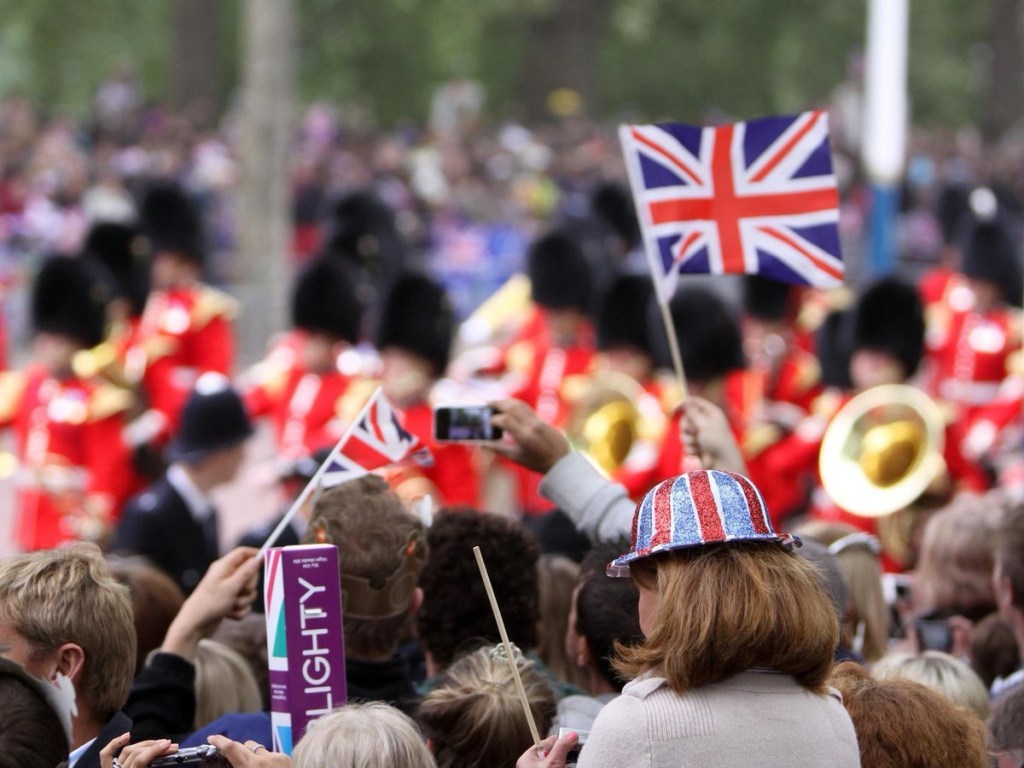
And then there was the “Nation” which drove the dictators in Germany, Spain and Italy in the first half of the Twentieth Century and featured strongly in Liverpool. There were derivatives of the Union Flag everywhere in the Conference hall and in Party communications – including the new membership card design.
The slogan “Country First” is a nationalist slogan and a populist one. Brexit was driven by such a motto and it is an uncomfortable thought that Hitler’s Party was the “National Socialists” even though socialism played no role in the dictatorship. Mussolini, of course, was also a self-declared socialist before he invented Fascism
Brexit showed that patriotism morphing into nationalism and then into xenophobia has a populist appeal. “Put out More Flags” is often the instruction of choice for those who want simplistic engagement with the electorate – internationalism garners few votes.
Britain’s role in the world got no mention in Starmer’s peroration – Europe wasn’t there nor were transnational alliances like NATO. It’s as if our future is solely in our hands though he did mention an ambition that “Britain is respected again around the world.” – though how this can be achieved by looking inwards rather than outwards wasn’t clear.
“Patriotism” and its bastard cousin “Nationalism” is a hot button of populist appeal as the twentieth century showed us. But there is a chilling undercurrent in “Country First” which could appeal to raw, insular outcomes like Brexit. Caveat Emptor.
It’s now nearly twenty five years since the publication of “Riding the Waves of Culture: Understanding Diversity in Global Business” by FonsTrompenaars and Charles Hampden-Turner
Trompenaars was a Shell executive and many of us working for the corporation at the time read the book because of this. This was particularly so for those of us who had lived outside our home country and/or travelled extensively on Shell’s behalf, of which I was one.
That doing business in countries as culturally different as (for example) Japan and Kenya, which I did in one project, brings the need for sensitivity and understanding is obvious. But this is not, just, about realising that what will work in country “A” won’t in country “B”. True even in a company as increasingly centralised as Shell. It runs much deeper than just appreciating differences in customs and practice. “Riding the Waves” is an exhilarating thing to do and though your personal values and culture are inate to come to realise that they are not “better” than others, just “different” is the key.
Many times I made successive trips between utterly different countries with the goal of securing the same outcome in each. I once flew from Vancouver to Bangkok for example. The Canadians challenged everything and needed hard facts. The Thais needed to trust me. But they were not in any way deferential and they could spot the key variables just like the Canucks. They were gentler and kinder and more trusting. It was for me to adapt and ride the waves.
Which brings me to Suella Braverman. She has said that multiculturalism “has failed because it allowed people to come to our society and live parallel lives in it”. The assumptionbehind this is that the natural order is White, Anglo-Saxon, Christian – ironic, you might think, given that the Home Secretary is none of these things.
Rishi Sunak, Suella Braverman, Priti Patel and other BAME Tory Ministers are surely visible evidence that a civilised society is comfortable with the idea of “parallel lives”. Sunak clearly is. He has said, speaking about his hindu faith and hindu identity “It gives me strength, it gives me purpose. It’s part of who I am. I am now a citizen of Britain, but I proudly say that I am a Hindu.”
So Braverman’s boss lives a “parallel life” according to Braverman’s characterisation and nobody cares, nor should they. The same applies to many parts of Britain – both Bradford and Birmingham, for example, have populations that are 30% Muslim.
It is reasonable to expect that those from minority groups understand the majority cultural norms. But vice versa as well. When I lived in Dubai the Emirate’s leader, Sheikh Mohammed, launched an outreach programme to ex-pats like me to explain Islam. He wasn’t seeking to convert us but to help us understand cultural differences.
Braverman is trying to assert that because minorities are different (Colour, Race, Religion) therefore they are some sort of threat. Instead of encouraging those of us from the majority to “ride the waves of culture” she is stirring up prejudice.
It’s only partly lack of achievement that offends me about what will be fourteen years of Tory rule. In my lifetime I’ve been there before (1951-1964, 1979-1996) calamitous periods in office both. It’s what they do. But no it’s not political failure that offends me it’s the mendacity. True the Art of politics can be the Art of hiding or distorting the truth – they all do it. But post 2010 the Prine Ministers and their acolytes in office seem never to tell the truth.
It’s wearying isn’t it to have people we are supposed to respect constantly telling untruths ? And they are far from all “ white” lies either. True Brexit took dishonesty to a new low (they’re still at it). But in virtually every policy area we are told porkies to the extent that we can’t believe anything they say. Books listing Boris Johnson’s lies were best sellers and he was the maestro of dishonesty. But they were all at it.
Bismarck said that politics is the “Art of the Possible” – it’s a truism that should keep Liz Truss and Kwasi Kwartang awake at night. But I doubt that it does. Their self justification is lying under another name. Positively Trumpian and it doesn’t get worse than that. And if you’re not an instinctive liar (I don’t think Theresa May is) then you’ll be brought down by those who are. It’s happening again with Sunak it seems.
The Albert Hall was packed yesterday for the Prom of the music of the extraordinary British composer and pianist Jon Hopkins. Hopkins is an artist of great originality comfortable in the complex cerebral world of electronic music but also, as we saw, when a full conventional symphony orchestra performs orchestrated versions of his work. (Left, Hopkins relaxed after the concert)
The main piece, “Athos” ( a premiere) was arranged for orchestra by James Buckley who conducted the concert. There were eight other pieces orchestrated by different musicians , mostly orchestra versions of works from Hopkins’ albums.
The BBC Symphony Orchestra and a large choir performed without an electronic gizmo in sight. Which is not to say that the music was conventional ! It’s originality came from its inherent aversion to stridency. I have rarely been to a concert with a large orchestra where there was such a presence of calm and absence of dissonance.
Lest anyone think that the absence of ratatatat led to anything bland or dull I urge you to listen to the concert on BBC Sounds. You might do that laying flat in a darkened room with nothing but the music around you.
Many of the pieces were all or part choral. The human voice more than any instrumentation has the ability to engage intimately with the listener. With a choir of the quality of the BBC Singers, and music of Hopkins’ understated brilliance, these were unforgettable moments.
Hopkins performed himself a couple of his compositions for piano and electric guitar (Leo Abrahams) and these were also contemplative and tuneful. I was reminded of Peter Maxwell Davies “Farewell to Stromness” a work that also showed that lyrical accessibility and simplicity doesn’t have to be bland.
Hopkins is unique . For me there were echoes of John Adams, Steve Reich and Philip Glass, but these were only echoes. There is little derivative about this composer’s work. You sense that he will succeed with whatever he chooses to do next – still only in his early forties it’s an exciting prospect.
This is a review I submitted to Amazon from whom I bought the book. I have written many book reviews over the years for Amazon and other publishers. The subject of Peter Ross Range’s book is one about which I consider myself to be reasonably well informed. After submitting the review I received a communication from Amazon saying that it conflicted with their standards, though they were not specific what they objected to. I tried to revisit my review but it was not available from Amazon so I could not access it.
Shortly afterwards I received a communication from Amazon saying that not only would they not publish my review but also that they were removing my right to review any other book or product on their website and that all my many existing reviews would be removed, which they have been !
I have protested to the top of Amazon U.K. (Country Manager John Boumphrey) but have received a brush off and their decision stands. All this is for the information of my friends and followers. But I would genuinely like to know if any of you find any part of my review offensive. Can anyone explain why Amazon has taken the action they have?
My Review: This is an academically outstanding book but also a readable page turner. The title really is the message, that the rise of Hitler to dictatorial power so nearly didn’t happen and on the face of it it is unfathomable that it did. Aside from his ambition Hitler had two qualities which took him eventually to the Chancellorship – extraordinary oratorical skills and a fierce, but of course malignant, intelligence.
The Führer was such a monster that we are uncomfortable with acknowledging his cleverness. But, as the author makes clear, he was focused and smart, and very lucky. At almost any point between the mid 1920s and 1933 Hitler could have disappeared from politics never to return. For a long time he wasn’t seen as a serious threat to the Weimar Republic. The Wall Street crash of 1929 changed that as did Weimar’s lack of leadership and failed coalitions. But still even up to and including the week that he gained power he could have fallen. The Nazis had over a hundred seats in the Reichstag but they were not the largest party and it is a stretch to say that they were democratically elected.
Hitler’s evil was there to see but an exhausted Hindenburg chose not to see it. Hitler’s politics were driven by extreme nationalism and a blame culture and one of the most valuable aspects of this book is the warning from history it contains. The rise to highest office of wholly unsuitable people today in Britain, America and elsewhere is scarily reminiscent of the Nazis. This book is history writing at its best. Meticulously researched and detailed without ever being dull. We know what happened between 1933 and 1945. This book tells us how we got to the point in 1933 and beyond that a civilised, cultured, and sophisticated nation like Germany descended into darkness.
It has been the greatest honour and privilege of my life to have served the good people of Mid Bedfordshire as their MP for eighteen years and I count myself blessed to have worked in Westminster for almost a quarter of a century. Despite what some in the media and you yourself have implied, my team of caseworkers and I have continued to work for my constituents faithfully and diligently to this day.
When I arrived in Mid Bedfordshire in 2005, I inherited a Conservative majority of 8,000. Over five elections this has increased to almost 25,000, making it one of the safest seats in the country. A legacy I am proud of.
During my time as a Member of Parliament, I have served as a back bencher, a bill Committee Chair, a Parliamentary Under Secretary of State before becoming Minister of State in the Department of Health and Social Care during the Covid crisis, after which I was appointed as Secretary of State at the department of Digital, Culture, Media, and Sport. The offer to continue in my Cabinet role was extended to me by your predecessor, Liz Truss, and I am grateful for your personal phone call on the morning you appointed your cabinet in October, even if I declined to take the call.
As politicians, one of the greatest things we can do is to empower people to have opportunities to achieve their aspirations and to help them to change their lives for the better. In DHSC I championed meaningful improvements to maternity and neonatal safety. I launched the women’s health strategy and pushed forward a national evidence-based trial for Group B Strep testing in pregnant women with the aim to reduce infant deaths. When I resigned as Secretary of State for DCMS I was able to thank the professional, dedicated, and hard-working civil servants for making our department the highest performing in Whitehall. We worked tirelessly to strengthen the Online Safety Bill to protect young people, froze the BBC licence fee, included the sale of Channel 4 into the Media Bill to protect its long-term future and led the world in imposing cultural sanctions when Putin invaded Ukraine.
I worked with and encouraged the tech sector, to search out untaught talents such as creative and critical thinking in deprived communities offering those who faced a life on low unskilled pay or benefits, access to higher paid employment and social mobility. What many of the CEOs I spoke to in the tech sector and business leaders really wanted was meaningful regulatory reform from you as chancellor to enable companies not only to establish in the UK, but to list on the London Stock Exchange rather than New York. You flashed your gleaming smile in your Prada shoes and Savile Row suit from behind a camera, but you just weren’t listening. All they received in return were platitudes and a speech illustrating how wonderful life was in California. London is now losing its appeal as more UK-based companies seek better listing opportunities in the U.S. That, Prime Minister, is entirely down to you.
Long before my resignation announcement, in July 2022, I had advised the Cabinet Secretary, Simon Case, of my intention to step down. Senior figures in the party, close allies of yours, have continued to this day to implore me to wait until the next general election rather than inflict yet another damaging by-election on the party at a time when we are consistently twenty points behind in the polls.
Having witnessed first-hand, as Boris Johnson and then Liz Truss were taken down, I decided that the British people had a right to know what was happening in their name. Why is it that we have had five Conservative Prime Ministers since 2010, with not one of the previous four having left office as the result of losing a general election? That is a democratic deficit which the mother of parliaments should be deeply ashamed of and which, as you and I know, is the result of the machinations of a small group of individuals embedded deep at the centre of the party and Downing St.
To start with, my investigations focused on the political assassination of Boris Johnson, but as I spoke to more and more people – and I have spoken to a lot of people, from ex-Prime Ministers, Cabinet Ministers both ex and current through all levels of government and Westminster and even journalists – a dark story emerged which grew ever more disturbing with each person I spoke to.
It became clear to me as I worked that remaining as a back bencher was incompatible with publishing a book which exposes how the democratic process at the heart of our party has been corrupted. As I uncovered this alarming situation I knew, such were the forces ranged against me, that I was grateful to retain my parliamentary privilege until today. And, as you also know Prime Minister, those forces are today the most powerful figures in the land. The onslaught against me even included the bizarre spectacle of the Cabinet Secretary claiming (without evidence) to a select committee that he had reported me to the Whips and Speakers office (not only have neither office been able to confirm this was true, but they have no power to act, as he well knows). It is surely as clear a breach of Civil Service impartiality as you could wish to see.
But worst of all has been the spectacle of a Prime Minister demeaning his office by opening the gates to whip up a public frenzy against one of his own MPs. You failed to mention in your public comments that there could be no writ moved for a by-election over summer. And that the earliest any by-election could take place is at the end of September. The clearly orchestrated and almost daily personal attacks demonstrates the pitifully low level your Government has descended to.
It is a modus operandi established by your allies which has targeted Boris Johnson, transferred to Liz Truss and now moved on to me. But I have not been a Prime Minister. I do not have security or protection. Attacks from people, led by you, declared open season on myself and the past weeks have resulted in the police having to visit my home and contact me on a number of occasions due to threats to my person.
Since you took office a year ago, the country is run by a zombie Parliament where nothing meaningful has happened. What exactly has been done or have you achieved? You hold the office of Prime Minister unelected, without a single vote, not even from your own MPs. You have no mandate from the people and the Government is adrift. You have squandered the goodwill of the nation, for what?
And what a difference it is now since 2019, when Boris Johnson won an eighty-seat majority and a greater percentage of the vote share than Tony Blair in the Labour landslide victory of ’97. We were a mere five points behind on the day he was removed from office. Since you became Prime Minister, his manifesto has been completely abandoned. We cannot simply disregard the democratic choice of the electorate, remove both the Prime Minister and the manifesto commitments they voted for and then expect to return to the people in the hope that they will continue to unquestioningly support us. They have agency, they will use it.
Levelling up has been discarded and with it, those deprived communities it sought to serve. Social care, ready to be launched, abandoned along with the hope of all of those who care for the elderly and the vulnerable. The Online Safety Bill has been watered down. BBC funding reform, the clock run down. The Mental Health Act, timed out. Defence spending, reduced. Our commitment to net zero, animal welfare and the green issues so relevant to the planet and voters under 40, squandered. As Lord Goldsmith wrote in his own resignation letter, because you simply do not care about the environment or the natural world. What exactly is it you do stand for?
You have increased Corporation tax to 25 per cent, taking us to the level of the highest tax take since World War two at 75 per cent of GDP, and you have completely failed in reducing illegal immigration or delivering on the benefits of Brexit. The bonfire of EU legislation, swerved. The Windsor framework agreement, a dead duck, brought into existence by shady promises of future preferment with grubby rewards and potential gongs to MPs. Stormont is still not sitting.
Disregarding your own chancellor, last week you took credit for reducing inflation, citing your ‘plan’. There has been no budget, no new fiscal measures, no debate, there is no plan. Such statements take the British public for fools. The decline in the price of commodities such as oil and gas, the eased pressure on the supply of wheat and the increase in interest rates by the Bank of England are what has taken the heat out of the economy and reduced inflation. For you to personally claim credit for this was disingenuous at the very least.
It is a fact that there is no affection for Keir Starmer out on the doorstep. He does not have the winning X factor qualities of a Thatcher, a Blair, or a Boris Johnson, and sadly, Prime Minister, neither do you. Your actions have left some 200 or more of my MP colleagues to face an electoral tsunami and the loss of their livelihoods, because in your impatience to become Prime Minister you put your personal ambition above the stability of the country and our economy. Bewildered, we look in vain for the grand political vision for the people of this great country to hold on to, that would make all this disruption and subsequent inertia worthwhile, and we find absolutely nothing.
I shall take some comfort from explaining to people exactly how you and your allies achieved this undemocratic upheaval in my book. I am a proud working-class Conservative which is why the Levelling Up agenda was so important to me. I know personally how effective a strong and helping hand can be to lift someone out of poverty and how vision, hope and opportunity can change lives. You have abandoned the fundamental principles of Conservatism. History will not judge you kindly.
I shall today inform the Chancellor of my intention to take the Chiltern Hundreds, enabling the writ to be moved on September the 4th for the by-election you are so desperately seeking to take place.