Pensioners get poorer every year – especially those with a high reliance on the state pension.

The State Pension is means tested. I pay income tax at the marginal rate on mine effectively returning 40% of the pension from whence it came. I do this willingly. I acknowledge that although I am entitled to the Pension I have other income sources and rely on the state less than some others. As for its quantum in Britain we have a slightly different model than some other European countries. The state pays my baby boomer generation less but I have more from my workplace pension which was final salary based, inflation-proofed and secure. I also pay tax on this of course.

Pensioners get a raw deal…

The problem for many is that both the state and workplace pensions are inadequately inflation proofed. Even with the triple lock the state pension loses its purchasing power every year. Similarly workplace pensions linked to an inflation index such as RPI or CPI decline in useful value every year. The reason for this rarely-acknowledged fact is that Pensioner inflation always exceeds that of the price indices. Indices are based on baskets of goods and services for the population at large, but what pensioners need to spend their money on is different.

If you search for it you can find an official index of Pensioner inflation, though it’s a bit hidden away! Odd that ! The money we pensioners spend on utilities is higher than that of the wider population. Similarly falling interest rates benefit us little as many of us no longer have mortgages. Poorer pensioners especially are disadvantaged with state pension increases not matching the inflation they actually experience.

Pensioner inflation generally exceeds the Price Indices.

The myth of gold-plated baby boomer pensions needs to be busted. And it’s also time we started comparing our total pensions receipts (state plus workplace) internationally and not just our lower state pension. The subject of pensions has always generated more heat than light. Time we started more fact based analysis and commentary.

Is it really worth pretending that you can hold Promenade Concerts in lockdown ?

There has not been a Promenade Concerts season in 2020 and will not be. Whilst the return of live symphony concerts next month is to be welcomed they are emphatically not Proms. You simply cannot have a Promenade Concert without promenaders. It’s a non sequitur.

The relationship between audience and performer, be it in sport or in the Arts, is what makes a live event. The virus affected cricket and football this year has been strange and unreal. The players and others involved have done well and the sport has been as normal as possible – but it has been soulless and cynical. The latter because we know that the only driver has been financial.

To hold a symphony concert with players scraping and plucking and blowing within a few feet of one another in a time of social distancing seems perverse and it is clear that the restrictions will mean there can be no sort of normality. We will see how the orchestras cope – presumably there will be screens? You can hardly play the trombone in a mask.

To even think about holding a “Last Night. Of the Proms” is absurd. Audience participation, especially after the interval, is the key to this event. Without it it it’s not just not worth the bother. It’s also grotesquely disrespectful. The Last Night is a spectacular celebration, very silly and eccentric of course but a bit of a bonkers tradition. To think of putting it on in a year when there is nothing to celebrate defies belief. More than 60,000 British families are still in mourning. The Land we live in is more one of dread than of “Glory” and any “Hope” we may have is dashed almost every day.

No glory and not a lot of hope in 2020

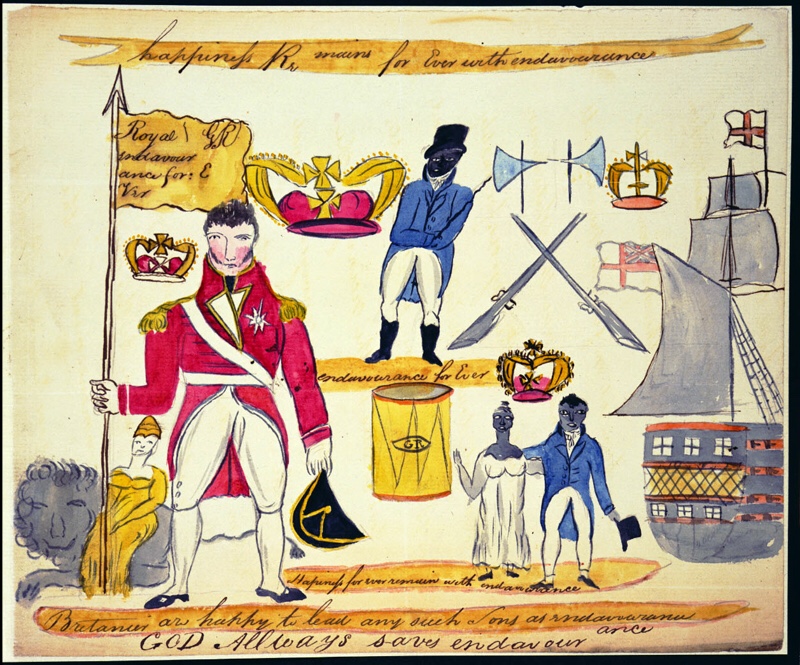
The issue of the “patriotic” songs is a separate one. Certainly to have them this gruesome year would be an affront and is unthinkable. For the future a review is called for. As a nation there are signs that the iniquities of Empire are at last beginning to be understood and that we never did create a “green and pleasant land”. That our lonely future can be celebrated as any sort of Jerusalem looks preposterous. You don’t remove Britain’s image as an inward-looking laughing stock by waving flags and pretending that Britannia Rules. But then perhaps delusion is all we’ll have left.

What we need is competence – you won’t get that from the man in the tent.

Johnson the loner will govern as he pleases” says Paul Goodman in The Times today. Mr Goodman and his friends at ConserativeHome have long supported Boris Johnson and wanted him as the Party’s leader. This has never been because Johnson has shared their Hard Right Eurosceptic libertarian philosophy, but because they saw him as a vote winner. His ambition was such that he would do what he was told and if it was Lord Ashcroft and his ConHome website that was doing the telling all the better.

The Prime Minister’s tent (allegedly)

There is no vestige of a political philosophy in Boris Johnson. The terms “Thatcherite” or “Blairite” did actually mean something. What is a “Johnsonite” – there is no such thing ? Like Groucho Marx he has principles, but if you don’t like them he has others.

Tim Montgomerie, a ConHome founder, has said:

“Many [Conservative] MPs are furious at the slump in the opinion polls; at the ways in which their multiple calls for Cummings to go were ignored; and at a succession of unforced policy errors. They no longer believe in the Prime Minister in the way they did.”

It’snot just the Conservative Party realising that Boris Johnson is not up to the job – his defenders in the media and elsewhere are few and Montgomerie is far from the only once supporter who has reneged.

Pragmatic leaders who campaign from the political edge but once in power segue to the centre have been common. Indeed most modern Prime Ministers are in this mould (Thatcher the exception). Johnson campaigned on a single issue – to Get Brexit Done. A weary electorate gave him what he wanted. He has been unlucky that his first year in office has given him a management challenge far beyond his competence to handle. But it was his choice to keep the manipulative and scheming unelected ideologue Dominic Cummings in his job – as Tim Montgomerie pointed out this has been a major cause of policy errors, and still is.

Johnson isn’t an ideologue – he has never had a coherent and consistent political philosophy. His vacillations and U-turns are not a surprise. If you spend some of your youth trashing restaurants your innate respect for common-sense and propriety is unlikely to be substantial.

In times of extreme stress good leaders act decisively and communicate persuasively. I don’t just mean Churchill (though of course he was the great model). The challenges of 2020 are not those of 1940 (though the death toll is greater) but more those of 2008 post Lehman Brothers. Then competence was needed and Gordon Brown exercised it. Brown eschewed faux-charisma and went for hard work and transnational cooperation which he led. It worked and it is his legacy that it did. Oh for that level of competence today – you won’t get it from the man in the tent.

It’s removing inequality of opportunity in the State education system that is the priority.

My parents, as they reminded me from time to time, made sacrifices to educate me privately in the 1950s and 1960s. As Max Hastings points out in The Times today this was just about affordable for them then but today, other things being equal, it would not be. Perhaps 5% of the population can enjoy the advantages of the schooling I had.

My old school has magnificent facilities, good teachers, co-education (an advance on my time) and outstanding examination results. Left Wing firebrand and campaigning atheist the late Christopher Hitchens and his brother Peter went there in my day. Curiously Christopher is quite complimentary about the school in his writings (even the then mandatory twice daily chapel services) whereas to mention it to Peter is a red rag to a bull.

The Leys School, Cambridge

If I had had children (which I didn’t ) and if I could have afforded to (unlikely) I would have sent my son or daughter (or both) to The Leys School. My politics have always been strongly anti Conservative so there’s plenty of hypocrisy in this admission. It would have been partly tradition (my father and uncle were both at the school) , partly pride and a rather boastful indulgence. I would have said, of course, that I just wanted to do the best for my child as my father had for me.

In education Britain is now three nations – a change from Disraeli’s two. There’s the 5% at the “top” who can afford independent schools. Then the rest of the middle classes who can afford the high house prices of living in postcodes with good state schools nearby. Then there is the proletariat who have to rely on bog standard comprehensives. Our education problem is not caused by the 5% at the top – elitist though this may be. (Actually the fact that these children place no burden on the state education budget could be seen as a benefit to the taxpayer).

The problem is that there is inconsistency of standards in the state system which reinforces class and regional inequalities. The High School Academy just down the road from me in the London Borough of Richmond has good facilities and good exam results. We live in the heart of middle class privilege which sets an educational standard that far exceeds that of less privileged parts of the country.

Tony Blair was right to prioritise “Education, Education, Education” but neither he nor his successors have cracked the system. There is no equality of opportunity. Most parents pay for educational advantage for their children in a different way from my parents in the Molesworth era. The independent sector is an indulgence for very, very few. The real challenge lies elsewhere.

It’s not moderation we need to solve Britain’s mess it’s radicalism

Danny Finkelstein in The Times today peddles the view that moderation is some sort of third way alternative to Left or Right. If that’s all it is only the indecisive will vote for it. A negative choice. An easy choice. A compromise. If we reject the Spartite absurdities of Corbyn or the one issue narrowness of Johnson (pragmatic but grubby) surely we want an upbeat alternative not some “On the one hand and on the other hand” fudge.

I was in the 1980s in the same political party as Danny – the SDP. I suspect that he joined, as I did, not because of its centrism but because of its radicalism. The Gang of Four weren’t cuddly liberals at all (though they did a deal with them for pragmatic electoral reasons). They wanted to create a new politics.

The SDP were radicals not moderates !

And that’s what we need today. Not moderation per se but a radical repositioning of the political options that the voters will buy. My short manifesto would be:

▪️Electoral reform. A fair voting system. Smaller House of Commons

▪️Abolition of the House of Lords and an elected Senate to replace it.

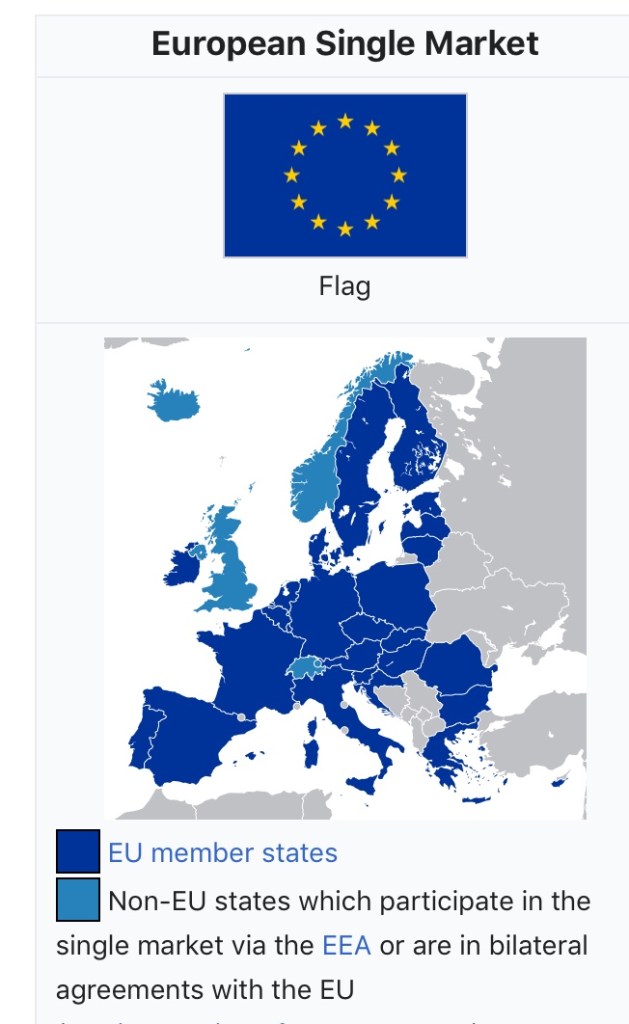
▪️Proactive partnerships with other countries, especially in Europe with EU27/EFTA

▪️Defence fully integrated with allies

▪️Far greater devolution of decision-making to the regions.

▪️Unequivocal support for a mixed economy.

▪️Extensive public/private partnerships for all public services.

▪️Abolition of private sector monopolies especially in public services.

▪️Full Integration of Channel Islands, Isle of Man etc. into Britain.

▪️Disposal of all overseas possessions – no more tax havens.

▪️Expansion of direct taxation on an ability to pay basis (inc. Wealth Tax)

▪️Reductions in indirect taxation.

Now don’t commend me if you agree with me because of my moderation but because I am a Radical. Some of these ideas libertarians might like, some moderate members of the Labour Party. Fine. But there is no ideology here just, I pride myself (!) common-sense.

British politics is a shambolic mess and we won’t get out of it with fudge. Let’s start again.

The real “Baby Boomers” were born in the immediate post war years. My mum told me why.

My mother was clear about what a “baby-boomer” was , why the boom happened and that I was part of it. I was born in 1946 at the beginning of a short period of a high birthdate with, according to Mum, a very specific cause. My Dad had returned from the war after being liberated from Japanese imprisonment on VJ Day. When he got back in September 1945 Mum was pleased to see him. I was born a little over a year later.

In the Labour ward where my mother gave birth there were eighteen other births the same week – it was a very busy time. Of the eighteen babies seventeen were boys. My Mum explained – “God” she said (she was a bit religious) “is replacing all the men lost in the war with boy babies. It happened in 1919 as well”. That was the real Baby Boom – it lasted at the most until 1950 and it’s obvious why it happened even if you find my Mum’s gender bias explanation a tad fanciful.

The birthrate in the 1950s and 1960s may have been healthy but it wasn’t the real “Baby Boom” of happy memory. There was a good reason for the spike in births in the late 1940s and those of us who were part of it find it rather moving. The recent horrendous war was over – no better way to celebrate the peace than to have a family. The later breeding patterns in the 1950s and thereafter may have been healthy but the real “Baby Boom” of happy memory was earlier.

Do as you’re told, in the court of King Boris

Writing in “The Times” yesterday Max Hastings deplored the low quality Of Boris Johnson’s Cabinet. He suggested that Rishi Sunal and Michael Gove were the only members who deserved their places.

Well in the land of the blind the one-eyed man is King. The truth is that there is no way Rishi Sunak would be Chancellor of the Exchequer if times were normal. His potential would no doubt secure him a Junior ministerial job in the Treasury with a “Let’s see how you get on “ brief. A few years down the road he might get promotion to Minister of State. Perhaps. As for Michael Gove this superficially genial (in private) man is a walking cocktail of pride and prejudice. He can fake competence but he’s a nasty bit of work. And these two (I agree) are the best of a gruesomely bad bunch.

British life as Mr Hastings and I know it (we are the same age) has been destroyed by Brexit. The alliances of the past were complex and sure there were disagreements. Blair and Brown was pretty toxic but despite this they were competent – as were many others in their cabinets. It was sad that they fell out having worked so well together in the run up to 1997. Ten years earlier the Blessed Margaret did not demand, and would not have received, blind loyalty. She was in charge and preferred to be with those who were “one of us”. But her cabinet was not stuffed with Yes Men. And other elements in society, like the Civil Service or the Justice system, were not expected to kowtow to her.

Worship not dissent is demanded in the court of King Boris.

The Brexit divide is antithetical to normal British politics. Those opposed to Brexit in the Conservative Party have fallen from a strong majority to barely a lunatic fringe. We are in the times of Henry VIII here. To be in the monarch’s favour and receive his patronage you had to sign a document pledging your allegiance to him. Otherwise you would lose your job or your head. So it is with King Boris – to be in his court you have to be a Brexiteer, or convincingly pretend you are. There is only one true faith and you better declare your belief in it. Whoever you are.

In a political environment so singular and intolerant of dissent those who rise to the top will not be those who challenge orthodoxies. When Theresa May fell those in her cabinet who wavered fell as well, never to return. Some outstanding dissenters on the back benches Like Dominic Grieve and Anna Soubry were, one way or another, kicked out of active politics. Ken Clarke, no doubt in respect for his age and previous service, made it to the Lords rather than the Tower. How he’ll feel in the company of Claire Fox and Kate Hoey and Ian Botham one wonders.

So to be in Boris Johnson’s Cabinet you have to submit to the authority of he who must be obeyed (aka Dominic Cummings) and kiss the feet of the monarch. And that requirement won’t promote the best talent. You won’t get cream at the top of the bottle – just sourness everywhere.

VJ Day – my personal pause for thought

So it’s 75 years after VJ Day and a few days after the anniversaries of the Atomic Bombs being dropped on Hiroshima and Nagasaki. In the early 1960s I became aware, in my early teens, of the fact that atomic weapons had been used to end the Japanese war. And also that, fifteen years, on countries, including Britain, had stockpiles of weapons far deadlier than those used against Japan. I joined the “Campaign for Nuclear Disarmament” (CND) and proudly wore their badge. I still support CND – how could anyone not?

My CND badge

One day in 1960 I returned from boarding school at the end of term wearing my CND badge on my blazer. My father went purple. “Don’t you know that without those Atomic bombs I wouldn’t be here,and nor would you” he said rather dramatically. When he explained I saw that he was almost certainly right.

From the capture of Singapore in February 1942 to his release in August 1945 my father was a Far East Prisoner of War on the Thai/Burma railway. He and other officers had built a radio receiver (Dad kept the earphone in a shoe) and via this they kept in touch with the war. They knew that the war in Europe was over and that Hitler was dead. They also knew that the Americans were making progress, at high cost, in defeating the Japanese.

To beat the Japanese a task force for invasion at least as large as D Day would be necessary. The Japanese defence of their islands was strong and their culture denied the possibility of surrender. A long hard battle was ahead, or so it seemed. The worry for the POWs was that they would be seen as an inconvenience. A few men were needed to repair the Railway which was under constant Allied attack. But Dad and his fellow prisoners were more burden than asset. Their concern that the Japanese would at some point dispose of them was a legitimate one.

For the Americans the prospect of a long drawn out conventional war, including invasion, was unappealing. Tens of thousands would be lost on both sides as had happened after D Day in Europe. The Japanese Government and Armed Forces were at least as fanatical as the Nazis had been. A game changer was needed.

For over five years scientists had been working on the “Manhattan Project” in the US the goal of which was to produce an Atomic Bomb. The first test was successful in July and the decision was taken to use the weapons against Japanese cities, first Hiroshima and then Nagasaki. The rationale was to end the war quickly and to avoid the military and civilian casualties that a conventional war would have involved. Incidentally it was hoped that a very swift end to the war would see the immediate release of allied prisoners and slave labourers from the camps.

A digression. A couple of years ago I visited a German friend in Hamburg and he took me to the top of the St Nicholas Church from which there is a fine view of the modern city. Historic Hamburg had been destroyed by allied bombing in 1943. Over fifty thousand civilians had been killed. In 1945 bombing of a similar intensity had killed 25,000 in Dresden.

Hiroshima and Nagasaki ended the Japanese War. My father and tens of thousands other FEPOWs were liberated shortly afterwards. It’s difficult to calculate how many deaths the atomic bombs caused – perhaps twice as many as Hamburg and Dresden combined. But this is not about the head counts – Allied lives saved by not having to fight a land war to defeat Japan. Or saved because, like my father, they were liberated from imprisonment rather than being butchered as they might well have been.

Liberation of FEPOWs from Changi jail Singapore August 1945

When as a child I began to realise the chilling truth that I almost certainly only existed at all because a hundred thousand or more Japanese had been killed by two atomic bombs it reinforced by opposition to nuclear weapons and confirmed my support for CND. I’m conscious of the huge paradox here !

Some years ago now I visited Hiroshima – it is a respectful record of man’s inhumanity to man. But then so is Coventry cathedral and so are the war graves along the Thai/Burma Railway. I have visited Japan quite frequently and made a few good Japanese friends. Some knew of my father’s suffering and I knew of the suffering of innocent people in Hiroshima. We didn’t need to talk about it.

Hiroshima’s peace park

For me VJ Day is more a commemoration than a celebration. Amen.

Shell blundering into something for which they have no collective corporate memory

“The Times” 15 August 2020

The key aspect of this project, acknowledged here, is that Shell is in partnership with a company called Eneco. Eneco is renewable energy company – they bring the expertise and experience. So what does Shell bring? Very little other than a capacity to raise capital in substantial quantities.

Shell has no collective memory in renewables – other than a series of past failures. There is no renewable energy history of success anywhere in the corporation – from Forestry to Solar to Wind Shell has dipped toes in the water and fairly swiftly withdrawn them.

Years ago in “In Search of Excellence” Tom Peters advised companies to “Stick to the Knitting” and this Shell has done with considerable success. You don’t become the world’s leading Oil and Gas corporation by taking your eye of the hydrocarbon ball. From Nuclear to Coal to Agrichemicals to Power Generation (and many others) Shell’s step out activities have eventually been abandoned. When playing around with Forestry Shell ran a TV Commercial which claimed that Forestry might “one day be our biggest business” – they sold it the following year.

The collective memory of hydrocarbons in Shell is considerable. That memory is technical and commercial. Oil and Gas is what they do because they always have. Frankly, as Tom Peters knew, it’s very different to teach monkeys to do new tricks. Shell is very big but not because it has diversified by acquisition – that never seems to work. Decades ago Shell went into Metals by acquiring Billiton. The logic was that looking for and extracting minerals was the same knitting as oil and gas. It wasn’t and the corporation struggled to make it work. Billiton went the way of other diversifications and was sold.

The future for oil and gas is not as gloomy as some predict. There are many “oil specific” uses of oil that will remain so for the foreseeable future. These include much of transportation including aviation, marine and a lot of road. The technology breakthrough that makes electric vehicles as convenient and cost competitive as petrol driven ones has still to happen. Across Northern Europe, Canada, the United States and elsewhere homes will continue to be heated by gas boilers. The hydrocarbon game is far from up.

The Oil majors are not popular but they do not create demand for the products they make, they supply it. This is nothing to be ashamed of. Grabbing the headlines briefly when you set up a Forestry or a Solar or a Wind business might make Shell’s high-priced help feel better when they face the strident environmentalists who chastise them. But the reality is that oil and gas is what they do and always will – so long as society needs energy from these sources. And that will be for quite a while yet!

“The Murdoch Dynasty” – the Divine Right of Rupert

“The Murdoch Dynasty” was pretty good and informative – and shocking. Power corrupts and near absolute power corrupts absolutely. Murdoch is a winner and that pursuit of victory is ruthless and never fails. He was not destroyed by the Millie Dowler story (as he should have been) but strengthened. Nobody else could have done that.

Many have taken the Murdoch shilling and still do. Power and wealth go hand in hand – power gives money and money gives power. Tony Blair and countless others have known that. Tony was blinded by the power and Cherie by what wealth brings. They weren’t the only ones.

In the West we delude ourselves that we live in democracies and that we have checks and balances to curb the excesses of power. Murdoch shows how delusional and dangerous that is. Rupert Murdoch resembles Louis XIV – an earlier “Sun King”. We may have abandoned the “Divine Right of Kings” – but not the divine right of Rupert.