Complacency, despite our leaders’ incompetence, is our biggest threat

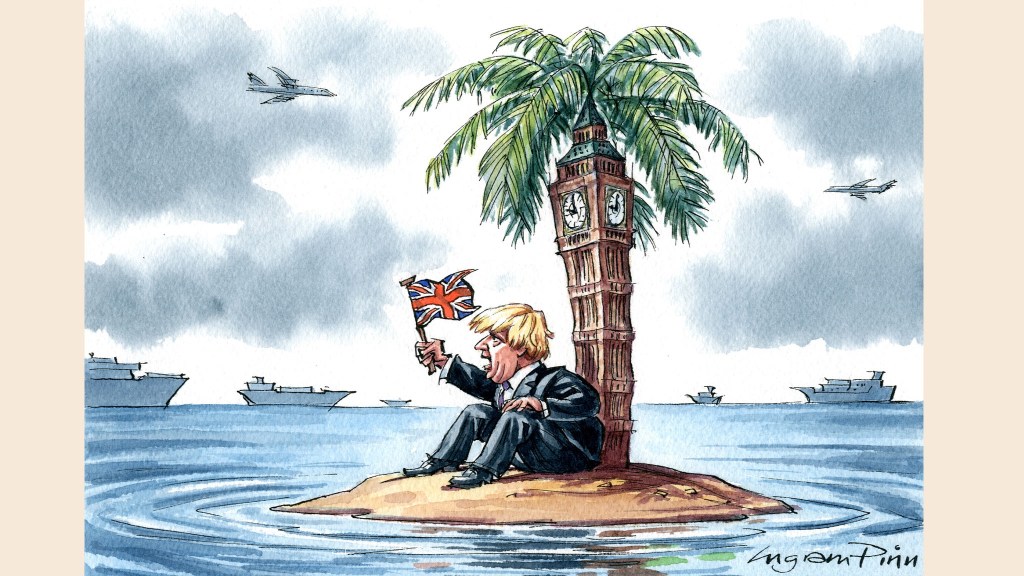
The problem is not that we have an unpopular Prime Minister and a struggling Government. That’s happened before and we’ve survived. No, today’s crisis comes from the fact that we have an administration of woeful incompetence which they compound with mendacity. They are useless, and they lie about it.

In 1940 it was Labour who pushed for change at the top. Their MPs, in supporting the replacement of Chamberlain by Churchill, weren’t playing Party politics but acting in the national interest. “Speak for England Arthur “ called out a Tory MP when Labour MP Arthur Greenwood called for Chamberlain to go. Somebody needs to speak for England today.

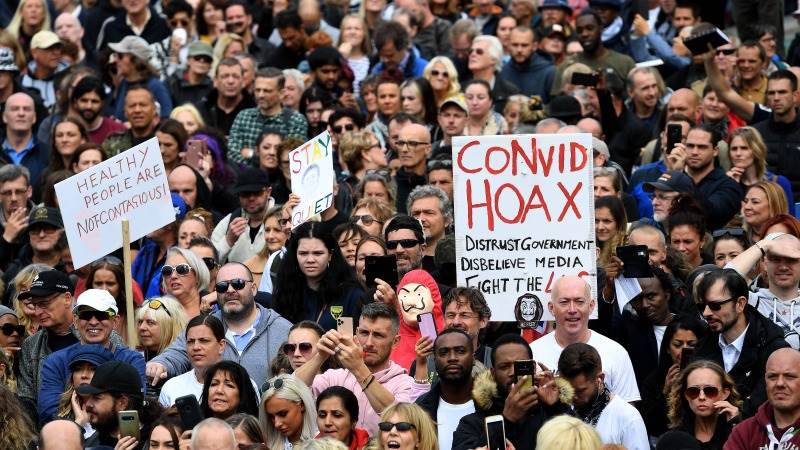
Democracy relies upon checks and balances to work. It may be the Virus that keeps people from the streets to protest against our malignant Government but I fear that it is more likely to be complacency. Public opinion, if we believe the polls, has turned against Johnson and his Junta but there’s no civil unrest. What protests there are come from those who shout libertarian messages ( as they would no doubt see them) – the anti maskers and anti lockdown mob. But the real people of England haven’t spoken yet.

It may be that the impotence of the masses comes from us not being able to articulate a solution because there isn’t an obvious one to hand. Yes we are sick of being governed by idiots but there isn’t an election for four years. Yes a substantial majority of our people now see Brexit for the disaster it is, but its happened and we will shortly all be making the worst of it. Johnson should go, of course. But have you seen those in the frame to replace him when he does?

2020 has been the year of the unprecedented. Around the world governments have varied in the nature of the response to the virus and in their success in containing it. New Zealand recently overwhelmingly re-elected their Prime Minister and her Labour government not because it had as a nation swung to the Left. They recognised competence and rewarded it. Donald Trump’s rejection was probably swung by voters who saw his woeful incompetence and rejected it.

There may come a point when we say enough is enough – “No Deal” might trigger that. But a nation that can be persuaded to vote Conservative because of a populist Prime Minister driving a bulldozer through a wall doesn’t bode well for the chances of a mass uprising. It’s said that countries get the Government they deserve. Perhaps we do.

If you want to toast an economic system then raise a glass to the mixed economy

“Join me in a toast to capitalism — still our only hope for progress” says Matthew Syed in the Sunday Times today in an article that will no doubt gladden Rupert Murdoch’s heart, if he has one.

I suppose in a world, and especially a country, where everything has to be binary economic and political system choices have to be binary as well. Capitalism good, Socialism bad if you like. The only workable reality is different. We have a mixed economy because There Is No Alternative – the modern TINA is participation between the private sector and the State.

Every nominally capitalistic enterprise lauded for its achievements by Mr Syed could not operate without services provided by the State. From healthcare for its employees to transport infrastructure. From the police and the emergency services to welfare and transnational relations on trade Government, and the public sector, are essential.

Whilst the private sector relies on the public sector the reverse is also true. The National Health Service, whilst publicly owned, has a raft of private sector suppliers – not least for the crucial dispensing of medication. Our healthcare system depends on a significant amount of contracting out. So does virtually every other public service.

The real threat to common-sense in our economy and our society comes from ideology. The Orwellian Good/Bad depiction – the simplistic and naive description of the heroics of capitalism here for example. The recent capture of the Labour Party by old-fashioned Clause IV Socialists was a victory for ideology and dogma over pragmatism. But those on their soap boxes crying out for Socialism are matched by those screaming for unbridled Capitalism. They are both demonstrably wrong.

Modern economies, the creators of wealth and progress, have been driven by free enterprise and private sector entrepreneurs. But decades of unbridled capitalism led to abuses to such an extent that Governments had to step in. Regulation of the manufacturing sector, for example, came from government not out of the kindness of the hearts of Victorian businessmen. The growth of the Trades Union movement came similarly as a response to exploitation.

The modern day debate should be ideology free and pragmatic. Fine tuning of our economy, including who does what and who owns what, should be based on public interest alone. Margaret Thatcher’s administrations and those of her Tory successor John Major gave us the core of the public/private mix we still have today. None of the services privatised in the 1980s and 1990s were renationalised by Blair or Brown. There is certainly a case for greater public accountability in some of them and possibly a return to public ownership, but not for ideological reasons.

The real modern triumph is not “capitalism” as such but the mixed economy. This is a continuous task and demands continuous review. But it’s fine tuning not Revolution that makes sense. We don’t need a neo-Thatcherite privatising revolution any more than we need the dead hand of Corbynite socialism.

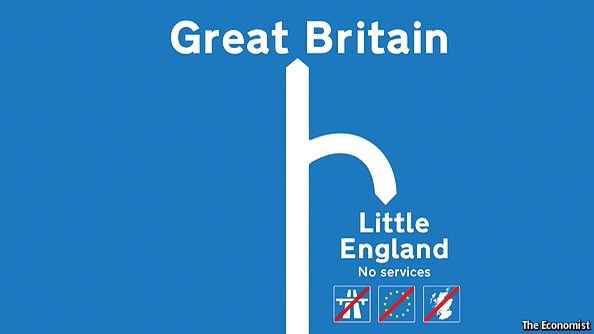
Welcome to Little England, sovereign but the world passes us by.

“Britain and the EU could begin a new, and perhaps happier, relationship as sovereign allies.” James Forsyth in “The Times” today

Britain and the EU are in no way “sovereign allies” – this is a fundamental misreading of what the European Union is. The Union is an alliance of 27 sovereign states – it is in no way “sovereign” itself. It has no role other than to implement the decisions and the will of its members.

Sovereign – but the world passes by

Britain has not been negotiating with a sovereign entity but with civil servants of the EU Commission. The power lies not in the Brussels bureaucracy but in the governments of member states. These governments would all have to ratify any deal.

Throughout the Brexit process – before, during and since the Referendum – Europhobes have blathered on about “Sovereignty”. Sometimes as code to cover their xenophobia, sometimes as simplistic faux-patriotism – often as flag-waving populist nationalism. The truth, of course, is that at no point did Britain’s membership of the EU impinge materially on its sovereignty.

To believe that Britain once surrendered a significant part of its self-governing freedoms by being an EU member is preposterous exceptionalism. It requires the arrogant premise that 27 different and proud indendent nations – the French, the Germans, the Italians and the rest – are somehow less concerned about their sovereignty than Britain .

The modern world is interdependent to an extraordinary degree. No nation is an island entire in itself any more. This reality has to be governed by rules and codified in formal agreements. This incidentally makes us more secure – allies whether political, economic or cultural tend not to go to war with one another. Jaw Jaw is always preferable to War War.

Terminology so loosely used by Mr Forsyth is inflammatory but then the whole sovereignty argument was and is incendiary. Many who use the word “Sovereignty” know that it can be a classic bit of binary jargon despite the fact that the concept is so obviously a nuanced one. Societies at every level accept some restraint on their freedom to act. At a national level every treaty, every alliance, every deal leads to lost or pooled sovereignty to some degree.

For Britain to be the only country in Europe not in or not closely linked with the world’s largest bloc beggars belief. Even the Swiss, traditionally fiercely neutral, have strong formal ties with the EU. If they can give up a tiny fraction of their historic sovereignty why on earth can Britain not do the same? Welcome to Little England, sovereign but the world passes us by.

A collective madness created by flawed thinking and preposterous flag-waving faux-patriotism has diminished Britain’s international standing and made us a laughingstock.

It was, is and for the foreseeable future will be a cataclysmic error to leave the European Union. Those of us who fought tooth and nail against this insanity all lament the fact that we were beaten but even more about the random bunch of misfits, xenophobes, dimwits and worse who did the beating.

On reflection I don’t care that much about the fatal damage to Britain’s international reputation – that was pretty low anyway. But I do care that our young people will grow up in a world in which their country will have been made insignificant. “What’s the British view?” nobody will ask, or care.

Many political decisions have unexpected consequences often not spotted at the time. David Cameron’s to call a Referendum in response to the threat to his position from the Tory Right and from UKIP was both inept and arrogant. To be brought down by a man who as a teenager at his posh school had strode around giving nazi salutes and praising Hitler was humiliating for Cameron and the beginning of the slip to ignominy for the nation.

I’m well into my eighth decade and have to accept the likelihood that for the rest of my lifetime I will be a citizen of a state disconnected from the sane world. A good tip when observing our present government is to assume that the truth is the opposite of what they say. So when they use the term “Global Britain” obviously the reverse is true.

Little England is actually a new concept. Even before the various Unions England certainly fought above its weight. Indeed from Norman times we were a “player” in Europe and later we forged new paths as a United Kingdom. In times when colonisation and imperialism were seen as noble ventures we were rather good at it. We did rule the waves. It couldn’t last and eventually didn’t – but we were never “Little” then were we? But now we are.

A collective madness created by flawed thinking and preposterous flag-waving faux-patriotism has diminished our international standing and made us a laughingstock. I can’t see the way forward from this new dark age for my country. To be a distant colony of the United States is one possibility though whether this reverse takeover is possible seems unlikely. To somehow become an associate member of the EU would be more logical but the path to that isn’t clear either.

I remember the cricket commentator Brian Johnston once telling me that late in his life someone met him and asked him “Aren’t you someone who was?”. Once the Scots and Irish and Welsh have sorted themselves out as reborn European states the best Little England can hope for is to be a “nation who was”.

“Boris Johnson in retreat as Tory revolt over Covid lockdown tiers rocks No 10”

Read last Sunday’s Sunday Times. It reveals a Government that is absolutely shambolic. The Venn diagrams of the libertarian freaks who gave us Brexit and those who oppose common-sense lockdown measures are almost identical. The same specious cries about “freedom”. The same rejection of expert advice. The same dunderhead certainty they are right. The same egotistical leaders spouting nonsense.

Britain has been ungovernable for sometime as our vacillating Prime Minister spouts nationalistic claptrap and wants to slap the Union Flag on everything. Meanwhile the Union that flag celebrates slides inevitably towards extinction. It needs a modern day Gibbon to record all these disasters.

The mighty have fallen into insignificance governed by people who only tell the truth occasionally, and then by mistake. The default position is to lie and we the people know it – so we do our own thing. The sensible amongst us are in quarantine – the dimwitted march maskless through central London showing open contempt for the law.

Leadership is ephemeral but you know it when you see it. It’s not characterised by bombast and ego but by demonstrating grip and garnering support for doing the right thing. After its four year slumber leadership is emerging again in America. Britain needs to do the same.

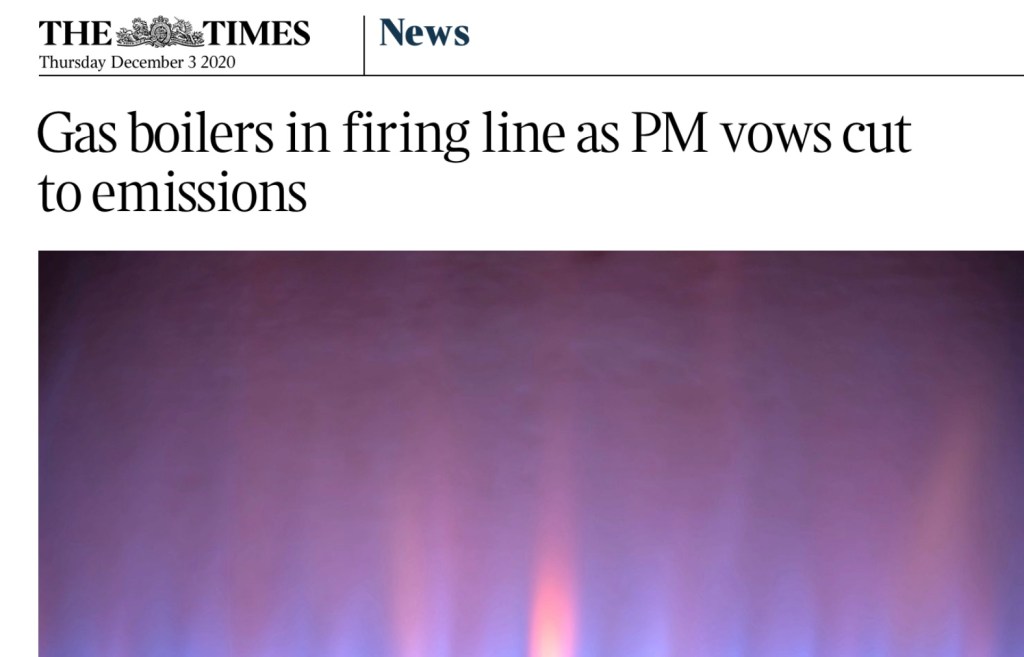
Johnson’s latest ban the boiler wheeze is so much hot air

Boris Johnson’s latest Green wheeze is high in visibility (as ever) but low in practicability. Across Europe, in most of North America and throughout the rest of the world where domestic space heating is a necessity gas (in some cases oil) is the established fuel. Whilst for new build homes you can specify a “greener” alternative (at a cost) to retrofit existing homes with a replacement system is likely to be prohibitively expensive as well as very disruptive to the residents.

As well as residential premises tens of thousands of offices, schools, hospitals and commercial premises rely on gas boilers for their heating systems. The practicability of replacing these, as well as the cost, is doubtful.

The change from the principal domestic fuel being coal in a grate to a boiler and radiator (or hot air) system in the 1960s onwards came from technology advances, the easy availability of initially oil and then mainly gas and the huge increase in comfort that central heating gave. Mrs 1970 lived in a much warmer and more comfortable home than she had when she was a child.

Useful hot air

None of the alternatives to gas boilers mentioned here match them in their efficiency or value and none can be installed in existing premises without major cost and disruption. A far more logical alternative is to continue to make gas boilers more efficient. There is no reason why new boilers should not be very low emissions indeed – this is an ongoing process.

Changing the energy balance of a nation is a complex task. To switch from petrol cars to electric ones, or from gas boilers to heat pumps or hydrogen fuelled ones, is a very long term goal indeed. The most effective green policy for now is conservation – cars and boilers are far more efficient these days with far lower emissions per unit of useful output. This should continue.

A society that seeks magic and rapid solutions to real or perceived problems is likely to be disappointed. Whilst we are all prepared to pay for personal lifestyle improvements spending our own money in order to make the world a greener place is a minority sport. We are unlikely, except in a few cases, to volunteer to pay for electric cars or replacement heating systems out of the goodness of our hearts. A touch of reality is necessary.

A Britain on the sidelines can realistically have little or no influence over China

Tom Tugendhat has a piece in The Times today in which the headline says “Britain can counter China’s threat to international order.” Its utterly delusional I’m afraid.

Let’s start from Britain’s place in the world and specifically with regard to China and Hong Kong. Tough talk is not enough, you also need to wield a big stick. Morally and practically we have hardly no stick at all and waving the little one we have will be ineffective and risible.

It could have been different. As a leading member of the European Union and a significant contributor to the Union’s economic and political power and influence Britain would have been a player. Add in our special connection with Hong Kong and collectively you have a force even the Chinese would listen to. On our own we are an also ran.

The EU nations and the United States have mutually beneficial ties to China which it would damage both sides to loosen. Collectively the EU can along with the US be a force for good and change. Don’t hold you breath this will happen quickly , easily or significantly but there is a chance. Whilst this is underway Britain will be sitting ignored on the sidelines. Don’t kid yourself the Chinese think we matter.

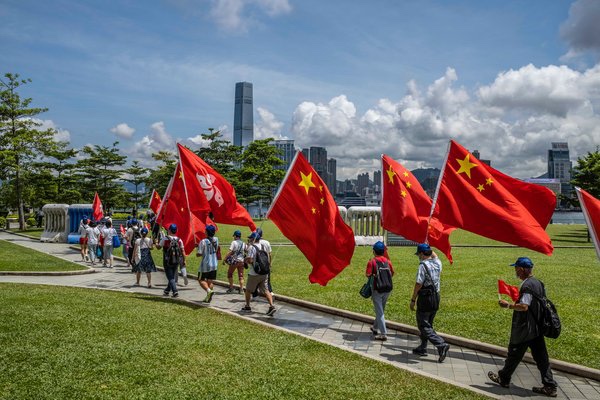
Hong Kong is a specifically British issue morally but we have zero chance of being a force for good. When we handed the then Colony’s people over to a hostile power stateless and with no protections that mattered we surrendered any moral authority we might have had. The offer of right of U.K. residence now and (maybe) nationality later is far too little and far too late. Hong Kongers will treat it with the contempt it deserves. Those that leave HK (some will) will go to Canada or Australia countries that have, in contrast to Britain, welcomed them and where there are large Chinese communities that can effortlessly absorb them.

We cannot know what Little England’s place in the world will be in the future but to sententiously suggest that on our own we are still up there with the big boys is preposterous. Our soon to be divided Kingdom has lost its Empire and surrendered the only alternative role with logic – as a major player in a uniting Europe. No doubt we will still bang a few desks and opine pompously. But nobody, least of all the Chinese, will listen

As America emerges from four years of a leadership void Britain needs to do the same

Another day, another U- turn, this Government is absolutely shambolic. The Venn diagrams of the libertarian freaks who gave us Brexit and those who oppose common-sense lockdown measures are almost identical. The same specious cries about “freedom”. The same rejection of expert advice. The same dunderhead certainty they are right. The same egotistical leaders spouting nonsense.

Anti lockdown protest in London yesterday

Britain has been ungovernable for sometime as our vacillating Prime Minister spouts nationalistic claptrap and wants to slap the Union Flag on everything. Meanwhile the Union that flag celebrates slides inevitably towards extinction. It needs a modern day Gibbon to record all these disasters.

The mighty have fallen into insignificance governed by people who only tell the truth occasionally, and then by mistake. The default position is to lie and we the people know it – so we do our own thing. The sensible amongst us are in quarantine – the dimwitted march maskless through central London showing open contempt for the law.

Leadership is ephemeral but you know it when you see it. It’s not characterised by bombast and ego but by demonstrating grip and garnering support for doing the right thing. After its four year slumber leadership is emerging again in America. Britain needs to do the same.

Will Rishi Sunak cope with “events” better than an ousted Johnson – don’t hold your breath

“Events, dear boy, events” said Harold Macmillan musing on the main things that influence politics. He was surely right. It’s a question of what in business is often referred to as the difference between strategy and tactics. Strategy is the long term – tactics happen to steer towards that long term goal but also, and crucially, to fight fires. The “events”.

There ought to be more to politics than fire-fighting and there is certainly at times, plenty of rhetoric about what sort of nation Britain should be. For the last year, the Boris Johnson premiership after his successful General Election, we know what he wants us not to be (European) but very little about what he actually wants us to be instead. “Independent” is the populist buzz word. Sadly, except at the most abstract level, this means nothing in a very interdependent world.

Rishi Sunak was an active campaigner for “Leave” before he held any office. Like many of his Asian heritage compatriots (Patel, Javid and the rest) this was curious and unexplained but opposition to immigration, wrapped unconvincingly in the veneer of “Sovereignty” , lay at the heart of it. Sunak confirmed this in a strong anti-immigration speech back in 2016. The immigration he was primarily opposed to, of course, was that from Europe not South Asia.

Rishi Sunak – bright but uncomfortable in the real world where most of us live ?

Sunak is certainly bright but his intelligence is narrowly applied. There are few if any signs of any real social intelligence – that elusive quality that augments smartness with compassion. When you take Sunak out of his comfort zone he looks uncomfortable. And good though he may be on matters Financial (you don’t make a personal fortune in Goldman Sachs without knowing how many beans make five) in other policy areas he is at best an unknown quantity.

Whatever Europe trade deal emerges shortly we know for sure that it will be less advantageous to Britain than the status quo. And that the majority of our trade with the rest of the world will be uncovered by any formal deals for a long time. It is in these unpromising circumstances that we will have to manage the worst national financial balance sheet and P&L in modern times. Compounded by the unprecedented hit our economy will take from Brexit.

The pandemic is an unprecedented “event” and even the wily Macmillan would have struggled to manage it. In such times we need friends. Gordon Brown’s success in managing the “event” of the global financial crisis during his premiership was based on international cooperation in which he took a leading role. Perhaps the last time Britain was global before the infection of Brexit changed us for ever.

In a normal world the politically inexperienced Rishi Sunak might be a junior minister making his way – not our least worst choice to be Prime Minister when Boris Johnson follows his henchmen out of Number 10. Cometh the hour cometh the man possibly, but don’t hold your breath. What is certain is that he will be preoccupied with “events” and with putting out the post-Johnson fires that will be raging. He’ll have no time for strategy and not just that – his tactical options will be severely limited by the calamitous limiting factor of Brexit. In language Sunak will understand be very bearish about Britain for a very long time.

The story of Princess Diana grabs the attention of even the most dyed-in-the-wool Republican

My photo which appears on the Diana entry in Wikipedia.

The photograph above is one that I took of the funeral procession for Diana Princess of Wales in 1997. Although I had moved to Dubai the previous year I was in London on business and a spot of leave at the time of the funeral. Ann was with me.

I am a firm Republican who would abolish the monarchy. I am the last person to wave a flag when a Royal goes by. I am also not a “Celeb” freak – I’ve never read let alone bought “Hello” magazine. So what was I doing in Hyde Park for Diana’s funeral and even laying flowers among the hundreds of thousands of other bunches?

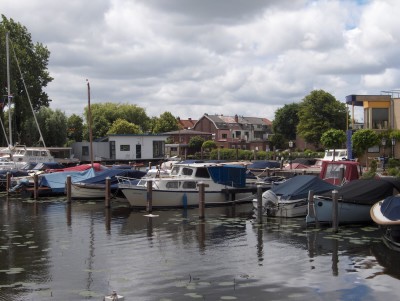
Yacht harbour, Waarde Eiland Leiden

I have just watched the “People” magazine documentary about Diana on Netflix – it’s a bit gushing but it pretty much gets the story right. Roll back seventeen years from 1997 to 1980 when on my first overseas assignment at the age of 33 I moved to The Netherlands. The house we were lucky enough to rent backed onto the Rhine Schiekanaal in the lovely town of Leiden. Our Dutch neighbour told us that the best way to see our part of Holland was from the water – the rivers, canals and lakes. We should get a boat, ideally a small motor cruiser. We did! But what should we call her ? Well a few months earlier in 1981 Lady Diana Spencer had got engaged to the Prince of Wales. So we called our boat “Lady Di”. This was all a bit weird but that summer, before and after Lady Di’s wedding at the end of July, we cruised along the waterways flying the Red Ensign and with the boat’s name prominently visible. “Lady Di” people shouted when we went by, and waved.

Over our years in The Netherlands, Scotland, Hong Kong, London and Dubai we watched the Royal marriage story play out. We saw the two of them in Sydney for the Aussie bicentennial. Even for the anti-Royal like me it was fascinating – part soap opera, part comedy, part farce, part tragedy. The Netflix documentary covers it very well with interviews with many of the observers of or participants in the events of twenty or thirty years ago. It is in fact only in part a “Royal” story at all. Yes the key players are the Royal Family – especially Charles. But as you can also see in “The Crown” Diana was never really one of them.

Diana was a reluctant Royal, maybe not initially but it didn’t take long. She matured rapidly from the shy schoolgirl to the canny, charismatic Icon she became. I can think of no parallel in any sphere of life in my lifetime (maybe Jackie Kennedy, briefly). Fame, so sudden, blossomed rather than withered her and enhanced her infinite variety. She took to it in a quite different way to (say) the conventional, dull and dutiful Kate who was to marry her elder son.

Diana was anything but dull and dutiful. As soon it started to be clear that the Charles/Diana marriage was an unmitigated disaster she was empowered to be herself not a Kate-like appendage. “Jackie O” had done the same when, similarly alone, she had needed to find herself. Applying a blame judgment when a marriage breaks down is rarely fair – there is always fault on both sides. But with Charles and Diana you have to blame the Prince not the Princess. He had an arrogant, anachronistic and rather misogynistic belief that he could do what he liked and his spouse would turn a blind eye. He did, Diana didn’t.

The story of Diana as well-told in the Netflix documentary is unique and uniquely fascinating. Watching it I had no sense of voyeurism. This is because Diana really did relate to people and people responded to this – even cynics like me. The universally loved People’s Princess (Aargh – but she was). There was no snobbery about Diana though she was, as the daughter of an Earl, hardly a commoner. But she had the common touch – a rare social intelligence almost entirely absent from her husband and her mother-in-law. The Queen initially staying aloof in Balmoral after Diana’s death goofed big time. Tony Blair rescued her – though this is unmentioned in the documentary for some reason.

Charisma is hard to define and genuine rather than confected charisma rather rare . In my lifetime Sinatra, Garland, Monroe, Mohammed Ali, Mandela, Obama. You’ve either got or you haven’t got style – they all had it. Diana had rather more.