There is some ill-informed PR puffery in The Times today about Shell’s “Zero emissions by 2050 “target” .
Shell, and BP for that matter, plays an essential part in the global economy’s demand for oil and gas. But let’s be crystal clear about this. Oil companies do not create demand, only supply it. If we want to reduce our dependence on hydrocarbons look to the oil companies’ customers not to the companies themselves.
As some sectors, like power generation, switch from (mainly) gas to renewables Shell may choose to try and compensate for lost sales revenues by creating renewables businesses of their own. There’s plenty of huff and puff about this. I’m sceptical. Shell has an abysmal record of failed diversification away from their core hydrocarbon business. There is little or no collective corporate memory about Wind or Solar Power in Shell and frankly little genuine expertise or interest.
Providing recharging points at Shell petrol stations, also mentioned in The Times article, does not make Shell a renewables supplier any more than providing a shop made them a grocery retailer. It’s simply a response to change and what customers will want. No big deal.
Shell has long pursued a policy of reducing energy consumption and pollution in its own activities like production, refining and distribution. But the fact that oil and gas consumption at the point of end use can be environmentally damaging is frankly not the corporation’s concern. Nor should it be.
Few of us seem bothered by the genocide being perpetrated by the Saudis in Yemen. British-made arms play their part in that horror. And we have kowtowed to the human rights abusing Saudi Arabia with impunity for decades.
Another Saudi attack in Yemen
It won’t be easy for President Biden to set an example given the power of the American armaments sector. 9/11, masterminded by a Saudi national and put into effect by others, was barely even a blip in long term US/Saudi relations.
Britain is a significant player in the arms industry but whether this will continue in the new world of our international isolation and diplomatic impotence remains to be seen. The British ambassador in Riyadh along with sycophantic and self-interested commercial interests have always been tools of the armaments producers never saying Boo to the horrific geese of the House of Saud.
Look to the money applies as ever. The Kingdom of Saudi Arabia notwithstanding the fall in the oil price is rich and British businesses continue to beat a path to its door. And so do the Americans. Biden will struggle to break some of these money making ties. Britain won’t even try.
Peter Oborne argues convincingly that Boris Johnson becoming Prime Minister (and the confirmation of this in a subsequent General Election) represents a existential break with Britain’s political past. A past that stretches back nearly two hundred years to the mid Victorian era when the “Victorians brought high ideals into government”. These ideals included “accountability and integrity” – above all “lying to Parliament, was one of the most serious crimes any British politician could commit”. “Standards of truth telling” argues Oborne, “collapsed at the moment…Johnson entered 10 Downing Street”
The premise of the book is that in the same way that Donald Trump’s intellectually barren populist crusade exploded established convention in 2016 so Johnson’s equally mendacious accession to power three years later was a moral and political disaster. The judgment criteria we apply when looking at our leaders (competence, honesty, selfless public service, moral principle) disappeared in clouds of bluff, bluster and dishonest discourse.
Starting with his self interested backing of “Leave” in 2016 and continuing to the present day Johnson commits “Deliberate and Systematic Deceit” . Oborne lists dozens of examples of the mendacity including, and especially, the “spreading [of] lies on social media”. Here the dark arts of the likes of Dominic Cummings were employed to “good” effect – “Johnson’s Conservatives deliberately set out to lie and to cheat their way to victory”.
Peter Oborne is an experienced and knowledgeable observer and recorder of British politics over more than twenty years. He has a solid context in which to place his judgments. He says he has never seen anything like Johnson’s Government and this reviewer, who actually goes back a decade longer in his recall, agrees!
Most recently it started with the “Leave” campaign in 2016 – Brexit was achieved by fraud and Johnson played his full part in the deception. This was the beginning of the slide down the slippery slope of dysfunctionality and corruption. Along the way conspirators in the Brexit coup have been rewarded by being in Government or in some bizarre cases by elevations of the faithful to the House of Lords. More recently we have seen government contract handouts to Boris’s buddies. Boris Johnson, says Oborne, “… never needed a noble justification for lying”. Nor for largesse it seems.
We were warned, oh how we were warned, but we didn’t care. Johnson was first sacked for lying (from “The Times”) at the age of 23. As Europe correspondent of The Daily Telegraph he was an early creator of “Fake News” and he clearly saw nothing wrong in public or personal deceit. Another lie about his private life led to his sacking as a shadow minister by Michael Howard in 2004. But you couldn’t keep a bad man down. He was a charismatic, if lazy, Mayor of London for eight years. Not much of a job, in truth but a nice platform for preening and display.
Where we are now, says Oborne, is that “Ministers can lie to Parliament but escape rebuke. They can bully and harass staff and get away with it. They can undermine civil servants and not pay the price. They can award contracts to cronies and nobody minds”
The Johnson premiership has sailed ahead on falsehoods and propaganda with various management and competence failures being covered up with a succession of untruths. But when COVID-19 hit this dysfunctionality became lethal. “Prime Minister Johnson failed for a long time to grasp the significance of the crisis” days Oborne. False claims on the progress of testing were to follow along with claims that Britain was handling the crisis well when the opposite was self-evidently the case. They lied or dissembled about everything including testing and care homes – Case and death statistics (which were dreadful) were massaged. Operational failure was compounded by communications deceit.
At the core of the Johnson year plus in office there has, says Oborne, been a “wider attack on the pillars of British democracy”. You can only have a liberal democracy if it is based on truth. Oborne references Orwell’s 1984. Johnson “…has been caught out rewriting the past in very much the same way as Orwell’s Ministry of Truth.”
In his inaugural address the new President Joe Biden said “…we must reject a culture in which facts themselves are manipulated and even manufactured.” And he went on
“… And each of us has a duty and responsibility, as citizens, as Americans, and especially as leaders…to defend the truth and to defeat the lies.”
This was a response, of course, to Donald Trump but it could equally be aimed at Boris Johnson’s post-truth rule. Johnson and Trump are shown together on the cover of Peter Oborne’s book – for good reason.
“It’s time to fight back” are the last words of Peter Oborne’s courageous and timely book. In 176 small format pages he frankly demolishes the credibility of Boris Johnson who is, perhaps, the ultimate example of the “Peter Principle”. But Johnson’s unsuitability for high office goes beyond his deficiencies of competence. This is, as with Trump, about character and honesty.
Johnson has failed throughout his public and personal lives to develop character traits that go beyond the superficiality of blustering self-confidence. Or to show that he has the remotest capability to distinguish fact from fiction and lies from the truth. “It’s time to fight back” indeed.
“…what happened when sections of the German elites and masses of ordinary people chose to abdicate their individual critical faculties in favour of a politics based on faith, hope, hatred and sentimental collective self regard for their own race and nation”. “The Third Reich” by Michael Burleigh
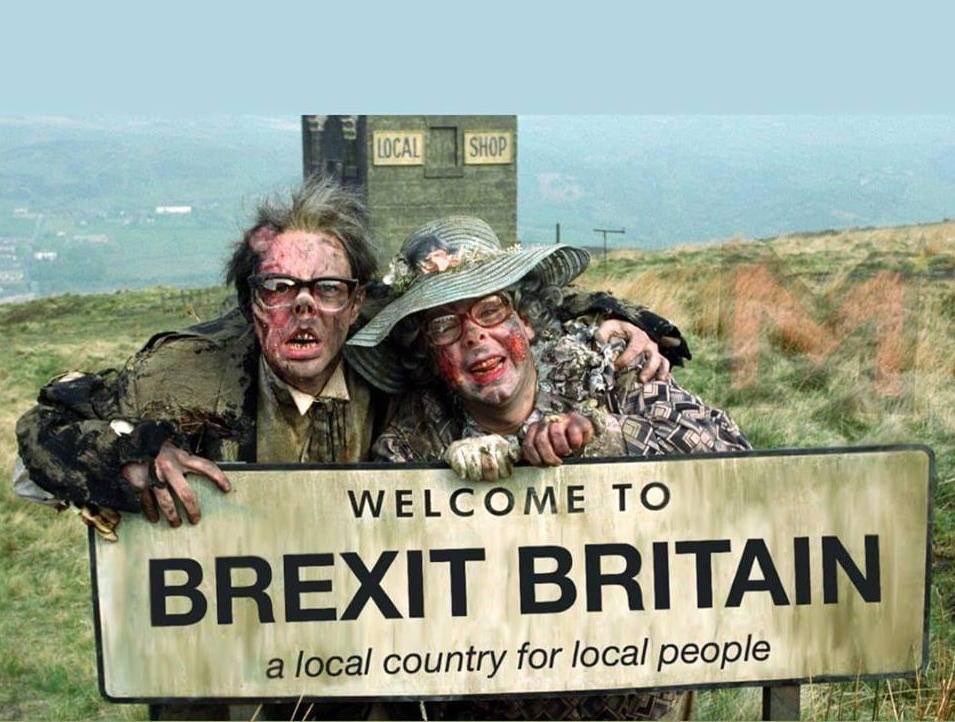
At the risk of being accused of falling victim to Godwin’s Law let me suggest that if you replace the word “German” with “British” in the above quote, which is actually the very first sentence in Burleigh’s book, you have an accurate description of the cause of Brexit. And Brexit was the primary cause of where we are today.
A lesson from history
Let’s look at the “elites” first. In politics senior politicians were mostly pro Remain but a significant body of the Conservative elite campaigned for “Leave”. Ex ministers like Michael Howard and Nigel Lawson. Ambitious active Tories like Michael Gove, Jacob Rees-Mogg, Priti Patel and Rishi Sunak. Long-standing Eurosceptics like John Redwood and Daniel Hannan and the rest.
In the media the ownership elites of major circulation newspapers almost all favoured “Leave” and their newspapers did their bidding. A study by Reuters has shown a very strong pro Leave bias in the press with only The Guardian , the Daily Mirror and the Financial Times being pro Remain.
In the business world again the vast majority of businessmen were pro Remain but those who differed – James Dyson, Tim “Wetherspoons” Martin and others got a disproportionate amount of media coverage.
In the world of celebrity , sport and The Arts the anti Remain statements by the likes of John Cleese, Ian Botham and Roger Daltry got more publicity than an open letter published in The Guardian and signed by more than 250 of Britain’s best-known actors, artists, musicians and writers which warned that if Britain were to leave the European Union it would become “an outsider shouting from the wings”.
The German parallel is relevant. Not all Britain’s opinion formers and elites supported Leave any more than all of Germany’s elite supported the Nazis. But enough did to make a difference. In the 1920s the Germans mainly voted in traditional ways and the moderate Weimar Republic which resulted was not a threat. In 1928 the Nazi Party received less than 3% of the vote and won only 12 seats in the Reichstag. It was only after the 1929 Wall Street crash that the “abdication of critical faculties” by “ordinary people” kicked off the slide to Hitler’s eventual accession to power in 1933.
Europe was a low interest subject until David Cameron started to feel pressured by the rise of Nigel Farage and UKIP . This happened at a time when he was in coalition with the LibDems – something despised by the overwhelmingly Eurosceptic Tory Right. There was a pressure cooker reaching the boil.
Dave’s solution to his troubles was twofold.. First buy off the Tory Right with an offer of a Referendum which he did in early 2013. Then destroy the LibDems – which the Wizard of Aus, Lynton Crosby, delivered for him in 2015. In between Europe shifted from being low interest to being a cause célèbre as Nigel Farage and UKIP topped the 2014 European Election poll with nearly 27%. This was seismic.
The 2014 Euro election did not show that there was a majority in the country for hard right conservatism nor withdrawal from Europe. But it did show that there was a large hard core to be tapped. The German parallel holds good. Hitler won over 100 seats and 18% of the vote in September 1930. This did not give him power, but it was the springboard for power just two years later.
The “Leave” Referendum win in 2016 was unquestionably a build by the forces of the Right on the Euroelections of 2014. Government policy and that of all the opposition Parties in Pariament was for “Remain”. But a nationalist call for “Freedom” and a blame culture aimed at the “Establishment” was seductive for many. And “Freedom”, that is “Freiheit” in German, had been used successfully by the Right before:
The Nazis had offered Freedom and to destroy the Establishment
The Nationalism of “Leave” was to be the precursor of the equally flag-waving nationalism that has characterised Boris Johnson’s post Brexit regime. This government pitches a cult of personality-driven national fervour against the traditional political positions of the Social democratic Left and liberal Left and is wiping the floor with them. Sound familiar ? Having flirted with matching extreme with extreme with Jeremy Corbyn Labour now has a social democrat leader in the Wilson/ Blair mould. But for now the Hard Right of Johnson is prevailing. Where will it take us. The risks are clear. We should have learned from the Germans. Is it too late?
The NHS is not a religion it is one of Europe’s largest employers and one of its biggest enterprises. As such it demands the highest standards of management, not least financial management. The welfare model is robust – healthcare funded out of general taxation with the sick not being penalised if they are poor. But as taxpayers it is reasonable for us to ask that the Service is run efficiently.
Efficiency is about standards and about meeting those standards at least cost. You cannot talk about the “NHS Budget” without simultaneously talking about what it delivers. For example, what is the target waiting time for operations where the patient’s condition is not life-threatening? How long should a patient have to wait in A&E before being seen. What are criteria for prescriptions if the medication is of very high cost?
There are judgment calls along the way. To facilitate decision-making openness is essential. Here subsidiarity – taking a decision at the lowest practicable level – is important. It seems logical that this be at the patient’s interface with their GP. Larger GP practices and/or grouping of GPs together so that they become much wider in the scope of what they do should be the norm. If each GP has a speciality that could ensure that a patient’s symptoms get early attention rather than delay from referral to a hospital or specialist.
Healthcare is often described in ideological terms. The Free Market versus socialised medical services. This will always be unhelpful. There is no better example of the mixed economy than the NHS. The State working had in hand with the private sector to deliver an efficient and integrated service. Obviously on the margin decisions need to be made about whether an activity should be contracted out rather than carried out by NHS employees. Again, standards and efficiency are paramount. Expressed perhaps over-simply one can say that the standards need to be agreed and then decisions made about the best way to meet those standards and the appropriate mix of public and private sector staff involved.
Costly though it is the NHS compares favourably with other countries. Of the G7 group of large, developed economies, UK healthcare spending per person (£2,989 in 2017) was the second lowest, with the highest spenders being France (£3,737), Germany (£4,432) and the United States (£7,736). Obviously, this does not necessarily compare like with like and the delivered standards may not be comparable. But it is a myth that the British system is profligate.
A debate on Healthcare is welcome not least because it is clear what we do now is sub-optimum. We may need to spend more; we certainly need to spend better. What we don’t need is to make the Health Service a battleground and ideology wars.
The Times has a good leader today under the above headline. But elsewhere there are strident calls for pupils to return to school and for restrictions to be relaxed. Do we learn nothing at all ? We are where we are because of a populist driven desire on the part of our Government to relax restrictions, and not impose others that were necessary, last year. The deadly “Boris Saves Christmas” nonsense killed thousands, for example.
The emphasis should not be on idle speculation on the timing of the relaxation of rules but on how we stop killing people at one of the highest rates in the world. With the vaccination programme a start has been made but new mutations and variants seem to occur every day. This pandemic is still running wild.
The more some politicians and media drivel on about COVID-19 threat to the economy and to our children’s schooling the more public opinion shifts away from the real issue. To get on top of the virus once and for all. Only when the risks are minimised should we consider relaxing lockdown.
Leadership should not be about doing what is popular but what is right. We are a long way from any sort of normality let alone a significant one. Courageous journalists and politicians won’t play to the crowds but tell it as it is. If we could find any.
Danny Finklestein has a fair and informed report on Britain’s Vaccination success in The Times today. But for me with one worrying exception.
I had my first Pfizer vaccine on Monday and all seems to be well. I was given a card with the date of the vaccination but a blank where the date of the second will eventually be filled in. When? No idea.
What is clear is that my second jab will be many weeks later than Pfizer recommend. And that Britain is the only country ignoring the manufacturers’ recommendations. Is there a chance that the whole effectiveness of the vaccination campaign will be damaged by the Government decision to delay?
I hope I’m wrong and I stand to be corrected but on the face of it the long gap between jabs seems to be a political not a medical decision. Ironically, as Libby Purves points out in the comments section of Finkelstein’s piece, Kate Bingham in charge of the vaccination programme has an appropriate background in bioscience and pharmaceuticals. Surely her contacts among the specialists will have told her what the manufacturers’s advice was. Did she choose to ignore it? Or is there something we don’t know ?
Rachel Sylvester in The Times today writes about mutinous Tories. If only, if only. The “One Nation” Tories of yore were purged prior to the 2019 General Election and any other MPs who exhibit one nation tendencies risk finding a horse’s head in their beds. Suggest that Brexit may be other than strategic genius and you’d be well advised keep well away from the boating lake.
Populist policies. Contempt for other nations. Faux-patriotism.
The only actions that put Johnson under pressure come from the libertarian Hard Right. He has responded positively to this mob frequently over COVID – for example at Christmas when the irresponsible and deadly relaxation of rules – “Boris Saves Christmas” – has clearly killed people who would otherwise still be with us.
The people who took us out of the EU, who want to emasculate the BBC who want to remove regulations are the antithesis of the Old Conservative Party. All of them indulge in Thatcher worship even though some of the nationalist and faux-patriotic claptrap they spout even the great she-Elephant would not have countenanced.
With the fall of Trump (Dea Gratia) Johnson is the most significant world politician flying the flag of the provocative Right pushed all the time by the ERG/CRG in his own party. He does, eventually, what they want. In Turkey and Poland there are others on this track and Ms Le Pen is threatening in France. Dangerous times ahead.
Johnson is no more a traditional Conservative leader than Trump was a traditional Republican one. In America virtually all of the Republican Party stood by Trump to the bitter end. Same here. Johnson is manifestly inadequate at anything but the “Ra Ra” self promotion bits of his job. “Make Britain Great Again”. Populism in Power. But he’s safe.
In his inaugural speech Joe Biden asked for the return of truth to politics. Trump’s lies had brought divided America close to failed nation status. Here the core of our Government’s inadequacy is their unbelievability. Combine this with their manifest incompetence and you have a country so far down the slope towards failure it looks irreversible.
Shell and BP are oil and gas multinationals supplying essential products to society. In Britain , as with much of the western world, we have an economy which at present requires substantial quantities of hydrocarbon products. Our domestic and commercial space heating needs are provided almost exclusively by gas boilers. Our aircraft, marine vessels and most road vehicles are powered by oil. Much of our electricity is generated by gas.
The switch to non hydrocarbon fuels in some sectors, notably in power generation, has been underway for some time. But it is a long term project. In some sectors like home heating, despite premature government declarations, the switch from gas will take decades. No credible plans exist to do this and we’ve barely started.
Cars and trucks will continue to run predominantly on petrol and diesel also for the foreseeable future. The technical breakthrough which makes battery driven cars as convenient and affordable as petrol ones has not yet happened. Aircraft and ships will continue to be primarily fuelled by oil products for the rest of this Centrury and beyond. There is no sign of a truly viable alternative.
In the above described circumstances it is obvious that the oil and gas multinationals will continue to serve our energy needs for a very long time. Providing they do this responsibly and within the law they are not pariahs but essential participants in our economic welfare, growth and development. For the Bank of England or any other partner to have involvement with Shell and BP is in no way to be condemned and it is preposterous to do so.
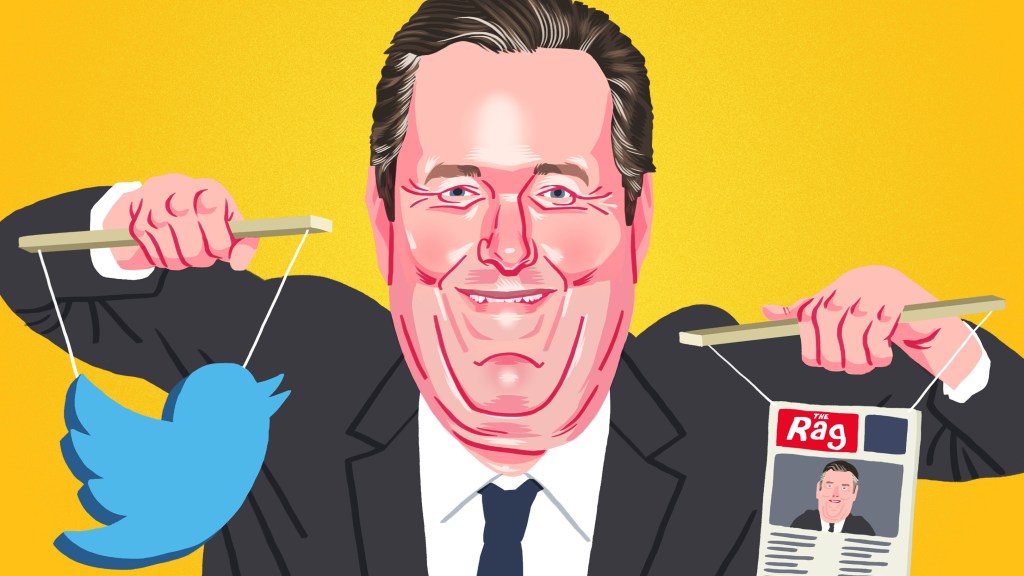
Piers Morgan, demolished nicely by Matthew Syed in The Sunday Times today, is famous for being famous and if that fame crosses the border into infamy he’ll take that, and does. But he isn’t alone. The phenomenon of the “ shock jock” is all around – Syed’s newspaper has a few. The “shock jock” was originally the American disc jockey who shocked us with their outrageous views. Hence the name. They’re everywhere now on tv, radio and in print. The anti lockdown brigade might spout dangerous nonsense – but they get plenty of platforms on which to do it.
The problem is that people watch Piers in large numbers – bums on seats. And they read Rod Liddle and dozens like him. This is populism on Speed, but it generates sales. The “Leave” campaign in 2016 was driven by shockjockery of an extreme type. But why are so many of the Brexiteers also spokespeople for anti lockdown ? This has puzzled me but I get it now. It’s not the issues, which are unconnected. It’s the potential for more advanced shockjockery.
Vanity plays it’s part and no more so than with Piers Morgan. In this he resembles Donald Trump with whom he had a love/hate relationship. It’s now hate by the way. No surprise there. Fame is the spur because that is what the shock jocks seek. It’s an ego trip. But often a well paid one.
If they had no platform they wouldn’t bother us these noisy provocateurs. But they do get their newspaper columns, their radio talk shows and their tv programmes. Some are skilled at what they do, and Morgan is one of these. He may be a bumptious opinionated egotist. But he gets his lucrative platform because people watch it.
In truth the shockjocks are just actors on the stage and they signify nothing. The problem is not really with them, but with us. We pay the pipers, and they play the tunes we ask for. Fortunately for those of us who want more cerebral fare there are plenty of commentators around who offer it.







 Paddy’s Blogs in a crazy world