Laughter is the best medicine

When in Cambridge in 1961 I saw a current British Prime Minister portrayed on stage for the first time in “Beyond the Fringe” I’m not sure that I was aware of the significance of the moment. Later I bought the early copies of “Private Eye” in the streets of the City. And before I left school Ned Sherrin and David Frost had launched the groundbreaking “That Was The Week That Was”. What was happening was Satire.

Beyond the Fringe

The world is absurd, and people lie and cheat. Politicians parody themselves daily and people have prejudices out of ignorance or venality. What satire did was to hold a mirror up to all this – sometimes the mirror enlarged and sometimes it distorted but it always reflected and allowed the viewer or the reader to judge.

Peter Cook, Dudley Moore, Jonathan Miller, Alan Bennett, David Frost, Barry Humphries, Richard Ingrams and many more launched a wave of mockery believing, as Readers Digest used to say, that “Laughter was the Best Medicine”. Britain wasn’t alone in using satire – in the US “Roman and Martin’s Laugh In” and humorists like Bob Newhart also broke new ground. But in satire we Brits did lead the way and fiercely intelligent performers and writers like John Cleese and Cook and Moore were social commentators as much as they were comedians. Later “Spitting Image” portrayed Margaret Thatcher and her cabinet of “vegetables” with cutting wit.

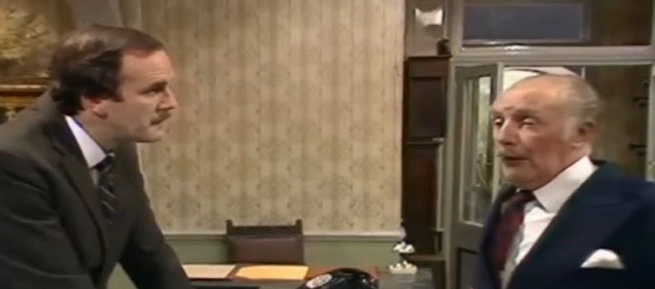
“Fawlty Towers” was in this long satirical tradition. Basil was a monster and, yes, the brilliant writing of Cleese and Connie Booth also enlarged and distorted his character. He was genuinely comic and horrific simultaneously. The characters around him from Sybil to Manuel and the Major were caricatures in the same way that he was. Polly was us, the sane, capable normal person trying to do her job in the Fawlty madhouse – Basil’s surname was carefully chosen !

1970s Britain (I was there) defied satire at times. Edward Heath was easy to parody – a strange and decent man struggling to make sense of a world collapsing around him. The economy was stuffed, the nation was divided and over powerful institutions like the Mining Union challenged “The Grocer” as Private Eye called him. Around Heath’s England were relics who grumped and mumbled about the modern world and in parts of the country it was these old fools who still held sway. The Major is a satirical creation but a perceptive one. When he utters the offensive remarks that he does in “The Germans” he was actually not intending to be insulting – and that is the point!

The Major’s racism (as we would now see it) was far from exceptional amongst people of a certain age and class in the times in which Fawlty Towers was set. Cleese and Booth knew this – the words they placed in the Major’s mouth were deliberately chosen to ridicule the underlying attitudes and ignorance of people like him. In the golf club in a leafy south London suburb of which my father was a member there were many Majors. It was nasty, but was it dangerous? I would say that the xenophobia and borderline racism of modern times – from UKIP to the bigots elsewhere on the Right – have been far more dangerous than the Majors of the 1970s ever were.

Once we stop laughing at ourselves we begin to lose our souls. Harold Macmillan came to see himself portrayed in “Beyond the Fringe” and Peter Cook departed from the script to give him a Glasgow Kiss welcome. He was not amused but alongside him the aristocratic Lady Dorothy laughed her head off. From the 1960s onwards we as a nation have been able to laugh at ourselves. This means that we can separate satirical comment (as in Fawlty Towers) from genuine offensiveness. When we listen to The Major we don’t think we are listening to a real person who wants us to believe his bigotry – he’s not Nigel Farage. The Major is a warning from the past that prejudice pollutes and that we should see it for what it is and call it out when we do.

How to acknowledge the past – the good the bad and the ugly

I have spent some time in the last couple of years in Germany and have seen what the Germans have done to record their past. The Historical Museum in Berlin displays the Nazi era in graphic detail. There are other museums in the City which focus on specific aspects of those terrible times. They are all realistic and informative.

Imperialism and colonisation were arguably the most significant global forces of the second millennium. And yet there are few if any places you can go to learn about them certainly in Britain. Slavery was a driver of Britain’s Imperialism but there is no museum you can visit to learn about this.

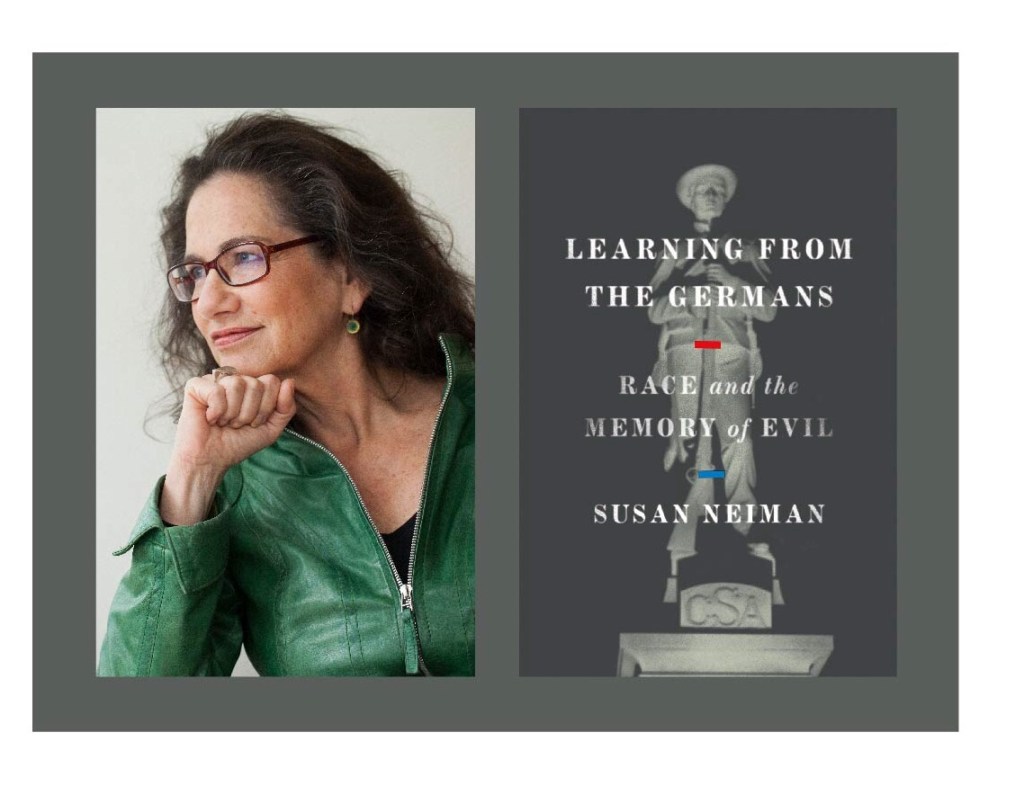
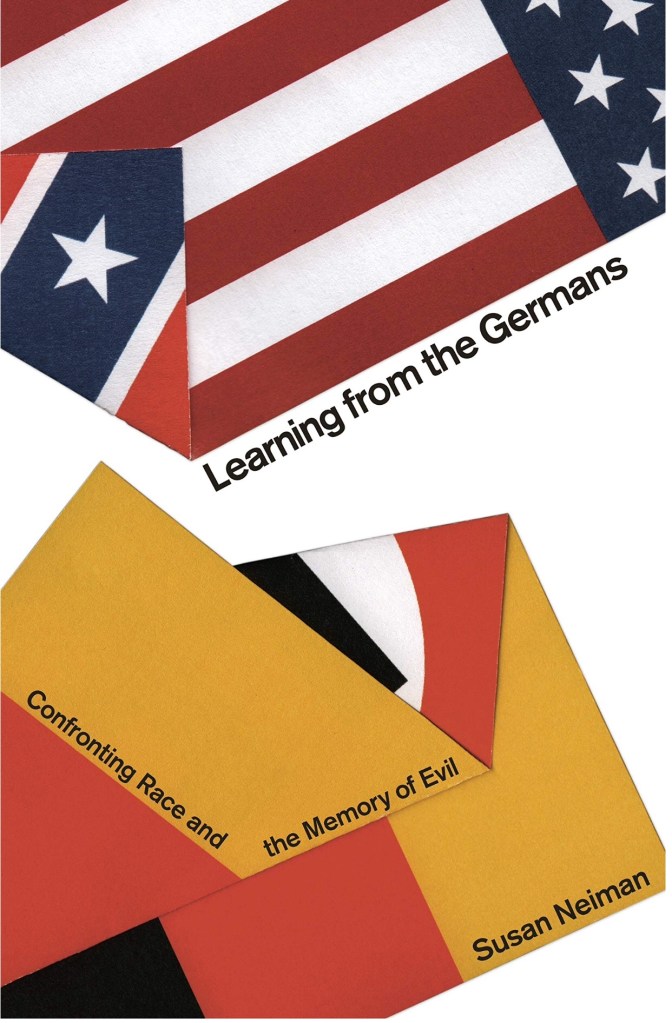
Susan Neiman, a professor of history in a Berlin university, published a book last year called “Learning from the Germans”. The key proposition was that the southern United States should address their racist past by establishing museums (etc) which inform about it. A start has been made on this in Mississippi.

Britain should found a substantial “Museum of Empire” in which our imperial past is accurately recorded. There are distinguished historians who think that some of that history was commendable – fine , let them have their say. If there was some “good” let’s put it alongside the bad and the ugly.

If Wall Street stays strong don’t write off Trump

A couple of years ago I met an old Canadian business friend of mine for the first time for a while. He had been the Finance Director in Canada of the Corporation for which we both worked but like me he was now retired. We swapped notes about what we were doing and about the state of the World – as you do. I made some mildly disparaging remark about Donald Trump who was a year or so into his presidency and was already showing signs of his inappropriateness for high office – “Yes” said my friend “but look at Wall Street”.

Wall Street reaches record highs

On rational, moral or national reputation grounds there is no case for Trump. He’s a grotesque political aberration of unimaginable ineptitude and dysfunctionality. But even today he’s at 40% in the opinion polls when you’d think he should be in single figures. And the Republican Party, with one or two honourable exceptions, still supports him. Why?

The first reason that the idea of Trump’s re-election is not the zero chance option it should be is the continued support of poor whites. This is not a Liberal cohort and they are Trumpite to a man or woman. Every race inspired riot enhances Trump’s support in this group of disadvantaged Americans. The second reason that Trump is not out of it is the Fat Cat vote.

Those at the top of the tree financially got there in part on the back of a booming Wall Street. When your personal wealth grows with little effort on your path you vote for the ideology that does it – if the standard bearer of that ideology is Donald Trump so be it.

Strong stock markets with healthy dividend-paying shares are not just good for the Fat Cats of course. My Pension Fund still invests heavily in the equity asset class, and there are plenty of investment funds important to ordinary citizens like me predicated on Wall Street or FTSE Blue Chips. If Wall Street stays strong up to November and Trump can get across the message that this is good for all Americans don’t write him off.

Racial discrimination is part of Britain’s inherent failure to achieve genuine equality of opportunity

I think that there are overlapping and complementary privileges at work in Britain. White privilege is one but not necessarily the most important. I don’t wish here to try and rank the privileges but let me try and address them. Let’s start with Wealth. The chancellor of the Exchequer Rishi Sunak was educated at Winchester College – a fine Independent school, but an expensive one. His parents were sufficiently wealthy to buy him that privilege and he has subsequently had the personal ability to build on it. But he had a head start denied not just to the vast majority on British Asians, it is denied to the vast majority of Britons of all races.

Rishi Sunak

Sunak’s privilege of wealth has allowed him to trump his disadvantage of race. I do not, of course, mean that his race was in any way inherently a real barrier to progress. The reverse seems to apply – British Asian children seem to outperform others at school though whether this is nature or nurture I’m not sure (I suspect the latter). But as Priti Patel has made clear people of colour like her (and Sunak) will face prejudice and discrimination at times. And not all will be able to ease their way around this disadvantage as they have.

Seven percent of children have the exceptional advantage of attending an independent school like Mr Sunak but wealth can buy educational advantage within the state system. Schools vary considerable in quality and there is a clear correlation between the wealth of a location and the quality of the schools. This is the so-called “postcode lottery” though it is less chance than this suggests. If you can afford a house in a more expensive area the schools there will be better. Again wealth buys advantage

Closely linked to wealth is, of course, Class. Again in Sunak’s case his father’s profession as a doctor placed the family firmly in middle class territory. And his education both at school and university will have reinforced that. He also sounds like what he is – a wealthy privileged Brit of colour. I doubt that any doors have ever been closed to him because of his race – as it should be, but all too often isn’t.

The advantages of class and wealth are endemic in British society – there is far too little equality of opportunity. Middle Class parents can buy their children privilege but they can also create a context within which education is valued. If at home there is a bias towards learning – books on shelves and diversity of entertainment choices – then this is an environment helpful to a child’s development – and to the passing of exams !

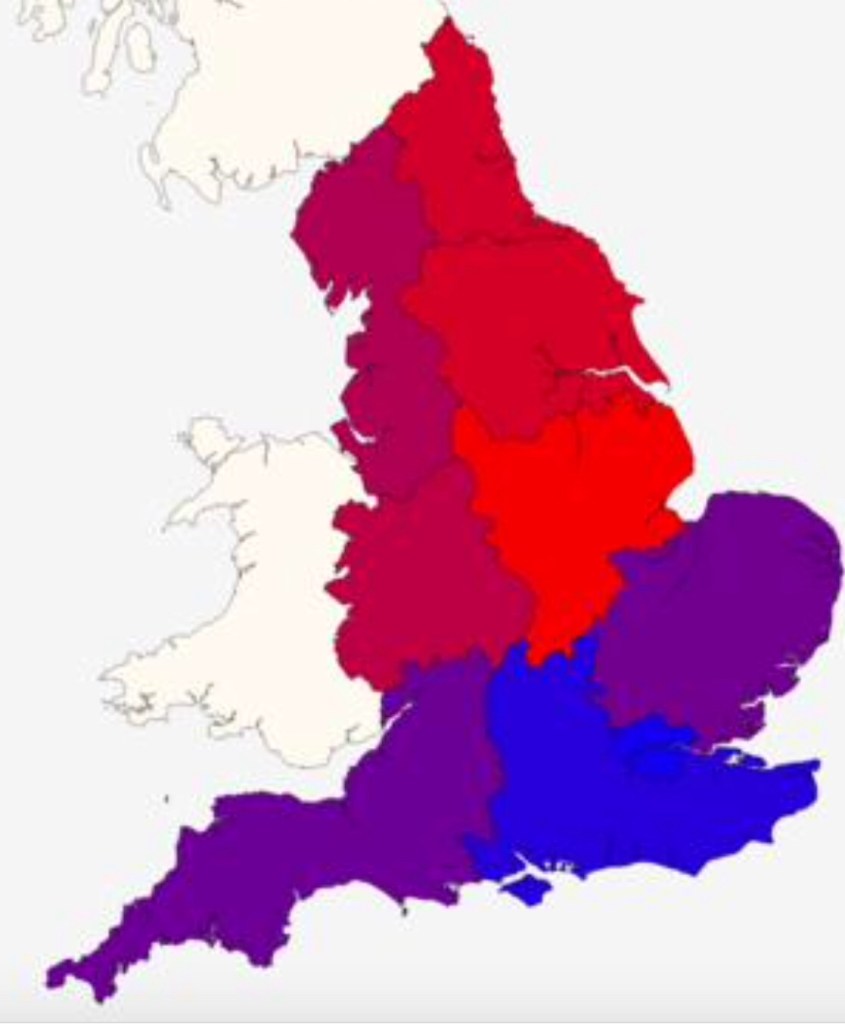
The evidence of a north/south divide cannot be ignored either. In the map below the percentage of children achieving five or more A to C passes in their GCSE exams is shown. The redder the area the fewer the passes, the bluer the more.

Five or more A-C passes at GCSE

If the discriminators of wealth, class and location can be added to that of race so can Gender. As the Trades Union Unison puts it “Some employers have outdated ideas about what work is appropriate for women, what work is appropriate for men, and how that work should be rewarded.” Look at the Board Rooms of our public limited corporations if you doubt that – and where there are exceptions check whether the presence of some female non executive Directors isn’t tokenism!

The fact that there are a raft of discriminations in British society does not, of course, minimise the significance of racial discrimination. Yes, Black Lives Matter. Yes we need more colour blind selection. As I have written before I believe the instances of racial discrimination in Britain are much greater than the establishment admits to. But our society is inherently discriminatory on many fronts – the goal of genuine equality of opportunity is a long way from being achieved.

There is a strong undercurrent of racism in modern Britain

I was born in 1946 so have spent my whole life, a few postings overseas excepted, in modern Britain. As a child in a leafy south London suburb casual racism was rife. My father’s golf club did not allow Jews to be members and the offensive insult “Jew Boy” was far from uncommon. Whilst I did not see the slogan “If you want a nigger for a neighbour vote Labour” the sentiment was rife in this overwhelmingly Tory borough. There was an underlying xenophobia in the 1950s which denigrated anyone who was not a WASP (English, White, AngloSaxon, Protestant).

I escaped West Kent when I went to University but many of my contemporaries stayed behind. They were the hard core of the “Leave” vote in the 2016 referendum and supporters of Nigel Farage (who grew up just down the road from where I was born). Not all were racists but they were not far away from deserving this descriptor. Remember I’m talking about fairly privileged middle class people here. Well, if narrowly, educated. Financially comfortable these particular xenophobes.

If the post war products of leafy suburbia could grow up with prejudice in an overwhelmingly white, “Christian” and middle class environment then what about the people of the West Midlands and the Northern Cities? When they were born their homes were in singularly WASP areas. But gradually newcomers from South Asia fundamentally changed these towns. Liberals like me might welcome the rise of multiculturalism – but bigots like Farage condemned it. UKIP was predicated on a discriminating and racist ideology.

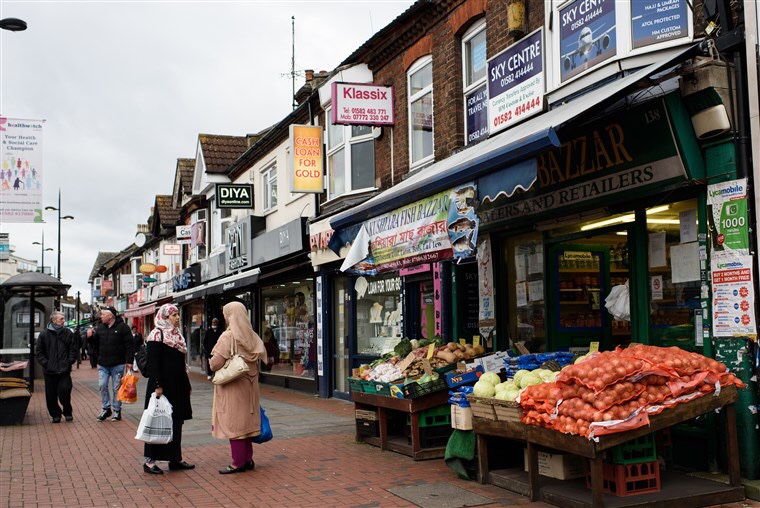
When the number of people attending Mosques in an area far exceeds those attending Churches it is symbolic of immense social change. The south Asian heritage communities may be overwhelmingly law abiding and hard working but it only takes a few vile sex offenders of Pakistani heritage to give the potential to people like Farage to condemn them all.

There is a strong undercurrent of racism across Britain. This is partly out of ignorance – in the leafy suburbs. But it is partly out of familiarity breeding contempt – in the Northern and Midlands Cities. There is no melting pot – the multiculturalism is also separatism. If your basic instinct is to reject the unfamiliar and the different it’s a small step to extend that to residents from Europe who (shock horror) might speak a different language to you. The politicians, including the Home Secretary, who boast about removing freedom of movement know this very well.

Not all pro Brexit voters are racists, but all racists voted for Brexit. If you doubt the underlying prejudice and bigotry rife in Britain then study of the reasons for the Referendum outcome is a good place to start.

My review of Susan Neiman’s “Learning from the Germans” – a book that has some insights on today’s racial conflicts.

This is a thought-provoking and brilliantly researched book. It also has a very original premise. Every nation has a past in which there is at least one event or period of which they can be ashamed. For Germany, of course, it is the unique horror of the Nazi period and the holocaust. For the United States it is Slavery and the failure, post the Civil War, to establish effective civil rights for all. Susan Neiman does not equate Germany’s Nazi past with the institutionalised discrimination and lynchings of the Southern States of the US. But she does suggest how today’s Americans can and should “confront Race and the Memory of Evil” – by using Germany as the precedent. “Learning from the Germans”.

For me there were many new things in this book. I know Germany fairly well but had not realised that the determination to record and explain the Nazi period is a relatively recent thing. The museums, school curricula, memorials and other records of the evils of Hitler have only really come into place in the last thirty years. Under the immediate West German governments of Adenauer and his successors there was little attempt made to feature anywhere the years 1932-1945 or to make reparations to those who suffered. Interestingly the German Democratic Republic (East Germany) was different and young East Germans were far more likely to know of Germany’s recent past than their West German compatriots. Today across Germany there are outstanding museums of the Nazi era and the Holocaust. In part, of course, these are driven by accumulated guilt and it took a generation that was too young to have been guilty or not yet born to create these memorials. 

The post-Civil War period in America which in the Southern States maintained and expanded discrimination and it endured until well into the 1960s and, arguably, it hasn’t entirely gone away today. White Supremacists raise their fetid heads from time to time and have in Donald Trump a “President” who doesn’t seem over-bothered by them. Ms Neiman records some of the infamous cases of murder carried out by the Klu Klux Klan post war – and chilling stories they are as well. She points out how the “Confederacy” states like Georgia the State of her birth were segregated. The Civil Rights heroes of the 1960s had to fight not just the racist extremists but even Southern Democrats like Lyndon Johnson who didn’t want to lose the white vote! She visits Mississippi and finds bigotry still present but where there are also encouraging signs. Museums of Slavery have been built and the horrors of segregation are more a matter of record today. She quotes Stanley Cavell who said “History will not go away, except through our perfect acknowledgment of it” – this is perhaps the main driver of Ms Neiman’s book.

I am British and found this retrospective on German and American evil and how later generations have addressed it very instructive. Here in the United Kingdom whilst we are happy to wallow in the perceived greatness of our past we are largely unwilling to address our errors, many of which were venal. Susan Neiman says that in Britain “… there is no monument remembering the victims of colonial famines and massacres…” – she’s quite right about this. There is no “Museum of the British Empire” (one in Bristol closed through lack of support) and teaching in schools and universities on the subject is minimal. Britain’s involvement in slavery, our appropriation of lands overseas that were not ours, our discrimination against and often murder of native peoples needs to be addressed just as much as the Germans and Southern Americans are addressing their pasts.

At over 400 pages “Learning from the Germans” is a long read and a moving and timely one. So much of modern society around the world revolves around discriminating hierarchies which self-select on the basis of race, colour, nationality, absence of disability, gender or creed. Sammy Davis Junior once called himself “the only black, Puerto Rican, one-eyed, Jewish entertainer in the world.” Almost a full house! In my country there is now open nationalism and xenophobia in Government. In the White House it’s the same. If Trump could read and if Boris Johnson could be bothered to they should look at Susan Neiman’s book. The holocaust historian Laurence Rees called his definitive book on the Third Reich “The Nazis – A Warning from History”. Ms Neiman’s book is that as well – but it also shows how by “Learning from the Germans” we can do something about that lesson.

Politics before science as Johnson and co. ignore the experts.

This Prime Minister and Government add culpable irresponsibility to incompetence and mendacity. The experts are being marginalised and ignored. Those who charge that “herd immunity “ was never abandoned are beginning to look not like conspiracy theorists but informed insiders.

The problem with Britain’s grotesque mismanagement of this crisis is that from the start it has been seen as a political issue not a medical science one. So political leaders who habitually lie on everything fell into default mode and lied to us on the pandemic.

As a nation we have lost the capacity for rational debate, everything is binary. So when Johnson and his gang tell us black is white we are unpatriotic for telling them it is not. There is no discussion – and if you have the temerity to suggest that there are areas of grey you incur abuse.

Britain’s record on handling the pandemic has been embarrassingly woeful and yet they have the gall to tell us we are doing well. We are daily killing more citizens than the rest of Europe put together and yet we are relaxing the rules – it defies belief.

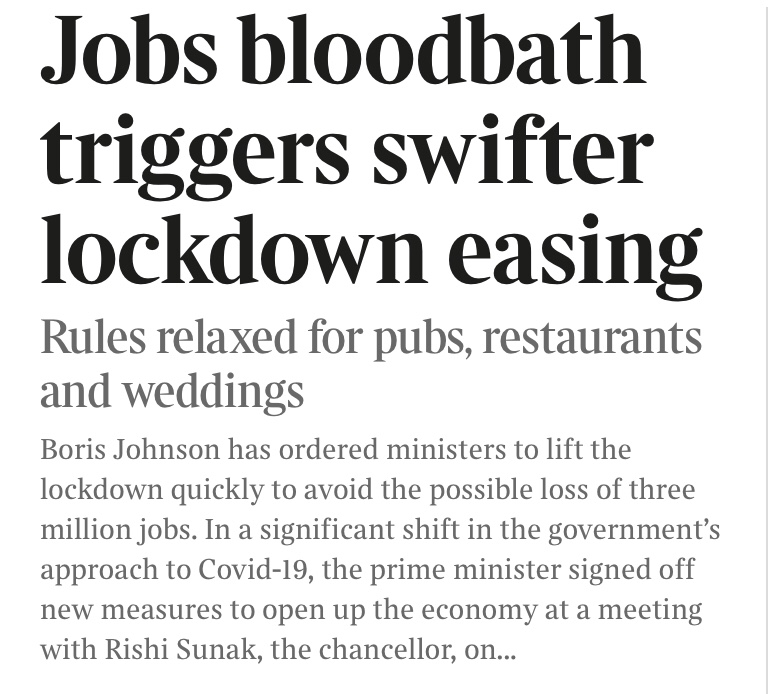
There should be no discussion of a trade off between mitigating economic damage, on the one hand, and saving lives on the other. Minimising fatalities should have been the driver from the start – it wasn’t. Yes the economy is suffering but it will recover. Our dead relatives and friends cannot recover – how many more will be joining them in the coming months?

The power, and the impotence of protest

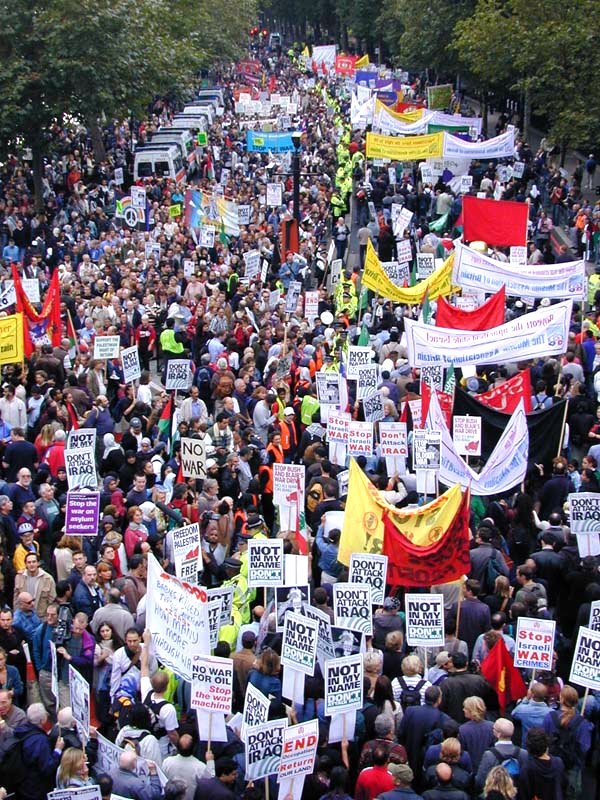
Protest against the Iraq War in London in February 2003

15th February 2003. London is brought to a halt by one of the largest protests it had ever seen. I wasn’t there, but I should have been. Less than a year earlier I had returned to the U.K. after six years living in the Middle East. I knew the region well and although I’d never been to Iraq I knew people who had and was certain that Saddam, evil bastard though he was, was not a threat to the West. The “Weapons of Mass Destruction” did not exist, Saddam had had nothing to do with 9/11. There was no Casus belli – Britain was being used by a belligerent American President. It would all end it tears.

I should have been there. I was to write a piece for a Dubai newspaper the following month which argued that the war, if it happened, was all about oil. As a recently retired Shell executive this was a controversial thing to do ! I had no insider information but I was pretty sure I was right. I was.

So why wasn’t I at the protest that February? Rather disgracefully I think that I just failed to make the effort. When I later read Ian McEwan’s novel “Saturday” which takes place on the day of the demo I knew that I had goofed by not being there – not, of course, that it would have made any difference if I had been. Except to me.

Back in the late 1960s, when I was a student, the two big issues were the War in Vietnam and Apartheid in South Africa. I took part, in a small way, in protests against both in London. The activities were largely peaceful and non violent though protests against the Springbok rugby tour of 1969 sometimes got violent and were unlawful. Ironically it was probably the Right Wing American politician Barry Goldwater who best summed up the case for extreme protest “extremism in the defense of liberty is no vice. And let me remind you also that moderation in the pursuit of justice is no virtue.”

This brings us to the huge protests on both sides of the Atlantic against the killing of George Floyd in Minneapolis. The fact of protest is admirable. This was both a horrific event in itself but also a symbol of the continuing racial inequalities in the United States. If Mr Floyd had been a white man he would not be dead – it’s as simple, and scandalous, as that.

The assumption of racial inequality underpinned mankind’s greatest crimes from slavery, the Holocaust to Apartheid. And also, it cannot be denied, to Empire and the genocide of First Nations peoples. The perpetrators of these horrors were white, their victims black or brown. So the slogan “Black Lives Matter” is of much wider relevance than the tragedy of Mr Floyd.

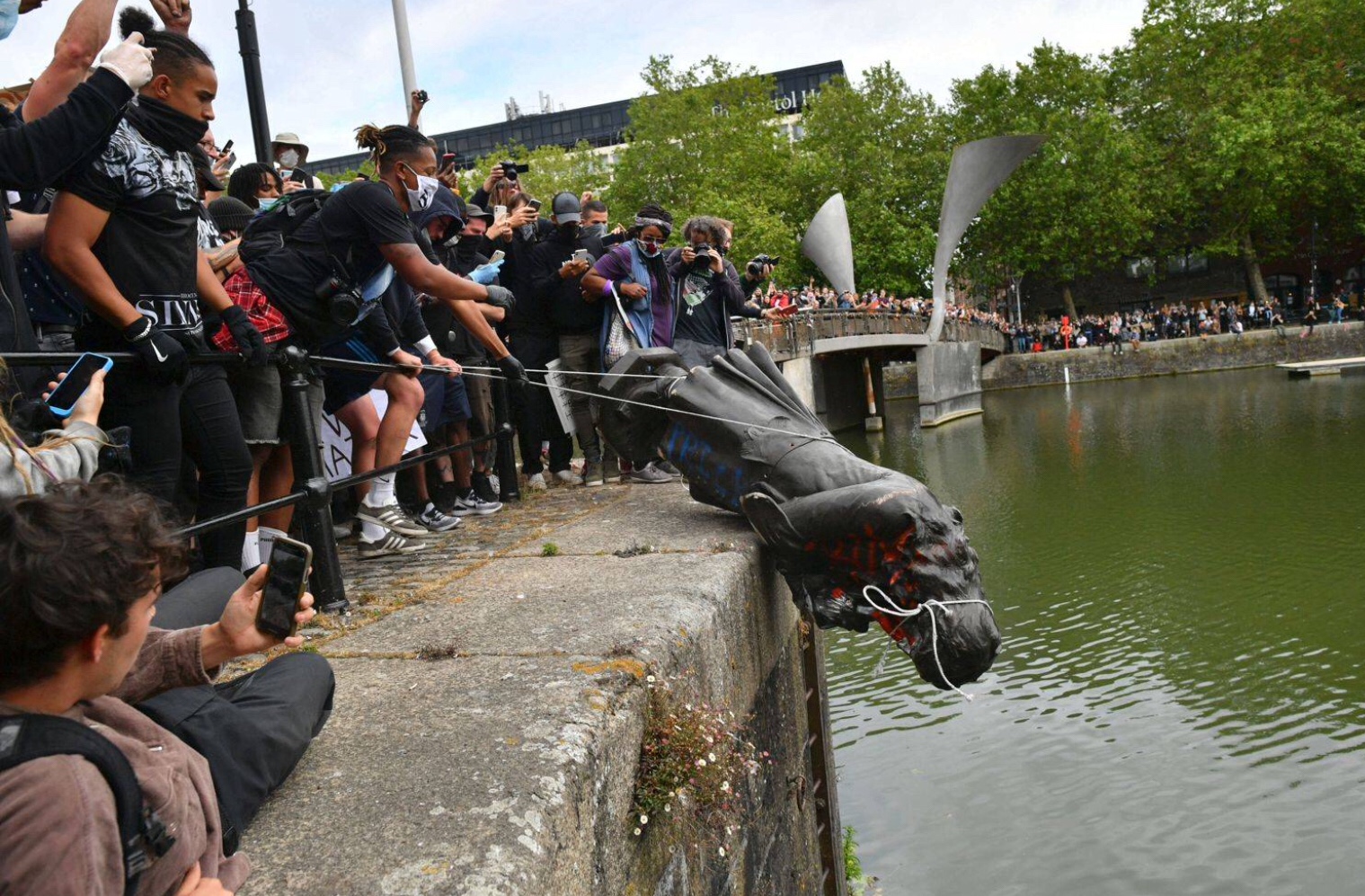
Britain was at the heart of the slave trade a fact that tarnishes our history irreparably. (We were also one of the first countries to abolish the trade but for a century or more white Britons got rich on the slave trade and slavery). One of its beneficiaries in the late 17th Century was Edward Colston and yesterday his statue was toppled and thrown in the harbour in Bristol.

The vandalism in Bristol was, of course illegal. But was it “extremism in the defense of Liberty” and as such not a vice? Or was it Virtue Signalling by Hard Left protestors – you pays your money and makes your choice.

Will the events in Bristol make a happorth of difference to the lot of BAME people. Of course not. Will they make some people more aware of the iniquities of slavery ? Maybe, but there are better ways to do it. There was a Museum of the British Empire in Bristol until recently but it closed through lack of support. This seems to me an area where we could be “Learning from the Germans” – as I said in my review of Susan Neiman’s book. Yes the presence of statues of slave traders in our cities is an affront. Yes the absence of any substantial museum telling the story of a Empire (including Slavery) is an omission in a country that does museums rather well. It’s not a noble history, but like the Germans we should be honest enough to tell it.

The eerie similarities between Boris and the Donald.

The only consolation I can offer my fellow Brits is that for now our American cousins have it worse – but they can and surely will eject the vile Donald Trump in November. We are stuck with Boris Johnson way beyond that. The comparison between Johnson and Trump is eerily apposite. Morally there’s little to choose between them.

You might say that it doesn’t matter if our leaders are serial philanderers if they are competent and inspiring leaders – the Lloyd George defence if you like. But when you fuse on to amorality prejudice, ignorance, laziness and a willingness to be the tools of shadowy “advisors” of the Hard Right then Trump/Johnson surely in any rational world disqualify themselves from office.

Boris and the Donald are not ideologues but their strings are pulled by those who are. Barack Obama maybe didn’t achieve as much as he himself and his millions of supporters would have liked but he admirably got up the noses of the American Right. David Cameron’s Coalition Government was similarly anathema to our eurosceptic Hard Right leading initially to the emergence of the populist Nigel Farage and his xenophobic UKIP party. In 2015 Cameron defeated his erstwhile LibDem friends in a cunningly fratricidal General Election and soon he marginalised Farage by calling for and then losing a referendum on Europe.

In 2016 David Cameron and Hillary Clinton both tumbled to electoral defeat – both beaten by ideologies of the Right. The similarities are startling, the crucial technique being to find a scapegoat. In white trash America it was the Establishment represented by the Uber-mainstream Clinton. In Britain the Establishment represented by the pro Europe majority in both the major parties. It’s arguable that Trump and the “Leave” campaign didn’t win their elections so much as Clinton and “Remain” lost theirs.

No rational voter would vote for Donald Trump or for Brexit the Metropolitan elite would say, and in a way they’d be right. But before the 2016 election Jeremy Paxman visited poor white America for a TV documentary and they were voting Trump out of desperation not reason. The Brexit voters in Britain weren’t desperate but they were similarly defying convention and being bloody-minded. There is a hard core of flag-waving nationalism both sides of the Atlantic and the Trump and Brexit campaigns knew this and exploited it.

The libertarian and Nationalist Right in America and in Britain successfully colonised the Republican and Conservative parties and got an electable patsy into the Party leaderships. They also got their ideologues into positions close to power. In America Steve Bannon set the Trump course initially and since his brief but crucial day others have kept the Donald on track. In Britain Dominic Cummings has been the puppet master and is so important to the increasingly incoherent and shambolic Johnson that he has so far retained his “advisor” despite overwhelming calls for his dismissal for recent grievous mistakes.

America in November has the chance to banish Trump and in so doing defeat his Hard Right string-pullers. Britain does not have this opportunity and we will have to suffer longer. Whether our democracy will survive is a question some of us wonder – with justification.

Freedoms are usually things to celebrate and fight for. But no more in Brexit Britain.

This young Tory MP is 26 years old so Nearly all of her life she has lived under the Four Freedoms entrenched in the Treaty of Rome (or its subsequent revisions). These freedoms are:

▪️Freedom of movement of goods

▪️Freedom of movement of people

▪️Freedom of movement of services

▪️Freedom of movement of capital

The freedoms underpin the Single Market, the Customs Union and the rationale of the European Union. Although some non EU countries also adopt the four freedoms Britain has said it will not do this and both the Home Secretary and MPs like Ms Davison boast about our abandonment of them – especially Freedom of Movement.

I was born nearly 50 years before Ms Davison but there is more than just a generational chasm between us. I have seen the Freedoms in action. They work – especially Freedom of Movement which gives us all, but particularly ambitious young people of Ms Davison’s age, opportunities that would have been unthinkable when I was 26. The freedom to live, work, love and travel across thirty countries of Europe is a driver of personal and national progress that makes it something to cherish.

I have lived and worked in two countries of continental Europe – The Netherlands when I was in my early thirties and Spain when I was in semi retirement. In Holland I was welcomed as a European citizen from a country the Dutch much admired. Some of our neighbours saw the freeing from tyranny inspired and fought for by my parents’ generation of Brits and our allies as noble and worthy of the greatest praise. I never had to wait long for a glass of Heineken or Grolsh from these older Dutch friends !

The abolition of Freedom of Movement will make us unique in Europe for our insularity and divisiveness. Young Spaniards or Dutchmen and women will be subject to demeaning and arbitrary rules if they want to come here. I doubt they’ll bother to undergo such indignities when there are thirty other European countries who will welcome them as of right.

And what about our young Brits? Today in normal times they can test themselves as I once did and work across the continent without restriction. Isn’t that a right worth keeping?

I don’t think Ms Davison has thought this through. Surely she can see that only a narrow English exceptionalism would erect the barriers to movement she is praising. Surely as a nation we’re better than that?