A predominately Anglo-Saxon and Celtic nation can protect its people rather better than Britain has.

James Forsyth in The Times today explores the extent to which political Systems and culture have affected nations’ record in dealing with COVID. The article is remarkable for not mentioning an example of a liberal democracy which has managed COVID better than any other nation but without surrendering the freedoms which lie at the heart of its constitution – New Zealand. Indeed it has actually held a General Election during the crisis. The Kiwis have surely shown that it is not ideology, (Eastern, Western or whatever) which matters, but competence.

New Zealand is culturally the most “British” nation in the world, outside Britain itself, and it is also an island nation. So why have they done better than us ? The demographic and way of life comparisons are precise as is the benefit of not having contiguous borders with any other country. So why have they succeeded whilst we have dramatically and fatally failed?

Jacinda Ardern – consistency, honesty and effective communications

New Zealand is much smaller in population than the U.K. , and that arguably made it easier. Perhaps – but to apply the same methods and gross them up was perfectly feasible. Closing its borders almost from day one was one of New Zealand’s key decisions. We could have done that , and should have.

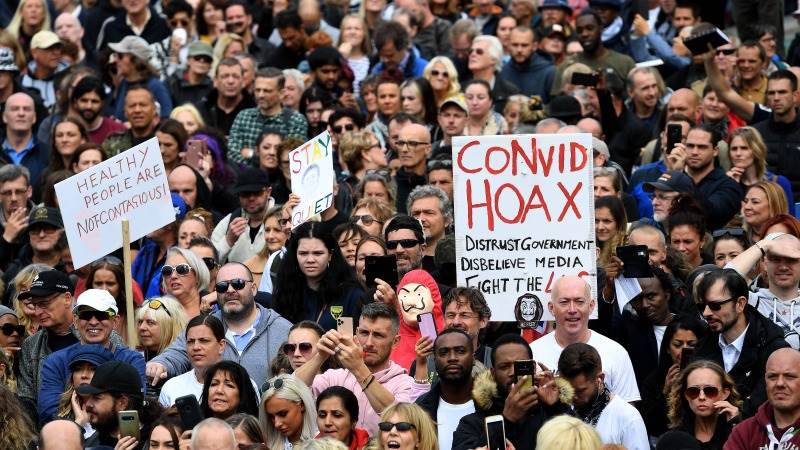
My experience of New Zealanders is that they are a no more conformist and regimented a people than Britons are. But they don’t spout on about their freedoms much, they don’t need to. There is no equivalent of our Hard Right know-alls opining about the need for libertarianism or “freedom of choice”. There are no petty nationalists or anti-maskers. When Arron Banks visited the country before their election to try and stir things up he got nowhere. His preferred Faragist party got one percent of the vote. The Kiwis manage to be proud of their country without being nationalist xenophobes.

But ultimately it’s about leadership, consistency and doing the right thing. Jacinda Ardern gave that leadership and made the right choices. She is no more medically qualified than Boris Johnson but unlike him she listened to those who are and followed their advice. Even in an election year she did not surrender to populism, and the electorate instead of taking to the streets gave her overwhelming support and re-elected her in a landslide. An important part of this was Ms Ardern’s communication skills – she told the people the truth and was believed. And if you believe a leader you’ll do what they say.

It is true that some cultures are more respectful of authority than others and that authoritarian governments can sometimes enforce policies more easily than those with democratic checks and balances. But New Zealand surely tells us that a democratic state can get things right with competent, credible leadership. And that a predominately Anglo-Saxon and Celtic nation can protect its people rather better than Britain has.

Restrictions to Freedom of Speech are a necessary element of a civilised society

Children of my baby boomer generation were brought up to believe that whilst sticks and stones might break our bones words would never hurt us. When at school I was name-called constantly for various perceived defects of character or appearance. I didn’t believe the aphorism then, and I don’t believe it now.

There was nothing “preposterous” about the claim that the the murder of Jo Cox was in part a consequence of the febrile political climate of the time. The language and lies and, especially, the images used by the “Leave” campaign created a context within which the semi rational preached “Sovereignty” but the malicious xenophobia – or worse. A deranged person felt empowered by that climate to murder an MP. There was clear cause and effect.

Language matters. There are words in common parlance fifty years ago which if I used them in the “Comment” section of The Times would lead to the whole comment being removed. But the Prime Minister can attack those of us who argue for greater fairness in society as “Do-Gooders” with impunity. Words do hurt , sometimes fatally.

Freedom of Speech needs rules and laws to govern it – as most social media realises when they moderate public postings. It’s called “moderation” a handy word actually. You can be strong in your messages but moderate in your language. Persuade me of your views with reason and logic without insulting me or name-calling.

Britain should be a comfortable home for people of all faiths, and none

“Few of us would have guessed, a generation back, that faith would exercise such a pernicious influence upon the 21st century.” Max Hastings in The Times today.

Multi-faith meeting in Leeds

It was a bit naïve to think that the 21st century would be different from all the preceding ones. All faiths require us to suspend our critical faculties, or at least to confine our use of them within the prison walls of dogma. Some faiths are blinder than others of course – you don’t have to believe that wine turns into the blood of Christ when you take communion. But many parts of the world require us to tow the religious line – on pain of death in some cases.

It is possible, indeed quite likely, that our next Prime Minister will be a Hindu – something that would be unthinkable in America’s Head of Government. It was a stretch to elect a Catholic in 1960.

That the church should be disestablished in Britain seems inescapable to me and to have Bishops in the House of Lords is a preposterous anachronism. To proselytise you have also to deny – the “one true faith” syndrome. In a modern multicultural country to have institutionalised in the constitution that one religion is the norm and the others are (consequently) heathen is a preposterous anachronism. If King Charles does declare himself “Defender of Faiths” (plural) that needs formally to be followed throughout society. A move towards the secularisation of education would be a good start.

Biden’s election and the end of Trump can spur the process of recovery of normality on both sides of the Atlantic

Hamburg 1945 and today

The human capacity to recover from trauma and disaster is remarkable as anyone visiting cities devastated in the Second World in the immediate post war decades will have seen. From London to Berlin, Tokyo to St Petersburg – even Fire-bombed Hamburg and Atom-bombed Nagasaki and Hiroshima cities rose again from the ashes. And so it will be, we must hope, for Britain and America after their self-inflicted electoral infernos of 2016.

The election of Trump and the fateful decision by Britain to leave the European Union live with us daily four years on from the disasters. There is little point is still complaining and crying that the decisions lacked logic or even credible explanation. Actually we have 20th Century precedents for populist nationalism which do help explain why Anglo Saxon electorates in 2016 took leave of their senses. We can learn from the Germans how to recover, let’s hope we do.

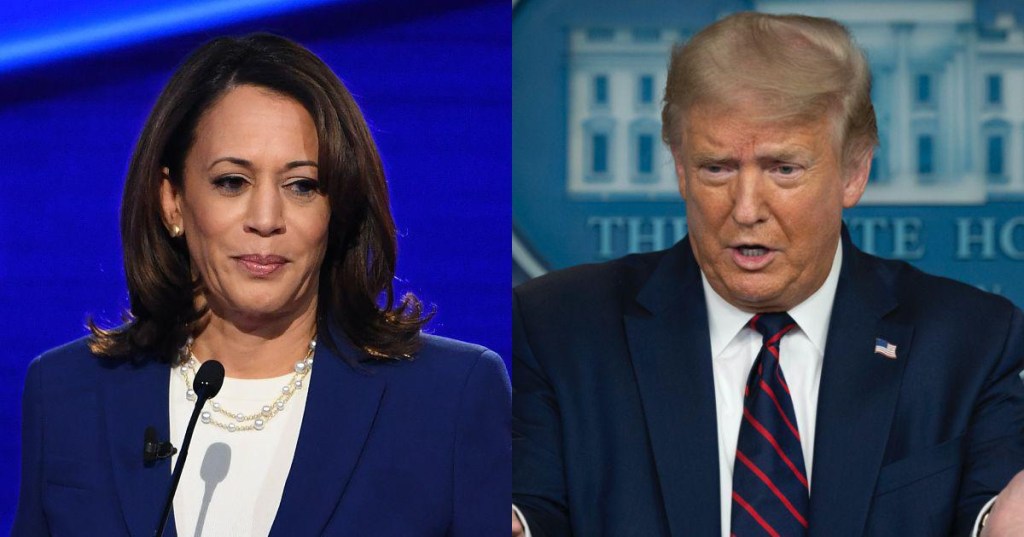
For America the beginning of recovery is a couple of weeks away. The infection of Trump runs from the Oval Office all the way through the Augean Stables of his malignant administration . The election of Joe Biden will remove from office not just the offensive blight that is Trump but also the hundreds of his place-men across the Government.

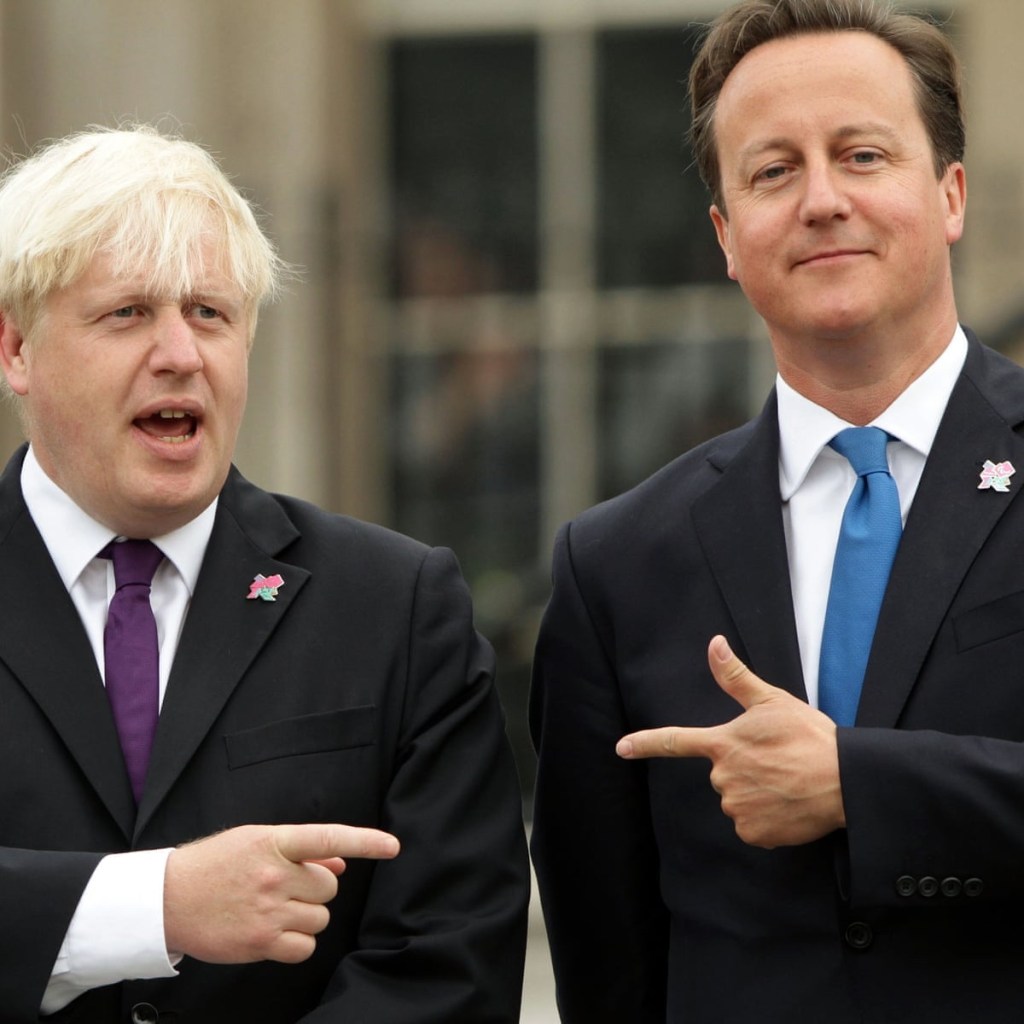
This side of the pond the recovery will take longer. As in America the vote in 2016 damaged the the continuity of competent coherence we expect from our leadership. You might politically disagree with (say) Gordon Brown or John Major (or George Bush or Barack Obama) but you could rely on them to govern in the national interest. David Cameron and then Donald Trump changed these expectations. The 2010 to 2015 Coalition Government was part of the continuity but Cameron couldn’t cope with the “Revolt of the Right”. The 2014 European elections won by UKIP were a warning that Cameron failed to learn from. To hold a referendum on EU membership so soon after Farage’s gruesome triumph was arrogant and deadly.

Populist nationalism – “Make America Great Again” or it’s flag-waving equivalents in broken Britain – has a gut appeal. Combine this with a simplistic blame culture and raw propaganda and the ground shifts from logic to revenge. Here the precedent is the French or the Russian revolutions. There was less blood in the streets but the tumbrels rolled for Cameron and Labour’s social democrats just as they had for Louis XVI and the Tsar. Corbyn and (eventually) Johnson were the Lenins who profited from the Revolt.

The election of Joe Biden would be the reassertion of the establishment, bloody and bowed though it is. Similarly the election of Keir Starmer (a quintessentially establishment figure) would help us here reassert the logic of competent coherence we have a right to expect from our leaders. Re-integrating this european nation into the European Union is another necessary condition for the return of normality. We are going to have to be patient on both counts.

There is a church in Hamburg that miraculously survived Bomber Harris’s best efforts to flatten the city completely. From the top of its tower you can see a modern vibrant city today where seventy years ago it was all rubble. The human capacity to recover.

Baby boomers like me enjoying a civilised retirement do so because we worked hard to achieve it – hands off !

In “The Times” today David Aaronovitch joins those who want to rob the retired Peters to pay the allegedly needy, younger Pauls. It’s an easy hit. We Baby Boomers are often in the sights of those who want a bit of redistribution – not from the rich to the poor but from the old to the young. It’s my fault, apparently, that young millennials can’t afford the deposit for their first home. Well I don’t recall a gravy train when I got married in 1969 (not that I expected one) and would contend that the Generation Y (the millennials) “struggle” may in no small measure because their expectations and perceived entitlements are rather higher than mine were at a similar age.

Throughout your life you are making judgments about your future. Some of that future is predictable, some speculative and some totally unknown. When I retired at the age of 55 after 37 years service with a multinational I did so based on certain predictable likelihoods. The key ones were financial – a workplace pension and a state pension the most important. Since my retirement I have done many things – a bit or work here and there. I’ve written a couple of books, some newspaper columns and lots of blogs. But the big thing is my volunteer role as the Honorary Editor of a quarterly magazine for Pensioners.

I do the magazine because I can afford to and I enjoy it. My time, if charged out, would probably be valued at around £15,000 pa. Maybe more. If my Pensions were less and my other state benefits removed I doubt I’d do the volunteer role. I’d need to find a new source of income – like most pensioners I spend what I receive.

Pensioners are often very active in their community – “Do-Gooders” like me. We are a bargain because our volunteer work costs nobody anything. I factored in this when I accepted the editor job. There are thousands like me. Remove or reduce my benefits and the bargains will go away.

David Willetts In “The Pinch” accuses me as a Baby Boomer of “stealing my children’s future” by being comfortably off whilst the next generations struggle. David Aaronovitch here is on the same track. They are both very wrong.

My pensions lose their purchasing power every year. Neither Price Indices nor the “Triple Lock” protect me from Pensioner inflation which is always higher than general inflation. Getting old can be expensive and if you at some point need care very expensive indeed. I’m not stealing anyone’s future in putting aside what I can, I’m trying to protect my own.

I pay tax on my state pension at the marginal rate. I’m not complaining about this. There are actually very few major Government-paid-for benefits of being old. If the few that there are were taxed as the state pension is I wouldn’t complain. But can we please stop this cross-generational squabbling. You can fairly judge a society by how it treats its elderly. We are well down the league table.

Poacher turned Gamekeeper Rishi Sunak can do little about the vulnerability and global insignificance of Sterling

Exchange Rates, like equity prices, still defy modelling. If you could predict accurately the variables that drive the strength of currencies you’d be a very rich man, my son. Sterling , once a significant currency internationally, no longer is. There are only two global currencies and the Pound is not one of them.

After its crisis of a few years ago (teething pains) the Euro has become a very important currency with far greater stability and purchasing power than the Pound. Size is important and only the Dollar and the Euro offer the quantum that helps stability. There is no longer a “Sterling Area” of any significance – the Pound is just an internal mechanism of exchange within the U.K. and one that in respect of its Relative value is just a speculators’ plaything.

The rise or fall of Sterling is driven by traders’ actions – to go “Long” or “Short” on Sterling has little or nothing to do with the underlying fundamentals of the British economy. It’s a gamble on perceptions. The Pound falls or rises because traders see the likelihood of other traders selling or buying it in response to some event. Years of British political and economic mismanagement have seen the purchasing power of the Pound fall, unsurprisingly. This has been the collective response to a series of events that have lead traders to be bearish about the Pound.

Smart countries take the exchange rate out of the economic toolkit to reduce or eliminate the effects of speculation. Very large economies like Germany or France do this by being in the Euro. Well managed small economies (Singapore a good example) do it by having a fixed exchange rate with the Dollar. Britain goes it alone when logic dictates we should, of course, have been in the Euro from the start.

Traders love instability – they don’t mind if a currency goes up or down so long as they call it properly. Our Chancellor knows all about that! But whether this poacher turned gamekeeper can create stability in Sterling is highly doubtful in these times. Turbulence ahead – if you’re a fat cat get out of Sterling – the rest of us will have to hold on tightly for the ride.

We have become fundamentally un-British as a nation

This is my response to Matthew Syed in the Sunday Times today.

Those who seek to characterise politics as an ongoing battle between Left and Right , between conservatives and socialists are stuck in a binary mindset which is unhelpful , as well as superficial. It’s more complicated than that.

Surely 2020 has taught us that the main divide is between those who are competent, and those who are not ? Jacinda Ardern was not re-elected because she is a Leftie – she is back in office because she is demonstrably able. Donald Trump will not be booted out because he is a Republican, but because he is useless and unpleasant. Boris Johnson is in trouble because he lacks consistent grip ( to put it mildly) not because he is a Conservative.

The conventional view is that Britain in the 1950s and 1960s was a Butskellite country where there was little to choose between Labour and the Conservatives. I think this oversimplifies but few would argue that there wasn’t a large measure of political consensus – certainly more than today. Harold Wilson campaigned from the Left but governed from the centre. So did Edward Heath from the Right.

Margaret Thatcher and John Major did some things that Labour might not have done, but when he gained power Tony Blair did not reverse them. The rhetoric of the Right and Left of those times was far greater than the actuality of what they did. Thatcher was a shock to the political norms but it is simplistic to call her a Right Wing politician. Her ideology was free enterprise and to an extent libertarian and her methods controversial but until the mistake of the poll tax she was competent in what she did. She even won a war. And the traditional British way of political fudge (centrism if you like) survived her reign and was to return.

Brexit is not the result of the Right triumphing over the Left. Two Prime Ministers have overseen referendums on Europe with different outcomes. In 1975 Wilson knew what he was doing and his Government won. In 2016 David Cameron got everything wrong (including the fatal decision to hold the referendum in the first place) and he lost. Competence compared with incompetence again not Left v Right.

That there are ideologues around is not in dispute – there always have been. But for them to have moved from the lunatic fringe to positions of power and influence is unprecedented. I remember Oswald Moseley and some racist Conservatives like Enoch Powell as well as a few Hard Left Trades Union Leaders and Labour politicians back in the 1950s and early 1960s. They were all colourful but made little real impact. So to have a General Election, as we did in 2019, where the two main parties were lead by a daft old socialist on the one hand and a dilettante puppet of the xenophobic, nationalist Right on the other was fundamentally un-British. The centre had failed to hold, with a vengeance. The road has been closed.

The solution is clear as it was in 1990, after a shock to the system moderation and competence must return. However we are nowhere near being out of our traumatic malaise. Even if COVID disappears in early 2021 we we still be dealing with the battleground of post Brexit Britain. The break up of the United Kingdom, the return of armed strife in the island of Ireland and social unrest everywhere look unavoidable. That’s not a consequence of a Left v Right battle but of the triumph of a uniquely malignant ideology over logic and reason.

There is no excuse for Empire and we should stop pretending to search for balance.

Matthew Parris writes about Empire in The Times today. It is in part an unconvincing apologia. But in my view there is, or should be, no Good/Bad confusion about Empire. No paradox. No attempt to find balance. The very acquisitive premise which led to colonial ambition was indisputably amoral and from start to finish the whole adventure remains a stain on many European countries’ history. It’s worth reminding ourselves that the British Empire may have been the biggest but that we were far from being the only nation that sent people across the seas to sequester land that we had not an iota of right to – and to subjugate peoples that were nothing to do with us.

Slavery facilitated colonial ambition

European Colonialism doesn’t happen any more though whether this is a temporary hiatus who knows? And to some extent political and military domination has been replaced by economic – China in Africa for example. The twentieth century saw the expansion of European imperialism before it saw its decline. What else was Hitler’s search for lebensraum if it wasn’t Empire building?

The apologists for Empire, and there’s a fair bit of that still around, focus on what Britain brought to its occupied territories rather than what it took away. The Indian railway system and the English language for example. Yes as we plundered we needed infrastructure to get the loot away. And elsewhere we needed manpower – it took a lot of slaves or indentured labour to pick the cotton or grow the sugar cane. Hooray for Wilberforce and co. of course. But a sudden dose of principle didn’t expunge a couple of hundred years of evil. And a key element of that evil was the imperialists confident assumption that there was a hierarchy of culture and that Britain sat firmly at the top of it. Rule Brittania.

Yes if you visit old colonial outposts there are plenty of graveyards with English names on the headstones. But the white mans’ burden they symbolise was a self-imposed and unnecessary one. And supremely arrogant. The missionaries sought to civilise the natives by bringing them their God not to mention the arbitrary pseudo morality that went with it. That some allegedly ended up in a cooking pot serves them right.

Modern day Germany atones for its first half of the twentieth century history. Read Susan Neiman’s “Learning from the Germans” and visit the Historical Museum in Berlin to see how to do this. But we have no equivalent of the many Holocaust museums which tell the full story of the British Empire anywhere, and there is little atonement. Instead we still bizarrely sing “Land of Hope and Glory” and admire the fact that once we ruled the waves. Like the Third Reich the Empire was supposed to last a thousand years. Thankfully it didn’t and the people we once exploited are now free, those that survived the disease and subjugation that Empire once brought that is.

Celebrate the creation of liberal open Britain and fight to restore it.

I wish that I had written the article by David Aaronovitch in today’s Times ( “You will, Paddy, you will”). It encapsulates everything I feel about politics, especially social and progressive politics. My political hero is Roy Jenkins who managed the change processes that meant that we stopped hanging people, created a law on abortion which gave pregnant women choice and respected sexual preferences – all within a sensible Legal and moral framework.

Roy Jenkins – His Britain was liberal, open and European

Roy Jenkins was a great reforming Home Secretary and he shifted the nation irreversibly in the direction of freedoms that we now take for granted. He was also, of course, Britain’s greatest modern pro European and saw that a liberal nation is also an open and international one.

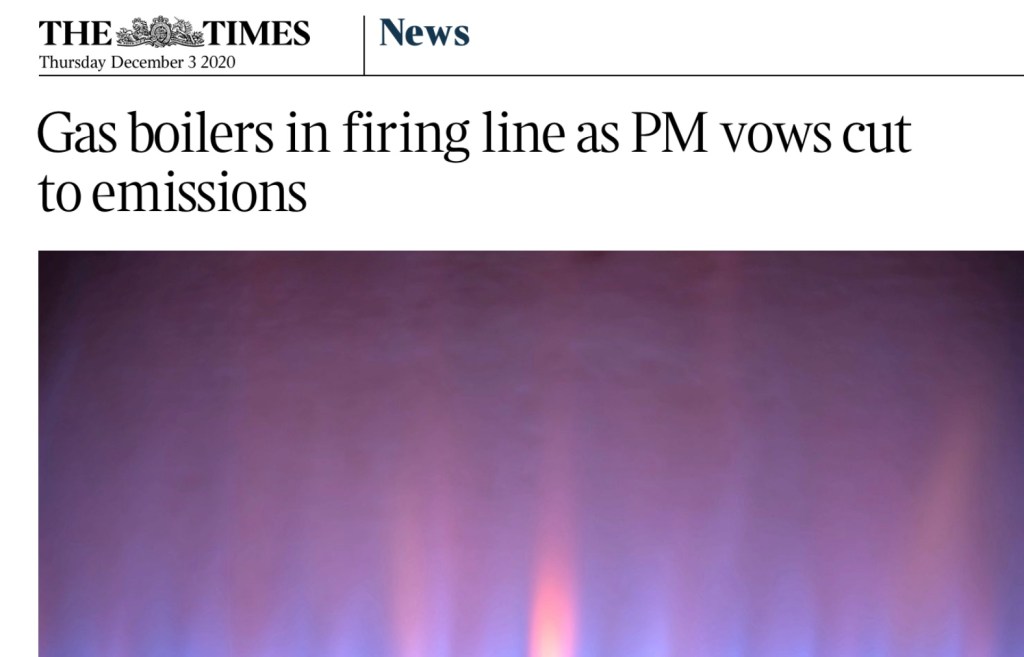
On the environment in addition to Boris Johnson’s windy conversion (don’t hold your breath) we can include a raft of clean air measures since the 1950s. I first wore a mask not in 2020 to protect people from Covid but, as a little boy, to protect myself from smog. The power generation shift from coal to gas (opposed by some vested interests) was part of the drive which should ultimately culminate in a clean renewables dominated energy sector.

David’s final paragraph, tongue in cheek though it is, makes a connect between liberal reform and positive environmental change and Britain’s external relations. To leave the European Union is the most illiberal measure enacted by Britain in my lifetime. The parallel with social/environmental change is precise. These changes were as progressive as Brexit is regressive.

Post Imperial Britain has I now realise been fraught with the carry over from “Great Power Britain”. The withdrawal from Empire was at best messy and at worst amoral and deadly. From India to Kenya and Malaya and Cyprus we killed people in their hundreds as we freed them. And yet we still celebrate a “Land of Hope and Glory” – which it isn’t, and never was.

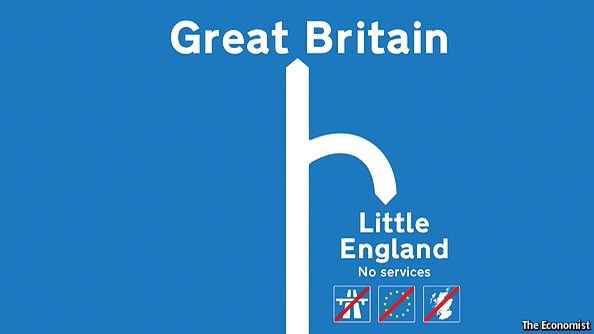
Our modest little island has a strange history with pomp and circumstance, but not a lot of genuine nobility. Our history is what it was and we both need to inform new generations about it, and atone for it, and move on. Moving on includes keeping on the liberating path of which we can be proud. Part of that is to restore our credibility as part of the European partnership of nations. Then we might have a chance to be Great Britain again – a liberal, open nation reconfigured for the modern age not silly Little England.

Crass, but revealing. It’s the small things that get to the core of how dysfunctional this Government is.

Computer screens before stages – a Government as Philistine as it is uncaring.

It is, of course, the big things that define the nation. But it’s often the small things that make us wake up to what we are, or what we’ve become. The advertisement had “UK Government” prominently displayed – there is not the slightest doubt that it reflects Government policy. A policy that is demeaning to the Arts and which praises the vague cold world of “Cyber” – whatever that is.

Here a young woman of colour, a ballet dancer, is being told that she will have to “rethink, reskill, reboot” but that she doesn’t know it yet. In other words stop doing what she has chosen to do and do something else. It’s insulting, ignorant and pointless. The latter because it can have no effect other than to irritate those in one of Britain’s great areas of strength – the performing Arts.

Any young person entering into the world of ballet knows that it is tough. The young woman looks to be in her teens. She will already have been through tough selection processes – auditions at every step of the way – and survived. She doesn’t need to be reminded that the high standards required mean that her career choice is precarious.

Performers above all need encouragement to test and hopefully realise their potential. That’s what the colleges of drama, the music conservatoires and the ballet schools do. The majority of students won’t make it because the standards are high. Here in effect the dancer is being discouraged – told that in a while she will hang up her tutu and spend her days not on the stage but in front of a computer screen.

Communication is about checks and balances and here they were obviously absent. But it’s not a one off. Some of the messages from the Home Office about asylum seekers recently have been as insulting, illiberal and idiotic as this one. And the tone is set at the top. Someone in Government, a Cabinet Minister no less, was responsible for this. The “National Cyber Security Centre” is a Government body – someone is ultimately in charge of it.

Joined up Government is difficult and, yes, sometimes the left hands of the bureaucracy don’t know that the right hands are doing. And not everyone in Government is as crass and philistine as whoever signed off this advertisement. Just as not everyone is as uncaring and insensitive as the Home Secretary who signed off the asylum seeker communications.

Someone needs to lay down the law and get things back on track because at the moment Boris Johnson’s Government is compounding its glaring incompetence and mendacity with communications that make them look like uncaring fools. And if they’re not careful the international perception of Britain, already at a historic low, will tumble into “failed state” territory.