The “Sunday Times” today says that Boris Johnson’s “safety is assured”. As a nation we are divided on most things including the Prime Minister where the “Good Old Boris” numbers seem still to be ahead of those who believe “Johnson must go”. Opinion polls show voters would reject the Conservatives if we had a fair electoral system – but we don’t, so they won’t.
Johnson’s persona seems a mixture of stupidity and cunning. The latter delivered Tory MPs in some constituencies that had never had them before. He did this with a unique gut feel approach driving a bulldozer through a wall – a prescient metaphor as it turned out. Never underestimate the capacity of the British public to ignore facts and vote with prejudice and emotion. Johnson didn’t.
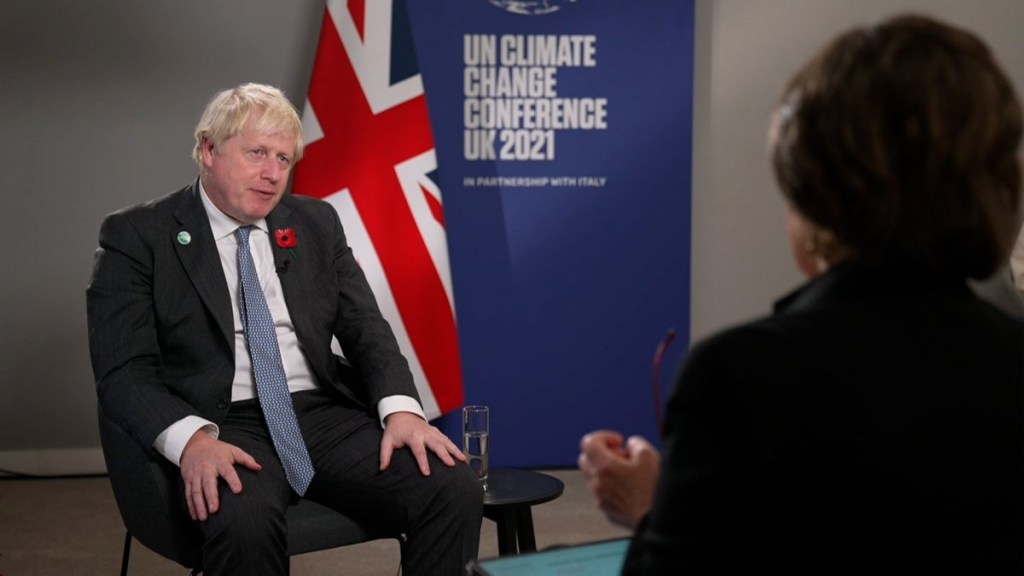
The stupidity is daily on view. Telling lies is stupid – as Johnson showed when he denied the truth to Christianne Amanpour on CNN about Britain’s abject performance on COVID. But he gets away with it in part because a servile media fails to hold him to account. This may be in the process of changing, but don’t hold your breath.
Britain, in embracing the politics of UKIP in today’s Conservative Party, has moved from the sometimes cerebral, and moderate, to the rarely coherent and extreme. There is no other explanation for Boris Johnson. It’s frankly our own fault – a breakdown of common sense as well as ignorance. It seems to be an Anglo-Saxon thing. The appalling Donald Trump was rejected by a smaller majority than the bare figures suggest – and he hasn’t gone away.
The pro Paterson vote in the House yesterday was an outcome entirely consistent with these times. We knew that we were in trouble when it became clear that any challenge to the hegemony of the Right would not be tolerated in Boris Johnson’s Conservative Party. Any opposition in the ranks even from distinguished parliamentarians like Ken Clarke or Dominic Grieve would be crushed. What Theresa May once called the “Nasty Party” re-emerged as the new normal.
Standard bearers of the Tory Right who call Boris Johnson’s tune
The rebels this time are small in number but high on principle. Contrast them with those who are no more than lobby fodder – not least the 2019 first elected cohort. Mr Paterson was a standard bearer for the powerful vast majority of Tory MPs who follow a populist, nationalist line at all times. He spoke an extraordinary brand of claptrap but the backbench sheep baa-d in approval.
Labour is polarised within its parliamentary ranks and in the country in a way that the Conservatives appear not to be. The debates are shouty and not very edifying but at least they are there. There is little debate among the Tories but maybe – just maybe – this issue will change that. Will an opposition to the ERG norm emerge? Will a leader to challenge Johnson appear? I’m not holding my breath but it’s possible.
The One Nation Tories of yore may not all be dead, just sleeping. The Party I observed over the decades had its eccentrics and its Enochs. But it was generally lead by pragmatic centre ground moderates. Even the blessed Margaret had her Willy.
There is an article in the Financial Times today which presents the increasingly conventional view that Royal Dutch Shell should concentrate its business future on non hydrocarbon energy – Renewables. This assertion, I’m afraid, ignores the reality of Shell’s business profile and, in particular, how it became what it is and the core competencies it developed along the way. Let’s look back at this history. I should declare an interest. I was a small cog in this journey and am currently a Shell pensioner!
Oil and Gas replace Coal.
The elimination of coal burning in the home and in industry and countless other sectors came because oil and eventually gas replaced solid fuel. This had major environmental benefits but it wasn’t why Shell did it – the benefits were collateral to the oil/gas companies expansion and marketing. In those days Shell had an active coal to oil conversion plan. I was there ! We also invented central heating in Britain. The earlier home heating initiatives were driven by the oil companies – especially Shell-Mex and B.P. – it was later that gas came along. It’s a fascinating story – google “Mrs 1970” for the background.
I mention the past of the switch from coal to make the point that energy consumption did indeed change in its mix because of oil company initiatives. However the cleaner air benefits were a response to Government actions. The Clean Air Acts of the 1950s and 1960s for example made a reliance on coal in the sitting room grate or in an industrial boiler unacceptable and in most cases kerosene, gas oil or fuel oil replaced them – to the benefit of the environment and our lungs.
The switch from oil and gas to cleaner alternatives.
We are now, rightly in my view, making progress in the switch from oil and gas to cleaner alternatives. However this is and has to be a response to Government action and legislation not because the oil/gas giants are driven by altruism. Shell and the rest are not involved, as once they were, in creating demand for their products but only in supplying it. The consumption of hydrocarbons is not a consequence of Shell creating markets any more. The markets are there. Shell supplies its customers. In expanding its customer base Shell may seek to take business away from its competitors. That’s competition. But it is not seeking to create new demand.
Shell’s products pollute. But it’s the customers who do it.
Those who lambast their oil/gas corporations for what they do have the wrong target. It’s the customers that need to be persuaded and encouraged. The move into renewables by Shell or BP is unpersuasive and, in my opinion largely inappropriate. Businesses prosper because they build successful strategies based on their collective corporate memories. Shell’s memories on renewables are ones of failure. In short the various failed diversification initiatives over the years (Nuclear, Coal, Forestry, Power Generation, Solar…) were because we did not understand these industries. We should have stuck to our knitting.
Shell should communicate its message better
Shell should be much proactive in it’s corporate communications. The world needs oil and gas and will do for generations to come. Many uses are oil specific (aviation, marine and much of road transport for example) and there is no realistic alternative in the short to medium term. Shell does not need to be defensive in acknowledging that it supplies this customer demand. It should explain the real situation – there is no need to be apologetic. Hospitals across the country have boilers and power generators running on gas. Again there is no realistic alternative – if Shell produced that gas in one of its offshore fields it does not need to say “sorry” for doing so.
Shell deserves and should demand a voice at the table
Shell’s Planning activities were cutting edge. We used Scenario techniques to analyse alternative futures. The corporation has the capability to participate in the Energy debate. It should be encouraged to do so. In the meantime it is frankly ignorant to blame the corporation for supplying demand it in no way creates.
Most of the Kippers, including Farage, were originally Powellite/Thatcherite conservatives. In 2010, when Cameron got into bed with Nick Clegg , the traditional hard Right wing of the Tory party was horrified and some shifted to UKIP. Their unique selling proposition policy was, of course, extreme Euroscepticism.
As with Enoch Powell right wing Tories, now in UKIP or contemplating it, linked anti-Europeanism with a toxic mix of xenophobia and anti Immigration, Islamaphobia and flag-waving nationalism. In 2014 this mix won UKIP the European elections.
David Cameron responded to the threat from the Right in two ways. Firstly, with Lynton Crosby’s help, he destroyed the LibDems in the 2015 General Election. Second he promised a referendum on EU membership. Both actions shifted the Conservative Party in the direction of their hard core dissidents and of their UKIP deserters.
The 2016 referendum win, financed and substantially organised by the extra-Conservative Right, eventually led to Boris Johnson’s rise to power and to the destruction of One Nation Conservatism which a few short years earlier had been the mainstream and in power. Johnson was not seen by the Right as “One of Us” – it was quite clear that he wasn’t one of anybody, except himself. But he was seen as a potential election winner. Rightly as it turned out.
The Kipper mindset had always been economically free enterprise and small state favouring. The Cameron/Osborne austerity policies had recognised the attraction of Thatcherite neoliberalism to many Tory MPs and voters. Boris Johnson is ideology free and is a populist. But around him are Ministers, including the Chancellor, who are not!
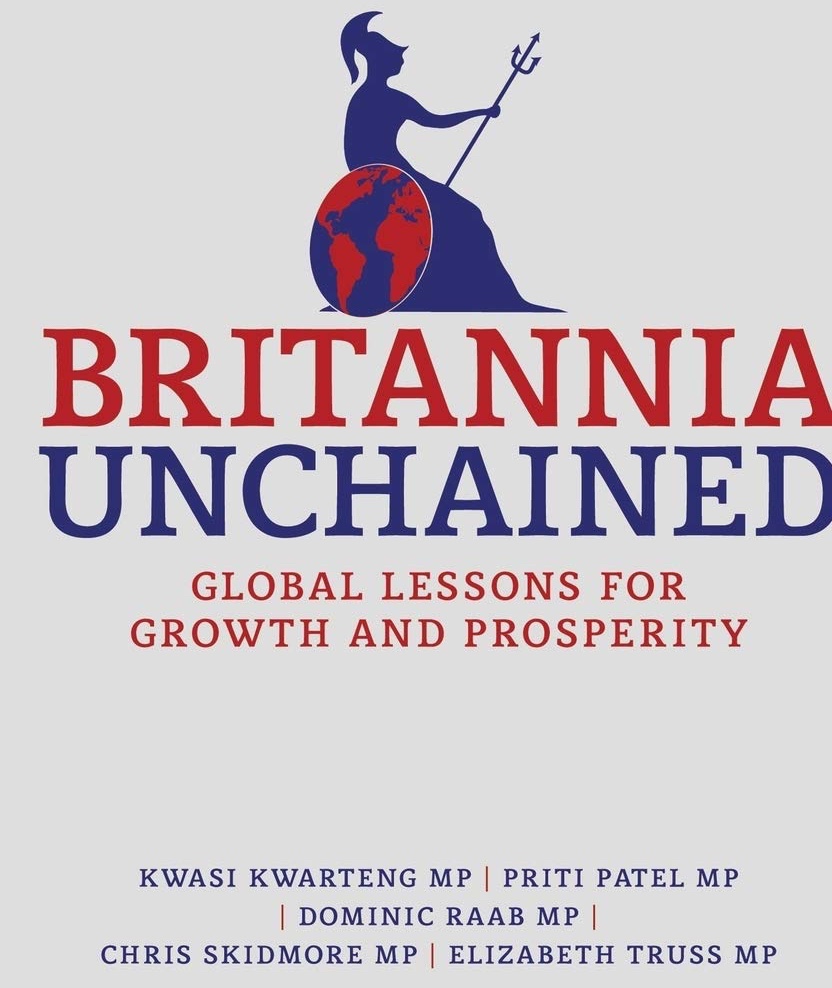
Having defeated Cameron over Europe the overwhelmingly Hard Right (economically) senior ministers (Sunak, Raab, Truss, Patel and the rest) may well feel emboldened to try and rein Johnson in over public expenditure and higher taxes. They declared their intent some years ago in “Britannia Unchained” .They are flexing their muscles.
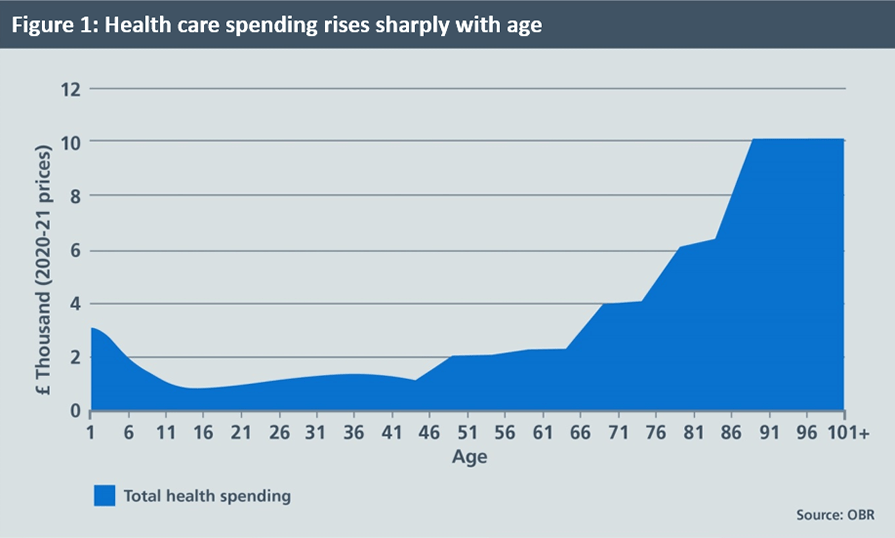
For Sixty years I wasn’t much of a burden on the Health Service. Then as I moved out of middle age never to return I began to be more of one. The older you are the more you need care and treatment. And that costs.
The blood thinning drugs I take for Atrial Fibrillation are expensive, but they work and enhance my life. The medication I take for my fairly recently diagnosed epilepsy likewise. My NHS provided hearing aid and the service alongside it enhances my quality of life as well.
I’m pretty sure that my situation is matched by millions. I paid my taxes for forty years a significant part of which was allocated to healthcare I didn’t need. Now I pay much less tax but draw on my “free at the point of use” healthcare rights rather a lot. The NHS says “It costs three times more to look after a seventy five year old and five times more to look after an eighty year old than a thirty year old …today, there are half a million more people aged over 75 than there were in 2010.”
Somewhere in my common story there is a solution trying to get out. Of course my taxes were general including Trident as well as my Grandpa’s teeth. I didn’t pay them in in order to draw on my money pot later when I needed. But maybe I should have? Not to the private sector but to the NHS? Do we need to rethink National Insurance so that it is more specific in its use and more personal?
“The Anglo-Dutch energy group, which is one of the world’s biggest polluters” says The Times today
This is nonsense. The multinational energy companies like Shell cause very little pollution in their activities which are the search for, production of and transportation, processing and marketing of oil and gas. Energy consumption along this supply chain is modest and tightly controlled.
Shell does not create demand but supply it. The demand is a factor of economic development around the world. Societies have created a demand for energy as they have grown. There is a linear correlation between GDP and energy demand.
Those that attack Shell should turn their attention to the users of oil and gas not the suppliers. Persuade electricity generators to switch to renewables. Persuade motorists to take the train or get electric cars. Persuade those of us with gas boilers to replace them with something more efficient.
Oil companies have been essential elements in the growth of prosperity. But they have not themselves created that prosperity only facilitated it. It’s the same with the collateral damage from energy consumption. Shell does not pollute. Its customers do.
Whilst it is the high profile environmental improvement stories , like heat pumps and electric cars, that hit the headlines in fact we could significantly reduce our hydrocarbon consumption with more conventional changes.
In the home there are many relatively inefficient gas boilers in use. If we replaced every unit that is more than ten years old with a modern far more efficient condensing boiler that would have a significant effect. Similarly the installation of double glazing and better loft insulation would be hugely beneficial. Better heating system controls and thermostatic radiator valves could also help. These are all relatively low cost and straightforward changes and government subsidies could be used selectively to make them available to all.
Efficient condensing boilers use far less gas
Home appliances are also far more efficient today and the replacement of old cooking, laundry and cleaning devices with higher tech modern ones would be beneficial.
Modern conventional vehicles are also far more efficient than those of only five years ago, let alone the many that are older than that. Replacing and scrapping a ten year old petrol-engined car with a modern more fuel efficient one would be easy to do and if people were incentivised to do this with grants the take up would surely be considerable.
More fuel efficient public transportation designed to switch travellers from the roads
Lifestyle can be moulded without too much intrusion if it is done thoughtfully. To switch travellers from the roads to public transportation is hugely environmentally positive but to do this you do need to improve services, introduce new ones and make them affordable. Critics of the High Speed Train HS2 should remember that every journey made on it will be far more environmentally friendly than the alternative of travel by car.
Long term strategies to increase the numbers of electric vehicles and heat pumps in homes (etc.) grab the headlines and can make sense. But there is still plenty of low hanging fruit to be picked that can be achieved in a far shorter timescale and lower cost.
The key thing with a slogan is credibility. It mustn’t just be catchy, it must be capable of being seen to be true. “Beanz Meanz Heinz” did that. It confirmed what was entirely credible – that Heinz took the humble baked bean away from commodity status and made it special. And when you do that your customers will pay a premium price, or enough of them will be make it worthwhile.
In my Shell career I worked with a slogan that for me is up there with the best – “You can be sure of Shell”. My memory fades a bit but I think the slogan originated on posters in the 1920s. Post war Ogilvy and Mather, during David Ogilvy’s time, refined it and made it ubiquitous . For the slogan to have worked it had to be seen to be true. Not one word is wasted. “You” says that we serve our customer or partner (etc.). So it’s not about us but about your needs. “Can be” is assertive and certain. No ifs and buts. “Sure of” says rely upon. Again confident and unequivocal. “Shell” is the brand name – and there’s only one Shell.
Internally “You can be sure of Shell” was a challenging target. If something we were doing brought the certainty into question the slogan was a vital check. If for whatever reason Shell could not be relied upon (it happened!) then that had to be rectified or the slogan became a lie.
For Heinz they had to source the best beans and deliver them in a superior way. Taste tests had to give Heinz the edge. Otherwise Heinz would no longer mean Beans. The own label brands would drag them down to their level and price would be the only discriminator.
The problem with religions is that their teachings are largely non negotiable. Transubstantiation is obviously and scientifically provably nonsense. But if you’re a Catholic you are supposed to have faith to believe it. The current construct of healthcare in Britain has been created as arbitrarily as the Catholic Church was. It is equally full of sentiment and lack of logic at times.
We lived in a mixed economy in which virtually everything we do requires a mix of public and private enterprise. The treatment of the COVID emergency is a good example. Looking after patients has been primarily a public sector task, but the development of vaccines was handled by private companies. In the NHS the dispensing of prescriptions is, and always has been, carried out by independent pharmacies large and small.
The mixed economy nature of British healthcare requires careful “Who does what?” decision-making. But for many if you suggest an activity would be better contracted out by the NHS to the private sector you move into “Who moved the stone” territory. You won’t be burned at the stake for apostasy these days but you may well be vilified.
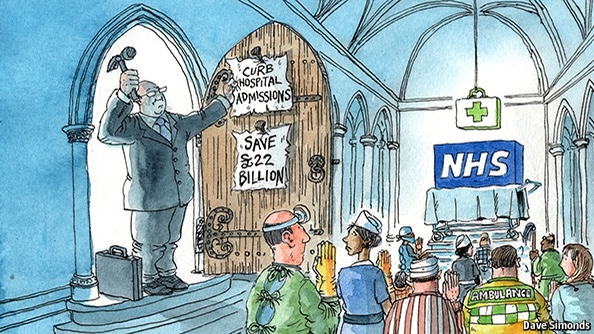
The NHS is a huge employer and a huge enterprise. As such it needs the most professional management in both its patient care activities and in its structure. It does not benefit from ideology. It needs systematic efficiency improvements, less sentimentality and a far better definition of what it’s really for and how best to run it.
Reunions are full of nostalgia and the recent one for pupils of The Leys School from the 1950s and the 1960s was no exception. My first term at the school was Autumn 1959 so I fell pretty much in the middle of the group age-wise. We all looked reasonably prosperous this week though none of us was quite the same shape as we had been fifty or sixty years earlier.
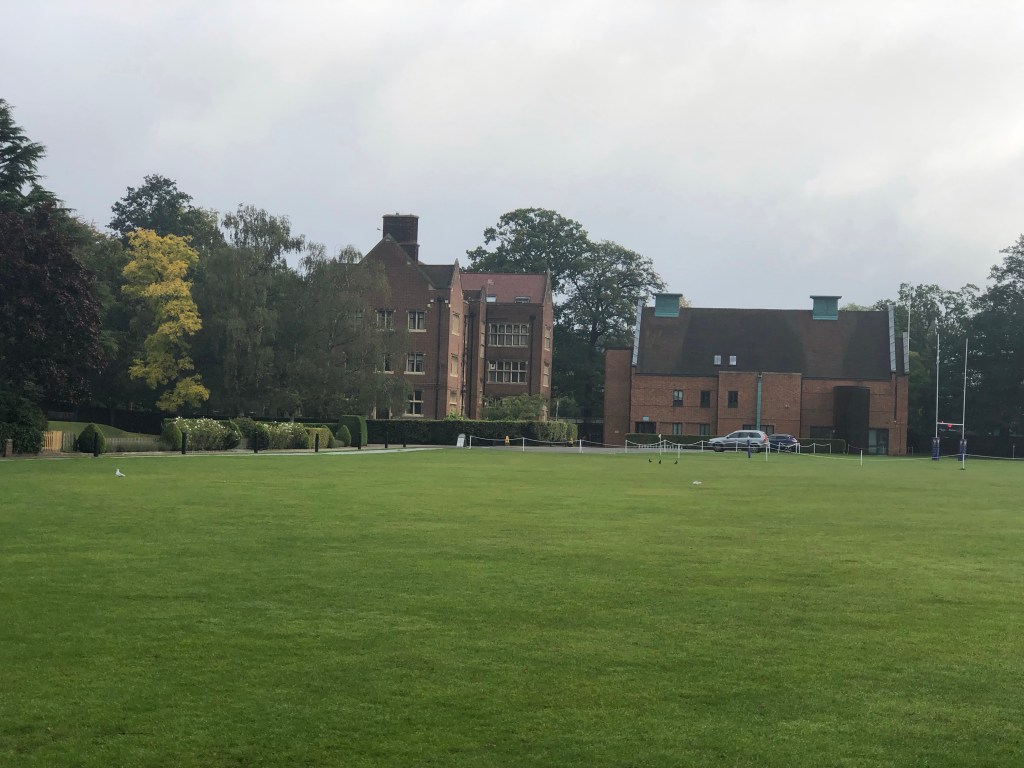
Key to the nostalgia were the buildings. The Kings Building (above) was the same as it had been when Norman Wilkinson captured it eighty plus years ago. The same applied to my own House, East, which viewed from outside seemed identical. Indeed the same as it was when my father was one of its first inhabitants in 1930.
East House (left) and the Music Centre
The other building in the photograph is the “new” Music Centre a superbly equipped place where students can study any instrument (including the bagpipes!) and play in world class music rooms.
The Grand Hall, now ten years old, has a theatre that would be the envy of any professional Company. And, in truth, every other aspect of a modern day rounded education is covered by quality facilities. Sport, The Arts, science and the rest.
Back to the historic buildings some dating back 120 years. As I have said externally they are all as I remember them. Internally, however, they are unrecognisable from my day. The dormitories are gone to be replaced by study bedrooms and a range of other facilities. And it’s not just the internal physical fabric of the buildings that has changed. The Leys has been co-educational since 1990 and girls now comprise almost half the pupils.
The Leys was founded as one of the first Methodist public schools though by the time I came up in 1959 the methodism was fairly muted. Alan Barker, the new Headmaster, was an Anglican and that, to an extent, set the tone. The school chapel is magnificent and in my day we attended services every day, and twice on Sundays.
The Chapel at The Leys School
Author and polemicist the late Christopher Hitchens was at The Leys when I was there. He was a couple of years younger than me and in a different House so I didn’t know him well. Like me he did not emerge from the school a Believer – a Methodist or any other sort! That said this strident atheist did once say that he “learned more in the Leys Chapel than anywhere else in the school” ! I wouldn’t go quite that far but we did have some good visiting preachers including the Rev and very Red Donald Soper. The Chapel , opened in 1906, with its fine stained glass owes more to Oxbridge College chapels than it does to the rather austere meeting halls of the Wesleyan tradition. It is largely unchanged inside and out from 60 years ago.
Historian and Leys teacher Derek Baker called his book on the school “A Partnership in Excellence” . I like this descriptor, a tad boastful though it is, because there is a continuity in the thought that excellence is transferable from one generation to another. It was a fine school in the early 1960s and it is a fine one now – the times have changed radically but to be excellent is an achieved goal.
This brings me inevitably to the contentious subject of private education – the ability that parents with money have effectively to buy privileges for their offspring. It is perhaps a bit simplistic to say that “excellence” is the result if the ordinary can be transformed for the better. But surely if “Levelling up” has a meaning you need an excellent model of attainment to level up towards. The Leys is assuredly that.
The school motto “In Fide Fiducia” means “In Faith, Trust”. This has also morphed a bit over time but for a modern parent to believe that they can trust their child to be looked after and developed in a school is a prerequisite of education. For me this means much, much more than “just” passing exams.
We met today’s Housemaster of my old House East who said that all his charges go to University – no doubt it’s the same from all the other Houses as well. But the partnership in excellence between pupil and teacher, sports or drama coach, for unexamined subjects is at the heart of what the school does as well. I think it always was – culture is not narrowly defined. And examinations are not the only challenge.
Chris Hitchens in his memoir remembered a magical summer evening when our own home grown rock group “The Saints” gave an outdoor concert culminating in their version of “The House of the Rising Sun”. Of its time perhaps but my collector’s item copy of their LP “Saints Alive” reminds that they were pretty good. Today the School drama group regularly puts on performances in the wonderful theatre which like that rock concert all those years ago are open also to the good burghers of Cambridge. A recent performance of “Chicago” got rave notices.
Leysian talent 1964 and 2020
The school song “Joyful word at parting spoken” is unchanged except that the line “Distance from her sons can sever” is now “Distance from us all can sever” – a reflection, of course, of the now co-educational nature of the school. But better in other ways as well. “Us all” can be seen to cover all of us with Leysian connections even those like me and my friends at the Reunion whose connection started many decades ago
Each verse of the school song finishes with the Greek word Χαιρετε! Former headmaster John Barrett, in his splendid sermon to us in the Chapel, focused on this word which is a joyous expression very versatile in its meaning. I think our old boy community all hoped that it means “adieu” with its theme of meeting again. Let’s hope that we can.














 Paddy’s Blogs in a crazy world