Iain Martin today in “The Times” has an extraordinary article trying to justify his Brexit vote whilst lambasting Angela Merkel in a vile and mendacious attack. It’s nasty stuff.
Nasty stuff
You lost Mr Martin, calamitously. It must be hard to bear – you want to be reassured that your foolish Brexit vote was that of a winner but sadly it was not. The worst kind of Brexiteer is not the fool who didn’t know better but the smart person, like you, who let the wrong side of his brain take over. So now you clutch at straws to try and prove the unprovable – that you were right all along.
Angela Merkel provided leadership in Europe at a time when Britain utterly abrogated it. She has been at the heart of the extraordinary and successful coming together of nations (many of whom were once enemies) for peace and security as well as for economic, social and cultural unity. She did this without the need for bombast and with the confidence of one who had seen for herself the dangers of nationalism.
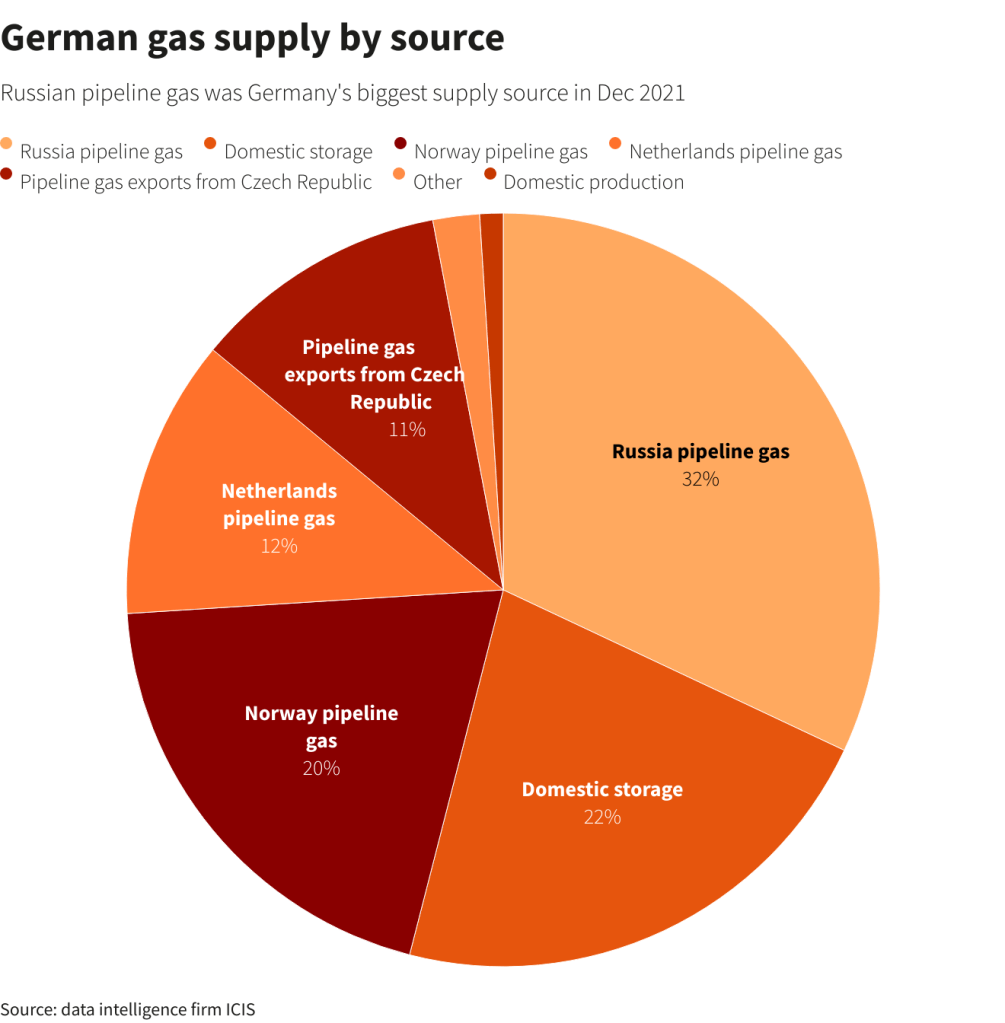
Northern Europe needs gas to survive our cold winters. In the short to medium term there is no alternative. Yes power generation can use a variety of primary energy sources and Germany is diversifying away from a reliance on Coal. Gas is in that mix along with all other alternatives. But for home heating gas was and is the fuel of choice. The only one.
Britain’s energy mix is not dissimilar to Germany’s in that we too need Gas for space heating. But we have had our own offshore and even today half of our needs are met with indigenous supply. Germany does not have that luxury. She had no alternative but to do a deal with Russia.
The significant producers of Natural Gas in Europe are the Netherlands, the United Kingdom and Norway. Their supply does not meet northern European demand so there have to be imports. By pipeline from Russia and by supplies of Liquified National Gas (LNG) from a variety of producers. Over time there will be more LNG. But the only feasible pipeline fed supplier to cope with demand is Russia.
“Embedded in that view is a concept of humans as essentially rational, in the classical economist’s sense of that word. Rational people weigh up the options and do what’s in their best interests. So, the arc of history bends, if not always towards justice, then towards peace and prosperity.” James Kirkup in “The Times”; today
“Rational men” ? They think so
What is “rational” is subjective and culturally dependent. Back in the 1980s, living in Hong Kong and working for Shell, I was a very small cog in the growing movement to open up China economically. How many times did I hear the platitude that China embracing capitalism would lead to the country embracing democracy as well. We thought that to have free markets you had to have free people. Time has shown that you don’t.
Russia’s culture is one of strong all-powerful leaders. The Tsars, Stalin, Putin and most along the way. This hasn’t prevented them being a “Great Power’. Indeed had they been bothered with ensuring personal freedoms and genuine ballot boxes they could have fallen into the troublesome necessity for endless political debate that preoccupies the West.
Being successfully international – economically or culturally or commercially – requires us, as two writers once put it, to “Ride the Waves of culture”. One of writers of this excellent book like me worked for Shell. He taught that when we move outside the comfort zone of our own culture we need to ride the waves we encounter not try and mould or redirect them.
So there is no “rational” model. Walk down a Tokyo street in modern times and you will see hundreds of “salary men” in western suits. Don’t be fooled. The mores and values they have are not ours. When a Japanese businessman says “Yes” he says he understands not that he agrees. “Rational man” is a culturally dependent construct.
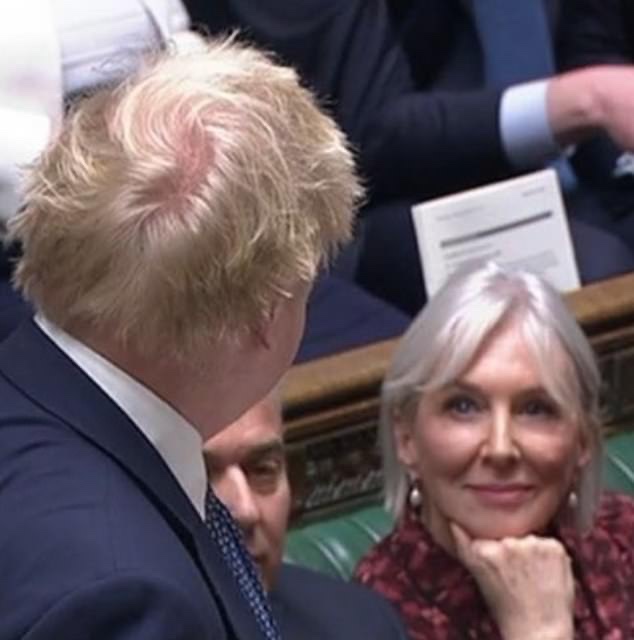
We do not have the most talented Cabinet of modern times. But Nadine Dorries is in a category of her own. Parliament has always had a smattering of colourful freaks in all parties but they are rarely let near ministerial office. The problem with “Mad Nad” is that her Department actually matters to most of us. “Culture, Media and Sport” are part of most of our lives. It is important that The Arts (in all its forms) , the Media, (ever more diverse) and Sport ( the new opium of the masses) exist in a well governed and appropriately regulated context. That’s the Minister’s job.
Nadine Dorries – creepily devoted
The BBC has its faults, how we pay for it is anachronistic but it is the jewel in the crown of British broadcasting and admired around the world. It needs reform, but not change driven by a narrow ideologue whose personal antipathy to the Corporation is matched only by her ignorance of what it does.
Prime Ministers have always preferred to have loyal sycophants around them but even Margaret Thatcher allowed one or two ”Wets” in her team. Johnson demands loyalty and a faithful devotion not just to him but to the one true faith that got him his job. Dorries delivers the loyalty in a rather creepily devoted way and was an early convert to the dangerous faith that is Brexit. Ticking those two boxes seems to be all that matters to Johnson who has a Stalinist approach to loyalty. Incompetent though she is Nadine will survive as long as Johnson does.
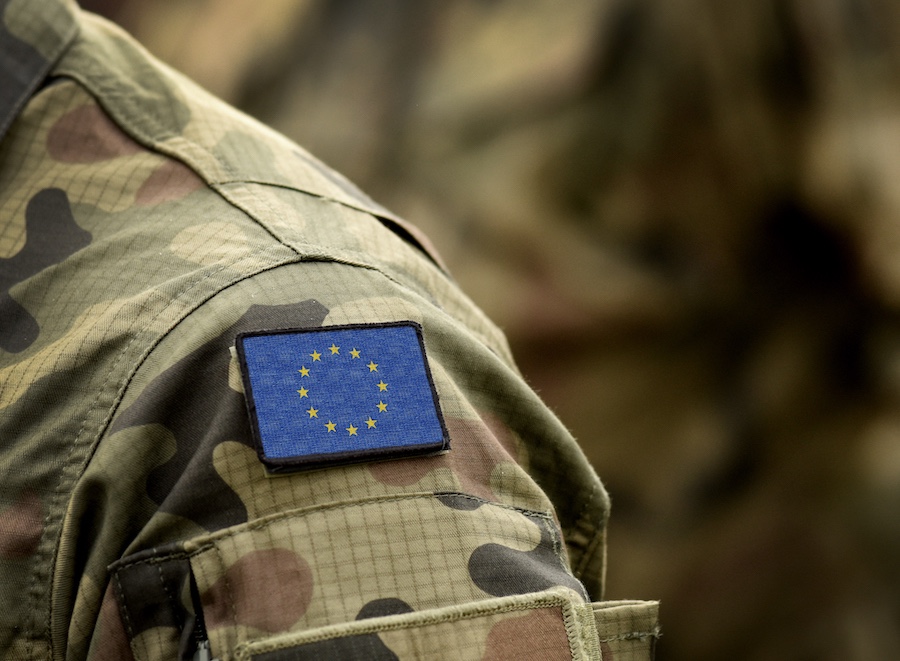
For Europe the next logical extension of “Ever Closer Union” is an entirely European military alliance. This could be, and logically should be, based on NATO but excluding the non EU member states. This does not mean that the likes of the United States, Canada, Turkey or Britain should withdraw from commitments in respect of Europe’s defence. But those commitments would be founded on separately negotiated military treaties.
The problem with NATO today is that the collective is democratically unaccountable – and is not unquestionably European in character . An EU military would be accountable to the European Parliament and to the European Commission. It would be a Defence alliance founded on the Union’s historic and unwavering commitment to peace across the continent. At present the absence of democratic debate in NATO means that its actions are largely unchallenged politically.
The 27 nations of the EU is effectively Europe and to confirm its accountability for the defence of Europe is no great step. The few European nations not in the union – e.g. Norway, Switzerland and the United Kingdom – could benefit from the EU military alliance if they contribute troops and money to it. Similarly Non European nations, especially the US, Canada and Turkey, have interests in ensuring peace in Europe and would be welcomed contributors of personnel and resources.
Europe has no reason to be militarily aggressive and few if any significant defence commitments outside of the continent. But Russia is a threat and one that Europe has no choice but to address collectively. Part of this crucially is diplomacy – Jaw Jaw is always better than War War. The EU is the obvious way to further this diplomacy.
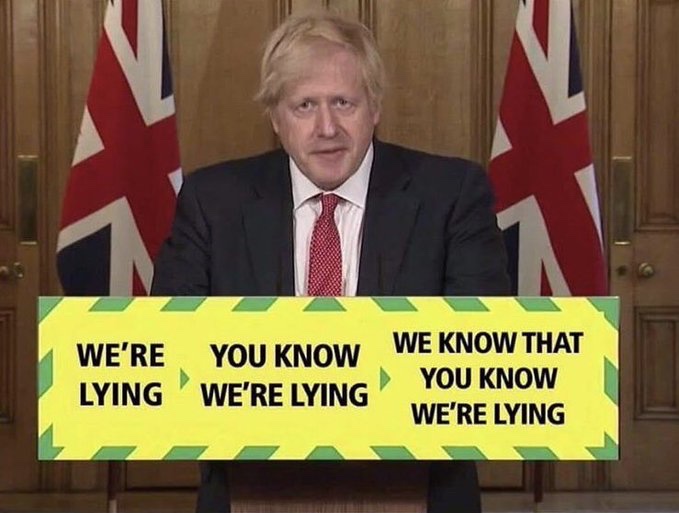
The Collected Lies of Boris Johnson” would be such a heavy tome that it would need to be issued in two volumes. And when mendacity emanates daily from our head of Government it’s hardly surprising that it becomes ubiquitous across our society. Indeed the distinction between truth and fiction, between fact and fable, is so blurred it is often hard to detect at all.
The step from a lie to a conspiracy theory is a small one. Donald Trump was not the only public figure to promote lies which became conspiracy theory about Barack Obama. Most people didn’t believe them but if enough did to make an electoral difference there was a problem.
For two years now some commentators have spread preposterous untruths about COVID, about vaccination and about treatments. Some of these scare-mongerers have platforms in various credible media and even the BBC felt it had to give the anti-vax brigade a platform which implied equivalence with genuine medical science.
But, of course, the biggest lies of all came from the “Leave” campaigns in 2016 and from Brexiteers ever since. The “Benefits of Brexit” , in contrast to the assault on truth that is Boris Johnson, wouldn’t require a book or even a pamphlet so thin would it be. But then some people believe what they want to believe tendentious though it is, especially if it gels with their prejudices.
When telling the truth becomes a fetish for a tiny minority society as a whole begins to lose its morality. And lying normalises when everybody does it. Those who communicate with us cannot automatically be believed especially when politics trumps science. Remember when Michael Gove said “I think the people in this country have had enough of experts” ? This is a paean to anti-intellectualism. Raising the common man to the level of the knowledgeable academic.
Truth is science and science is truth. Of course in science there are borders where challenge is rife. But if we ignore the margins of uncertainty the hard truths contain pretty much unchallengeable facts. They will still be challenged though and always be given a platform on social media. Conspiracy theories deviate from the scientific method. The latter observes, collects information and data, evaluates and concludes. As it does so it records the areas of certainty and of doubt. The scientist will often say “The evidence suggest this and we can conclude with a 95% level of certainty that it is true”, or similar. The conspiracy theorist has no such uncertainty – that’s often a clue !
Life is for some a search for truth – often a frustrating one. That’s one reason why religions can be comforting. They allow “faith” – something based on spiritual conviction rather than proof. “There are more things in heaven and earth, Horatio, / Than are dreamt of in your philosophy” says Hamlet – a good check on our certainty, and acknowledgement that there is always doubt.
Doubts may illuminate and perhaps challenge the expert to seek further proofs. But probability can help us here. “I think that it is (highly) probable” is analogous to the legal construct of “reasonable doubt. “Beyond” reasonable doubt, required for conviction in criminal cases, ups the ante a bit further. Nobody will go to jail if it is just “probable” that they committed a crime. It requires more to convict and potentially deprive someone of their liberty.
Truth has many faces and my truth, biased by factors such as religion and personal experience, may not be the same as yours. But lies and distortions committed deliberately to give the liar personal advantage are often transparent. Civilised society requires that we are true to ourselves and to those we interact with.
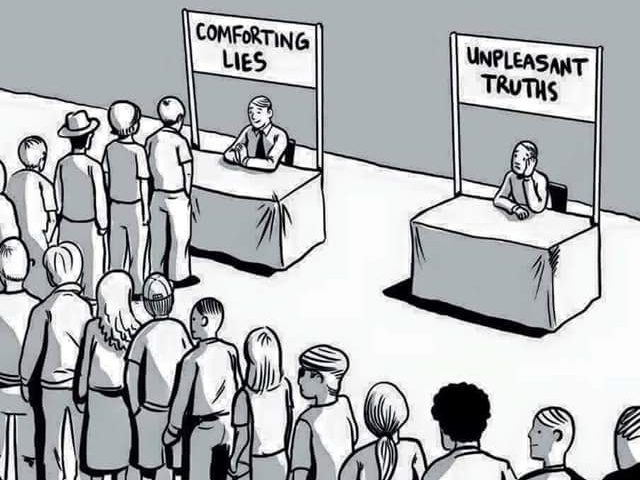
Whether it was Mark Twain or Jonathan Swift who first said “A lie can travel halfway around the world while the truth is still putting on its shoes” ( there is doubt !) is less important than the inate truthfulness of the saying. We are especially unwilling to confront a truth when it upsets or disadvantages us. Maybe that is why populist politicians like Johnson or Trump lie to us. To be the bearer of bad tidings is much less attractive to the voter than telling them comforting lies.
In 2006 the CEO of Saatchi and Saatchi, Kevin Roberts, published an original analysis of buyer behaviour in respect of brand choice – “Lovemarks”. The title referred to brands which transcended rational choice and generated such preference that they had become “loved”. They didn’t have to be loved by everyone just by enough in the target group to be dominant. The classic, almost clichéd, example is Marmite.
In politics support for an individual who has “Lovemark” status is much more elusive because politicians are much more divisive. In being for something they have also to be against something else. Even if the differences deep down are not that great. Heath and Wilson or Major and Blair were not that different in values if you drilled deep down. But they pretended to be different.
Boris Johnson is, or perhaps aspired to be, a rare “Lovemark” politician. Whereas previous party leaders were often divisive and superficially driven by policy commitment Johnson had never been. But even his flagship “Get Brexit Done” slogan was opportunistic and pragmatic – he could easily have been a Remainer if he had judged that was better for him personally.
Ask people what Boris stands for and you’ll get many blank faces. The wave whose crest he rode on was driven by familiarity, personality, presence and style. People actually bought his brand because they loved it. But in the Age of Covid it looks like charisma isn’t enough when the core of the brand is fraudulent and it is promoted by deception. In the “Lovemark” analysis (see above) Johnson was never quite in the top right quadrant (except for a few ultra-loyalists or lovers ). But he could and did operate successfully high in the bottom right. He was a “Fad” in which people supported him out of a fanatical affection which in many cases trumped their lack of true respect.
That Johnson is a serial liar, adulterer and fraud is hardly a surprise. But he got to 10 Downing Street despite these flaws, even a bit because of them. As Politics Professor Matthew Flinders put it:
“Whether hanging from a zip wire, waving Cornish pasties or falling in rivers, he is the ultimate entertainer. To the annoyance of his opponents, the public appear to vote for him not on the basis of his performance or policies but simply because he’s funny.” In short he was clearly a “Fad”.
But once Johnson bulldozed Britain to Brexit the demands of the job changed. A charismatic vote winner who was economical with the actualité was not the man to handle a pandemic in which management competence, openness and truthfulness were more important than entertainment.
Once the affection goes (and it’s slipping away rapidly) then “Low Love” and “Low Respect” beckons. And that’s the loser’s quadrant. The end of the dream.
The subject of domestic energy prices creates more heat than light when “debated” on social and other media. It’s almost as if nobody has taken the trouble to find out about it (quite likely) or that it is too complex to understand (it isn’t). This is an attempt to explain.
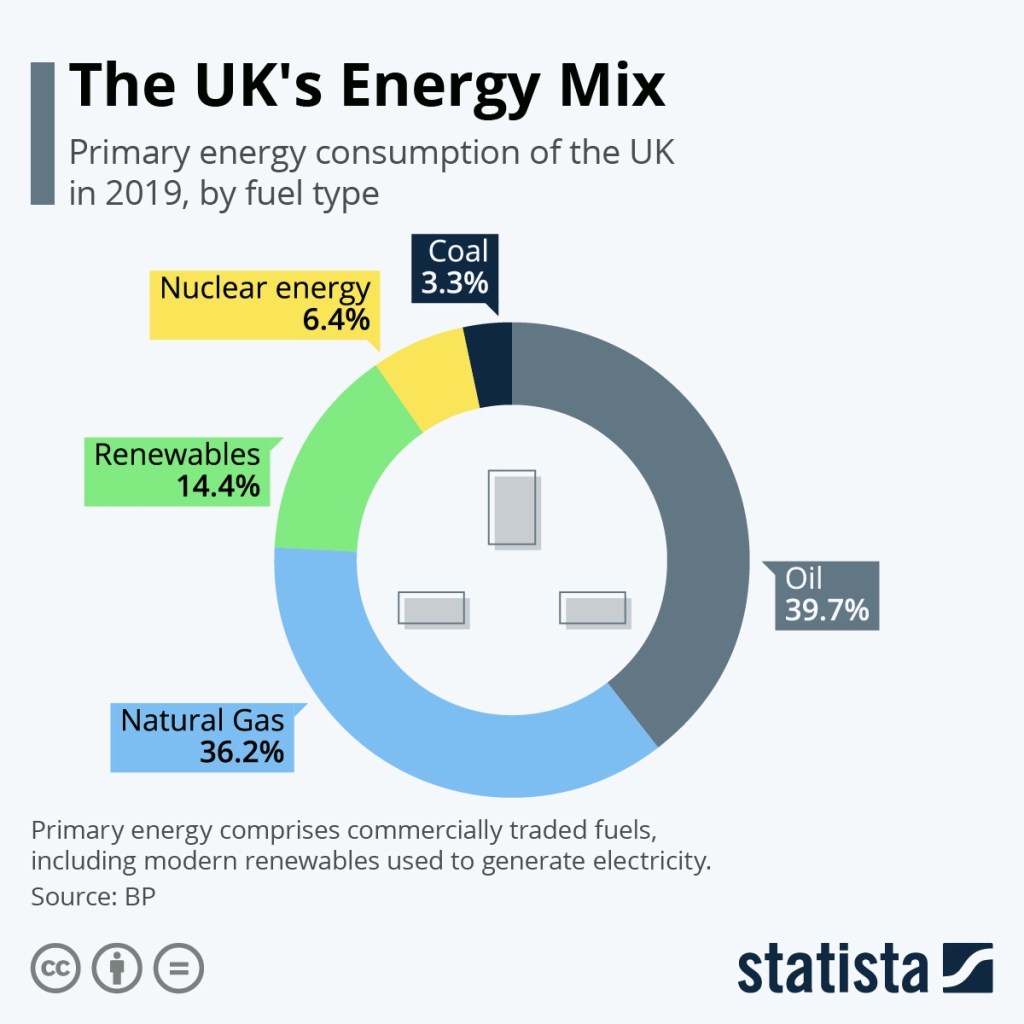
Let’s look at some first principles about Energy. First There is a need to understand what Primary Energy is, where it comes from and how we use it.
Primary Energy is the high level presence of useful energy sources. These are:
Crude Oil
Natural Gas
Coal
Nuclear Power
Water (Hydroelectric schemes)
Renewables (Sun, Wind, Tidal etc.)
U.K. Primary Energy supply (Hydro shown under “Renewables”)
Crude Oil is useful only when converted to something else – usually in an oil refinery. These are oil products and also feedstocks used in plastics manufacturing. Among the products are a number of Secondary Energy manufactured fuels – the most familiar are petrol and diesel for road vehicles (motor fuel) and various fuels for other transport – aircraft, ships etc.
The price of oil products is determined by (1) The dollar cost of the Crude Oil input. (2) The exchange rate between the Pound and the dollar (3) Refining costs. (4) Transportation costs – both for the Crude Oil to the Refinery and for the refined product to the customer. (5) The producer and refiners margin and (6) Taxes and duties.
If we take the principal domestic use of oil products, motor fuel, the price build up can be seen in this graphic:
This is illustrative and not directly based on current pump prices. What it shows is that at a price of 132p a litre tax (Duty and VAT) is some 60% of the consumer’s cost. The raw material (crude oil) cost is less important than the tax.
Other uses of oil products (e.g. for Aviation or Marine applications) are not generally taxed.
Gas
Now let’s look at Gas. Natural Gas, like Crude Oil, is a hydrocarbon and is the Primary Energy source of choice in the U.K. for home heating (and cooking for some). For U.K. demand Gas is produced offshore the British Isles as well as in Europe especially in Norway and The Netherlands. Traditionally the only means of transportation was by pipeline but in the last 20/30 years Liquidied Natural Gas has been transported to Britain in special ships. UK has three operational LNG import terminals — two in Wales (Dragon and South Hook) and one in southeast England (Isle of Grain).
Gas, unlike Crude Oil, requires little processing to enter the gas grid. Just some adjustments to bring it to specification. It is a commodity and there is no product differentiation. The grid is owned and operated by National Grid plc a privately owned monopoly. National Grid’s role is entirely operational – it neither buys nor sells gas but solely provides the infrastructure for others to do so.
Domestic gas “suppliers “
The commercial element in domestic gas supply comes from dozens of so-called “Energy” companies (see above) who offer price deals to consumers. There is no product and little service differentiation between them. They are traders who buy and sell gas which National Grid transports to the consumers. The suppliers make a margin to cover their costs and profits and none of them has any strategic advantage (except that the larger companies like British Gas will have some economies of scale and may have some procurement cost advantage as well.)
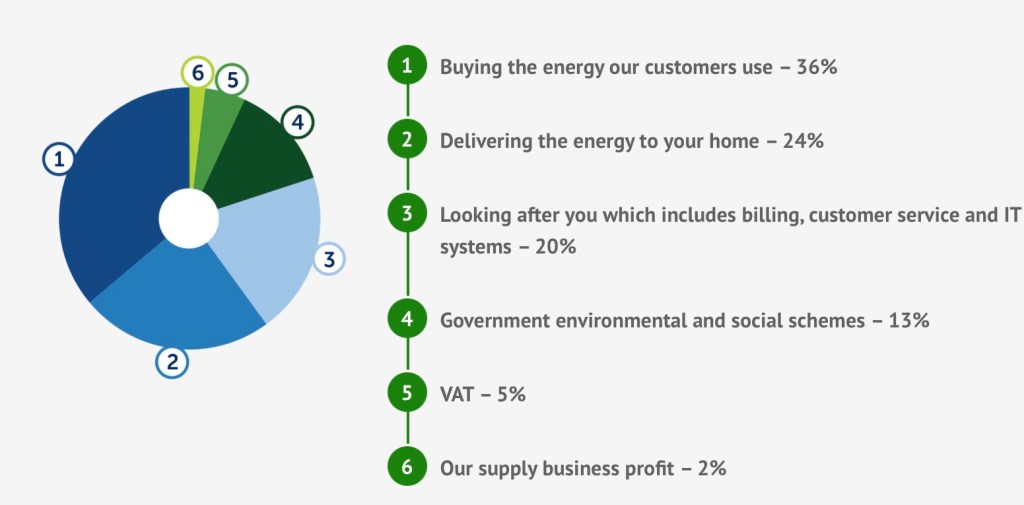
As we have seen with Crude Oil, Natural Gas sourced either by pipeline or by LNG tanker starts with a cost of acquisition to which must be added transportation costs and other costs of the “Energy” companies – including their margin/profit. SSE, one of these suppliers, have showed their cost build up as follows:
SSE gas cost build up
The above graphic is worth studying. It is noteworthy that the actual acquisition cost for Gas to SSE is, according to them, only just over a third (36%) of their total cost. 46% are their operational costs and profits. “Delivery” is mainly the fees paid to National Grid for moving the gas through pipelines to the customer. SSE’s costs include marketing (not made specific) where the level of competition from over thirty other “suppliers” means they have strongly to advertise their price offers. Other than price there is no other significant benefit they can offer prospective customers.
As with Crude Oil the acquisition cost for gas is determined by international dollar denominated prices and the £/$ exchange rate. Purchasers can negotiate deals for term supply but ultimately there is not a lot of flexibility – gas is a publicly traded commodity.
Electricity
Power generation is the activity of converting primary energy (mainly hydrocarbons, nuclear and renewables) into electricity which can then be transported by the electricity grid cable system to customers. As with Gas the distribution system is owned and operated by National Grid plc. Power Stations mainly using hydrocarbons (Gas) as fuel convert the fuel to electricity. Everything described above for Gas, downstream of the power stations, is the same for electricity. Indeed the same companies are involved and it common to bundle Gas and Electricity together in consumer offers.
Coal and Nuclear
Power generation using Coal is a minor contributor – there are one or two specialist industrial processes requiring coal but in overall terms coal is no longer a significant part of Britain’s Primary Energy mix.
In 2019, Nuclear energy supplied 17% of the country’s electricity. This energy comes from 13 nuclear reactors at six plants. Although one new nuclear plants is planned and others proposed it is unlikely that production significantly above current levels will happen.
Conclusion
The U.K. has a reasonably diverse Energy supply situation and this will improve further as Renewables (mainly Wind power) expand further for power generation. As electric vehicles increase their share of the private vehicle sector then oil consumption will fall percentage wise. (For this to be environmentally positive the electricity used will need to be from renewables of course otherwise al that happens is that the location of the pollution moves !)
The key area for reform is domestic gas and electricity supply. The current situation is sub optimum with suppliers incurring largely unnecessary marketing and other costs which are passed on to consumers. The case for having unitary gas and electricity supply to create scale efficiencies and eliminate artificial competition is strong. As is the case for far greater transparency in cost and pricing.
The debate as to whether a unitary operation should be publicly or privately owned (and regulated) is secondary to the need to get our collective act together. The debate should include the role of National Grid as a monopoly transporter to the energy suppliers. But private sector monopolies are often defective (see also domestic water supply) !
The planned rises in gas and electricity prices need to be seen in the context of all of the above – especially the apparent comparatively low percentage (36%) that gas and electricity acquisition costs are of suppliers’ total costs.
Arrogant elitism has led to a a disdainful breaking of the law by senior politicians who had just set the very rules they broke. Some think that the media is doing us a disservice by reporting these stories. “Shameful” wrote one commentator. But the “shame” is solely with the perpetrators not those who broke the stories. These stories were not “created”, as some also charge, but they were real and have at least been reported as such – very belatedly as it happens ( grounds for further investigation there surely).
An effective working democracy relies on honesty and its destruction comes not from truth-telling but from lies. One of the learnings from this sorry affair is that the checks and balances on the governing class are inadequate. Every day Number 10 and its tenant’s senior ministers tell us more untruths and every day some of our popular press duly and sycophantically reports them as facts.
The Augean stables are foul and fetid and we need more not less investigative reporting. We deserve to be governed by people who tell us the truth and who have our best interests genuinely at heart. It’s not time for Spring cleaning. It’s time to throw the current mobsters out and to start again.
It started with Korea and via Vietnam, Iraq and Afghanistan (and others) western meddling in the internal affairs of far away countries has been a disaster. America in the lead at first with its preposterous domino theory and Red hunt at home. Tendentious justifications claiming the moral high ground.
Military actions doomed either to battlefield failure or losses of the peace – often both. The arrogant presumption has always been that “we” know best. Our governance systems are better than theirs and we care more about our people than they do about theirs. And yet when push comes to shove their failing and inadequate system and methods beat ours – as in Afghanistan with tragic consequences.
If the 21st century is to avoid the horrors of the 20th the West could benefit from having a bit more understanding and a lot more humility. America has enough of its own internal problems to address without thinking that it has a right to tell others what to do.
There is a certain continuity in British politics that could be relied upon. The Tory Party in Parliament has always had its eccentrics and fools, some very funny at times, some bonkers. But somehow the best tended to rise to the top. Some were found wanting for various reasons and some excelled unexpectedly. John Major, Michael Heseltine, Ken Clarke, Chris Patten, Willie Whitelaw – they were “One Nation” in the days when we were.
Today the cupboard is bare. Sunak looks promising though too swiftly over promoted. He’s a lot to learn. But the rest of the Cabinet ? Liz Truss is Johnson’s Anne Widdecombe – given prominence and power for inexplicable reasons. Remember Widdy was Hague’s shadow Home Secretary. 😂
Johnson’s lack of judgment and lazy, narcissist nonchalance has got him into trouble all his life. Ministers run things and Prime Ministers run the country. Johnson has never run anything. The London Mayoralty is a sinecure. Johnson was briefly Foreign Secretary and rather an indolent one. Otherwise he’s a comic turn but now more Jim Davidson than Eric Morecambe.
Matthew Parris despairs in The Times today. He will remember “Cry the Beloved Country” about Southern Africa by Alan Paton. I’ll borrow the title to describe Britain today. The decline wasn’t inevitable – after the painful disposal of Empire, Europe offered us the chance to be something. Along with Germany and France we could have been central to the development of a new European Age. But we blew it and in so doing lost everything except our memories.







 Paddy’s Blogs in a crazy world