Hong Kong was sold down the river, there is nothing to celebrate

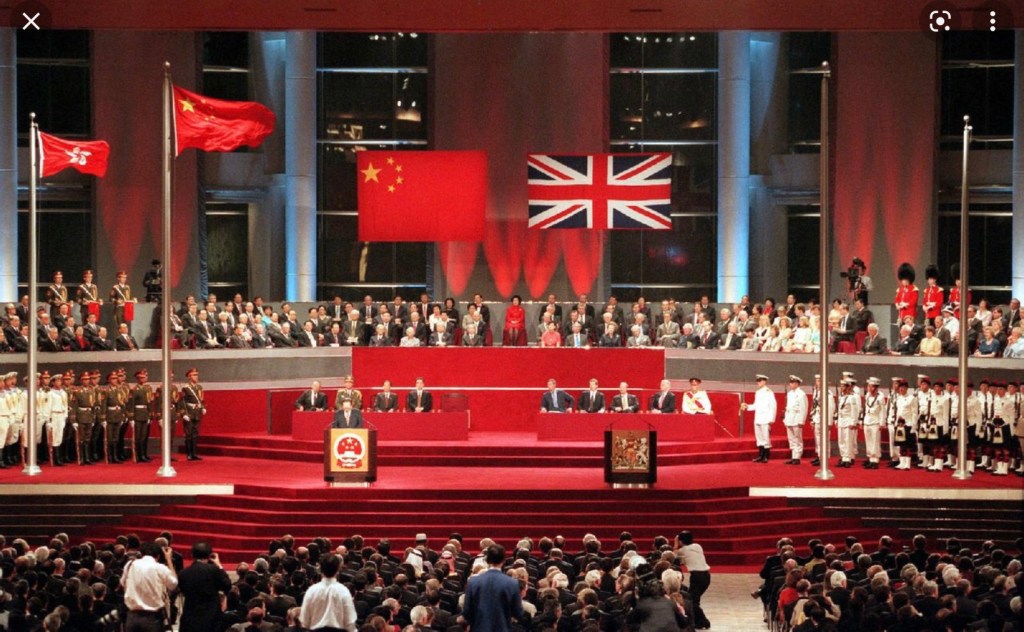
Twenty-five years on from the infamy of the handover of Hong Kong there is nothing to celebrate and much to mourn. Was the repression inevitable and could Britain have avoided it ? Undoubtedly so in my opinion.

My years in Hong Kong in the 1980s we’re very happy indeed. But it is delusional to think that even then anyone thought that “One Country two systems” could work. My Chinese Hong Konger friends certainly didn’t think so. In large numbers they sought and gained overseas Passports. Not from Britain, which sold them down the river, but predominantly from Australia, Canada and New Zealand. Or America, if they had the right connections.

It was in 1989 that Britain’s perfidy was seen for what it was. I was in Peking when the students gathered in Tiananmen Square. But I was back in Hong Kong when the tanks rolled in. Bedraggled escapers started arriving with horrific stories of Chinese atrocities. And what did we and the rest do ? Absolutely nothing, apart from a bit of hand wringing.

In the decades that followed Tiananmen there was a series of faustian pacts on an enormous scale between British and other western companies and the Chinese. The scale was huge and human rights played not one tiny part in it. China became the world’s manufacturer on a giant scale. This trickled down in the People’s Republic and a consumer society emerged buying from the West, which salivated at the money to be made.

Hong Kong was Britain’s last significant withdrawal from Empire but we botched it like we botched all the others. The irony is that it didn’t have to be such a balls up. Britain had a right to Hong Kong Island and Kowloon in perpetuity but we hardly played that card in the negotiations. Thatcher wanted out and she certainly didn’t want to offer the people of Hong Kong a home in Britain. Imagine the headlines!

The Chinese didn’t move to repress the Hong Kong people immediately – they are far too pragmatic for that and they famously take a long term view. But now they’ve nothing to lose. Their economic strength is unchallengeable. Some ignorant commentators say we should boycott Chinese goods and services. Ha !

I was privileged to be in Hong Kong for a while and have happy memories. It was a unique place, benevolently governed and a shining example of the potential and success of multiculturalism. I keep in touch with my HK friends, but they are now in Melbourne or Vancouver or Auckland. Who can blame them ?

The new Establishment is based on patronage not class.

Anthony Sampson described the then “ Establishment” in a book called “Anatomy of Britain” back in 1962. The commanding heights of post war Britain were occupied then by the old school – officer class, public school, silver spoon types. They had been mocked by the bright young things from Amis to Osborne to Pinter and Braine. But they were still in charge.

When “ Beyond the Fringe” opened it was the first time a Prime Minister had been parodied on stage – poor old “Supermac” , that most establishment of Prime Ministers. Peter Cook and Co. invented satire and the status quo was gently rocked. Their characters were not exaggerations , they held up a mirror to society.

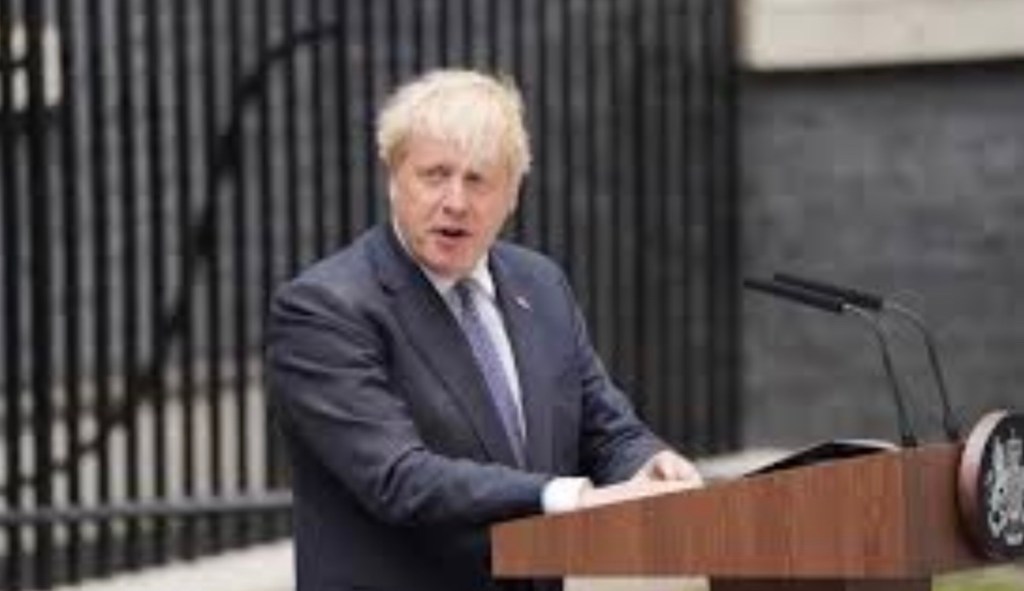
But in a society in which Boris Johnson is Prime Minister, Jacob Rees-Mogg in the Cabinet and Nadine Dorries is Secretary of State for Culture, Media and Sport surely satire is dead ? The governing class satirises itself daily. But it is as incestuous as that which Sampson described.

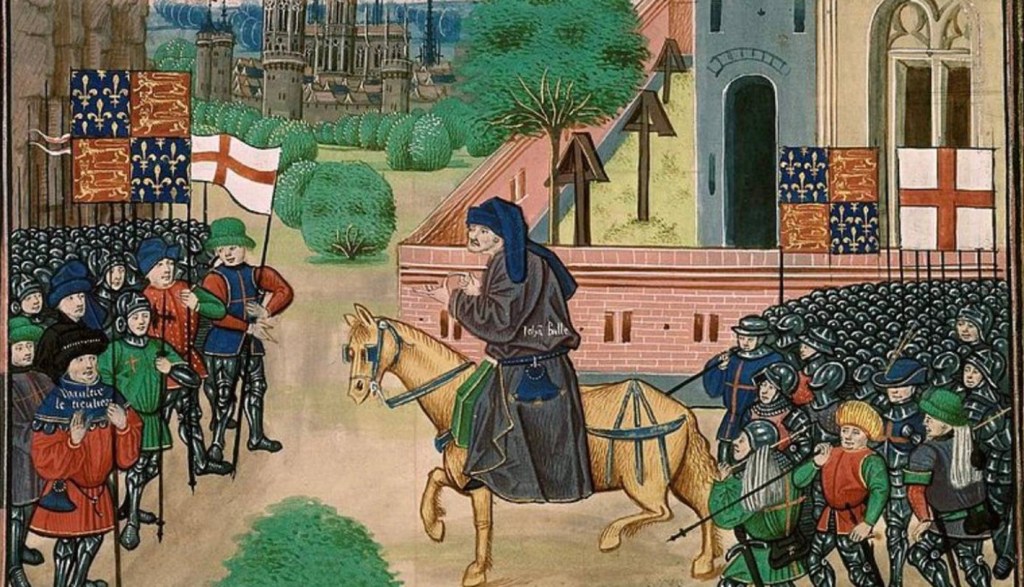
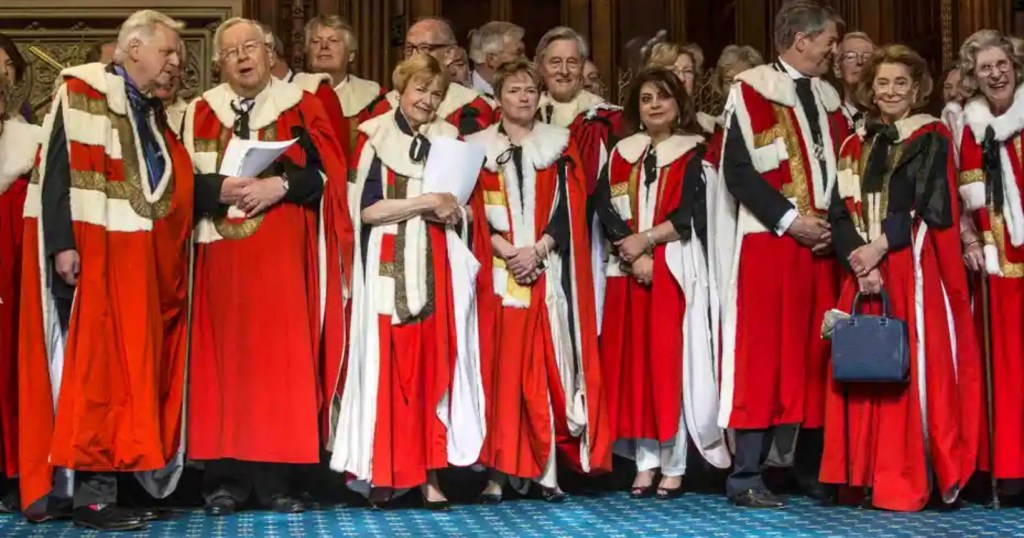
The new Establishment is based on patronage not class. Of course honours and preferment have always been used as rewards by those in power but today it is so naked. If you catch Boris’s eye, and were sound on Brexit, a seat in the House of Lords is yours, Buller or not.

It’s hard to know what anyone in authority really thinks any more. Perhaps they don’t think, just parrot what those they aspire to join say. When one breaks cover, as JK Rowling did, she is cold-shouldered despite being indisputably right.

Nothing works in Johnson’s Britain and our patience is running out

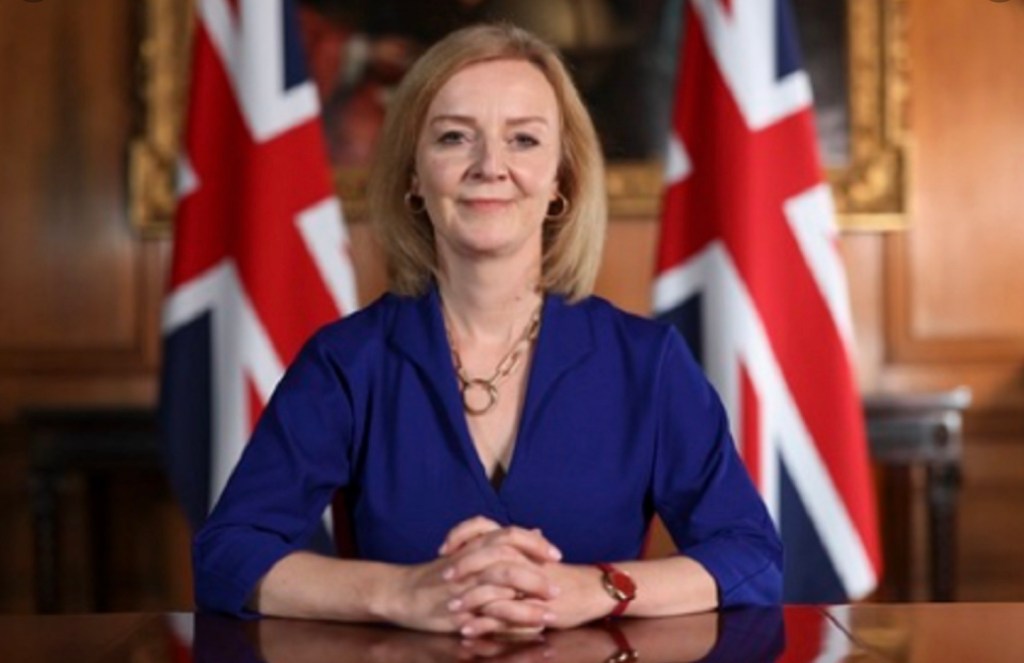
Matthew Parris renews his call for the defenestration of Boris Johnson in The Times today. Of course he’s right – it’s Johnson. But it isn’t only Johnson. He is surrounded in Cabinet by sycophantic incompetents a number of whom – Patel, Dorries, Raab, Truss and the rest – only in the fictional dark recesses of a satirist’s mind wouod be anywhere near high office.

The earthquake that was Brexit changed the Conservative Party from top to bottom into a Faragist cult. Faragist without Farage, maybe, but there are plenty of alter egos for our Nigel. Scan through UKIP’s manifestos of ten years ago and Boris Johnson’s Conservative Party will be revealed to you.

Successful political parties need to be popular to win but Johnson’s approach has been populist – not the same thing. From Rwanda to Human Rights it’s as if the Government’s policies were dreamed up in the saloon bar of a pub in Colchester late in the evening.

In Wakefield and Devon they rumbled what’s up. And surely across England the same applies. Maybe Essex Man will still be loyal but the cult is shrinking. When nothing works – try getting a driving licence or a passport in a hurry – our patience wears thin. When our electricity and gas bills go through the roof and the next appointment at our GP is two months away we slip into blame mode – and ultimately we know where the buck stops – where the parties were held and the vomit had to be cleaned up.

Of course Johnson must go, but to be replaced by who? Has the cupboard ever been so bare ? Our nation really should be better than this – can anyone tell me how it can be ?

Retail petrol and diesel is a perfect market with vibrant competition

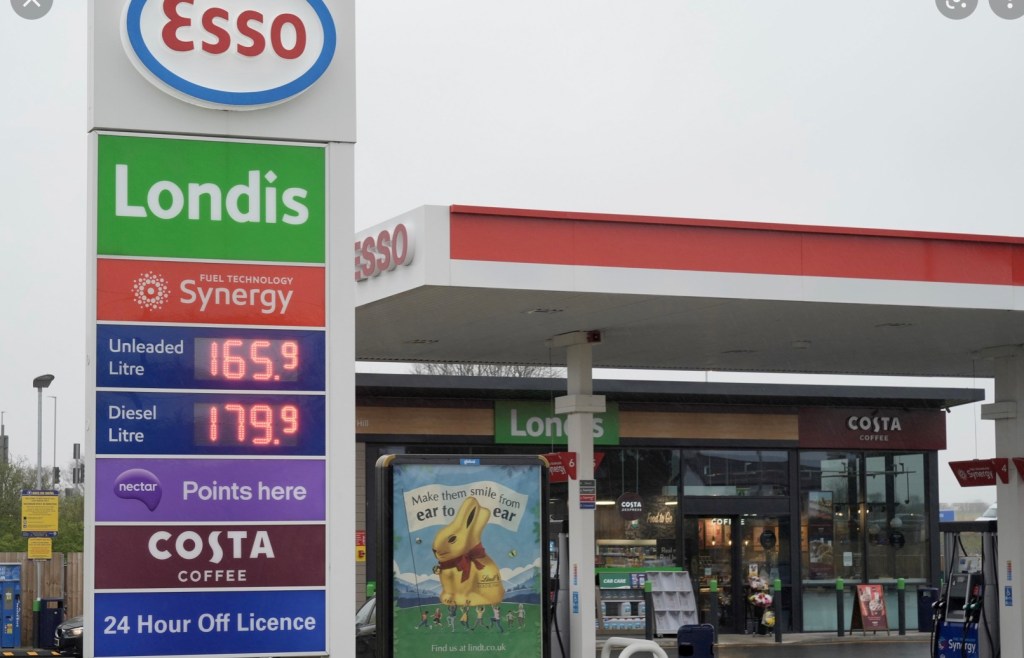
There are few more perfect markets than that for petrol and diesel – at least in urban areas. The pump price is market driven with retailers constantly monitoring competitive prices in a trading area and responding to changes. Petrol stations which increase prices above their area’s norms lose business and those which reduce prices gain it – its as simple as that.

Petrol stations visibly display prices on roadside signage helping the motorist to make a choice. If you don’t like one site’s price you can find another. There are no restraints on fuel prices other than those of the market. Fuel is a commodity with little or no product differentiation. Convenience plays a part in choice as does service and the presence, or not, of shops and convenience stores. But it’s primarily a price driven market.

There is often a time lag between falls or rises in wholesale prices and pump prices but it isn’t for long as market forces cut in. Where competition is weaker, in rural areas or on motorways, prices are higher. But in towns and cities the market and competition generally works well.

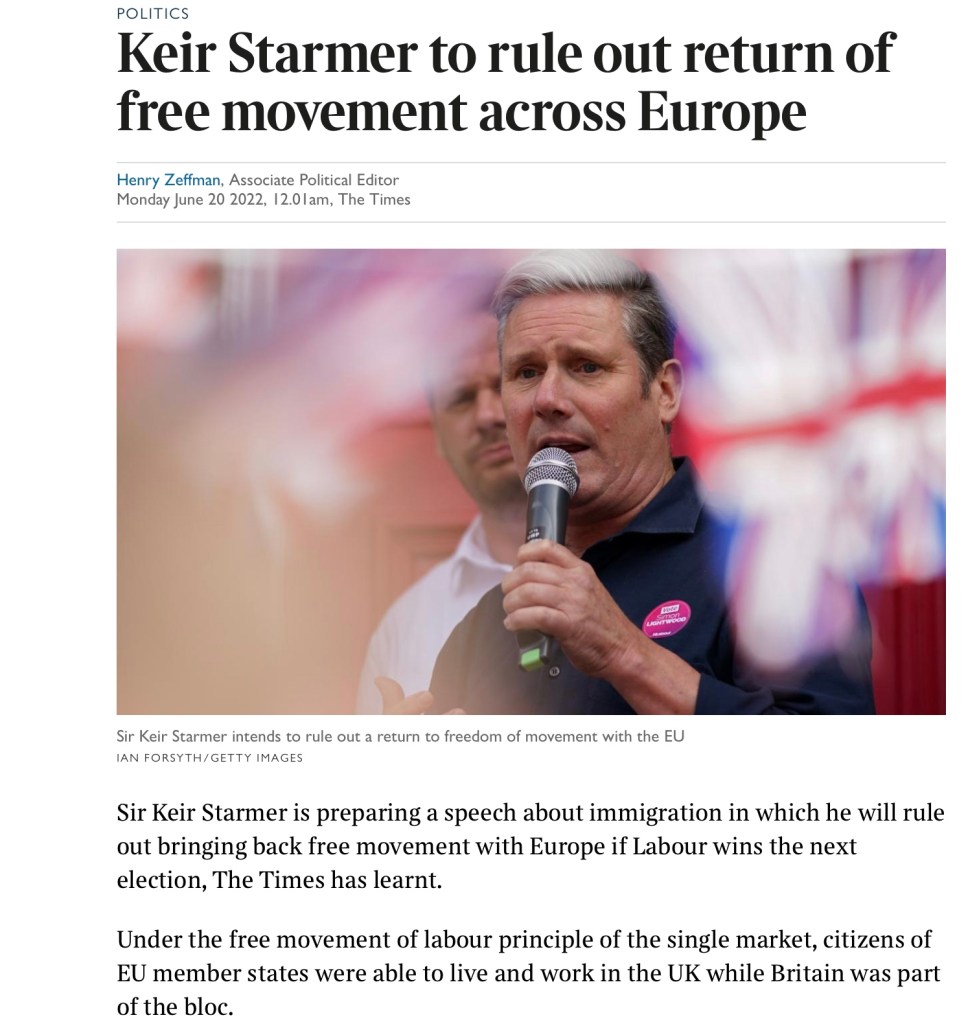
Keir Starmer has caved in to the Little Englanders – Nigel Farage’s triumph is complete

And so the victory of Nigel Farage is complete. His anti-foreigner prejudice infected the Conservative Party and killed its open trade imperative once so proudly espoused by Margaret Thatcher. And now Keir Starmer’s Labour Party, once internationalist and modern, is becoming Faragist in erecting permanent barriers to trade and people.

Across Europe you will see 30 independent sovereign nations linked by their commitment to the single market and enjoying the benefits of freedom of movement of capital, labour and enterprise. But Little England, having erected a fence around its shores, stumbles on in a fantastic belief that faux-patriotic flag-waving can replace openness and common sense.

We have turned the clock back more than a hundred years to a time when Britain had thought it was a land of hope and glory and that it ruled the waves. The ships and the glory have mostly gone and the flags just look like sad relics of a distant time.

Freedom of Movement was, of course, a two way street. Across the Channel an eighteen-year-old contemplating his or her future has those 30 countries to choose from with no barriers in the way. A Brit now has far narrower horizons because a political class dominated by Farage types of his or her grandfather’s age has removed their freedom of movement. What a pathetic runt of a nation we’ve become.

Priti Patel – dumb, dangerous and degenerate

To argue that in days of yore Politics attracted the very best of these islands would be stretching credulity. But overall it was a decent profession and those treading the political boards, whether you agreed with them or not, were mostly able, smart, decent and principled. In the last ten years or so that has disappeared almost completely.

The present Cabinet is decried daily by political observers – this is a randomly selected exposé of the “Worst Cabinet in History” there are dozens of similar diatribes around.

Worst Aming Equals”

Priti Patel is arguably the “Worst Among Equals” in the Cabinet though perhaps not head and shoulders above the rest (an improbable assertion about our vertically challenged Home Secretary). But she really is awful.

There is a video on YouTube of Ian Hislop destroying Patel for her support for the Death Penalty. I have always thought that Capital Punishment is the acid test of anybody’s personality. Before abolition the hangers and floggers were a vile tribe and those of us who campaigned against them were tested not to grab them by the lapels and nut them. We mostly did apply restraint.

Patel as a “Hanger” could be dismissed as an eccentric throwback were she not Home Secretary and were her views on this subject not genuinely illustrative of her views on everything else. That she bullied her staff should be no surprise – one Civil Servant stated bluntly: “She hates us and we all hate her.”Another official said: “What’s become abundantly clear is that she is out for herself and only interested in how this plays out publicly.”

Well ambition is the fatal flaw of not just Priti Patel but most around her at the Cabinet table and certainly of the man at its head. But with Patel the ambition is combined with stupidity and wickedness. A menacing combination. She is dumb as well as dangerous and degenerate.

The “Rwanda solution” for refugees seems not to have been dreamed up in a debate at some modern day “Wannsee” type conference but in the dark recesses of Ms Patel’s head. It is an idea so transparently evil that the fact that it is being attempted says as much about our Government’s absence of checks and balances as it does about Patel’s malignancy.

Whether the populism that drives all of Patel’s actions will slip her up we will see. Her comments on the ECHR ruling were beyond shameful, but that is what she does and what she is.

The Falklands War was a symbol of failure

Max Hastings, who probably knows more about The Falklands War than anybody, writes about it 40 years on in The Times today.

The Falklands, 1982

I was living and working in The Netherlands during the Falklands War. My Dutch colleagues and friends thought that we were mad, but they admired us. Working in the oil industry I knew that there was a possibility of there being exploitable hydrocarbon resources in the South Atlantic. But there was insufficient certainty about this to justify sending in the fleet.

No – the War was about sovereignty and nothing else. The Dutch who thought that we were mad were mercantile pragmatists. The Falklands had no resources to speak of, cost a lot to supply, were miles from anywhere. Fewer people lived there than on a housing estate in Utrecht. “You Brits must love penguins” one said to me. “Why not give the 2000 residents a Scottish island” said another. He had a point.

But in 1982 I backed the War. There seemed a nobility about it and a moral logic to defending “our” people. In Holland my views were tolerated and even admired, though the quizzical looks suggested that the people thought that I was unhinged. On reflection I now think that I was.

Forty years before The Falklands the nation was in a life or death struggle. Eighty years on my admiration for those in that war, my own father included, is undiminished. But the skirmish in 1982? Not really. The loss of life in the South Atlantic was horrific and for what ? British honour ? Hmm. I am now convinced, though I wasn’t at the time, that a negotiated settlement was possible. That there was a war was a symbol of failure.

The key performance indicators for the rail operators should be customer satisfaction and value

My response to Danny Finklestein in “The Times” today

Danny

When you and I, in the early 1980s, joined the Social Democratic Party (SDP) we were in effect choosing to join a modern version of Labour with a new name. Our “Socialism” was that of Tony Crosland not Tony Benn. It was arguably not socialism at all but a recognition that the modern world demanded modern answers , but not the answers that Margaret Thatcher was giving it.

“Labour” was the creation, post war, of those who believed in the need for the State to command the heights of the economy. The Welfare State revolution is still with us, just, though the state ownership of production has long since gone (as has much of the production actually).

Since Attlee Labour governments have accepted the premise that Britain can only operate as a mixed economy, Clause Four has long since been abandoned and the private sector runs much of our public services. In my view it has gone too far and we have too many of our essential services being driven by profit and reward imperatives rather than for the people.

The disconnected railway system is a confused shambles and that is part of the reason for the planned rail strikes. The key performance indicators for the rail operators are profit and remuneration of its top management. They should be customer satisfaction and value. Every major European country has better Railways than Britain irrespective of their ownership structure.

The Left will argue that the Railways should be renationalised. This, all or in part, may be an element in the necessary changes. But regulated private ownership and public/private partnerships are also options to be considered. Ideologies of either Left or Right are counter-productive.

“My Fair Lady” sparkles in a fine production at the Coliseum

The “Lincoln Center” production of “My Fair Lady” has been transferred largely intact to London’s Coliseum Theatre and placing it on a conventional stage rather than semi in the round (as it was in New York) has taken away none of its engaging intimacy. It is the first major production of the great musical in London for twenty years.

“My Fair Lady” is, of course, “Big Theatre” – it is over three hours long, has a big cast and an even bigger orchestra which makes a big sound! But in essence it is a simple story addressing big themes. Gender, Class, Wealth (or the lack of it), Morality…it’s pretty much all there. Along of course with the fin de siècle certainties of the virtue of Englishness (especially of the English language) of those still Imperial times.

The simple story asks the question “Can a flower girl pose as a Duchess and persuade those who might see through her. “ But in posing the question George Bernard Shaw, in “Pygmalion”, weaves in an acute dissection of the norms and mores of Edwardian England. There has been some debate in recent times as to whether GBS’s plays are truly feminist. That debate seems rather sterile to me. From Pygmalion to Candida, Major Barbara to Man and Superman (and others) Shaw’s women were groundbreakingly strong, confident and self-assured.

The original play and it’s musical version are set in the England of a few years before the Great War. It was the time of the Suffragettes “Votes for Women” campaign and we see that briefly in a crowd scene. Shaw wasn’t to know that war would shortly give that campaign a resolution as women played a key role and did a lot more than just keeping the home fires burning. After 1914-1918 there was no turning back.

The world of Eliza Doolittle is an overwhelmingly male world both in the refined surroundings of Henry Higgins and Colonel Pickering and in the raucous world of Eliza’s father the Dustman Alfred Doolittle. Doolittle and Higgins, different though they are, have the same views of women and marriage. “Let a woman in your life and your serenity is through” as the latter puts it!

Higgins attitudes and behaviour sound vile to modern ears, a male chauvinism that would get him vilified if not locked up today. Extreme though he is, however, he is not really challenged except in the most subtle, and effective, way. Eliza shows him up occasionally with words but mostly with her exemplary behaviour.

Henry Higgins thesis is that language use, and especially accent, is the definitive discriminator between the classes. Improve the way a flower girl speaks and she improves her station – especially if you give her a good dress to wear. But Eliza does more than this. As her transformation is underway we see her curled up on the sofa with a book. For her self-improvement is more than talking posh.

Colourblind casting

Eliza is played by the excellent Amara Okereke who is black and of Nigerian heritage. Colour-blind casting is pretty much the norm these days. We’ve seen a black Curly in Oklahoma at Grange Park Opera and Okereke herself was Laurey in the same musical at Chichester in 2019. There is an unspoken agreement between the audience and the performer in such productions. We all know that Curley and Laurey could not have been African-American but agree that it doesn’t matter. When Curley sung “Oh What a Beautiful Morning” offstage at Grange Park there was no audible sharp intake of breath as he appeared on stage. Hooray !

But in the new “My Fair Lady” there’s a difference. We are colourblind to the Eliza until, perhaps, her father appears and we see that he is black as well. The premise changes at this point. Now we have two members of a black family in Edwardian London. We can surely no longer be colourblind at this moment. Having cast Okereke the Director cast Stephen K Amos as her father. Had Shaw wanted to address the issue of race in Pygmalion he would have done so. But he didn’t. The casting here has become deliberate, not colourblind any more.

A Five Star Production

For me this is a five star production dramatically and musically and it is brilliantly staged. The leads are excellent and the chorus carries us along with pace and style. The ENO’s terrific orchestra is pitch perfect – what a delight to have so many players ! Above all Shaw’s intention is properly realised.

The golden age of the American Musical was for thirty years after WW2 driven primarily, of course, by Rodgers and Hammerstein. Lerner and Loewe, in “My Fair Lady” at least, were their equals. Perhaps the key point is that from “Oklahoma” onwards the story mattered. Hardly one contentious or controversial subject was missed. Whilst the fripperies of pre war musicals like “Anything Goes” or “42nd Street” were (and still are) fun “My Fair Lady” is about more than song and dance. The Lincoln Center production realised so well at the Coliseum honours Alan J Lerner and Frederick Loewe – but crucially it honours George Bernard Shaw as well.

Johnson will eventually lose because he fails the “decency test”

This by William Hague in “The Times” today is a very fine article indeed. Informed, analytical and measured. There is a tinge of regret, as you’d expect from a Conservative, but no sentimental tosh. And it avoids completely the nonsense being spouted by others about “getting the big calls right” , a claim that is self evidently the reverse of the truth.

William Hague calls Boris Johnson a “Gifted Leader”

Hague uses the term “gifted leader” to describe Johnson and given the good sense of the rest of the piece I wondered why. I think it may be a bit of envy of Johnson’s charisma, not a characteristic one would associate with Hague who has never been Tiggerish. For that is what I think Johnson is at his best – a bouncing self-confident creature who entertains and perhaps inspires in a devil-may-care way. Boris is Boris.

But leadership is more complex and more nuanced than this. Theresa May couldn’t hack it because she was dull and frit. Cameron made a good fist of it for a while by following the model of Blair who, warts and all, was along with Thatcher Britain’s best post war leader. Every leader is a one-off – providing there is intellect and decency there is an infinite number of leadership models.

Johnson fails the leadership test because he fails the “decency” test. He is a lying reprobate and after a while people get sick of that. It’s not that he sells snake oil, though he does, but that he has no discernible moral compass. It was not Johnson’s performance on trial in the vote but his character.