
The Corrib gas dispute was not really “resolved” through a negotiated settlement that satisfied all sides. Instead, it was resolved in practice because the project was eventually completed, the remaining legal challenges failed or were settled, and gas production began in December 2015.
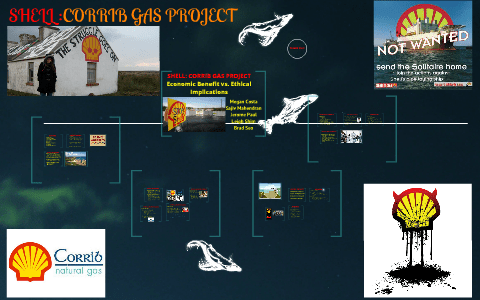
What was the dispute about?
The controversy centered on several issues:
- The decision to bring untreated gas ashore through a high-pressure pipeline near homes in the Rossport area.
- The location of the onshore gas processing terminal at Bellanaboy.
- Concerns about environmental impacts on Broadhaven Bay and surrounding habitats.
- Claims by local residents that consultation was inadequate.
- Wider political objections to Ireland’s licensing and taxation arrangements for oil and gas companies.
The conflict became nationally famous after the imprisonment of the “Rossport Five” in 2005 and years of protests by groups such as Shell to Sea.
How was it ultimately resolved?
The outcome was gradual rather than dramatic:
- The project was modified. Shell and regulators made a number of design and routing changes to the pipeline and imposed additional safety measures.
- Court challenges were exhausted. Some legal actions were settled while others were dismissed by the courts, allowing construction to continue.
- The state continued to support the project. Successive Irish governments regarded Corrib as strategically important and maintained regulatory approval.
- Gas began flowing in 2015. Once production started, the practical objective of stopping the project could no longer be achieved.
Has opposition disappeared?
No—but it has changed significantly.
The original campaign to stop the pipeline and processing plant effectively ended when the infrastructure was completed and became operational. The large-scale protests that dominated Irish news in the 2000s have largely disappeared.
However:
- Some former campaigners remain active on energy, environmental and climate issues.
- Criticism continues regarding the state’s oil and gas licensing terms and the fact that Ireland has no state ownership stake in Corrib.
- Former Shell to Sea activists have shifted attention toward issues such as fracking, LNG imports and fossil-fuel policy more generally.
There is also still a lingering sense of grievance among some people in north Mayo about how the project was handled, particularly concerning policing, compulsory acquisition of land, and community consultation. The dispute remains an important reference point in Irish environmental politics.
So the short answer is: the project went ahead, gas production started, and the immediate battle was lost by the opponents. But opposition did not completely disappear—it evolved into broader environmental, energy-policy and local-justice campaigns.
Paddy Briggs involvement
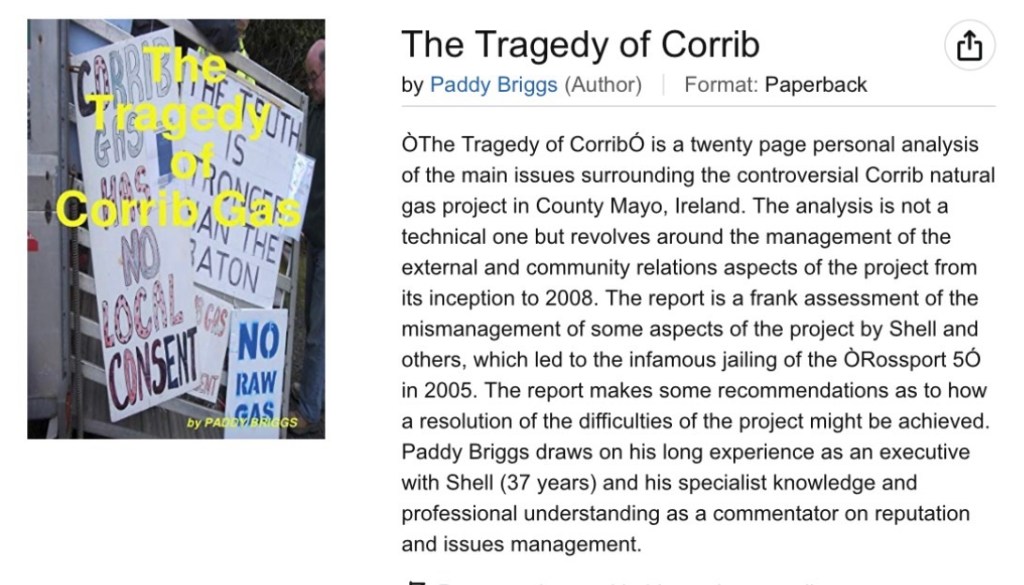
Paddy Briggs was a former senior Shell executive who became a critic of Shell’s handling of the Corrib project. Around 2010 he publicly discussed internal Shell documents and argued that Shell had relied on political connections and had mishandled community relations. One of the documents he highlighted was a 2003 Shell management meeting record questioning whether the company had sufficiently well-placed contacts with the Irish government and regulators. He published his views in the public domain – “The Tragedy of Corrib”
His interventions were important in three ways:
- They reinforced opponents’ claims that the project was not simply a technical planning issue but also involved questions about political influence and corporate power.
- They generated media attention at a time when the controversy was already a major national issue.
- They strengthened public skepticism toward Shell among people who were not directly involved in the Mayo protests.
However, there is little evidence that Briggs’s revelations directly changed the project’s outcome. By the time his criticisms became widely known, the central issues had already been fought through planning inquiries, court cases, regulatory reviews, and years of political debate. The key decisions remained with the Irish state and planning authorities, which ultimately continued to permit the project—albeit with modifications, including a rerouted pipeline and additional safety requirements.
In other words, Briggs’s contribution was more significant in shaping public perception of the dispute than in determining its final resolution.
A useful way to think about it is that the Corrib controversy had several overlapping arguments:
- Safety and environmental concerns (pipeline route, pressure, Bellanaboy terminal).
- Community and policing issues (Rossport Five, protests, compulsory acquisition).
- Political and governance concerns (whether government was too close to Shell).
Briggs’s interventions mainly affected the third category. They added weight to allegations of undue influence, but they did not overturn the planning approvals or stop construction. The project still proceeded and entered production in 2015.
Among former Corrib campaigners, Briggs remains a respected figure because he was seen as an insider who validated concerns they had been raising for years. Among supporters of the project, his role is generally viewed as politically significant but not decisive in the actual regulatory and engineering decisions that allowed Corrib to go ahead.
This analysis was substantially written by AI (ChatGBT)

