
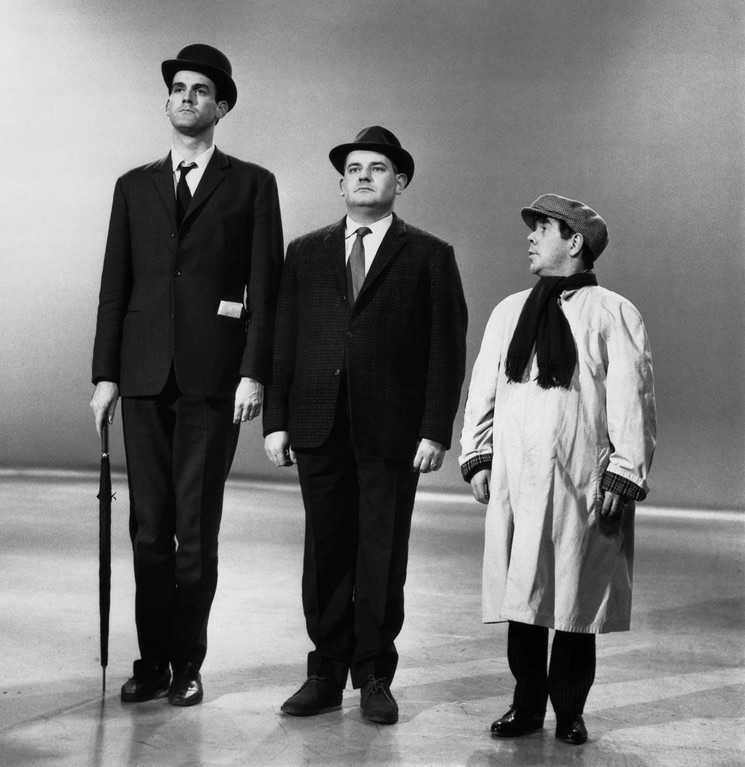
THIS BLOG WAS ENTIRELY WRITTEN BY AI (Chat GPT)
Sociologists generally agree that social class still matters a great deal in 21st-century Britain, but many argue that the traditional threefold model — “upper, middle and working class” — is no longer sufficient on its own to explain modern inequalities and identities.
Why the traditional class model still matters
The classic British class structure developed around wealth, occupation, education and inherited status. Many sociologists argue these divisions remain visible today.
1. Wealth and income inequality remain strong
The gap between rich and poor in Britain is still large. Ownership of property, private education, inheritance and elite professional networks continue to give advantages to some groups over others.
For example:
- People from wealthy families are more likely to attend elite universities.
- Home ownership strongly shapes financial security.
- High-paying professions remain dominated by people from privileged backgrounds.
This supports the argument that an “upper class” still exists, especially among those with inherited wealth and influence.
2. Occupational divisions still shape life chances
Employment continues to affect:
- income,
- health,
- housing,
- political attitudes,
- educational outcomes.
Manual and insecure work is still associated with poorer life chances, so the idea of a “working class” has not disappeared entirely.
3. Class identity remains culturally important
Many people in Britain still describe themselves as working class or middle class even when their jobs may not fit older definitions exactly. Accent, lifestyle, education and cultural tastes still carry class associations.
For instance:
- private vs state schooling,
- regional accents,
- attitudes toward culture and politics,
- social confidence in elite settings.
Sociologists influenced by Pierre Bourdieu argue that “cultural capital” — manners, tastes, education and social networks — has become just as important as income.
Why many sociologists think the old model is outdated
Although class still matters, experts argue that Britain has changed dramatically since the industrial era in which the old model developed.
1. Decline of traditional industrial working-class jobs
In the 19th and 20th centuries, class was closely tied to factory and manual labour. Britain is now mainly a service economy.
Many people work in:
- retail,
- hospitality,
- care work,
- technology,
- freelance or gig-economy jobs.
These occupations do not fit neatly into old “working” or “middle” class categories.
2. Growth of precarious employment
Some sociologists argue a new class has emerged: the “precariat” — people with insecure, temporary or low-paid work.
This idea is associated with Guy Standing, who argues that insecure employment creates new forms of social instability that older class categories fail to capture.
Examples include:
- zero-hours contracts,
- delivery platform workers,
- unstable freelance work,
- rising housing insecurity.
3. Expansion of education blurred class boundaries
University attendance expanded massively after the late 20th century. Many people now hold degrees but may still experience insecure employment or low wages.
This weakens the old assumption that education automatically produces middle-class security.
4. Consumption and lifestyle complicate class identity
Modern class divisions are also shaped by:
- housing,
- consumer habits,
- media use,
- cultural preferences,
- social mobility,
- ethnicity and gender.
A skilled tradesperson may earn more than a graduate office worker, making occupation alone less reliable as a class indicator.
Major modern sociological approaches
The Great British Class Survey
One influential modern study was the 2013 Great British Class Survey conducted by the BBC and researchers from London School of Economics.
The study argued Britain now has seven classes rather than three:
- Elite
- Established middle class
- Technical middle class
- New affluent workers
- Traditional working class
- Emergent service workers
- Precariat
The researchers argued class today depends on:
- economic capital (wealth and income),
- social capital (networks),
- cultural capital (tastes and education).
This reflects how modern sociology sees class as more complex and multidimensional than older models.
Marxist perspectives
Sociologists influenced by Karl Marx still argue class fundamentally depends on economic inequality and ownership of wealth.
From this perspective:
- the wealthy capitalist elite still hold disproportionate power,
- workers still depend on selling labour,
- inequality has intensified under modern capitalism.
So while occupations changed, the core class conflict remains.
Weberian perspectives
- status,
- education,
- credentials,
- lifestyle,
- power.
Following Max Weber, many sociologists argue class is now linked not just to wealth, but also:
This approach better explains why two people with similar incomes may have different social status.
Overall evaluation
Most sociologists would say the traditional categories are partly relevant but oversimplified.
They remain useful because:
- inequality is still strongly structured by wealth and occupation,
- elites retain major advantages,
- class continues to affect life chances and identity.
But they are less adequate because:
- work patterns have changed,
- identities are more fluid,
- education and culture matter more,
- new insecure social groups have emerged,
- ethnicity, gender and region intersect with class.
A common conclusion among contemporary sociologists is that Britain is still deeply class-based, but class itself has become more fragmented, complex and difficult to define using the old “upper/middle/working class” model alone.

