
Expenditure on Welfare is broadly Government providing certain citizens in need with wherewithal to spend. What they spend it on is not specified but it is likely that it will be on essential goods and services – certainly if the welfare is well directed to those genuinely in need. Welfare is generally seen to be driven by idealistic motives, and it should be. But there are also significant macroeconomic benefits.
Consumer expenditure is generally good for the national economy overall — in fact, it’s one of the primary drivers of economic growth in most modern economies. It’s the lifeblood of demand. Without sufficient consumer spending, businesses contract, jobs disappear, and growth stalls. In effect money diverted from taxpayers to expenditure via Welfare payments collectively provides a “demand side stimulus”.
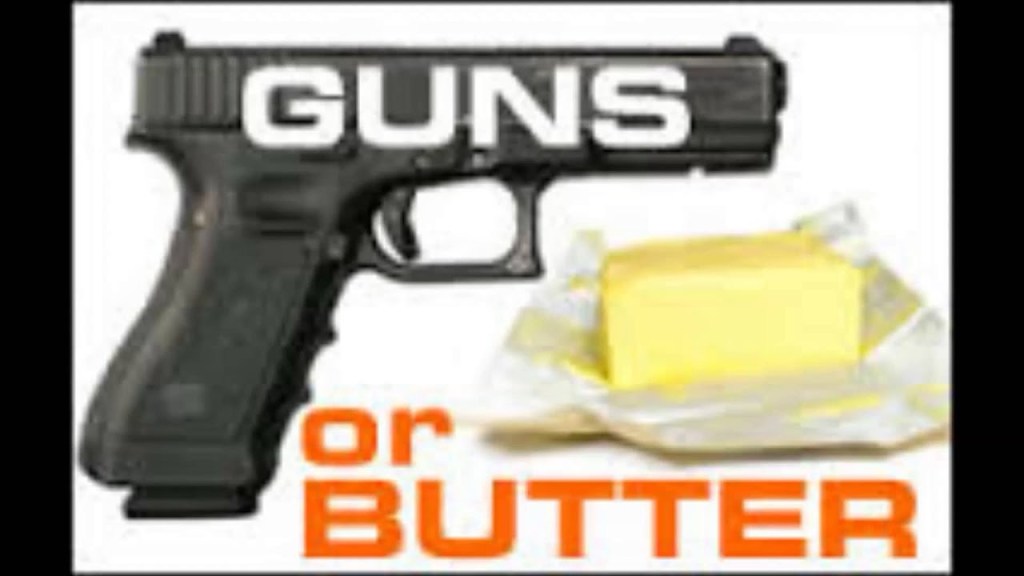
Historically the debate has often been seen as a “Guns or Butter” choice. Perhaps the best known use of the phrase was in Nazi Germany. In a speech on January 17, 1936, Minister of Propaganda Joseph Goebbels stated: “We can do without butter, but, despite all our love of peace, not without arms. One cannot shoot with butter, but with guns.” Referencing the same concept in the summer of the same year another Nazi official, Hermann Göring, announced in a speech: “Guns will make us powerful; butter will only make us fat.”
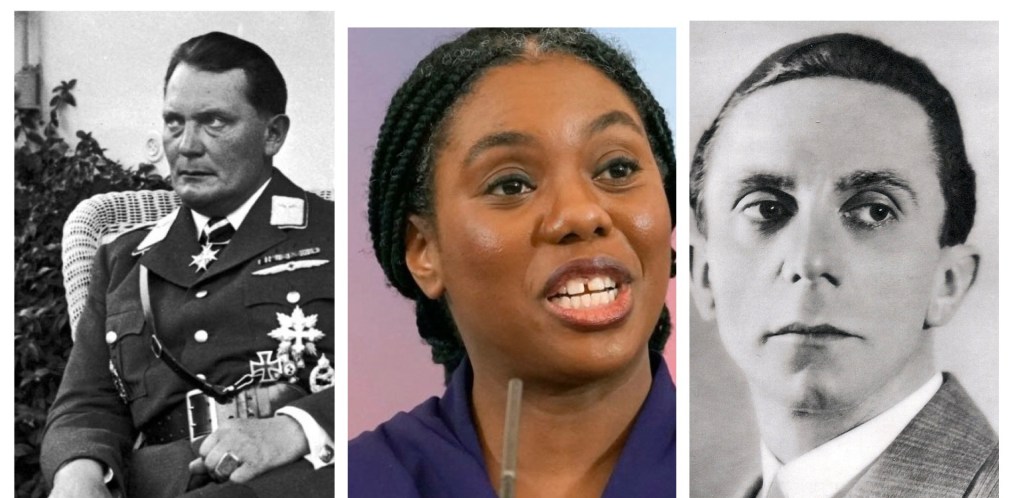
The ongoing debate in Britain is essentially a “Guns or Butter” debate. Kemi Badenoch’s recent comments made this crystal clear. She said “So why won’t Keir Starmer fund our military? Because he is too busy spending your money on benefits.” In other words she was unequivocally siding with Goebbels and Gōring in choosing guns rather than butter. In choosing to reduce demand stimulating (and of course morally decent) welfare spending and spending the cash on weaponry.

