
During my years in Shell the Corporation was doing business in or with some very dodgy regimes. And in some cases I was in the loop. To be frank ‘Human Rights” abuses did not often come into our discussions as to whether we should seek a deal. I visited Saudi Arabia frequently, I found it a chilling experience. Some South American countries were decidedly dodgy. In Zimbabwe I avoided difficult questions. Elsewhere in Africa I also needed sometimes to look the other way, Then there was China – I was in Tiananmen Square on Shell business a couple of weeks before the troops moved in to kill protesters. Not to mention Iran…
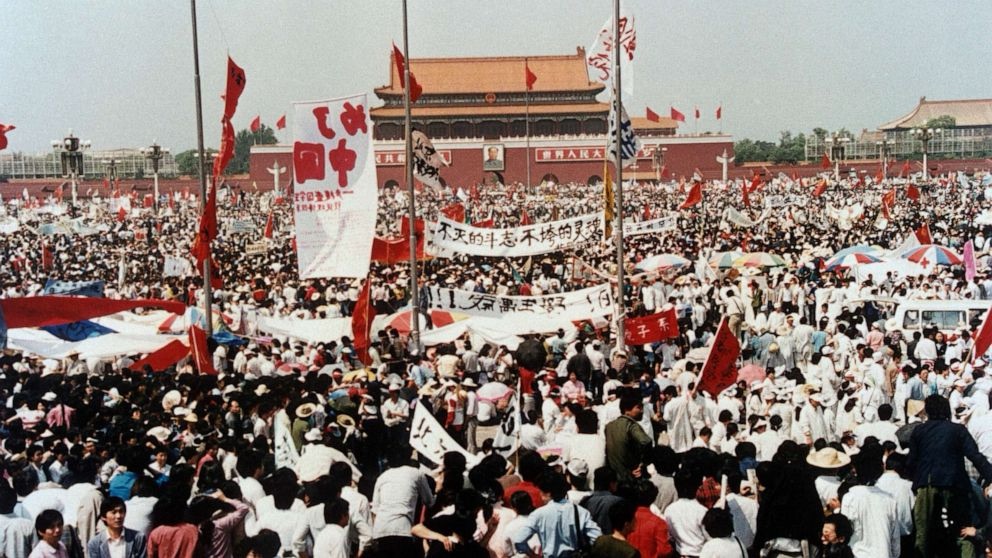
I suppose it boils down to whether or not one believes that there is such a thing as “Human Rights” and, of course, how you define what they are. That definition is not straightforward and there are strong differences over whether at the moment the US and Israel’s recent actions put them in contravention of the United Nations definition. But surely there can be no doubt at all that Iran is a totalitarian state indulging daily in Human Rights abuses? And yet I visited it often and enjoyed the challenge.
It can be hard to do normal business in an abnormal country. But in the oil industry we did rather a lot of it. God, or Allah or whoever it was had put hydrocarbon reserves in some very dodgy places. But I think I was paid to do my job and ride the waves of culture. Back in the early 1980s I had an interview about overseas opportunities and said in principle I’d work anywhere, except South Africa. The HR guy interviewing me seemed a bit surprised! But didn’t debate it. A year or two later I was “posted” to Hong Kong so it didn’t do me any harm!
It’s some years since I visited Tehran but I used to do so frequently for a time. On the surface talking business with Iranian oil company executives and other locals was entirely normal. They were able and it was easy to relate positively to them. Then I’d return to my hotel and there in my room there would be antisemitic and Holocaust denial propaganda in abundance on a table.
Under the Shah Iran was tricky – it was a corrupt plutocracy but they weren’t hanging people from cranes in the street. The subsequent “Revolution” theoretically gave power to the people. Revolutions always say they do that don’t they ? But they never do. They replace one group of plutocrats with another. A Lenin replaces a Czar. An Ayatollah replaces a Shah. Plus ça change…
Should multinational companies not do business in places where Human Rights are weak, or non existent? Put Principles before Profits if you like? The problem is that it is rarely as black and white (no pun intended) as Apartheid South Africa was (to me anyway). I travelled extensively in the Middle East but didn’t judge, though I listened. And if those cultural waves threatened to turn into a Tsunami, as they certainly did in China in 1989? That’s when your conscience is really tested !
Shell has been criticised for its business activities in various countries. For example Body Shop founder the late Anita Roddick was a vocal critic of Shell’s operations in Nigeria, especially regarding the environmental harm and the company’s perceived complicity in the treatment of local communities during the Ogoni crisis. It was a difficult time for the company and although I wasn’t in the loop I was uncomfortable. This and other headline grabbing stories like the disposal of the Brent Spar platform definitely damaged Shell’s reputation and were signs of confused management.
Today there is less criticism of specific activities and more general protest about Shell’s leading role in the international oil industry – along with other multinationals.
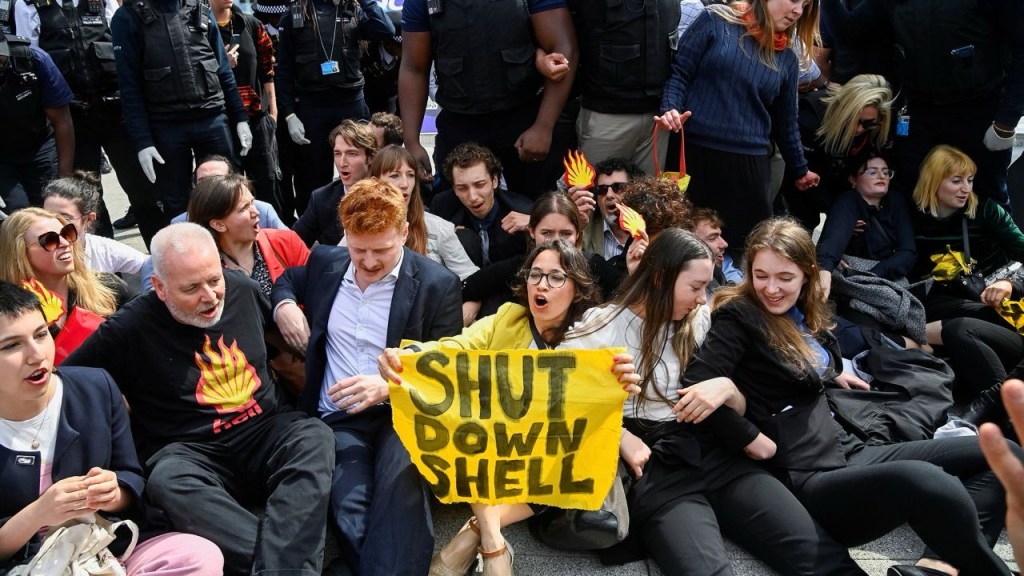
Shell is less than proactive in challenging the logic of these protests than I as (still!) a stakeholder would like. Whereas Ms Roddick had a legitimate specific case to make, and made it well, these protests are unspecific and profoundly ignorant.
The management challenge is often seen as being managing reputation. And so it is. But actually at a higher level of abstraction it boils down to doing the right thing and, where necessary, explaining how and why you do it. As a Shell pensioner I’d like to see the corporation do this better.
 Paddy’s Blogs in a crazy world
Oil companies are primarily concerned with their ‘bottom line’, rather than the environmental damage they have caused around the world. Oil may have improved mankind, but the cost to the planet cancels out all those benefits. They are ruthless in exploiting fossil fuel and care less for the political consequences their actions have for ordinary people, who basically suffer from them.
The sooner oil is phased out, the better. I’m not delusional; it will take maybe several generations to achieve it. It has to happen; the momentum exists. The choice is no choice, or mankind will perish.
LikeLike