
Paper for: “Noël Coward: Past, Present and Future” University of Birmingham
How Noel Coward and David Lean held a mirror up to middle-class Britain in the inter-war years
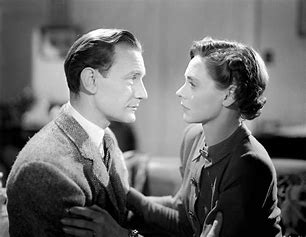
“Brief Encounter” is arguably Noel Coward’s most widely seen and popular work. But it’s more than just a romantic story. Coward was not indulging overtly in cinema verité revelations, creating a faux-documentary or being political. Towards the end of his life, he said “I’ve had no social causes. Do I have to? I wanted to write good plays, to grip as well as amuse”[1] . But Coward’s acute understanding of the English class system, and the genius of David Lean, combine in “Brief Encounter” to tell a layered but understated story in which character, norms, propriety, events and, especially, language reveal the truths lurking below the veneer of convention. The whole is greater than the sum of the parts.

The contemporary Times reviewer of “Brief Encounter” in 1945 said that the film “shows Mr Coward more as a serious psychologist than as a flippant commentator”[2]. Nine years earlier in 1936 The Times theatre critic had said that in “Still Life” Noel and Gertrude Lawrence (who played Laura) “… discarding their usual airs and graces, play … with a deliberate colourlessness which draws from the play its last ounce of emotion.” That “colourlessness” is reflected in the film by the use of black and white (a very deliberate choice – Lean and Coward’s previous collaborations “This Happy Breed” and “Blithe Spirit” had both been in colour). Pioneering film critic C.A. Lejeune summed up what many felt about “Brief Encounter” “It is, to my mind, not only the most mature work Mr. Coward has yet prepared for the cinema, but one of the most emotionally honest and deeply satisfying films that have ever been made in this country.”
The film, as with all movies, was a collaborative effort. David Lean’s biographer Kevin Brownlow says that Anthony Havelock-Allan, on Coward’s production team, claimed that “…Noel Coward did not write any of the script [it] was written by David, and myself and Ronnie (Neame)”[3]. In fact, of course, there was plenty of pure Coward from “Still Life” in it and much of the new dialogue was either his or a sort of ersatz Coward of which he approved “Which of my little darlings wrote this brilliant Coward dialogue?” he said at one point. Lean himself said “Luckily, Noel proved to be very good at adapting his plays to the screen. We worked with him, of course [but] the dialogue was always his.”[4] “Brief Encounter” is authentic Noel Coward and, as Barry Day says, the screenplay “…was Noel’s crowning achievement on film.”
In this paper I explore the extent to which the characters are imprisoned or freed by the conscious and/or unconscious characteristics of their social class. This includes looking at the counterpoint between the claustrophobically middle-class Alex and Laura, on the one hand, and the freer working-class Albert and Myrtle on the other.
In his definitive survey of Class structures in Britain[5] David Cannadine describes the inter-war years in Britain as a society that is “quintessentially middle-class”. When G.D.H. and Margaret Cole surveyed the “Condition of Britain” in 1936 they divided the social order into the “Rich”, the “Comfortable” and the “Poor”. “Still Life”, the play on which “Brief Encounter” is based, first appeared in that year and is mainly about this comfortable (and for some, aspirational) increasingly dominant middle. Evelyn Waugh, looking at it from above in “Brideshead Revisited”, describes how the historic hegemony of the Aristocracy was giving way to “The Age of Hooper” – modern, technocratic, and overwhelmingly middle middle-class.
“Brief Encounter” can be seen as a story which holds a mirror up to the ubiquity of middle-class sensibilities of the times. It is not to denigrate Alex Harvey nor Laura Jessop and her husband Fred to describe them as bourgeois. Nor is it insulting to observe how the working-class Myrtle Bagot’s attempts to be “Refined” (or “refained”) is aspirational. When “Brief Encounter” first appeared in November 1945 the anonymous reviewer in “The Times” described Alex and Laura as “Upper middle-class”. For that reviewer it was insufficiently accurate to describe them as “Middle-Class” (which they indisputably are) but further to specify that they are at the upper end of it. Noel says that Fred was a Senior Partner at a firm of Solicitors and Alex is a doctor and a graduate of Aberdeen University. Their status as qualified professionals place them at the upper end of the Middle-class stratum. Laura’s class is determined not by her own family background but by her husband’s. There is no evidence either in “Still Life” or in “Brief Encounter” of Laura ever having had a job. She married at 22 and had two children rapidly. She is, in Noël’s description, a “pleasant, ordinary married woman”. Laura’s friends, or acquaintances like the intrusive Dolly Messiter, come from the same social milieu as her.
If the characters are firmly Middle-class with servants and with shared social mores and values so was Coward’s audience as Frances Gray points out in her insightful “Modern Dramatists” book. “The rich might be silly, the poor might be vulgar… but the middle classes, the backbone of Coward’s audience… were the guardians of order, decency and the family… if they could control their unfortunate passions and come through to do the right thing”[6]. The view that Coward’s main audience was firmly middle-class is reminiscent of Terence Rattigan’s “Aunt Edna” who he described as “…a nice, respectable, middle-class, middle-aged, maiden lady, with time on her hands [who] enjoys pictures, books, music, and the theatre…”[7] In Laura’s case the library books are paid for from Boots, not free from the public library, and she has a “penchant for a particular kind of middlebrow fiction aimed at middle-class women” as Richard Dyer (in his BFI Film Classic book on “Brief Encounter”) puts it.[8] Dyer also quotes Nicola Beauman, founder of Persephone Books, who says that Laura’s reading has a presumption that “marriage and passion are irreconcilable: you can’t have the thrill of romance and the comfort of ordinary life”. Dyer says the film presents this in definite class terms “such irreconcilability is a middle-class dilemma”
Time and place are crucial to the story. Time is quite difficult. The film was made in early 1945 and premiered in November that year – close still to the end of a war which directly touched everyone in Britain. Coward was deliberately telling a story set in a more “normal” and peaceful world. In “Still Life” Coward says “Time – the present”, that is to say early 1936. But in the “Brief Encounter” filmscript it is said that “… this film takes place during the winter of 1938/39”. This is, I think, problematic. Is the idyllic and peaceful almost complacent world portrayed really believable as being in the high stress times after Munich? I think that Coward and Lean were deliberately making a film to mark the end of the war without mentioning it. War and rumours of war were avoided. That said there is a strong element of “fin de siècle” about the film. In 1945 it was not just the war that ended but it was also the triumph of the “Age of Hooper” with the election of a Labour Government with a substantial majority. Although this happened after the film was finished by November, when it was shown, change to the social order was very much underway.

If the time is somewhat imprecise the place rather less so. Ketchworth, Chorley and Milford are fictitious places, but we know them and where they were. We are in Southern England – the scenes and, above all the way the characters speak and behave tell us that this is outer suburbia or just beyond, probably in Surrey or Kent. In describing Alec Noel says that he is researching his special subject [pneumoconiosis] at Milford “as there are coal mines [nearby]”. This I think we have to take as poetic licence though at a stretch we could say that the location is near Canterbury or Ashford where some of the Kent coalfields were. Philip Hoare[9] says that the station was “probably based on Ashford” the nearest station to Coward’s home Goldenhurst.
The station scenes at Milford Junction were filmed, of course, famously at Carnforth Station which is near Morecambe Bay and not far from the Lake District. But neither the story nor the characters are in any way “Northern”. There is minor confusion from the fact that the platform notices (behind Laura when Alec tells her about the job in South Africa) still show the next train’s destinations as “Hellifield, Skipton, Bradford, and Leeds”. This was, I think, an editing mistake. Also, in the film script Albert is described as having a “North Country” accent. In fact, Stanley Holloway speaks with a fairly neutral southern accent, only just (and not very convincingly) borderline Cockney. No northern vowels at all and not characteristically “Working-Class”. Similarly, Joyce Carey’s Myrtle is not trying to refine a Yorkshire accent but a working-class southern one.
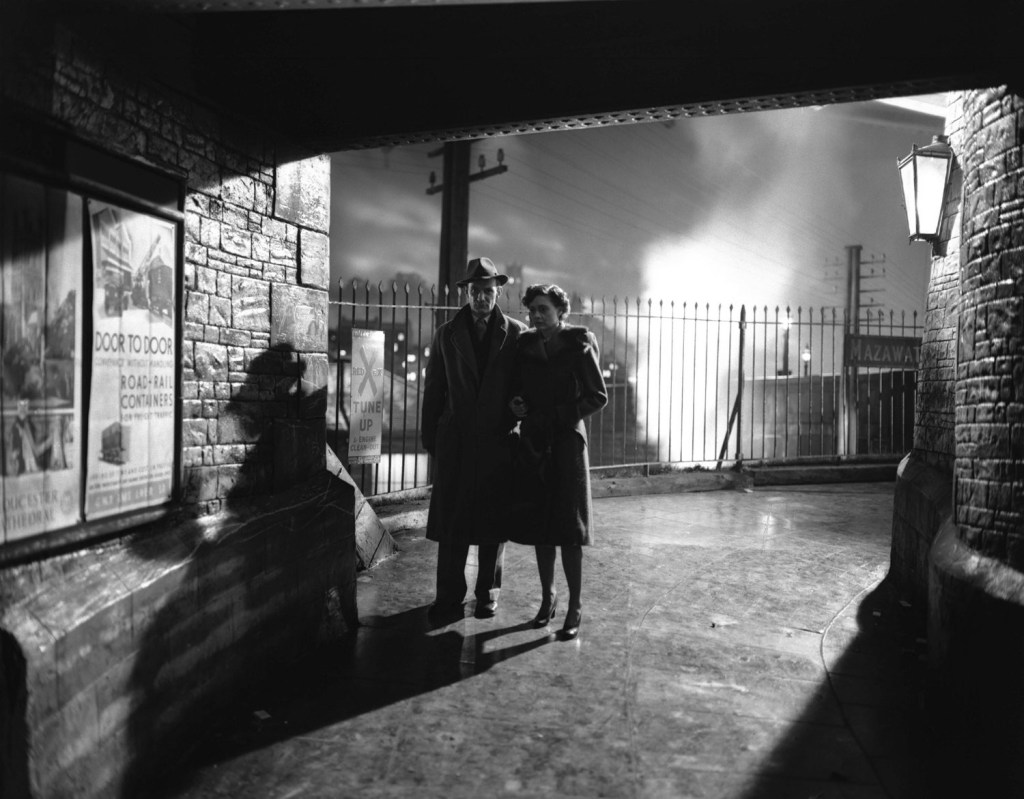
A recent study[10] has shown that the UK has some of the highest levels of accent diversity in the English-speaking world. The study showed that accents “reflect differences in what region people come from, their family’s social class background, their age and their current professions.”. Celia Johnson’s Laura speaks in an up-market Received Pronunciation (RP) voice which rather confirms the Times’ reviewer’s description of “Upper Middle Class”. It is, I think, Ms Johnson’s natural speaking voice. Born in Richmond Surrey and educated at St Paul’s Girls’ School she was part of what her daughter and biographer Lucy Fleming calls a “comfortable, respectable, Edwardian, English middle-class family” and “very, very English”. Kevin Brownlow says, “from the moment the idea [of Brief Encounter] took shape [Lean] and Coward wanted Johnson to play Laura Jessop.” Her impeccable middle-class background and accent determined the social positioning of Laura. Trevor Howard’s Alec has a less mannered RP voice, more neutral than Johnson’s, but still solidly complementing his upper middle-class vocation.
Coward had been stung by critics who detected in “This Happy Breed”, a previous collaboration with David Lean, “an attitude on my part of amused patronage and condescension towards the manners and habits of suburban London.” “Suburban London” is, here, a euphemism for “Working class”. Of course, the social milieu in which he was most comfortable was that of “Hay Fever” and “Private Lives” set towards the upper end of the social spectrum. But Coward also wrote well, if not so frequently, about people at a more humble level and three of his films with Lean (“Blithe Spirit” the exception) have working class or lower middle-class characters in them. Which brings us to Albert and Myrtle and Stanley and Beryl in “Brief Encounter”.
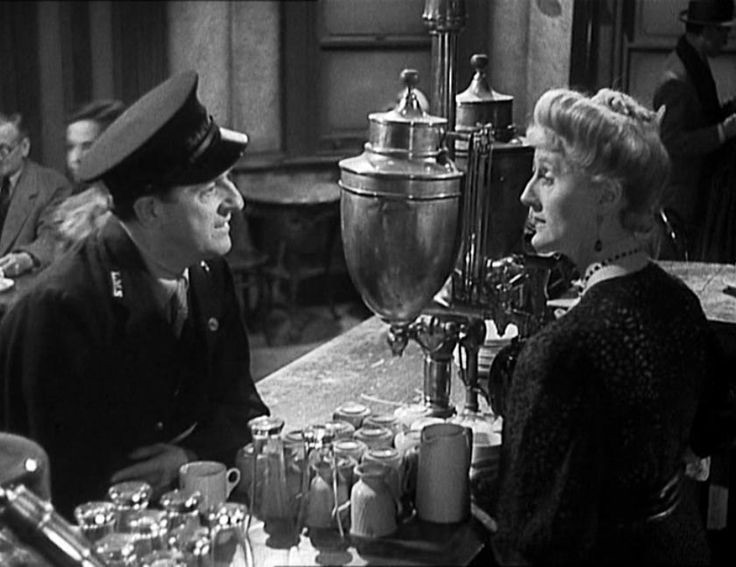
In “Still Life” in the Methuen Edition the first three pages of dialogue are these four Station employees. And throughout the play, and later to a lesser extent in the film, these characters act as a necessary positioning counterpoint to Alec and Laura. However, they are often forgotten in popular descriptions of “Brief Encounter”, and they are not universally liked nor thought necessary. David Lean disliked them “They embarrass me every time I see them” he said, but Coward wished to retain them believing that the story would be “intolerably sad without those scenes”.
The social positioning is that the relative freedoms of behaviour and expression of Albert and Myrtle show up the excessive restraint of Laura and Alec. Here there are echoes of Present Laughter which appeared a few years before the film. In “Present Laughter” the libertine actor Garry Essendine has a working-class valet called Fred who has a girlfriend called Doris of whom Essendine, rather satirically, accuses Fred of “taking advantage”. “Why not?” says Fred “I like it, she likes it and a good time’s ‘ad by all!” The parallel with “Brief Encounter” is clear and even more so in “Still Life” where Stanley says that Myrtle is “… out having a bit of slap and tickle with our Albert”. So, whilst Alec and Laura are showing middle-class restraint Albert and Myrtle are getting on with a relationship and enjoying it. The social limitations imposed on Laura and Alec by their class and situation means that they are not, in Laura’s words “…free to love each other, there is too much in the way”. They know that if they “followed their secret heart”, as Noel had put it in a song in “Conversation Piece” in 1934, it would be a scandal in their 1930s suburban middle-class world. So, they become “Suffused with restrained emotion” in Philip Hoare’s words.
This restraint is not a common moderation on Noel Coward’s part – his plays ooze sex! Is there anywhere, for example, in the pre-war years a sexier play than “Private Lives”? There are casual liaisons everywhere in Coward amongst his beautifully described theatre people and the upper class or upper-middle class world in which they live. At the beginning of “Present Laughter” the Deb Daphne phones her friend Cynthia to tell her about what is later described as “losing her latch key” to Garry Essendine. So, we have the “Rich” happily “scampering about” as Liz in Present Laughter puts it, the “Poor”, like Essendine’s “Fred” and Myrtle and Albert in “Brief Encounter” doing much the same. It’s only the “Comfortable” in the middle, like Laura and Alec, who miss out! And suffer guilt into the bargain. For them “Marriage is the fatal curse” and “Love crucifies the lover” (as Noel put it in “Bitter Sweet”)
Oliver Soden’s new biography reminds us that “Noel’s own family had placed a great emphasis on gentility” and that his mother, Violet Veitch, believed that diction was important – her upbringing was in “Genteel poverty” with the emphasis on the genteel. They may not have had much money, but they spoke well and had the attitudes of the newly emerging middle class, not aristocratic but not from the working class from which Myrtle aspires to escape either. This “middle-class morality” dilemma echoes George Bernard Shaw who coined that phrase in 1912 in “Pygmalion” in which the working-class Alfred Doolittle lives a life free of it in the same way that Albert and Myrtle do. “Doolittle is delighted that his job as dustman is so low on the social class scale that it has absolutely no morals connected to it.”[11] They cannot afford to be moral, so they are not bound by any rules or standards
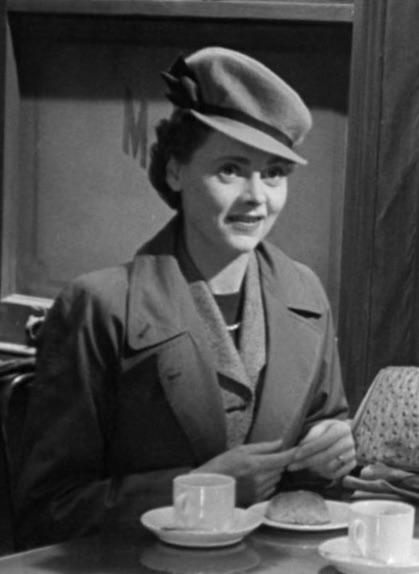
That other indicator of class and status dress is also crucial in “Brief Encounter”. A study[12] of dress norms in the inter-war years said “…for white-collar employees and their wives seeking to demonstrate their status …wearing gloves and a hat when outside the house was a prerequisite. Gloves were essential for a woman as a symbol of “gentility,” the mark of a lady who had no need to work …. hats mattered a great deal for men. Wearing a trilby was a way of signalling “I am not working class.”. In the film Laura nearly always wears a hat and gloves and in Coward’s description “Her clothes are not particularly smart but obviously chosen with taste.” Alec always wears a suit, collar, and tie and usually a trilby as well – even on and in, the boating lake!
In describing the differences between the classes “Brief Encounter” is quintessentially Home Counties English and as Richard Dyer puts it has “… a voice of the BBC, of our déclassé monarchy, of Churchill during the [war] which has often presented itself as the voice of the nation” “Narrow and class-specific” perhaps but what passed in those monocultural times as the quintessentially English “national culture”. Barry Day says “… Europeans generally couldn’t understand why Alec and Laura hadn’t gone to bed together”[13] and that further underlines the distinctive middle-class Englishness. Laura’s sense of guilt, even to the extent of contemplating suicide, is excruciating at times. Not just guilt about her unconsummated passion but about trivial things like the cost of the “terribly expensive” birthday present for Fred about which she needed to “square her conscience” and in buying she had “committed [a] crime”. Or her belief that “Upstairs is too expensive” at the cinema. The language here reveals the restrictive norms of her class in which extravagance is a sin and white lies are permitted to cover up embarrassment. Self-denial is a virtue.
Looked at from today “Brief Encounter” is a great film because like all the very best works of fiction it holds a mirror up to the social and behavioural mores of the times in which it is set. That past is a foreign country to us today and middle-class morality has mostly disappeared. Writing on the use of the Rachmaninov second piano concerto, so essential to the film, Oxford’s Dr. Leah Broad says, “Just as in Brief Encounter, by the 1940s Rachmaninoff’s music had come to symbolise something of an escape from encroaching modernity.” I think that the film can indeed be seen as an escape from the changes clearly underway when it appeared in November 1945 and after the Labour landslide election win that year. Perhaps, also, our modern-day love of the film is based on nostalgia for a past that those of us of a certain age have seen vanishing in in our own lifetimes – in the same way that we also turn to Rachmaninov for harmony and romance in a divided and dissonant modernist world.
Paddy Briggs
May 2023
Bibliography
[1] Interview with the New York Times 1970
[2] Review in The Times” November 22nd 1945
[3] “David Lean” Kevin Brownlow faber and faber 1996
[4] “The Cinema of David Lean” Gerald Pratley. Tantivy Barnes 1974
[5] “Class in Britain” David Cannadine Yale University Press 1998
[6] “Modern Dramatists Noel Coward” St Martin’s Press 1987
[7] Terence Rattigan “Collected Plays” 1953
[8] “Brief Encounter” BFI Film Classics Palgrave Macmillan 1993
[9] “Noel Coward A Biography” Philip Hoare 1995
[10] “Accent bias Britain” Queen Mary University of London 2022
[11] Cliff’s Notes
[12] “Class and status in interwar England” John H. Goldthorpe, British Journal of Sociology
[13] In “Noel Coward Screenplays” edited by Barry Day 2015
 Paddy’s Blogs in a crazy world
That is an essay worthy of a sociology A+ Paddy. Thank you for writing it.
LikeLike