
It’s the economy, stupid” said Bill Clinton, and up to a point he was right. But it is not “growth” – rather an abstract concept – that most of us want but a reasonable amount of comfort. That comes from being able to afford the basic things at the lower tiers of Maslow’s “Hierarchy of Needs” and occasionally things higher in the triangle. A holiday. A bottle of wine. A trip to the theatre or the seaside.
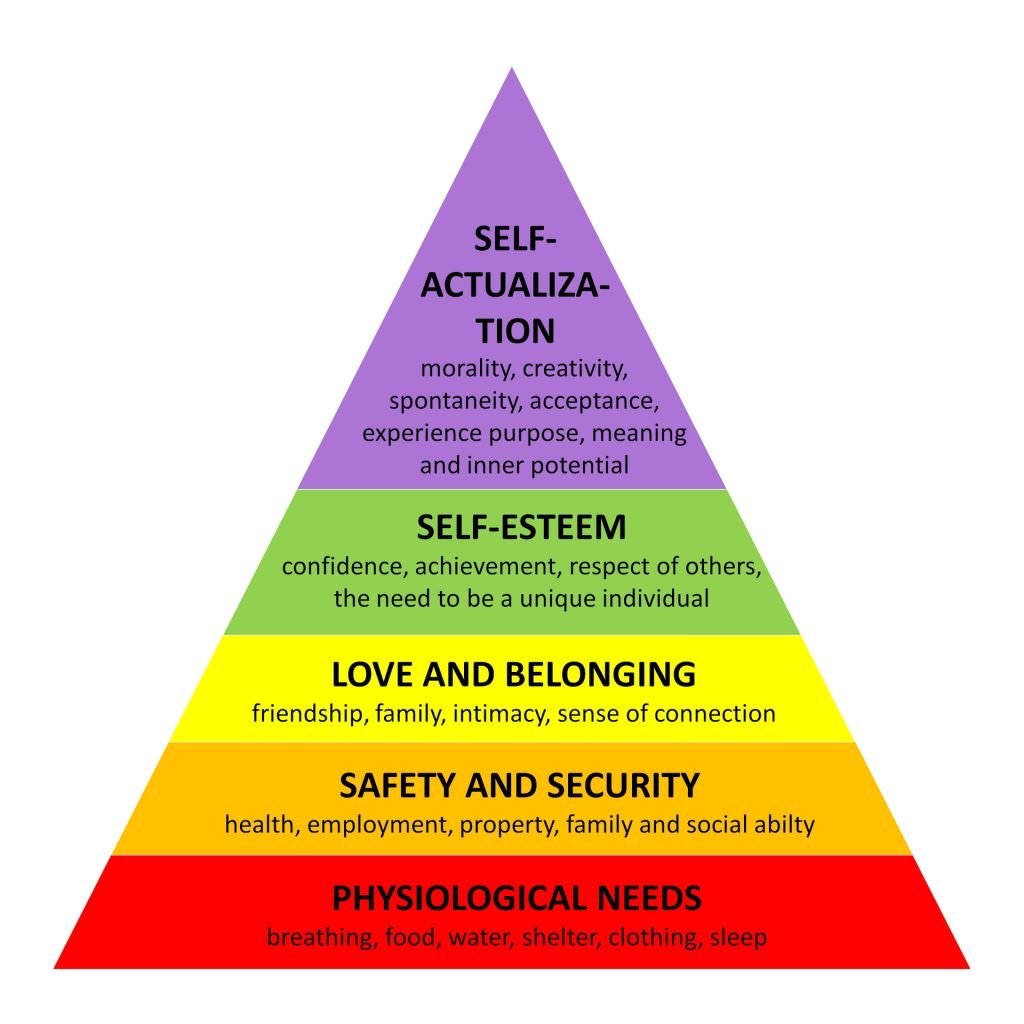
Most of us can’t explain the much peddled link between growth in GDP and personal/family welfare. That is because it is at best technically complex, at worst cultishly spurious. Macroeconomics is not just the science of growing the economy but of how its product is distributed.

More than fifty years ago E.J.Mishan in his seminal “The Costs of Economic Growth” clearly described the downsides of untrammelled growth. Environmental damage was a key, but not the only one. The more we grow the more we pollute. There are legions of examples of this, not just in the Industrial Revolution but today.
If a country is like Norway, rich in valuable hydrocarbon resources, it can run a generous welfare state. Britain did this for a while as well but the resources have dwindled. So where’s the Growth and wealth creation and redistribution to come from? Our industrial base is reduced and where our economy is strong, in London in particular, the distribution of wealth is patchy at best.
The economic debate needs to be about more than a simplistic attachment to “growth”. We could benefit from revisiting Keynes and studying the successes of the “New Deal” in Roosevelt’s America. Yes public works underpin growth but a full employment society shouldn’t need foodbanks.
“Tax and Spend” gets a bad press but actually what modern economies have to do it to offer adequate welfare and investment . Austerity and spending cuts affects those who can least afford it. Unemployment may be low but zero hours contracts (etc.) mean that the quality of employment can be poor for many. Cancellling desirable public investment, like HS2 north of Birmingham, damaged our future transport infrastructure and employment.
The panacea of “Growth” is something of a myth. When in his first speech as Prime Minister Keir Starmer said “…we will rebuild Britain with wealth created in every community,” he was understandably vague about how that wealth could be created. And indeed about what “wealth” actually is. He should read Keynes, and Mishan !
 Paddy’s Blogs in a crazy world
Adam Smith,(1723 -1790) defined wealth thus: “The wealth of individuals is not the amount of money they have, but their ability to purchase the goods and services that they need to live or to improve their lives. The wealth of nations, Smith argues, is the combined ability of the people of each nation to meet their needs.”
If Smith is right then by his measure we are all as poor as church mice. Most, if not all nations live beyond their means and most average individuals rely on credit. It’s a myth anything will change with a left-of-center government. I expect the opposite not just in Britain but the entire world.
Growth is destroying the planet. There is nowhere else for the coming generations to go. We all must live simpler lives.
LikeLike