

The Right to Protest.
The right to protest is one of the cornerstones of democracy. Without it we slide towards autocracy with the state having absolute power over citizens. And protestors in history have succeeded – from the Chartists to the Suffragettes to Gay Rights activists (and hundreds more) protest has secured change.
When I was a student in the late 1960s we protested against the Vietnam War and Apartheid in particular. In the main we didn’t break the law and our marches and rallies were peaceful. I remember the Establishment close to home (my parents) admonishing me for my strong support of the protesters and my occasional participation. This confirmed to me that I was right.
That we were right was confirmed further when the last helicopter left Saigon and later when Nelson Mandela was released and few today would defend the obscenities of American aggression in South East Asia or the institutionalised racism of South Africa. But the forces of conservatism, as now, were strong and you needed a bit of courage to take them on. At twenty years old many of us didn’t have to dig deep to find it.
Protest needs to be credible
Roll forward fifty years and there are still iniquities to protest about and young people prepared to do it. But the protest needs to be credible. So why given my personal experiences long ago do I unreservedly condemn the “Just Stop Oil” protestors ? “Because you worked forty years for Shell and are a Shell Pensioner” you might retort, and you are right but not in the way you might think!
It is not self interest, the protection of my Pension, that makes me challenge the protestors. It is that the protesters do not understand the subject they are protesting about, except at a superficial and emotional level. My employment years taught me a bit about Energy supply and demand. And first and foremost I learned that “stopping oil” is literally impossible in the foreseeable future. At the current time, around 84% of the world’s energy is still derived from fossil fuels.
In the past the oil companies did seek to create demand
I started work for Shell in the mid 1960s at the tail end of what was called the “Coal to Oil conversion programme ”. We actively encouraged the environmentally beneficial replacement of coal burning in industry and elsewhere by fuel oil. It was in our interests to do so of course, but there were collateral social benefits. As there were when we pioneered central heating fuelled by oil. Mrs 1970 gave us warm homes and eliminated burning coal in our living room hearths. Social benefits again.

And in those days the oil companies encouraged “Happy Motoring” and we did “Go well with Shell”. The post war economic recovery increased disposable incomes and car ownership. And at Five shillings a gallon motoring was a bargain. But the days of oil marketers seeking to expand the market are long gone. The competition is only for market share.
Technology and economics drive change in Energy consumption
Energy is an industry in constant change. Petrol driven cars are infinitely more efficient and economical than they were in the past. Aircraft use far less fuel to fly a passenger from A to B than they used to. Power Stations burn fossil fuels far more efficiently than before and pollute far less. But there’s a long way to go.
The goal of reducing our reliance on hydrocarbons is an honourable and supportable one even for someone as “oily” as me. But unlike my protests of fifty years ago it cannot happen overnight. We stopped the planned South African cricket tour of 1970 with a few months of active protest. And we never glued ourselves to the Lord’s gates to do so.
But structural change to our Energy economy will take much longer and it’s not mainly a lack of will. Sure there are some silly folk who deny the reality of man made climate change, but the scientific reality is clear. The planet is being damaged by our burning of fossil fuels and we need to do something about it.
The opportunities for switching to greener energy vary from sector to sector
The best way to approach a quite complex subject is to look at energy consumption sector by sector and see the potential for change. Let’s start with Power Generation. Electricity is essential to our lives but we can both use and generate it more efficiently and with greater concern for the environment. At a domestic level solar panels are worthwhile and new developments in , for example, solar PV roof tiles can make them invisible. That and similar technologies for new builds need investment and perhaps. subsidy. More efficient domestic appliances can also held reduce our reliance on the grid.
But it is at the sources of large scale electricity generation that the greatest changes are both desirable and possible. Hydrocarbon fuelled power stations (mainly gas) can be significantly replaced by renewables and nuclear. This change is, of course, underway and there are few if any downsides. The aesthetics of onshore wind turbines are an issue and siting decisions need to take care of this. It is not nimbyism not to want to look out on a field of giant turbines from your home!
Nuclear is a classic example of the energy paradox. Countries like France have shown what a valuable source it can be but others worry on environmental and safety grounds. But even the once strongly anti nuclear power Dutch have recently committed to building two nuclear power stations.
Transport is heavily reliant on oil and the potential for substitution by greener fuels varies enormously. But let’s start with the hidden energy source – conservation. As we have seen all oil powered transport from private cars to ocean going ships have seen large improvements in fuel consumption over the years and there is still potential for more fuel efficient engines. Another crucial change would be further investment in public transport which is massively more fuel efficient that private cars. We still operate many diesel powered trains and electrification of their routes would be beneficial.
Modern societies including Britain have come to take the ownership and use of private cars for granted. Any challenge to this, including rises in fuel duty, is seen as threatening liberty! There wouldn’t be many votes in a “Give up your car” manifesto commitment. So how can we improve the environmental friendliness of the private car sector? Obviously electric-powered vehicles are part of the solution.
All energy situations can be described as either production or consumption (supply or demand). Motor vehicles are consumption and whatever the fuel source that is the constant. With petrol or diesel vehicles upstream of the consumption is supply which comes from the production of crude oil and its refining into useful products. (Even further upstream there is exploration but that needn’t trouble us for the moment). For electric vehicles the production is in power stations or other electricity generation sources like Hydroelectric, Nuclear or Wind and other renewables.
When you drive an electric vehicle you are transferring battery stored electricity into motive power and that electricity can have come, as we have seen, from a variety of sources. For electric cars to be truly “green” the electricity they use needs to have come from renewable sources. If it was generated in a fossil fuel power station then all that is being done is that the pollution is being passed upstream. A switch to electric cars needs to run parallel to a switch to renewables.
Some energy consumption sectors are oil or gas specific
It is useful now to discuss the concept of “Oil Specific” energy consumption/demand. Above there are some examples of where we can realistically diversify from oil/gas. But the inescapable reality is that many parts of our economy are “oil specific” – where oil consumption cannot within known technologies be replaced by “greener” fuels.
Let’s start with marine transport, ships. The global economy relies on the movement of goods by container ships. There are around 5,500 of these globally and together they are capable of carrying around 25 million 20ft (6m) containers. Ships run on Fuel Oil which is, of course, one of the products produced when Crude is processed in a Refinery. As well as container ships marine is a crucial element of transport around the world. Close to home cross channel ferries and to British islands in Scotland, the Channel Isles etc. A country like Greece is held together by its ferry system. And cruise ships (like them or loath them!) can only run on Fuel Oil.
Another key oil specific transport is aviation. As with marine not only do all aircraft run on oil (a variant of kerosene) but there is absolutely no prospect of this changing. Today the UK has the third-largest aviation network in the world, with a turnover of over £60 billion and a contribution of over £22 billion to our GDP and almost one million UK jobs are directly or indirectly supported by it. Obviously our lifestyles could change and we could fly less and be less reliant on the airlines for business and/or leisure. Some journeys could switch to other transport. But realistically we are going to be reliant on this crucial transport sector for the foreseeable future and we will need lots of kerosene to run it.
Commercial Road Transport (CRT) is another overwhelmingly oil specific sector. The transport of goods by road in lorries and trucks is in vehicles fuelled by diesel or petrol both of which fuels are products of crude oil refining. As with private cars substitution by greener fuel must be a goal but the technology breakthrough necessary hasn’t happened yet. Power to weight ratio realities mean that battery stored electric power is not feasible, within known technologies, for large commercial vehicles. The same applies to other essential larger road transportation vehicles like buses, ambulances, fire engines etc.
Alternative fuels for CRT are at the experimental stage – fuel cells from hydrogen show promise but commercial exploitation of this is some way away. And moving goods by rail rather than truck is green. But the reality is that CRT is going to be oil dependent for a long time.
Let us now look at the uses of natural gas which is analogous to crude oil geologically (gas is often produced alongside crude oil in “associated” fields). Gas does not need to be refined and generally can be used pretty much in the same form in which it is produced. Gas, however, is less easily transportable than crude oil. Historically natural gas was transported through pipelines to the points of consumption though transport by specialised ships of liquified gas (LNG) is increasingly common today, and growing.
Gas is a hydrocarbon like oil but it is generally seen as being preferable to oil, harmful emissions are lower. But Gas burning does produce carbon and is clearly a contributor to global warming. The problem is that much gas consumption is both essential to our lives and, at least in the short to medium term, not replaceable by other more “green” energy. Space Heating is the main use. Northern Europe, most of North America and parts of Asia gas heats our homes, offices, hospitals and the rest. Modern gas-fired boilers are very efficient , but gas burning is damaging to the environment.
Changing our gas heated homes (etc) to alternative fuels is a very long term project indeed. New build homes can be equipped with heat pumps in some cases but retrofitting in existing properties is problematic technically and economically. Electric heating is an option for many homes but as with electric cars is only “green” if the power comes from renewables sources. Our space heating needs are likely to be fulfilled by gas for at least a decade or more. Once again the best green option for now is conservation – better insulation and more fuel efficient boilers.
All the above is not a pessimist’s nor a climate change denier’s view. The problem with “Just Stop Oil” and the remarkable Greta Thunberg is that they seem ignorant of these realities. In times of high energy prices nobody uses oil or gas wilfully. And, I would argue, it is wrong to lambast the oil and gas producers whose production and transportation of oil and gas satisfies demand.
The crucial point here is the distinction between supply and demand. It is the users of oil and gas who contribute to global warming not the producers. This is more than semantics. Students of Supply/Demand economics know what happens when availability of a commodity changes. In unregulated markets if supply increases prices go down. If supply decreases prices go up. Glut reduces prices, scarcity increases them.
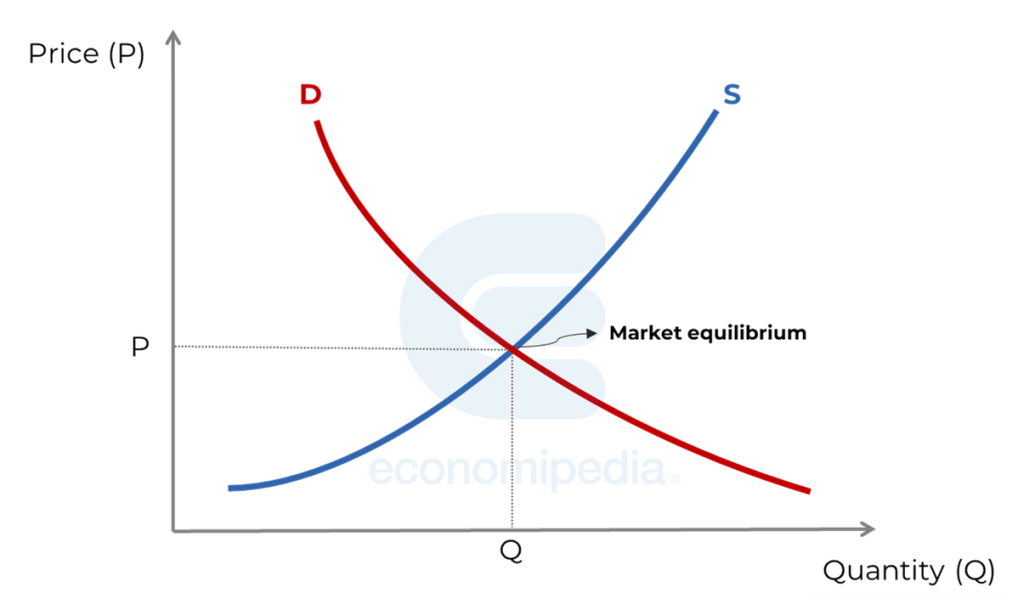
Crude Oil and, to a rather lesser extent Natural Gas, are classic commodities where prices are set at the intersection of the supply and demand curves. The “equilibrium” price. In the short to medium term demand for hydrocarbons cannot change anything but marginally assuming that no rationing is introduced. We have seen recently how prices rose when the perception was that supply was limited by the Russian military action against Ukraine. It’s happened many times before.
We have seen that much of our oil and gas consumption cannot be substituted, we certainly cannot “stop oil”. And the reality is that Global Warmng is not caused by hydrocarbon (oil/gas) producers but by consumers. Shell and BP and the rest do not create demand they satisfy it. In normal times levels of consumption are not affected by supply, there is no cause and effect. So the “Just Stop Oil” protestors are wrong. You can’t reduce consumption by reducing supply. You just put the price up.
Modern Energy economies like Britain’s are not impervious to change. Much has been done in the past thirty years or so to reduce energy consumption per unit of useful output. This has mostly been for pragmatic reasons – lower consumption means lower cost. Across the economy from large scale power generation to home heating and private cars the incentive to use less fuel is obvious.
“Just Stop Oil” wants to stop the further development of North Sea oil and gas. But if Britain’s hydrocarbon resources are not exploited consumers, collectively, will buy from elsewhere – we will import. Importing oil/gas rather than using our own resources negatively affects our balance of payments, damages our employment in the sector and increases our energy dependency. And has zero effect on pollution, global warming or anything else. In short it’s economically irresponsible virtue signalling.
As I said at the beginning of this piece the right to protest is essential. But if you seek to protest it is incumbent on you to get your facts right. This needs to be done not just at the high level of generalities supporting switching to greener energy use. It also needs to be done at the level of the Art of the Possible. And that means studying the subject at a much more detailed and practical level than “Just Stop Oil” does.
 Paddy’s Blogs in a crazy world
An interesting and thoughtful piece Paddy. Thank you.
I believe the protestors know quite well oil isn’t going to stop anytime soon. I think their principal purpose is to bring to the public attention the dangers of climate change and the need to pressurise the politicians to act. Raising public awareness is no bad thing it’s necessary but I do question how they are doing it. Its alienates the very people they are trying to reach so it becomes counterproductive.
LikeLike