“Global Britain” – it’s a ludicrous conceit

In “The Times” today Roger Boyes seeks to sell the idea of “Global Britain” with a new “Great Exhibition” like those we had in 1851 and 1951. It’s a laughable idea !

Land of Hope and Glory? If only…

In 1851 Britain was an Imperial power and much of the world in the school atlases was painted pink. Our navy, and our economy, was bigger than that of the United States. How we got to this position of power is not a story to dwell on in too much detail and certainly nothing to boast about, but there it was.

By 1951 we had got rid of the Jewel in the Crown of Empire (with deadly incompetence) and we were into the process of divesting ourselves of the rest. That wasn’t a walk in the park either.

By 1962 we hadn’t quite become post colonial – there was still the 5 Million people of Hong Kong to let down by handing them over to a hostile power. In that year former US Secretary of State Dean Acheson famously told us that Britain “had lost an empire and had not found a role.” He added:

“Britain’s attempt to play a separate power role – that is, a role apart from Europe, a role based on a ‘special relationship’ with the United States, a role based on being the head of a Commonwealth which has no political structure or unity or strength and enjoys a fragile and precarious economic relationship – this role is about played out.” And, crucially, he also said that Britain’s application for membership of the Common Market was a “decisive turning point.” Should Britain join the Six, “another step forward of vast importance will have been taken.”

So as long ago as 1962 “Global Britain” was a chimera though a fair number of ageing Imperialists denied it. And as long ago as 1962 it was clear that active participation in the accelerating moves towards integration in Europe was “vastly important” and a “step forward”.

Since 1962 the world has seen immense change, and these changes have strengthened the logic of Mr Acheson’s then analysis. The “Global” powers are now The United States, China and the European Union with Japan and a rather diminished Russia in the second rank. The most optimistic assessment of Britain’s chances in this new world order post Brexit places us somewhere in a middle rank – though without the size of others like Brazil or India or the the entrepreneurship of the likes of Singapore, Malaysia, South Korea etc.

Britain decoupled from the EU is a country which has lost the raison d’être that Dean Acheson described for us and is floundering without a role. Our strength in Financial Services is under threat from the Eurozone and the City’s dominant role is already declining, hardly surprisingly. We manufacture little and decoupled from tariff free Europe a major market becomes difficult for what we do still make. To be a niche producer is the best we can hope for.

The drivers of Brexit included flag-waving nationalism which struck a chord with those unable to understand the realities of the post-Imperial world order. When AC Benson wrote “Land of Hope and Glory” in 1901 “Wider still and wider shall thy bounds be set” could still be sung without irony. The nineteenth Century, just finished, was certainly the British Century. But the twentieth was to be American and the twenty-first Chinese (if the first two decades are anything to go by). For a middling country like Britain to go it alone is a silly conceit – and to suggest that we can be “Global” a preposterous delusion.
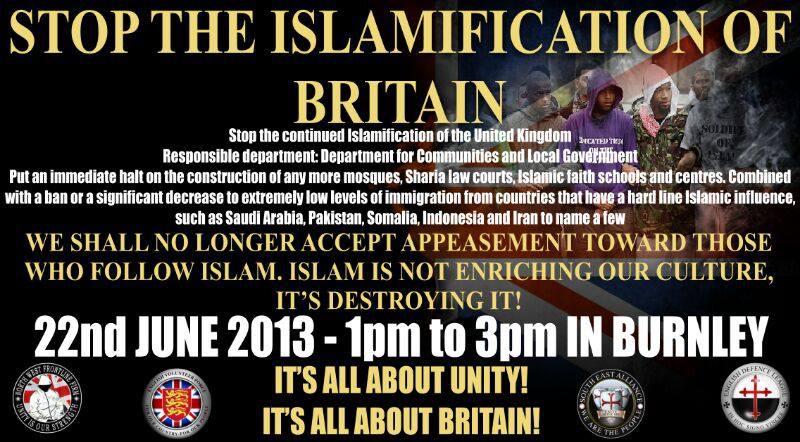
Burnley illustrates that there are still “Two Nations” in Britain.

The Blame culture in Burnley

If we look at the key determinants of social advantage and disadvantage we can see why the inhabitants of towns like Burnley struggle. These are:

▪️Class

▪️Race

▪️Wealth

▪️Education

When Disraeli described Britain. In his novel “Sybil” in 1845 he said this:

“Two nations; between whom there is no intercourse and no sympathy; who are as ignorant of each other’s habits, thoughts, and feelings, as if they were dwellers in different zones, or inhabitants of different planets; who are formed by a different breeding, are fed by a different food, are ordered by different manners, and are not governed by the same laws . . . . THE RICH AND THE POOR.”

As David Aaronovitch says in today’s “The Times” poverty is the problem because it leads to institutionalised disadvantage. Race also plays a part with young Asians in many cases achieving better academic results than poor whites. Perhaps this leads to scapegoating and racism – a blame culture in which the disadvantaged whites’ target is those in parts of the more educationally successful Asian community.

But let’s not ignore the determinant of “Class” either. Disraeli’s “Two Nations” were, and still are, created by class differences. Disraeli was writing long before the 20th century’s growth of the middle class. The classes he identified were on the one hand the rich ruling class , often (but not exclusively) aristocrats. These were being augmented in the “Haves” category by Victorian entrepreneurs – the beneficiaries through their own efforts of the Industrial Revolution. On the other hand, the “Have Nots”, were the dirt poor working classes exploited after they had been lured to the Manufacturing towns of which Burnley was typical.

The shocking, but true, thing in my previous paragraph is my statement that class creates the “Two Nations” today as much as it did in 1845. Today the division is between the middle classes, with their better education, better healthcare and significantly better opportunities, and the rest. Class and wealth are, of course, firmly correlated. The postcodes with the more expensive houses have the better schools – it’s as simple as that. And race and class are correlated as well. The discrimination against blacks that is driving the “Black Lives Matter” movement is in part because the overwhelmingly white middle classes are in charge. And they tend to hire in their own image.

When Tony Blair said that his three priorities were “Education, Education, Education” he was no doubt as sincere as he was right. The Asians of Burnley know this and many work the system and encourage the children. The poor white children of poor white parents do this rather less. And the system struggles to intervene.

The Welfare State is sometimes accused of creating an entitlement society which can lead to the passive idea that it is somebody else’s (usually the state’s) role to solve problems. If this is perceived not to happen the blame culture cuts in. Where wealth or class actively seeks to pursue advantage those who remain passive get left behind. And stay poor. It is then that they seek someone to blame. “Immigrants”. “Muslims”. “Foreigners”. The “European SuperState”. “Centrists”. “Neo-Liberals”. “Remainers” .

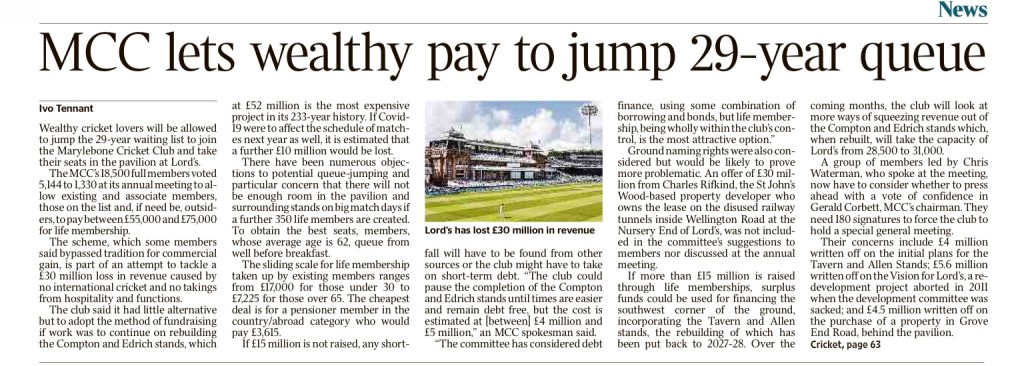
MCC’s inexplicable failure to redevelop its Wellington Rd perimeter creates a vulgarity under which the Fat Cats will call the tune

“The Times” 26th June 2020

For over a decade MCC has had the opportunity to create a financial basis of such strength that even the unprecedented loss of revenues of 2020 and probably 2021 could comfortably have been coped with.

The freehold of the strip of land along the Wellington Road that the Club’s incompetence back in 1995 let fall into the hands of a third party has been in play for ten years or more. An ambitious development plan for this land was approved and then precipitately cancelled by a previous leadership cabal at the top of the Club. This led to the resignation of Sir John Major in protest. Sir John had been involved in the process of the development and approval of this now withdrawn “Masterplan”.

The “Masterplan” (and subsequent refinements of it) would not only have enhanced the aspect of the Lord’s Estate at its perimeter and improved the facilities of the ground but generated a one off inflow of funds of at least £100m and probably more. It would also have solved once and for all the the anomaly that a part of the Lord’s Estate is not owned by the Club. There are no downsides – all the activities which take place at the ground and the Nursery ground could have continued.

The challenges of 2020 and the financial problems consequent on them did not require the Club to take the “nuclear option” of offering life memberships. There is a vulgarity to this surrender to Mammon and I am not the only Member to deplore it. The members’ areas of the ground, including the Pavilion, are crowded enough on major match days at present. To add significantly to this by offering membership to people whose only qualification is that they are rich and can afford it is an affront.

Labour is two Parties in one but the voting system stops them from splitting

In countries with more democratic voting systems the problem of the ongoing presence of the Corbynista cohort in Labour would be easy to solve. They’d break away from Starmer’s Labour, form their own Socialist Party and put their policy propositions to the electorate. In a strictly PR system if they got (say) 5% of the votes they’d get 5% of the seats – a respectable 30 or so MPs.

As a once member of the SDP I speak from experience. In the early 1980s the Gang of Four’s Party, in alliance with the Liberals, gained 25.4% of the vote but 4.5% of the seats. It was a scandalous under-representation – something that under First Past The Post (FPTP) has continued for smaller parties ever since.

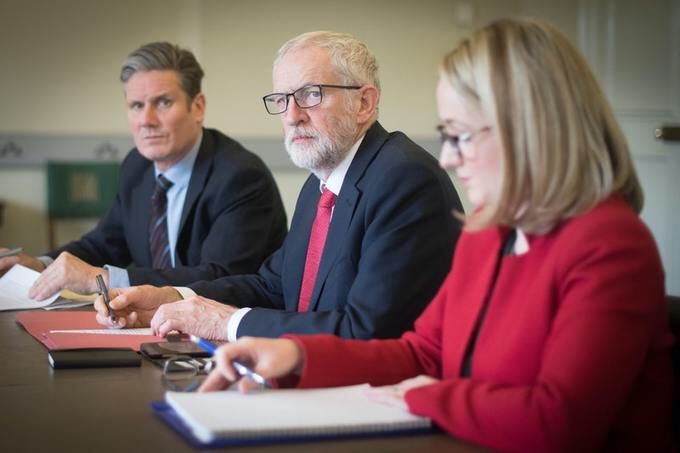
The Hard Core Socialist position of Corbyn and Long Bailey and co. is a credible and respectable political position but one that Sir Keir has not chosen for Labour which he is remoulding in the Social Democratic tradition of Harold Wilson and Tony Blair. If we had FPTP then Corbyn and Co. could leave and try their luck with the electorate. They might do better than 5% – who knows?

The problem with Broad Church political Parties is that there will always be those who grump and plot in the aisles. That was certainly true of the Conservatives before the 2019 Election. Boris Johnson ruthlessly stopped all that and there seem few if any dissidents on the Tory benches these days. But as with Labour there have traditionally been two broad streams. In Labour it was Socialists versus the Social Democrats. In the Conservatives it was “One Nation” versus the more authoritarian and libertarian Right. The latter group has now taken over under Boris Johnson but there are still One Nation Tories around. To break away and form their own Party under FPTP is doomed – ask Anna Soubry or Sarah Wollaston.

Labour tried painting itself the brightest red under Jeremy Corbyn and the electorate spoke. Sir Keir Starmer is taking the Party in a different direction. Ms Long Bailey and her supporters will no doubt snipe at their party leader from the sidelines – the electoral system gives them little choice. But as with the SDP in 1980 they should really be in a different Party.

Add a pinch of salt when looking at Shell’s renewables plans

“The company is also looking to reorganise the business around its new target of cutting emissions to “net zero” by 2050. It is expected to invest more heavily in is nascent electricity business.” The Times. Today.

In my forty years in Shell I saw so many failed and abandoned diversification initiatives its hard to recall them all ! It started with Nuclear Energy (one of the great corporate disasters) which was followed by the company dipping its toes in a series of non oil/gas sectors. And fairly rapidly withdrawing them ! Heres a list, though I may have forgotten some. I wrote about it more extensively here.

▪️Forestry ▪️Solar power ▪️Wind power ▪️Hydrogen ▪️Power stations ▪️Coal ▪️Domestic electricity ▪️Home insulation ▪️Seeds ▪️Horticulture

The truth is that Shell is good at oil and gas pretty much from well to pump, but not much good at anything else. The corporate culture is technocratic and financial. Thirty years ago I saw Shell Energy planners predicate the likely rise in renewables in their Scenario work. It was very far-seeing. But the high-priced-help couldn’t translate this into investment or action and the initiatives which did happen were inadequately financed, poorly managed and faded away.

The company always retreats to its comfort zone of finding, producing, transporting, refining and marketing/trading oil and oil products. Years ago Tom Peters wrote about the benefits of “sticking to your knitting” The multinational energy companies are not likely to succeed outside their narrow comfort zone. Partly because they’ve never needed to and partly because they can’t.

Cutting VAT won’t help The Arts

There have recently been some calls to cut VAT – including from two former Chancellors if the Exchequer. At a time of increasing calls on the public finances these calls seem unwise.

The purpose of taxation is to pay for public expenditure – it is not a good tool of social engineering. In developing fiscal policy you should not start by considering the mix of Direct versus Indirect taxation, you should start with expenditure.

The Virus has been profoundly damaging to virtually all sectors of the economy and will continue to be so for the foreseeable future. Government help for the most threatened sectors, for example The Arts, is unavoidable unless we want them permanently to close. In times when the calls on the public finances will be unprecedented to argue for a reduction in direct taxation seems perverse.

The Arts are comparatively non price sensitive. If you have to pay £50 for a theatre seat it’s unlikely that a price reduction of £1.50 will entice you much. But across the nation the revenues raised by VAT are a key component of the government tax take. If the government is going to bail out the theatres, as they may have to, then the funds to do this have to come from somewhere.

VAT like duties on fuel, alcohol and tobacco is a regressive tax. The poor pay tax at the same level as the rich. Over time to switch from these taxes to more progressive revenue raising (income tax or a wealth tax) is desirable but this is not the right time to consider tax reductions. Borrowing is already at record levels and the scope for further increases is surely limited.

There is blood on Boris Johnson’s hands

In charge ?

Boris Johnson is finding that the challenges of power are rather greater than just dealing with, as Harold Macmillan famously put it, “Events, dear boy, events”. But you do have to deal with the events. Johnson hasn’t. Much of both the backbencher and the public unease about his eccentric and dangerous premiership is not about his personality or character but about his floundering incompetence. There is blood on his hands.

In peacetime for the actions, or inaction, of one man to kill so many citizens is unprecedented. But that will be Johnson’s gruesome legacy – and it isn’t over yet. International comparisons are clear – not one country in Europe has had as many deaths as Britain and every day we are still adding substantially to that grisly count. There is absolutely no case for the relaxation of the rules Johnson will announce today. He’s playing politics – no surprise there then.

From the start the venality of Dominic Cummings has been behind the deeply flawed response to the Virus. But that doesn’t let Johnson off the hook. The buck doesn’t stop in the Number 10 cellar where Cummings has his cauldron and mixes his potions. It stops on the Prime Minister’s desk and in the cabinet room.

The Prime Minister cannot be believed and that does more than undermine trust in him as a leader. It means that the public will make their own minds up about what to do. Never in modern times have rules needed to be followed more than now. And yet we have liars in charge who respond to challenges not with facts but with obfuscation and untruths. When that happens people stop listening.

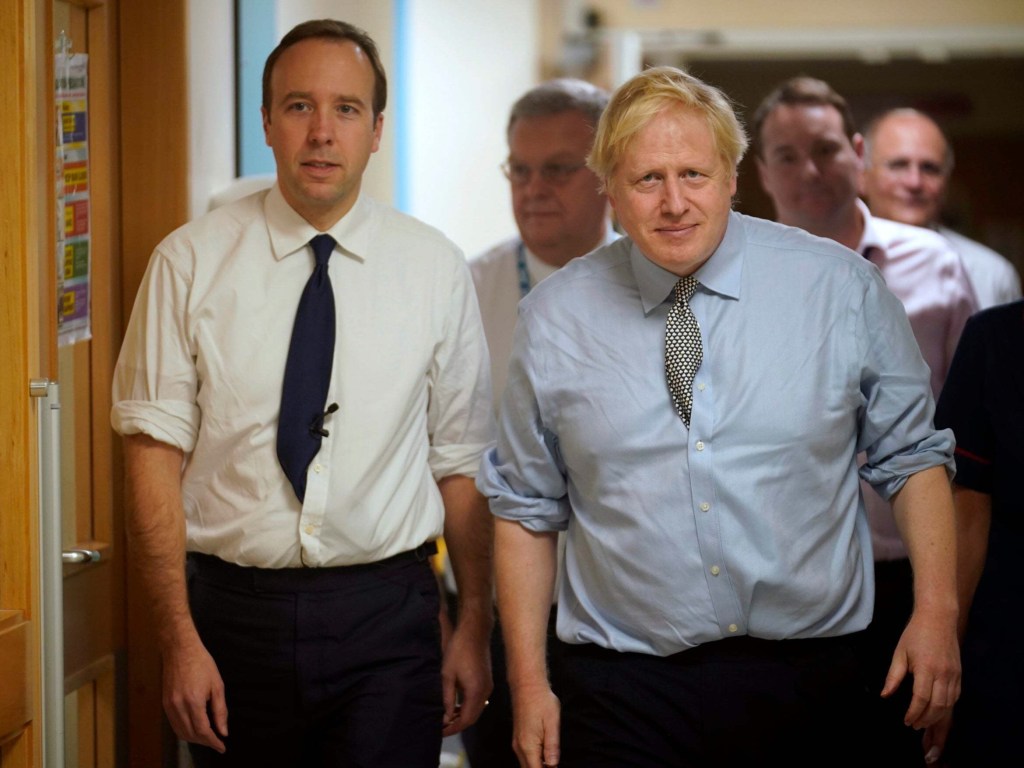
Across the Atlantic there is a deranged fool in the Oval Office. Boris Johnson isn’t deranged but his actions and assertions are as equally foolish and untrustworthy as Trump’s. If your indolence, lack of judgement and culpable errors kill people in their thousands it’s a good idea to change your approach. And apologise. And get better people in the loop. Johnson has done none of these things. For months nobody has believed a word Matt Hancock has said but he’s still “in charge” blathering inanities.

At its core, and from the start, the problem has been that managing the Virus has been seen by Boris Johnson as a political not a management and operational task. It’s the master political manipulator Cummings who has been pulling the strings not the top Civil Servants and scientists. There are people in Britain perfectly as capable as dealing with the emergency as well, for example, as they have in New Zealand. Our one island may be bigger than the Kiwis two but if we had followed the same rules as they did we would have far fewer bereaved families around us.

The myth that the State Pension “Triple Lock” is generous to pensioners

Inflation proof pensions are hardly a revolutionary idea. Most Defined Benefit Scheme workplace pensions give annual increases linked to an inflation index – usually CPI or RPI. The problem is that these general indices do not in any way reflect Pensioner inflation – nor does the annual increase in earnings nor 2.5%. The triple lock is a lottery and one that guarantees that in real terms Pensioners will get poorer every year.

Pensioner inflation is different from overall inflation because Pensioner lifestyles and spending patterns are different. Many older pensioners do not have a mortgage and so the housing cost element of CPI is inappropriate. The basket of goods/services in the CPI is also very different from the real basket of pensioners. Utilities costs (electricity and gas) form a considerably higher percentage of a pensioners expenditure than that of a working family.

To maintain the value of the State pension (and workplace pensions for that matter) a new approach is nodded. Annual increments need to be linked to a Pensioner expenditure Index which accurately mirrors what pensioners actually spend their pensions on. Such an index does actually exist but nobody talks about it. They should. The Triple Lock is characterised as being generous to pensioners. It is nothing of the sort.

Why petrol prices are higher on motorways

It is not just in Britain that motorway service areas are the preferred location for the oil companies. The economics are attractive in many countries despite the exceptionally high initial outlay. Here’s how it works.

Motorways are publicly owned and to help defray construction and operating costs the elements on offer on site are put out to tender. This includes such things as fast food and fuel (petrol/diesel). It is highly competitive and the right to have your brand on site will cost millions of pounds in upfront and annual costs.

The reason that despite the cost oil companies like motorway service areas is that there is no competition. This is supply/demand economics at its most raw. Price theory predicates that the price of a commodity like petrol is at the intersection of the supply and the demand curves.

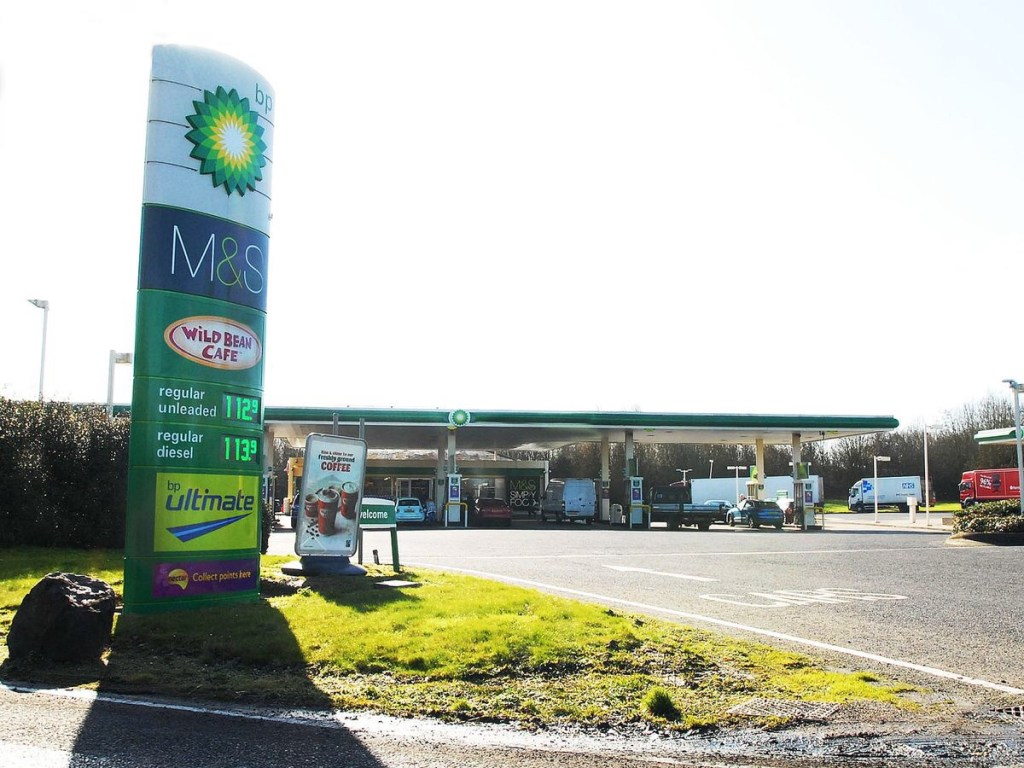
In a normal town there will be a number of petrol stations competing on price. The supply is high which puts pressure on the price. It’s also open – prices are clearly displayed on the sign outside the station. Of course other factors play a part – the shop on the site will bring customers in and location is crucial. The busier the road the better. There can also be brand preference and loyalty schemes. But in the main demand is price determined and the customer exercises choice.

At a motorway service area there is no choice – they are virtually all single brand outlets. There is no price competition and there are no price controls. Companies have paid a lot to be there and they want to recover those costs so they put the pump price as high as they can. The customer is captive and takes it or leaves it. On a long journey it is likely that he or she will have to take it. The alternative is to leave the motorway and search for a station with lower prices – not many drivers do that.

British motorways are mostly free to use but the driver and passengers will pay in other ways. Your Costa Coffee will cost you more than on the high street, and so will your BP petrol. With today’s more fuel efficient vehicles a tank of petrol will take you a long way. You may be able to avoid expensive motorway petrol entirely and it makes sense to do so. But most of us will have to pay the motorway petrol cost surcharge sometimes I’m afraid !

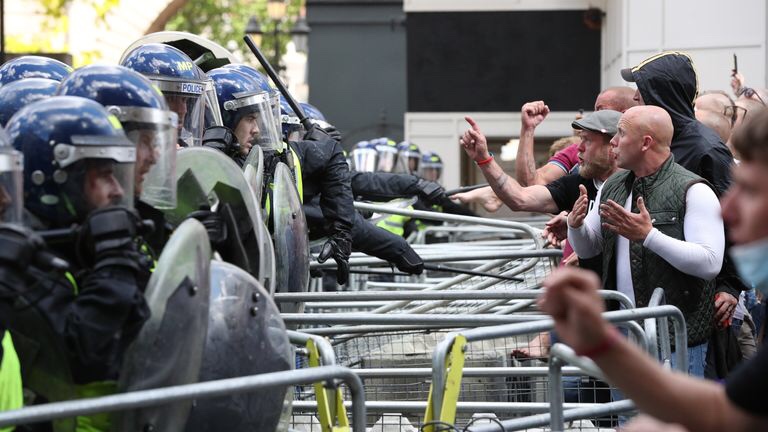
The political establishment has given the thugs cover

“Don’t call them bovver boys, what you mean is racists” – Sara Tor in The Times

At the heart of these people (if they can be seen to have one) is stupidity. Blind ignorance leads to many things of which racism can be one. Not all dim people become racists but it’s fair to say that all racists are stupid. What about Nick Griffin an openly racist activist who was educated at Cambridge University ? What about the aristocratic Army Officer Oswald Mosley – an antisemite fascist racist much of his life. Good questions !

The racist thugs have their heroes – check social media if you doubt that. Nigel Farage for one. The Dulwich College educated and minor city slicker Farage was a fascist at his school. Well we all do silly things in our teens. But in Farage’s case the proto-fascist child was father of the Hard Right, xenophobic man. His very apparent respectability gives our fat ageing street urchin “protestors” encouragement. Farage’s opinions are not that much different from the yobs – just somewhat more elegantly expressed.

Mosley led marches through the East End Of London where the ancestors of todays “protestors” cheered. Enoch Powell received much support from the Alf Garnett cohort. They knew the buttons to press. At the high point of his political activism Nick Griffin garnered dozens of council seats for the British National Party and was elected as a Member of the European Parliament. It’s successor Farage’s UKIP, the most successful overtly nationalist political party ever, changed Britains direction, possibly for ever.

In the European Parliament elections of 2014 Farage roused the rabble. Britain’s UKIP representatives in that parliament became political outliers in Brussels who the elected MEPs from 27 nations looked at with puzzlement bordering on contempt. When these rancid Kippers turned their backs on their fellow MEPs in an act of vulgar defiance any reputation Britain may have once had as a credible participant in the governance of a uniting Europe disappeared.

The distinction between a racist and a xenophobe is a fine one. And the distinction between a xenophobe and the Brexiteer peddlers of the mythical benefits of “Sovereignty “ is a fine one as well. They are still at it of course – even a man as educated and urbane as Chancellor of the Exchequer Rishi Sunak is drivelling on about Britain becoming “Independent again” on 1st January 2021. As if the independence our recent ancestors fought for and won in WW2 was a chimera.

So we may all distance ourselves from the fat men with tattoos who desecrated our capital City at the weekend. But we should all look carefully at the political climate which gave them cover for their actions. The political line from Mosely to Powell to Farage is clear. To extend it to Johnson is not too much of a stretch. If you call people of colour “picaninnies” you signal your opinions fairly clearly.