At some point we will need to lighten up and be more optimistic – but those times are nowhere near

“Britain has done brilliantly on the vaccination front — much better than the rest of Europe.” Matthew Parris in The Times today.

Matthew Parris has a a good article in The Times today with much of which I agree. But I must challenge first his implication in it that Brexit was just about trade, and then the delusional bombast in the above quote. Yes we are cobbling together some sub-optimum trading arrangements , not least with our major trading partners the countries of the EU. But, as Liz Truss predicted during the Referendum campaign, none of these new deals is as good as we had as an EU member. Even the supply of Percy Pigs is affected (see article today in the same newspaper).

The act of self-harm that is walking away from Europe on trade is matched by a host of other damaging consequences of Brexit. Everything that those of us who understood this would happen said is coming true. Project Fear was Project Reality. We were conned, and some.
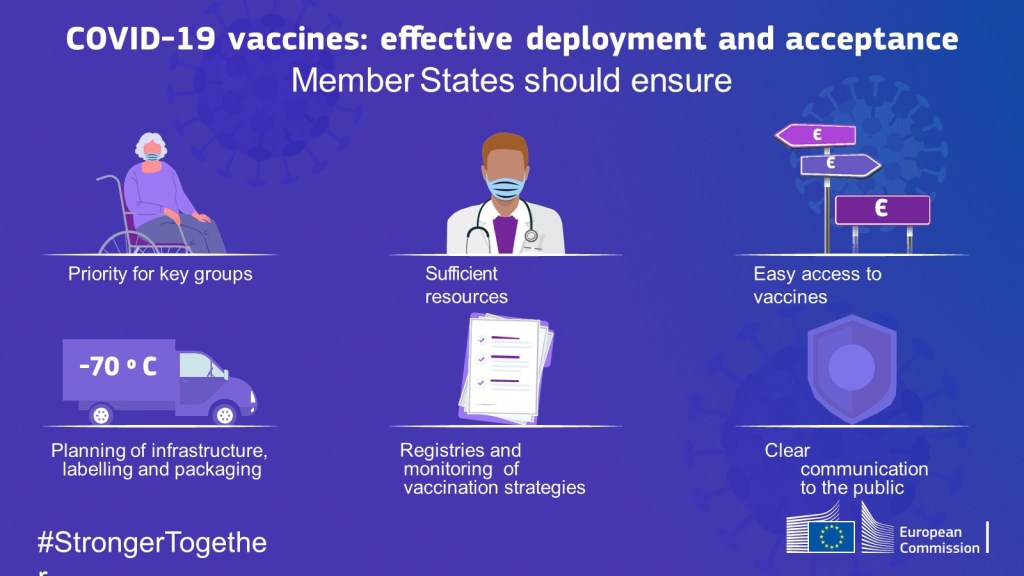
EU advice was for Member States to move systematically

I did care about how the nation of which I am a citizen is perceived in the world but frankly no longer. Our reputation may not be irreparably shattered but it’s going to take a while to restore it. We are the sick man of Europe in more ways than one. Which brings me to COVID and vaccination.

The figures on the mishandling of the pandemic are too shocking to be glossed over. Britain has done the opposite of “brilliantly” on everything – we are the killing fields of Europe. We went from denial to action slowly at the beginning and then our leaders soon caved in to pressure from the hard deniers of the Right. We had a bad first phase, everything was too little and too late. Boris Johnson paid more attention to John Redwood and Julia Hartley-Brewer and Toby Young than he did to the Chief Medical Officer and the professors of immunology. If the second phase was bad the third phase is disastrous. The U-turns have been dizzying.

Europe pooled its resources to some extent on vaccination – certainly on procurement. This is delivering logistical and cost benefits to which we are not party. But the devil of the vaccination programme is in the detail of which approval and procurement are just initial parts. Getting the vaccines to the people who need them is the key – and if comparisons between countries are to be made it’s the efficiency of the complete process that counts not just the initial pre-vaccination stage.

The “we’re doing it better” meme is everywhere – a sure sign that we’re not. It’s pseudo-patriotic bombast. If in doubt put another flag behind the podium. I agree with Matthew that at some point we will need to lighten up and be more optimistic. But for me those times are nowhere near.

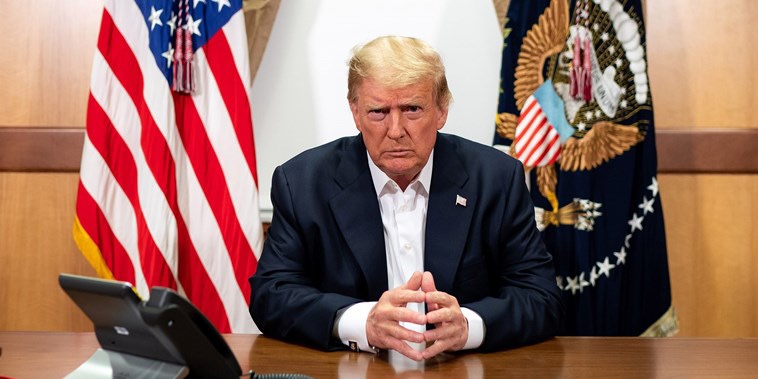
Orange Game Show hosts and scruffy blonde polemical writers share an ability to grab attention

Ultimately, however, Johnson believes in alliances in a way that Trump does not.” James Forsyth in The Times today.

Well you could have fooled me. The man on the bulldozer plastered with the “Get Brexit Done” slogan believes in alliances does he? Whilst I’m not sure what Johnson actually believes in (if anything) withdrawal from the world’s largest and most successful political and economic Union suggests that it isn’t alliances.

The starting point for any analysis of the character of Boris Johnson is the evidence of his behaviour in and out of office and in life as well as politics. And if we do this then the strong comparisons with Donald Trump become very clear. Ego is the driver as well as the arrogance that comes with privilege.

Harold Macmillan and Harry Truman learned about the realities of life for the poor bloody infantry in the trenches of the Great War. It strongly affected their actions when in power. Johnson and Trump had no such learning. They never wanted for anything nor made any effort to find out about the lives of those who did.

It is a coincidence that the final year or so of Donald Trump’s malignant presidency overlapped with the beginnings of Boris Johnson’s similarly dysfunctional premiership. Their respective handlings of the pandemic, the greatest crisis of modern times, were eerily similar. Both moved from initial denial of the extent of the threat to grossly incompetent actions – too little to late and too confused.

The bewildered confusion over COVID is matched by bumbling failures of management and communications generally, and at the core of this is a disconnect from the truth. If this is the Age of Fake News then Trump and Johnson are it’s master purveyors. You have never been able to believe a word they say.

Judgments about personal morality are hard to avoid. How we all live our personal lives is, in many ways, none of anybody’s business. That said do we really want serial philanderers and unfaithful womanisers in positions of power? Yes I know about Lloyd George and John Kennedy – nobody’s perfect!

The most relevant political similarity between Trump and Johnson is how these perversely electable but shallow men have been used by ideologues of the hard Right in their political parties. Orange Game Show hosts and scruffy blonde polemical writers share an ability to grab attention, especially on television, even if much of that attention is trivial. Those in the dark recesses of political manoeuvring in the Republican and Conservative parties probably didn’t like the Donald or Boris very much. But they saw a vote winner, and they were right.

Joe Biden and, come the dawn, Johnson’s successor will have an Augean stables of exceptional rancid detritus to clean up. Like Konrad Adenauer in post war Germany they will need hard work, good friends and a sympathetic public to rebuild their country’s reputation and credibility.

Some nations may do things better than others but that’s usually not about values at all, but about resources

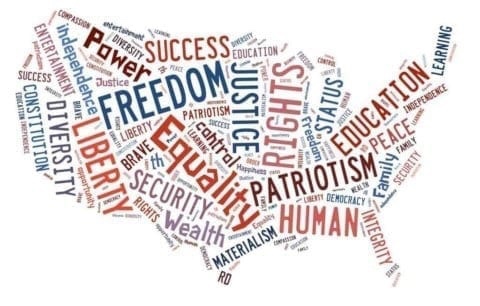
“American values” are referenced in the headline but not defined in the article of Tom Tugendhat’s piece in The Times today “Trump’s assault on American Values will fail” – though there is an assumption that these values are a “good thing”. (We get the same usage about “British values” frequently these days with an equally absent definition). For nations to have “values” is popular rhetoric, and usually pseudo-patriotic exceptionalism.

That nations differ is obvious and a product of centuries of evolution – especially of culture and language. Whether this evolutionary process creates differences in “values” is much more questionable even when, as in America’s case, they are constitutionally codified. “We believe these things to be self evident, that all men are created equal” was the inspiring claim in 1776 – to be followed by two hundred years of overt racial, gender and other discriminations.

Are historic American values those of the slave owners or of the Klu Klux Klan ? Of George Wallace? Of Charles Lindbergh ? Of the male hegemony that denied women the vote? Of a vengeful crime and punishment system that judicially executed people? And still does.

Are American values those of the unrepealed 2nd Amendment which allows citizens to bear arms and leads to one if the world’s highest Murder rates? Or a healthcare system which discriminates according to an ability to pay? Does the judicial system treat people fairly or are those with the ability to pay advantaged – you know the answer to that one!

American “values” are no such thing, they are universal and can and do apply to almost any nation

In some respects the gruesome Trump years were more representative of the core values of the American people today then the presidency of his predecessor. Liberal America (it does exist) is in a minority in a nation which often simplifies complex issues into insulting slogans.

Human values are surely the same the world over and no nation has a monopoly of good ones – if we can define what “good ones” are , which is questionable. Let’s take the value of having respect for others even if they differ from us. That was at the heart of the “Black Lives Matter” movement but sullied by a politicalisation which moved into some highly questionable policy proposals like “defund the police”.

The more widely we travel the more we see the commonality of values across nations. Love of family (for example) is not American or Western but universal. Respect for the law is fairly universal as well, though often challenged. The right to protest against perceived iniquities is a common value , though again can be problematic in practice.

The truth is that leaders of countries which feel the need to proclaim their values , even suggesting they are unique, often have an inferiority complex about them. In insecurity failing politicians call for another flag and spout “This great country of ours” type bombast. In truth we are all seeking similar outcomes wherever we live and it is how well we educate, protect, look after in sickness and in health, entertain and respect our citizens that characterises us. And that’s a universal goal. Some nations may do these things better than others but that’s usually not about values at all, but about resources.

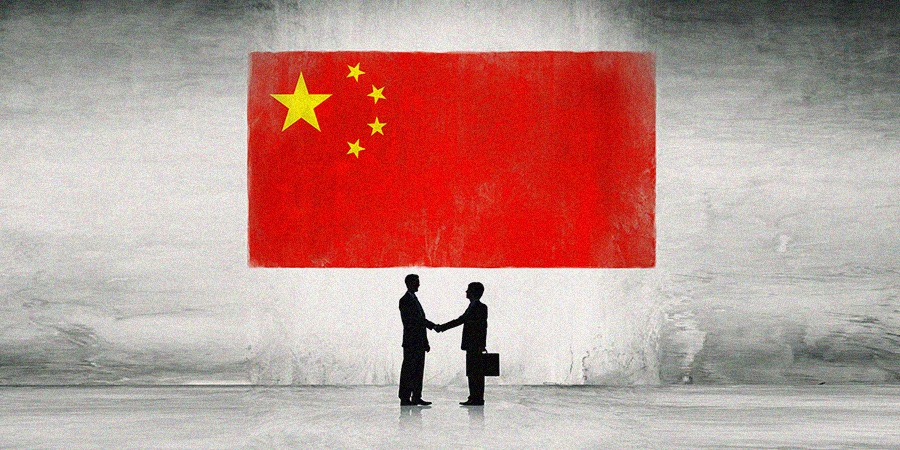
The economic powerhouse that is China was created in close partnership with the West

There is a splendid article by Danny Finkelstein in The Times today which avoids the ignorant “Boycott China” rhetoric we hear all too often. I first visited Beijing on business in 1986 so was a small part of the vanguard of Western businessmen essential to the opening up of the country. There was an interesting area of debate at the time as to whether you could have economic capitalism and free enterprise without democracy. We how know that the answer is an emphatic “Yes”.

More than thirty years of partnership between China and the West can’t and won’t be unravelled

Lets be clear. The economic powerhouse that is China was created in close partnership with the West. If Human Rights sensitivities had played any part in the West’s relationship with the People’s Republic then Tiananmen Square in 1989 would have been a game breaker. It wasn’t. Within weeks of the massacre the western businessmen were back on the planes to China.

China follows classic macroeconomic theory. In the early days it was attractive to western businesses because of its abundant supply of two of the four factors of production – Land and Labour. What initially the West brought was the other two – Capital and Enterprise. Western investment poured into China along with entrepreneurs offering and transferring technology and management skills. Along with this the huge population is a massive market for imports. And the per capita purchasing power of this population was growing with income growth from industrialisation. A peasant economy became a wealthier and more socially mixed one.

So China was an attractive market as well as becoming the world’s main source of manufactured goods. This created what is effectively economic integration and mutual dependency with the West. Sanctions against China would be sanctions against ourselves. Those who argue that we, the West, can pressure China to modify her approach to Hong Kong, or to minority peoples need to recall Teddy Roosevelt’s advice to “speak softly and carry a big stick…” At the moment we seem to be encouraging the reverse – speaking loudly whilst carrying no stick at all.

Some years in the Far East taught me that almost everywhere democracy and even politics itself is low in the priorities. People in Chinese diaspora cities like Singapore and Hong Kong, and countries like Malaysia and Thailand – even Japan – want the politicians to leave them alone. Wealth creation, family and good food are more important than the ballot box. And without question China is not internally clamouring for democracy – not least because of the memories of 1989.

This is the context of what the Chinese Foreign Minister meant when he said “…the legitimate rights of the Chinese people [is] to pursue a better life” the goal of “forging a collective consciousness of the Chinese nation [being] central to achieving the Chinese dream of the great rejuvenation of the Chinese nation”. That “collective consciousness” and rejuvenation is very substantially achieved economically. But hiding just beneath this is something much more alarming. Hong Kong is a pointer to Taiwan and there is no doubt that completing the collective consciousness task requires the reabsorption of Taiwan into the PRC. And the big stick is in the hands of Beijing not Taipei.

An unwritten and paradoxical alliance between the poor, on the one hand, and the privileged on the other gave us Donald Trump

When the Republican Party chose Donald Trump to be its candidate in the 2016 Presidential election it was an act of unprecedented folly. In office he demonstrated beyond question all the malignancy he had shown in his life to date. A dimwitted, ignorant, humourless man whose extraordinary populist appeal was to two subsets of the American people. The abandoned, and the privileged and greedy.

If Britain is two nations then so is America – and some. The disadvantaged are to be found everywhere, in blue states as well as red. Most of us when we travel to the US don’t see the poor white families living in trailers. Usually without healthcare, with poorly paying jobs at best, shallow education and zero prospects. But they’re there in their millions, and they voted for Trump.

If the white underclass was Trump’s base the Republican fat cats were firmly behind him as well. He could protect their privilege, and did. The paradox of an underclass voting for a man who had no intention of doing anything for them is extraordinary, but that’s what happened. If your reference point is a gold decked vulgar apartment in a Manhattan tower block, and a beach side mansion in Florida, you’re not going to know much about life in the boondocks. Or care.

Rich America talked a lot in the recent election about the threat of “Socialism” though few of them could tell you what it is. What they meant is the threat of taxation to extend and improve citizens welfare. The underprivileged are large in number but low in purchasing power. They generate insufficient collective economic size to interest country club Republicans who simply want to continue to ignore them. The hope that Trump offered the poor with his flag-waving “Make America Great Again” was utterly specious. But as we are seeing in Britain a nation’s flag backed by simplistic slogans will give unscrupulous politicians a reason for the people to believe them . It may be a veneer but it can fool enough of the people enough of the time.

Do not underestimate the potential for those with power to retain it. The manoeuvrings of Trump, and shamefully many in the GOP, to try and overturn a near landslide election win by Biden is bringing more calumny into a political arena already full of it. The vulgarity of it is breathtaking , but then if you wanted class and principle you didn’t support the Donald. The risk is to think that when Joe Biden is sworn in America will breath a collective sigh of relief and move on. But the forces behind Trump won’t go away, nor it seems will he.

Britain in Europe – lonely decline or pragmatic partnership is the choice

As bridges are rebuilt (or in many cases never demolished) gradually we will realise that to an extent we can have our cake and eat it.

We are where we are – not the most intellectually stimulating of clichés but true nevertheless. We are no longer a member of the European Union. To leave was emphatically the wrong thing to do but we been and gone and done it. What now?

Rejoining the Union is not a goal in itself for now. It may be a solution to problems at some point in the future but certainly for the next year or two or more it is not. That is because the post EU world has to be tested. This does not require any of us to surrender our positions. I’m as in favour of membership of the EU as I was a week ago when (effectively) we still were. But the battleground has shifted.

The scope of the post EU world, the bombastic rhetoric aside, has only just begun to be seen. Ask a businessman what they expect for their business in the new world and the chances are they will say they don’t know. Ask a merchant banker if they will shift from London to Paris or Frankfurt and they’ll say the same. It’s a journey into the unknown.

The effect of Brexit will be felt across all aspects of our life. Our commercial life. Our financial life. Our cultural life. Our family life, and more. What was straightforward following thirty year old precedents and within the context of detailed treaties no longer is. One very likely route forward we have already started to see. Every time Liz Truss declares that there is a trade agreement with a non EU country it’s the same agreement that we already have, though slightly less advantageous to Britain. It’s rollover time.

If the trade rollovers are pragmatic and sensible in other areas surely the same will apply? Take employment. European citizens make hugely valuable contributions to Britain’s economy, not least in the National Health Service. The strict application of the post Freedom of Movement rules would stop that. So it won’t happen. Common sense will surely prevail. Gradually, even stealthily, those nominally closed borders will begin to reopen. Here the illogicality of a swift return to employment freedoms cannot be one way. If Spanish doctors return to the NHS then British doctors will have to be allowed to take the opposite route. Freedom of Movement is a two way thing.

What I’m arguing here, and these are only a few examples among many, is that pragmatism will defeat ideology. Abandoning Erasmus was deranged ideology. As was not participating in Europe-wide vaccine procurement schemes. It reminds me of the fall of Apartheid in Southern Africa. What happened first was the abandonment of petty apartheid. The silly laws and rules that defied logic and were solely a consequence of hard racist ideology. Surely if something doesn’t make sense, like the withdrawal from Erasmus, we won’t do it.

The trade deal with the EU showed that a measure of common sense can prevail even at a time of faux-patriotic triumphalism. Soon, very soon is my guess, we will realise that the trade deal without participation in the single market and the customs union is sub optimum. So, probably quite stealthily, we will negotiate deals which have benefits that are indistinguishable from the current single market and the customs union. A few on the fringes might claim that this means it’s Brexit in Name Only (Brino) but most of us won’t care about that if it makes life easier and makes imports cheaper.

We don’t have to fly the EU flag to participate to mutual benefit in pan-European collaboration. The Swiss and the Norwegians don’t. Why should we? As bridges are rebuilt (or in many cases never demolished) gradually we will realise that to an extent we can have our cake and eat it. The key consideration is “mutual benefit”. There is no doubt that to participate in the single market is beneficial to both the EU27 countries and to Britain. If only ideology and phoney arguments about Sovereignty stands in the way of this happening then surely logic will prevail. Those screaming “Brino” will be seen for the dinosaurs they are.

My scenario is optimistic and based on the premise that though as a nation we do very silly things at times we are not deep down foolish. That premise has certainly been tested to destruction over the past decade and maybe I’m wrong and we will continue along the path of lonely decline. But my guess and fervent hope is not.

History matters – those who refuse to learn from the past are doomed to repeat it

I spend a fair bit of my retirement reading history and biography ( both of which we , as a nation, do rather well). I also travel fairly widely (or did until last year’s hiatus) – and not just to beach resorts. I haven’t in my seventies decided I need to pass more exams – it’s just that I realised how much I didn’t know, not least about my own country. And I’ve come to an uncomfortable conclusion – most of Britain’s history sucks.

Now I’m not trying to create a league table of awfulness here, though if I did Britain would be pretty close to the top of it. A position we are honourably maintaining today helped by tendentious polemics like Mr Liddle’s latest rant here in today’s Sunday Times. Empire had little if anything that was commendable about it seen from the perspective of today. Whether we apologise for it is a fair question but far more important is to learn.

A book that has really made me think is that by Susan Neiman called “Learning from the Germans” an American academic at Berlin University. Her position is to contrast how badly America has been at confronting her recent past compared with post war Germany. It took a while, but the Germans in modern times pull no punches in confronting their hideous first half of the twentieth century history. Very often the facts speak for themselves as visits to Berchtesgaden in Bavaria or the Holocaust museum or German Historical Museum in Berlin will show you. Only very slowly is America confronting slavery and institutionalised racism in a similar way.

If America has been slow in “learning from the Germans” Britain has hardly bothered. We have no “Museum of the British Empire” and the teaching of our imperial history in schools is patchy at best. On the contrary all too many of us are ignorant, flag-waving apologists for an Empire on which the sun never set. And which was responsible for unspeakable atrocities.

Very recently the Bristol statue affair and the closely linked but belated recognition of the fact that “black lives matter” has helped raise our awareness – but frankly they scratch the surface. Take the Boer War as an example. This comparatively recent event (my Grandma remembered it) has almost disappeared from our consciousness. And yet white Britons treated white Afrikaners as if they were sub-human. The innovation of concentration camps in which thousands died was uniquely British.

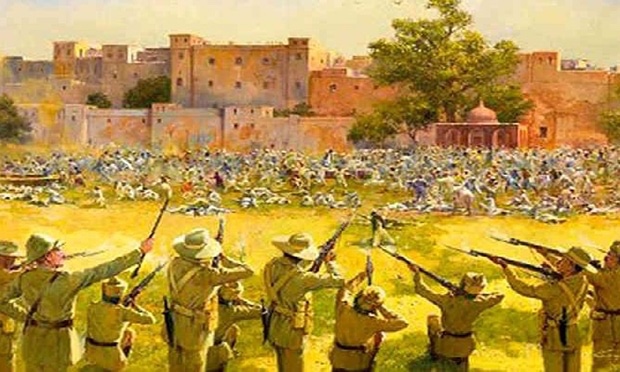
The Amritsar massacre in 1919

Amritsar was another event of recent memory which added an extra layer of murderous horror to British history. Even (just) in my own lifetime the imperial arrogance of we Brits killed a million or more in the botched partition of India and later still in the period before withdrawal from Malaya, Cyprus and Kenya.

Dig deep and you can find out about our imperial history and there have been some successful attempts to tell it in popular culture – Jeremy Paxman’s TV Series “Empire” was excellent. But in the main we just don’t bother and when we do we get accused by the likes of Mr Liddle of being “Anti history”. The reverse is the case. We are very much “Pro history” because those who refuse to learn from the past are doomed to repeat it. The Germans have learned, America is slowly learning. High time we did the same.

Finding the courage and caring to help others

Max Hastings has an excellent piece about courage in The Times today.

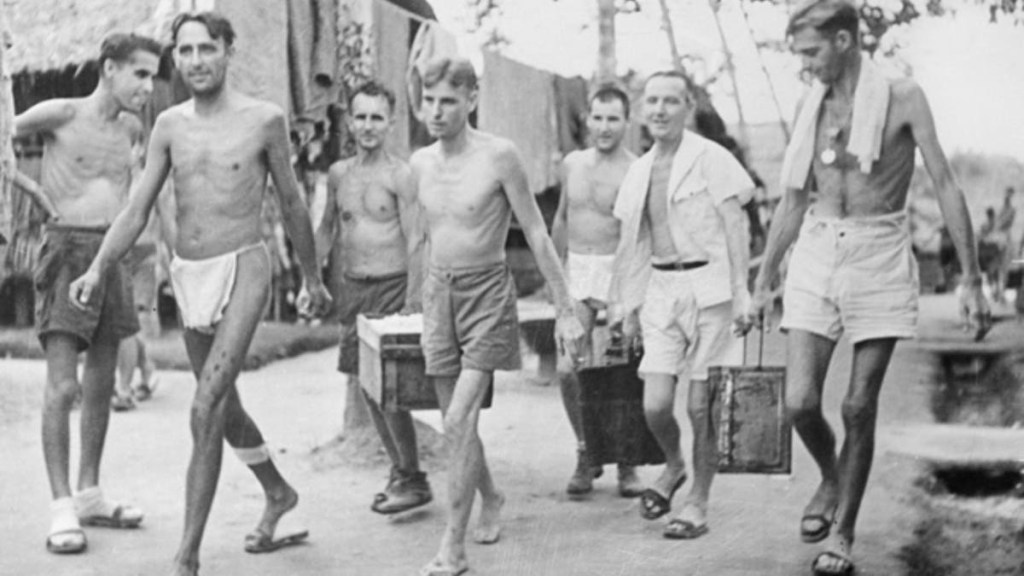
My father was a Prisoner of the Japanese on the Burma railway for more than three years. He rarely talked about it – he was not alone in that. He was not a hero – at least not in his own view. But I have found one or two books about the railway in which he is mentioned. He kept the earphone of the camps’ clandestine radio in his shoe. He and other officers liaised with Thai locals to smuggle food into the camps. If he had been discovered he would have been shot – or worse.

Dad wore a poppy on Remembrance Day but eschewed completely both the sentimental and the boastful faux-patriotism that is common today. He hated war and violence with a vengeance, he had seen too much. He would have rejected completely the characterisation of all soldiers as “heroes” which is also all too frequent in modern times. Some were, most were not.

Dad didn’t want to go to war in part, I think, because of his own childhood. He was born four days before the Battle of the Somme started. As he grew up he was surrounded by those scarred by the War to end all Wars. Some were silent men of courage. Some innocent victims who put their war experience behind them. In 1939/40 Dad volunteered and eventually joined up. It was not an act of courage, but one of duty.

As a child in the early 1950s some of my school friends played with toy guns , I did not as they were banned in our house. But my father was not a bleeding heart pacifist. He didn’t want to be a hero though he did have a buried grievance about being ignored when he got home in 1945. He was not alone in this either. When the largely fictitious “Bridge on River Kwai” film came out I went with Dad to see it. His reaction was interesting. He said it was nonsense, but he was pleased it had been made as in his view the subject had largely been ignored. He was right. The railway gradually became better documented and stories of courage began to emerge. Including his, but by then he had died.

It’s a cliché to say we do not know our potential for courage until it is tested for real. But it is also a very subjective thing – one man’s courage is another’s foolhardiness. The idea of silent heroes is an appealing one with its ring of modesty and lack of bombast. I remember Dad referring to one of his friends as “having had a good war, but he doesn’t talk about it. His Military Cross stays in its drawer”. Dad was not decorated but it seems he had a courageous and therefore “good war” as well. He was one of “…The strongest people [to] find the courage and caring to help others, even if they are going through their own storm.” as Roy T Bennet put it in “The Light in the Heart”.

Tinkering with tax and regulation in Britain to further some antediluvian libertarian ideology just won’t work.

“Virtually all economic growth comes from innovation.” Matt Ridley in The Times today.

It doesn’t. Economic growth comes from demand either domestic or from abroad. New ideas and products can help stimulate demand but it is growth in the sale of existing goods and services that is the main driver.

If you trash your manufacturing base whilst your international competitors are growing theirs that will contribute to your economic decline. Britain has been doing this for 50 years. The substitution by the service sector of the disappearing factories has covered up this process. There have been moments of innovation from Sinclair to Dyson but these have either faded away or not been significant enough to count much.

It’s the big guys on the block who innovate

The most innovative modern companies are in sectors like computing where the Americans (Apple) and the Far East (like the Korean Samsung and the Chinese ) dominate. Britain is nowhere. We just don’t make things any more. Our vehicle manufacturing is significant but these foreign owned companies can and will review where in Europe they have their plants. Britain is now a pretty unattractive prospect as recent decisions by Honda and Nissan have shown.

The Brexit agreement did not cover services and there is little doubt that Britain’s economic isolation will lead to the relocation of many financial services firms from London to more welcoming and flexible European locations.

The Gross Domestic Product of a country is driven in part by its size and in part by the efficiency of its new wealth creation but whilst it is beneficial to be innovative far more important is to have a sound basis to what you currently do. Economies of scale are absent in what is left of Britain’s manufacturing. This has led to the disappearance of traditional industries with only small scale and niche production remaining.

Britain is not a victim of high taxation nor excessive regulation , and energy prices are no higher here than elsewhere in Europe. And to spread lies about Europe’s “lethargic” approach to the approval of COVID-19 vaccines compared with the U.K. is petty and cheap.

The modern world is interdependent and whilst there is always the opportunity for clever entrepreneurs to exploit good ideas don’t hold your breath. The inevitable decline caused by our rejection of cooperation in Europe and our walking away from Free Trade – the Single Market and the Customs Union – will be hugely damaging.

Economies can adapt to new circumstances and innovation can help this. But it is the “big companies” that Ridley so decries here who mostly do this in the modern world. All the vaccines come from Big Pharma. Just as all the next generation of electronics will come from the likes of Apple and Samsung. Tinkering with tax and regulation in Britain to further some antediluvian libertarian ideology just won’t work.

Popular culture has always been full of ageing lechers pursuing innocents.

Max Hastings writes about Flanders and Swann’s “Have Some Madeira, M’Dear” in The Times today. He says . “I doubt that any entertainer today would perform a number about an ageing rake” – he’s probably right. Flanders and Swann held a mirror up to society and like all great satirists it distorted a little as it reflected, but not by much. Britain in the 1950s was a society riddled with male chauvinism, and worse. Employers hired women only as typists and secretaries and even in The Arts there were few female conductors, film directors or composers allowed prominence.

Flanders and Swann were part of the process of change as were the new novelists and playwrights. The Angry Young Men were all men, but at least the discrimination against women was one of the things they could be angry about. “Look Back in Anger” begins with a wife expected to know her place at an ironing board.

“Beyond the Fringe” was around the corner. It was gentle and very male satire. – but in many ways F&S were tougher. A target of both of them, and also of Osborne in “The Entertainer”, was English delusion and exceptionalism. How we could do with them today – there is no better portrayal of this dominant national character trait than in “The English, the English, the English are best”.

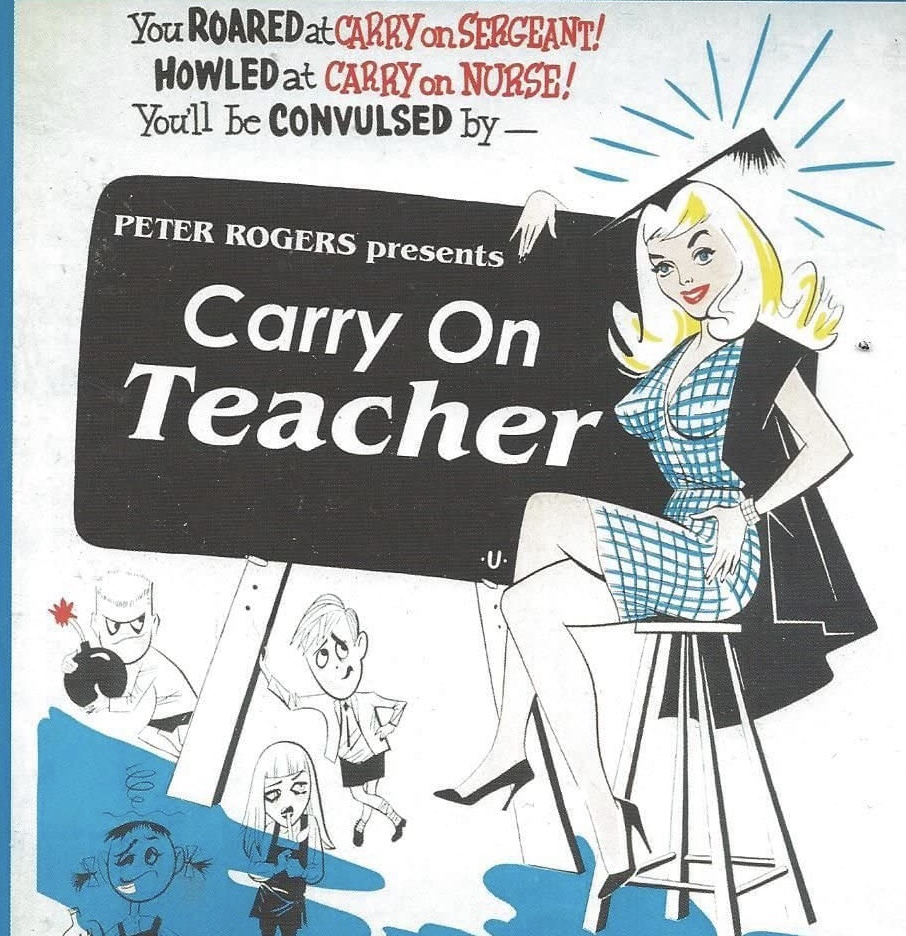
The pompous old fool in “Have some Madeira , M’Dear” was a man of his times but he didn’t go away quickly. Indeed he’s still around. Popular culture from the “Carry On” films to “The Navy Lark” and “Round the Horne” was full of ageing lechers pursuing innocents. It still goes on, even in Parliament it seems.

I grew up in the very hierarchical 1950s and through most of the decade we were all expected to know our place. Women were at best patronised and at worst abused. Many were seen as “Fair game”. Diana Dors and Jayne Mansfield were certainly in your face, but their prominence was based solely on their allure, not their brainpower. Ruth Ellis was hanged as much for her promiscuity as for her crime.

I worked in a London office of a well known company in 1964. One of the quite senior managers could not keep his hands of his secretaries and they had regularly to be replaced. He kept his job and indeed rose to some prominence in other fields. He may not have used Madeira in his attempted seductions – but this ageing rake got away with it – as did thousands more.