Our cousins across the water needed to rid themselves of Trump before they could start again. We need to do the same here to his bumbling stablemate.

2021 is about competence. So was 2020 actually but it’s woeful absence in Government last year intensifies the need for it this. Frankly party politics, who is up or down in the Conservative Party for example, are irrelevant in the circumstances in which we find ourselves now.

Paul Goodman in The Times today gives us a useful summary of the COVID management failures. If we were in The Netherlands the Government would have resigned en masse, and been right to do so. What a shameful catalogue of ineptitude and failure it all is.
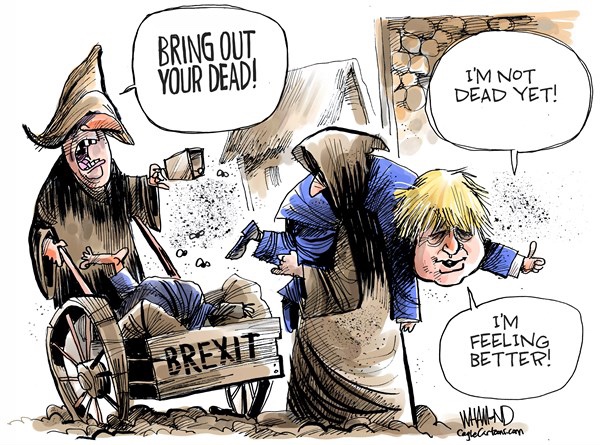
Boris Johnson survived the virus, but can he survive politically?

The “vaccine success” Mr Goodman lauds is fragile as supplies look to be under pressure. Then there is the astonishing decision to ignore the manufacturers’ advice regarding the timing of second vaccinations. At the very best this gamble, unique in the world, will indeed give us genuine benefits and save lives. At worst it could prove to be a cataclysmic error undoing much of the progress made by our being swift to start vaccinating.

Politics is often seen as a bit of an adult game with repartee in PMQs and photo opportunities being the tools of the trade. But for the past year it has been about much more than this. The past geniality of Boris Johnson may have helped him to achieve the high office he craved. But his manifest inability to manage complexity has shown him to be an utterly inadequate Prime Minister. Conservatives won’t like it but the parallels with Donald Trump are striking.

And then there is Brexit and here, as with COVID, we are in the Ideology versus Competence arena. The “Covid Recovery Group” is the “European Research Group” in a new guise. The same tired bleating about freedom and libertarianism. The same emphasis on flag-waving image over substance. The same addiction to English exceptionalism and the same certainty that “British is best “ 🇬🇧

We can already see Brexit is causing chaos both practical in the short term, at the ports and airports, and operational for the future with a deficit of forward planning. We had four years to prepare for leaving the EU but there are huge gaps in proper arrangements for the event. We only needed to blow the bloody doors off, instead we appear to be putting the whole edifice of our economy at risk.

The future may not be Orange any more but it’s not Rosy either. I normally eschew World War comparisons but one is apposite now. What Churchill offered in 1940 (apart from blood, sweat and tears ) was confident leadership. That was charismatic and needed to be. We need leadership now but of a different style. Biden not Trump. Competent and decent and truthful not utterly confused, corrupt and mendacious. Our cousins across the water needed to rid themselves of Trump before they could start again. We need to do the same here to his bumbling stablemate. Then cleaning the stables can begin. Do we have a Hercules ?
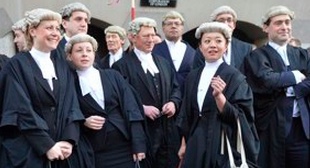
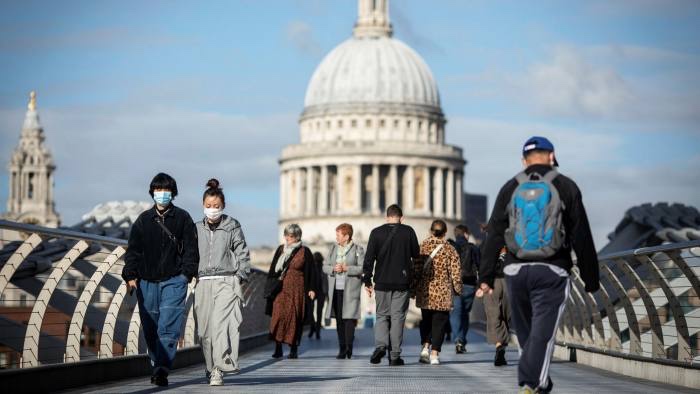
Exercising Principled Law in an increasingly totalitarian environment is impossible

UK judges are source of strength for Hong Kong’ says Derek Sweeting QC quoted by Jonathan Ames in The Times today.

When I lived in Hong Kong in the 1980s a barrister (later a QC) was a friend of mine. His father had been a senior judge in the colony. The mix of lawyers in the system between Brits and locals worked well. A good legal system and a benign but competent local administration to an extent compensated for the lack of proper representative democracy.

Today all is very different. Martin Lee, himself a barrister, a long term campaigner for human rights will shortly be tried for his role in protests. He is not alone. The rule of law established by the Joint Declaration and applied in 1997 is slipping away.

The Chinese have moved to tighten their hegemony as back in the 1980s we always feared that one day they might. “One Country, two systems” is being replaced by “One country, one system”.

The continued involvement of British judges in the Hong Kong might have been a useful check and balance if the Joint Declaration had been respected. It is clear that the Chinese have no intention of doing this. In these circumstances it is an affront for British judges to be involved.

Hong Kong was always a lucrative posting for a British lawyer. Barristers and Judges lived in some comfort and they no doubt still do. But he who pays the piper calls the tune and however high the fee there’s no doubt who are the masters now. But the exercising of principled Law in an increasingly totalitarian environment is impossible. The Brits should pack their bags and go.

You’re more likely to contract COVID if you’re poor

“It’s the rich wot gets the pleasure, it’s the poor wot gets the blame. It’s the same the whole world over, ain’t it all a crying shame)? “

In most areas of life the more moolah you have the more choices you have and the more benefits will potentially accrue to you. You can see this as aspirational or shocking depending on your own position relative to others now and in the future.

When it comes to vulnerability to COVID many factors play a part including age and how fit and healthy you are generally. Wealth appears to be one of the factors.

The relationship between wealth and health is both intuitively obvious and born out by the facts. The rich live longer than the poor. This seems also to apply to vulnerability to COVID. To explore this for London I have done some research into two variables and the correlation between them. (1) Income and (2) COVID cases.

For each of the 33 London boroughs I have taken published hard data for average income per borough and compared this with recent (January 2021) published COVID case data. The latter shows COVID cases per capita by Borough to rule out distortions from the different population sizes of the boroughs.

The five “richest” boroughs are Westminster, Kensington and Chelsea, Camden, Wandsworth and Richmond. The five boroughs with the lowest incidence of COVID are exactly the same. The five “poorest” boroughs are Hounslow, Harrow, Newham, Barking and Dagenham and Brent. The five boroughs with the highest incidence of COVID are the same except that Ealing replaces Harrow.

Across all 33 boroughs the correlation coefficient between income and COVID rate is .841. This is not a perfect correlation but it is close. There are one or two anomalies – Tower Hamlets, for example, is comparatively wealthy (11th) but is in the top ten worst COVID boroughs but across the city there is a clear relationship almost everywhere.

Obviously I am not suggesting a direct cause and effect. Lower income jobs are likely to be in the service sector where human contact is likely to be more frequent than in higher paid jobs which have the potential to work from home. The demographics of boroughs are different. But the basic premise at the beginning of these piece holds good. You’re more likely to contract COVID if you’re poor.

I beg your pardon…

I’m not keen on blame or retribution. I know that society has to seek out the guilty and try and punish them. It’s just not my thing. I recall my father, who was a Prisoner of War of the Japanese on the Burma railway, saying that he took no pleasure in the post war execution of evil Japanese PM Tojo. And Dad was far from bring a wishy-washy liberal !

The phrase “Justice has to be done and be seen to be done” worries me as well. Our concept of “justice” is arbitrary as is our concept of what punishment, if any, is appropriate. And the idea that punishment has to be “seen” leads us into very dark territory. I guess I’m more New Testament than Old. More “Turn the other cheek” than “An eye for an eye”.

The idea that victims are entitled to justice repellent as well. Justice has to be decoupled from victimhood. So when those who have suffered from some crime call for, for example, longer or mandatory sentences for that crime I worry. Inevitably emotion rather than reason would take over if the victims played any part in the sentencing process.

Which brings me to Donald Trump. Do I want to see him tried and punished for crimes committed? One bit of me says yes, for obvious reasons of decency. But on balance I think not. I really want this vile man to disappear from my consciousness for ever. Interminable trials and legal battles would occupy the media schedules at a time when we need desperately to move on.

So I guess I’m saying that I hope Joe Biden pardons Trump as Gerald Ford did Richard Nixon. I realise that this may not be a popular view. I do not absolve Trump from blame but I don’t associate myself with those salivating for retribution either. And to create a Martyr of the slime-ball I don’t think makes sense either.

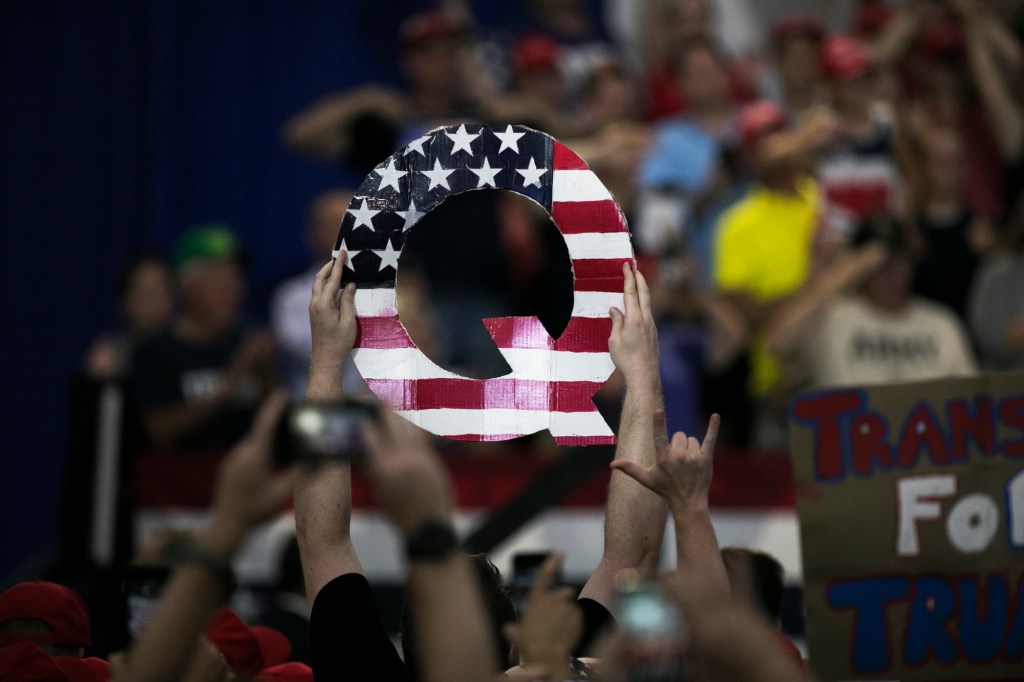
Challenging insane belief systems with science is the only way

Matthew Syed has a good piece in the Sunday Times today about the QAnon cult and it’s relation to more conventional religions. In it he is right to put the word “belief” in quotes when referencing to atheism. The point about being an atheist is that it means a lack of belief. Or at least a lack of belief in the random bundle of nonsenses that every religion, bar none, requires us to buy into.

QAnon – cult or religion ?

The scientific method of study into anything requires us to seek truths , preferably verifiable ones. We seek evidence and then the deeper we get in we seek corroborating evidence. As a biographer I’m only going to relate a story if there is proper reason to think that it is true. I might record an anecdote but if the provenance is questionable I will say so.

Most religions have a requirement that we regard its central figure – Christ, Mohammed, Buddha – as a deity or close to being one. And the “teachings” of this (quasi) God figure are of course holy writ. The extent to which challenge to the writ is permitted varies – you can be a Christian or a Jew without buying in to the Old Testament creation myth. That said there are hundreds of churches in the United States where you have to “believe” that God created the Universe in seven days 6000 years ago.

The problem is God or gods. The monotheistic religions disagree about a lot of things but by definition they agree that there is one God, who they worship. This is the very beginning of the belief systems that you are required to buy into.

If our logic and reason requires us to deny the existence of God that’s pretty much it – we can’t pass the necessary threshold to become a religious believer. There are exceptions to this of course and some religions like Hinduism have a more spiritual element to them. And there are quite appealing movements like the Quakers which don’t require you to sign up to anything other than living a tolerant and “good” life.

When people like me express religious scepticism we are sometimes told about the need for “Faith”. This is the catch all word common to most religions which essentially means that even if the evidence is absent or weak we should still believe it by having faith that it is true. Science can’t really handle this – the “I can’t prove it but I believe it to be true” position is anathema to followers of the scientific method.

That there is a world outside of us – the “there are more things in heaven and earth, Horatio, than are dreamt of in your philosophy” of Hamlet – most of us agree. Every day at a personal and more general level we learn new things. This enlightenment, whichever subset of science it is based on from archeology to quantum physics and everything in between, reduces the need for faith.

It is easy to debunk QAnon or Scientology with science but that of course is not enough. Education from the earliest years in the scientific method would be welcome and that surely requires that all schools are secular. It shouldn’t be, but it probably is, that this is a step too far.

Looking at the Government front bench you cannot find one member of it with Keir Starmer’s intellect and decency

There is a premature and surprisingly ignorant rush to judgment about Keir Starmer from Matthew Parris in The Times today. I’m tempted to say “Once a Tory, always a Tory” about Matthew but that would be a tad unfair. I trust his intellectual honesty, he’s nobody’s patsy. But here I think he’s wrong.

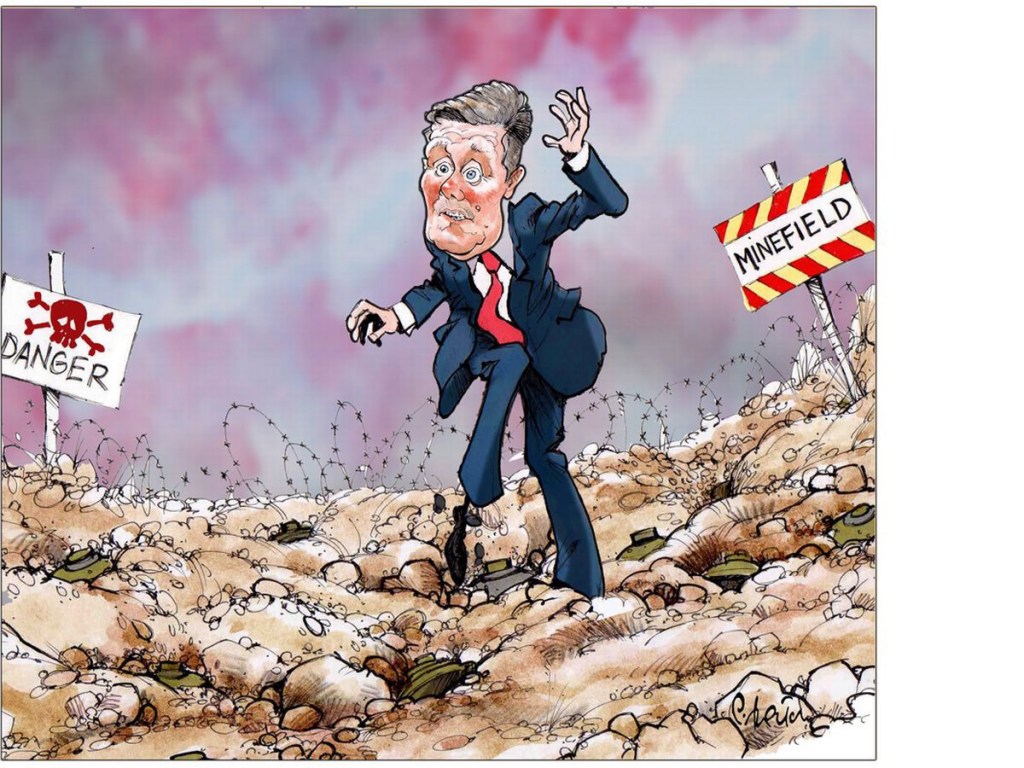
Keir Starmer has a job to do almost as necessary as that of Joe Biden. Like the President-Elect Starmer has to cleanse the Augean stables left rotting by his predecessor. That is not easy. The Corbynite fools are still very much around and they attack Starmer daily. Sir Keir is making good progress in making himself and Labour electable from a base as low as it gets. But it’s still a minefield.

“Politics is the art of the possible” is as true today as ever. In Labour’s case this means abandoning the simplistic and anachronistic ideology of Corbyn not (just) because it was unelectable but because it was profoundly wrong. The sentimental red flag flying socialists match their ignorant pomposity with their capacity for delusion. Sir Keir is returning the Party to the mixed economy favouring social democratic centre. The only place from which it has ever been elected.

Soldiers will tell you that you shore up your defences before you turn to attack. Sir Keir isn’t there yet. Nevertheless he is holding Boris Johnson and his government to account daily though this, with the bias in so much of our media, is being inadequately reported.

Someone called Annaliiese Dodds” is a nasty little construct unworthy of Parris. She’s at least as bright as the Chancellor, if not as stinking rich and if she was better reported the thoughtful subset of the population would admire her. Work in progress for sure, but a good pick.

Starmer is also under attack from the pro Europe Labour moderates – so he has cannons to the right of him as well as to the left. He remains (to coin a phrase) obviously internationalist and pro EU. That’s a core belief and cannot change. But for now he cannot afford to give the Conservatives the open goal of sounding like a Remainer. I suspect that he will finesse this cleverly in the next year as Brexit in practice continues to deliver disaster.

Looking at the Government front bench you cannot find one member of it with Keir Starmer’s intellect and decency. But for the time being they are the masters. Sir Keir must avoid descending to their level of trite mendacity and he’s doing it pretty well. His lack of charisma and modesty is rather appealing to me – listen for example to his “Desert Island Discs” which was moving, honest and engaging.

Undermining Keir Starmer at this time, unless you are an ambitious but myopic Conservative, is not really a smart thing to do. Less please.

The BBC needs a different funding and governance model fit for changed times

The Licence Fee is an anachronistic and regressive tax, it is also astonishing value. If you look at the cost of far more limited subscription services like Netflix or Sky Sports the Beeb is a bargain. 50p per day per household to cover the cost of the provision of the full range of BBC services is far from uncommercial – market leader by far.

So the issue is not the cost or the value but how you collect it. The BBC is arguably an essential public service and as such logic says it could be funded from general taxation. The argument that this penalises people who for whatever reason do not watch or listen to the BBC is bunkum. I willingly pay taxes for (for example) the provision of education services (schools) which I have never used.

All, and more, for 50p a day !

If the BBC becomes a direct charge on the exchequer it needs to be far more directly publicly accountable. Establish a Trustee Board that we vote for periodically whose duty would be to monitor BBC activities and performance, appoint key functionaries like the Chairman and ensure our money is properly spent. It is probably the case that currently the Corporation does some things better left to someone else, and doesn’t do some things it usefully could. The democratically elected Trustee Board would monitor this – and take decisions. It would not just be a powerless talking shop.

The BBC does many things that are unique and best practice – The World Service, the Open University, The Proms and the superb range of radio channels for example. It’s News and Current Affairs has some problems and decision making in this area seems over politicised. It’s worth stressing that to fund it out of public taxation need not make it more vulnerable to political meddling if it’s governance it’s accountable to elected trustees rather than politicians.

Brexit was always a means to an end and driven by neo-Thatcherite economic libertarians

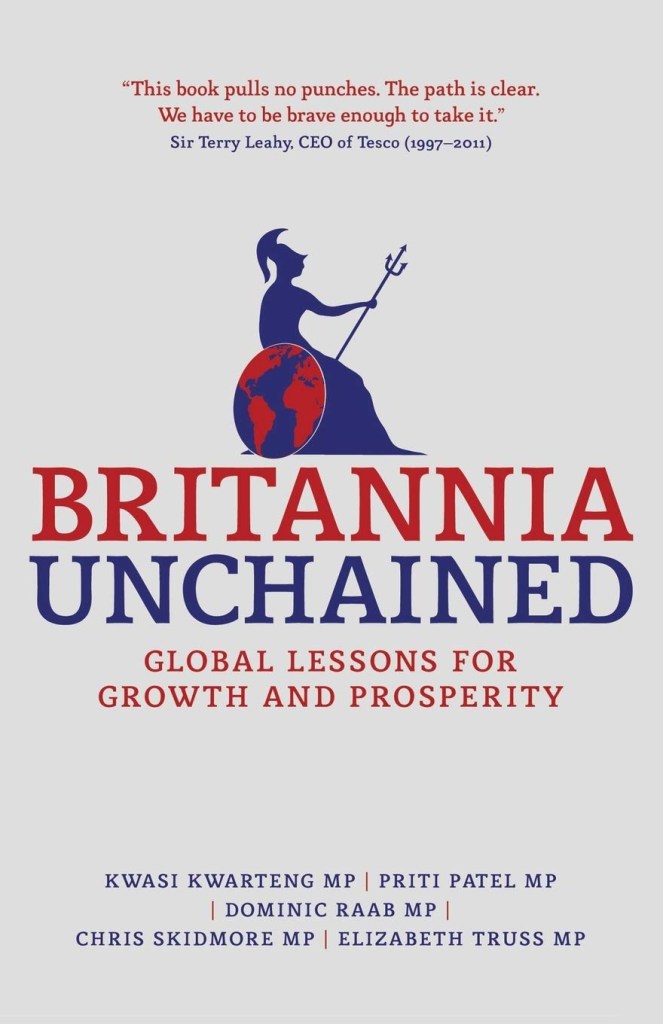
Rachel Sylvester looks back in The Times today at five Tory MPs who in 2012, launched a pamphlet, little noticed at the time, promoting a rightwards shift in the Conservative Party. The Infamous Five (four of whom are now in the Cabinet) who wrote “Britannia Unchained” are, of course, all Brexiteers. Brexit was never really driven by the xenophobes but by the libertarians like the five. But they have little in common with the Farage tendency that is viscerally anti foreigner. Brexit for the Five was always about restoring and deepening the free market ideology of Margaret Thatcher. A means, therefore, to an end rather than an end in itself.

Most western countries, especially in Europe, are balanced mixed economies. That balance underpins and defines the European Union. Whilst there are differences of detail among the EU27 they all have a pragmatic mix between public ownership and private enterprise. This, way back, made Michael Foot and Enoch Powell improbable bedfellows on Europe. Foot and the Socialist Left saw a uniting Europe inhibiting extending state ownership. Powell and the Conservative Right saw it as restricting private enterprise and privatisation. They were both right.

What the state should do and what independent businesses should do has always been a febrile discussion area. Only Thatcher in modern times shifted the balance significantly. But her economic reforms were entirely left in place and untouched by the Blair/Brown governments. The return of the Conservatives in 2010 saw a bit more privatisation – Royal Mail for example. But the essential post Thatcher balance remained.

The election of Jeremy Corbyn as Labour leader was predicated on a commitment to changing the state ownership balance dramatically. The accidental push for Labour to return to its socialist roots emanated from Corbyn and, incidentally, led to Brexit. The Hard Left, unlike the Socially Democratic Left, saw membership of the EU inhibiting the extension of socialism.

Whilst Labour was flying the red flag the Conservatives were flirting with neo-Thatcherism. “Britannia Unchained” was part of this. But for it to become more than a neoliberal pipe dream it needed to move towards becoming the Tory mainstream. Support from the new MPs from the Right, like Rishi Sunak, helped this happen. David Cameron, insofar as one could discern his personal politics at all, sympathised – but the One Nation Tories around him looked secure in their positions in Cabinet and in the Party in the country.

The key to unlocking the ideological logjam was Brexit. The most fervent Thatcherites were the likes of Daniel Hannan, Douglas Carswell and John Redwood who knew that they would likely stay on the fringes of of influence – that without a strong argument they would be rebels without a cause. Europe was that cause. Suddenly the ground was shifted, Cameron’s position was strengthened by the 2015 election which saw the end of the Coalition (Anathema to the Right). But it was also weakened because the Right began to demand its pound of flesh – a referendum on membership of the European Union.

The referendum campaign was a proxy fight. The Brexiteers had both Leave.EU and Boris Johnson and co. to push the populist and “patriotic” (essentially xenophobic) message. The official campaign talked about “sovereignty” and lots of Union flags were waved. But under the surface the driver was not antipathy to Europe as such but to the perceived restraints on Britain’s economic freedom to act. The latter is complex and cerebral so hardly a campaign winner. Immigration is populist and simple – or could be, and was, presented as such.

Well the rest is history. Britain is out of the EU. Cameron went and the One Nation Tories were finally killed off by Boris Johnson in 2019. The strongly augmented “Britannia Unchained” group are the masters now. Dissent has been ruthlessly removed. Brexit was the means to the end of achieving the goal of an economic revolution = low tax, low regulation, fiercely nationalist and independent. The big battle was not Brexit but what lies ahead.

As Rattle walks away a dull, grey insular world awaits us

Music is the universal language binding us together. I have twice seen opera and once ballet in recent years in Munich’s fine Opera House. It is a profoundly moving experience. Munich is a quintessentially European city and the European flag flies everywhere alongside the German. Bayreuth is just down the road and whilst Opera there is eccentric it is a key part of the Bavarian commitment to The Arts. As is the superb Bavarian Radio Symphony Orchestra.

Contrast all this with London. We have extraordinary orchestras and opera and ballet companies, for now. But our new insular and bureaucratic rules about foreign residency and the abolition of Freedom of Movement are already inhibiting our ability to build on this success. It’s not just the superstars that a musical city needs. Our musical world includes schools and conservatories, small venues as well as large. In the past these were open to the world – in future much less so.

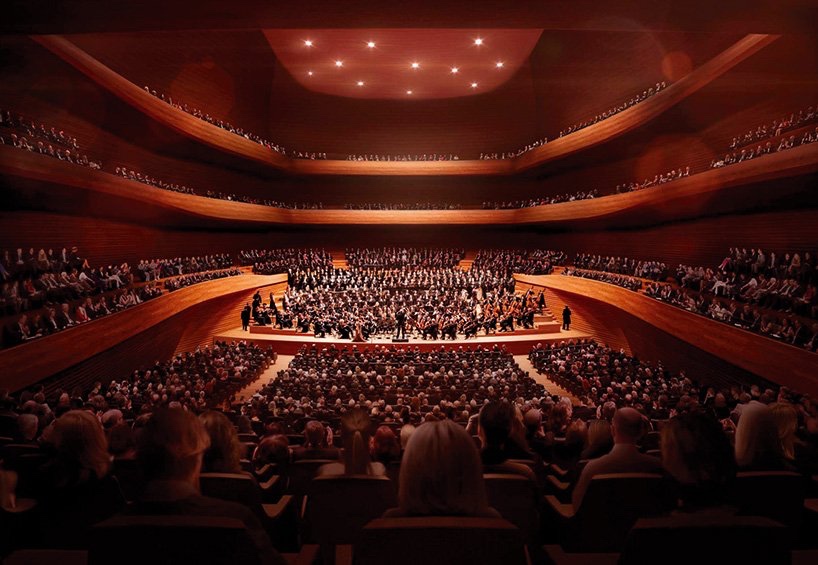
One of the proposed designs for a new Concert Hall in Munich

Munich does not have a major large scale concert hall, but you can be sure that if Rattle wants one he will get one. The Germans will have learned from the delays in the construction of their venue in Hamburg. Compare this with London where the LSO plays in a good but limited hall hidden away in the chilling, ugly area that is the Barbican. The South Bank has the Festival Hall which despite its recent upgrade is a seventy year old monument to the past with acoustics to match.

London should have approached the Head of State and asked to build a world class concert venue in one of the Royal Parks. Cut out the inevitable delays of financing and planning – just get on with it. Call it the Royal Philip Hall if you like – there’s a precedent !

Simon Rattle will not be the first leader of the Arts to turn his back on Little England. Once the philistine politicians in power get their hands on the BBC The Proms will go as well. The more you close your doors the more people will walk away and seek a more welcoming world. What a dull, grey, insular world awaits us.

Discussions about Energy policy often generate more heat than light

The dominant political trend of modern times is binary ideology – the YES/NO choice about everything. So on Energy you’re either a Wind freak, or a believer in the continued burning of fossil fuels. Anything more nuanced will lead to your position being traduced by both sides.

The truth is more subtle as Mr Lawson says in his excellent piece in The Sunday Times today. As a Shell Pensioner with 40 years service, including a period as Head of Energy Forecasting in The Netherlands, I can endorse every word. My position is not self interest but, I hope, informed.

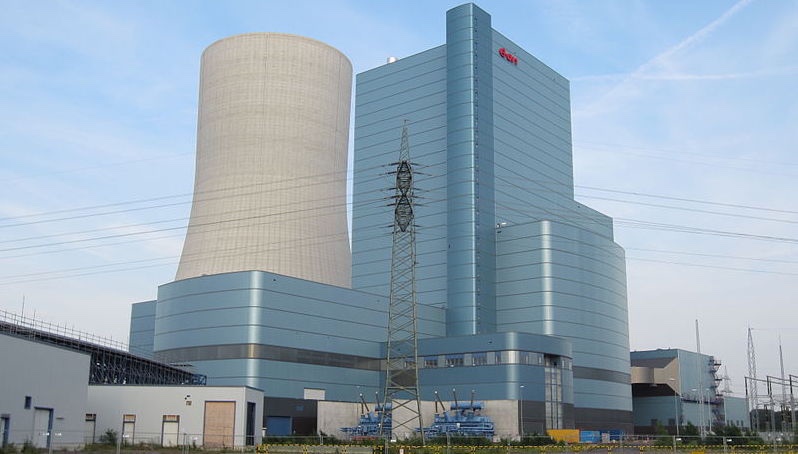
Datteln 4 The new 1.1GW Coal-fired power station commissioned in Germany in 2020. It is likely to have a twenty year operational life.

The Primary Energy mix of any country – the balance of Coal, Oil, Gas, Nuclear, Hydroelectricity and Renewables – is driven by practicality, cost, established infrastructure and environmental issues. For example if you generate some of your electricity from a modern, efficient, environmentally controlled coal-fired power station you don’t close it because of some ideological obsession that “coal is bad”.

The hidden hero of energy consumption is not the wind turbine but conservation. We now use far less primary energy per unit of useful energy output than we did thirty years ago. Power stations, cars and trucks, aircraft, central heating boilers and the rest are far more efficient these days. Even the humble light bulb has been replaced by something that uses less power.

Electric cars are still a tiny percentage of our vehicle fleets. Clever though they are they cost much more and are much less convenient than a petrol or diesel car or truck. They have become a boastful status symbol for the virtue signalling rich – or for a quirky tree hugger. The technology breakthrough that would make an electric car a logical rather than a showy choice hasn’t happened yet.

Electricity generation has to have a mix of base load and flexible production. If the wind drops or the hydroelectric station runs out of water or the sun stops shining you need something else. Nuclear, Gas or Coal is that “something else” as well as supplying the base load demand that renewables cannot adequately satisfy.

The answer is to eschew the binary and accept that for the foreseeable future oil and gas and to some extent coal have to be in the mix. And in some sectors, including transportation, oil will be either the only (aviation and marine) choice or the dominant one (personal and commercial road transport).

Investment in conservation has really been revolutionary but we seem to forget this success. That journey is not over. If you get significantly more miles per gallon, or warmth per kilowatt that really is WIN/WIN. You pay less and the environment is less polluted. This message seems to have become lost in our narrow definition of what is “green” and what isn’t.

The oil and gas corporations are being bounced into a renewables sector in which they have no collective memory or competences. They would be far better employed doing primary research into how hydrocarbons can be used more efficiently. Both in the refinery process and with the use of additives more energy efficient petrol can be made. Is this research happening?

Sadly discussions about Energy policy often generate more heat than light.