The rise and rise of “Cultural Conservatism”

From the “Sunday Times” today

I cannot recall seeing the descriptor “culturally conservative “ before but it is excellent. There is a very illuminating article in the Sunday Times today by Tim Shipman which shows how the populist appeal to cultural conservatism – the Anti-Woke imperative – is being managed. A shadowy figure called Dougie Smith is the crown Prince of populism – a credo which places popularity of statements and actions not only ahead of truthfulness but ahead of efficacy. The question asked then becomes not “What is the right thing to do?” but “How will this play in Hartlepool?”

Cultural conservatism is something of a throwback and clearly the Right’s response to social liberalism. In the post war years Britain gradually liberalised its attitudes and its laws. It took a while but in key areas like the Death Penalty, the laws on abortion, homosexuality, race and gender discrimination we changed. Membership of the project to unite the previously warring tribes in Europe played a significant part culminating in the four Freedoms of the European Union – especially Freedom of Movement – which changed the cultural aspects of society, considerably in some areas. Substantial immigration from Commonwealth countries, notably from the Caribbean and South Asia, did the same.

The move to a more liberal and pluralist society was never universally accepted of course – those opposing it had mixed reasons for doing so (often religious reasons) but they couldn’t stop the trend, only delay it in some cases. An example is the changing norms and laws on smoking in public. Gradually we changed from allowing smoking everywhere to allowing it nowhere. A social change now enshrined in law, as it had to be. But libertarians have always characterised this as an impingement on personal freedom.

Modern cultural conservatism does not generally argue for the repeal of socially liberal laws (though in some cases they do) but in the main chooses to fight a culture war about the past. They are self-proclaimed patriots defending Empire and, sometimes, excusing slavery. The conservatives do not, to be fair, generally start the fight though they certainly engage in it. To be “Anti-Woke” there has to be a “Woke” to be against. So movements which focus on discrimination like “Black Lives Matter” become a target. Sometimes whilst it is easy to see what the cultural conservatives are against it is harder to see what they are for.

A key element of cultural conservatism is an anti Metropolitan bias. London is too liberal by half , too multicultural, too elitist and too wealthy. But the towns and cities of the Midlands and the north are a rich breeding ground for the campaigners for reaction. The conservatives approach to the BBC is very similar – the Corporation is too politically correct (a cardinal sin) and of course too Woke.

The cultural conservatives are addicted to symbols. The Union Flag, portraits of the Queen, the statue of Winston Churchill and many other symbols become quasi-religious icons. Even statues of highly questionable Victorian entrepreneurs are defended because the Woke warriors are against them.

The binary divide between Woke and anti-Woke is not the same as the conventional divide of Left v Right, though there is some overlap. It is in the DNA of conservatives to oppose change – that’s what the word “conservative” means. However if change reinforces the iconography of cultural conservatism it is, of course, promulgated. The campaign for Brexit was an overwhelmingly cultural conservative and reactionary nationalist movement. The centres of its support were very distanced from the metropolis. It was above all a backlash against multiculturalism. In short “Remain” was “Woke” and “Leave” was culturally conservative and “Anti-Woke”.

The success of the Brexit campaign also fundamentally changed the Conservative Party. It became clear that there were more votes in cultural conservatism and narrow nationalism than there were in the traditional “One Nation” and internationalist positioning. Members of Parliament on the Conservative side have never been so united nor so culturally conservative. For Labour there is a huge dilemma. The very basis of modern democratic socialism was societal liberalism. The driving force for social change in the 75 years of post war Britain was always Labour governments. But now to espouse further improvements in human rights and to argue for improvements in the position of minorities is seen as “Woke” and is not a vote winner. Similarly to argue that the problem of Brexit is not how it is implemented but that it was fundamentally the wrong thing to do won’t play well behind the Red Wall.
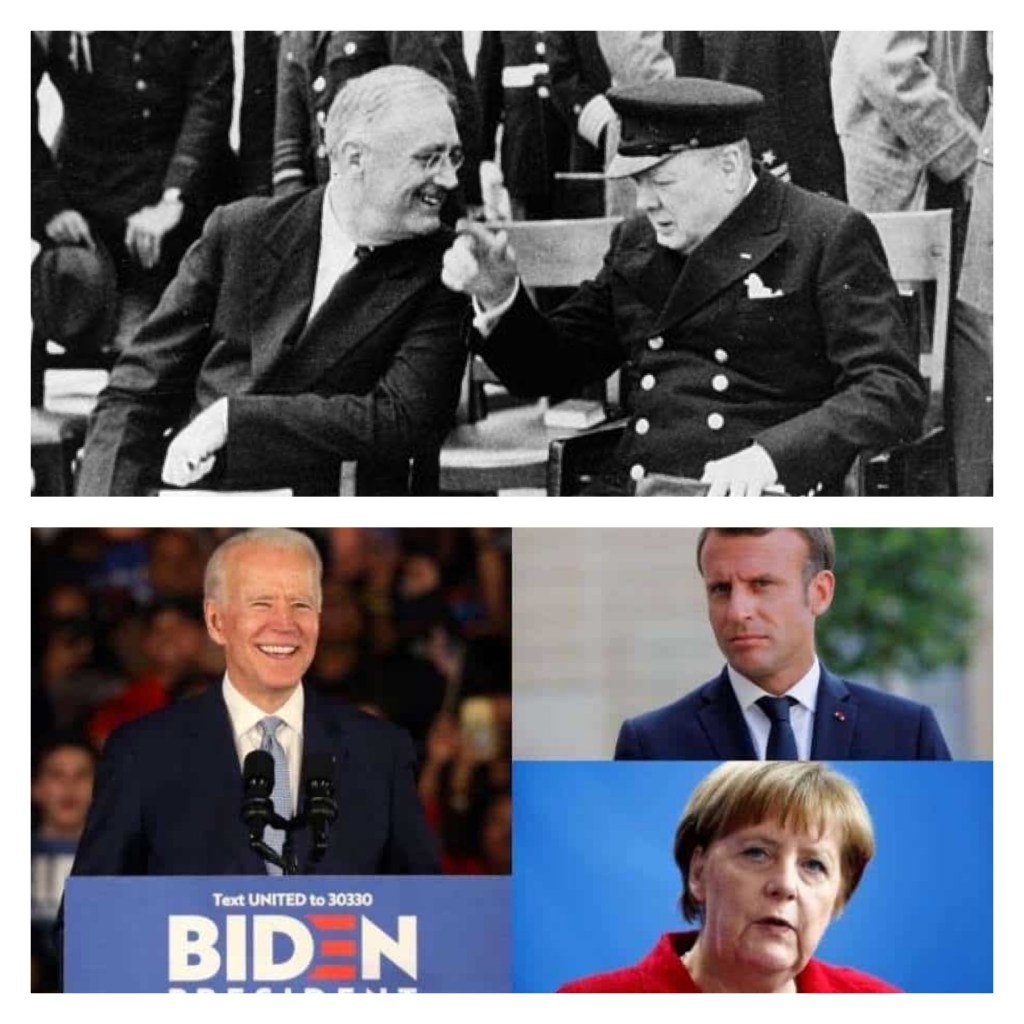
Britain is low in the list of priorities for President Biden.

“With the US we will be drawing up a new Atlantic Charter, 80 years after Churchill and Roosevelt agreed the first.” Boris Johnson in The Times today

If there’s to be an “Atlantic Charter” it will be between the US and the leaders of a united Europe

A crucial element of the “Atlantic charter” in 1941 was that it marked formally the end of Britain’s historic “Great Power” role. That role had been underpinned by Empire for a century or more but Roosevelt knew, and reluctantly Churchill was forced to accept, that a withdrawal from Empire was essential in the post war world. It was the main bargaining chip the US played in acceding to Britain’s request for help in the war in Europe, and later in the Far East.

When the various tripartite allied summits with the Soviet Union took place Britain was increasingly the junior partner. And in the post war creation of a new world order essentially a duopoly of power emerged. Britain was an ally of the US but not really a significant world player in its own right.

Once Britain lost its Empire – it took much longer than it should have – it began its search for a role. The defeated Axis nations – especially Germany, Japan and Italy – made economically and politically better progress in recovery than Britain. The 1950s saw a Britain struggling still with its imperial fantasies best illustrated by the preposterous delusion of Suez. Dean Acheson, former US Secretary of State, effectively told us in 1962 to stop pretending we were a big player anymore and to turn to Europe.

Any new Atlantic Charter will exclude Britain – President Biden knows that this side of the Atlantic economic and political power is centred in Brussels not London. Cooperation between the United States and Europe is one of the major geopolitical plays of our times. Post Trump the auguries are good. Biden treasures his Irish heritage and today that heritage is a European one as well And Ireland, mostly free of British imperial rule, is a good example of a positive outcome from the 1941 “Atlantic Charter”.

So whilst Boris Johnson can pretend that he can be Churchill to Biden’s Roosevelt the President will be looking at the united nations in the EU rather than the offshore oddity that is the United Kingdom. Europe’s economy is around ten times of that of the U.K. Britain is a legitimate member of the G7 but with the EU an integrated economy and trading entity it will be on the leading EU countries that Biden will be focusing.

Johnson’s blather about a new “Atlantic Charter” is meaningless flimflam. Britain, notwithstanding our historical links and our common language, is low in the list of priorities for President Biden. This side of the Atlantic there are thirty European nations which collectively and in many cases severally are pragmatically and emotionally well ahead of Little England.

The bad guys do win – Nixon, Trump, Johnson – but in the end their faults can catch up with them.

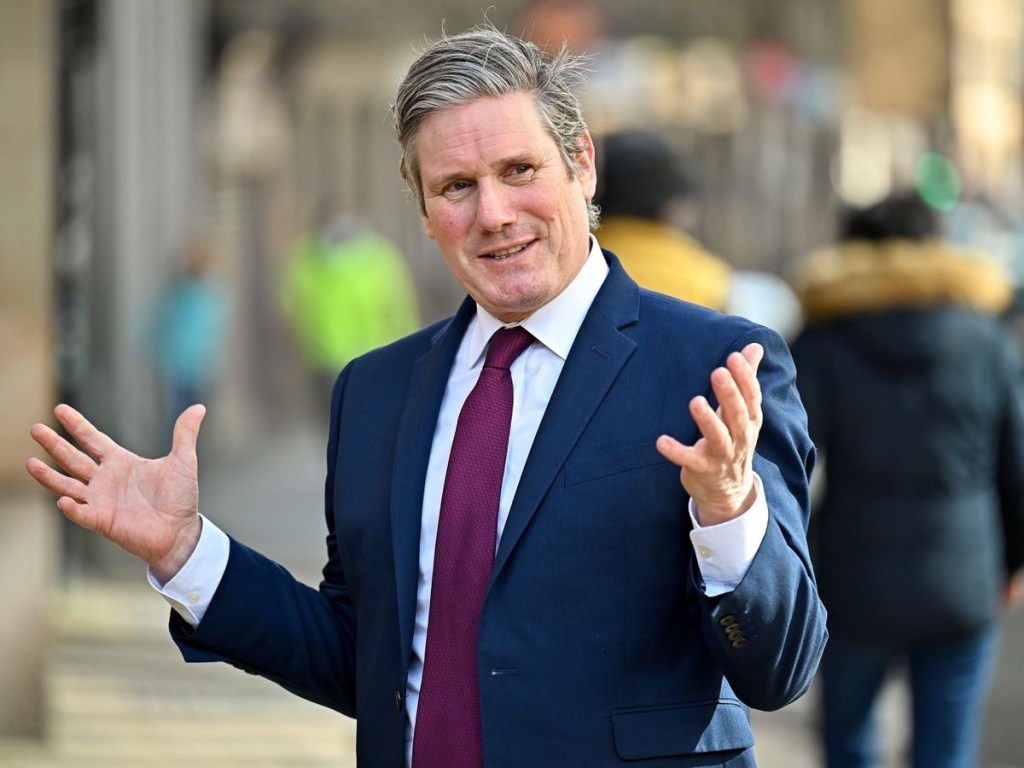
There is a good piece on Sir Keir Starmer by Charlotte Ivers in the Sunday Times today. How can Starmer persuade people to vote for him?

Most our decisions, including how we vote, are driven in part by logic and reason and in part by gut feel and emotion. Both sides of the brain are at work, sometimes in cranial conflict. How often do we hear , or use, an expression that contrasts head and heart?

Rational man would never have voted for Brexit, or for Jeremy Corbyn. We avoided the latter but our emotions regrettably gave us the former. It’s complex. In 1945 the genuine emotional admiration for Churchill surely made him a shoe-in to be elected? But the then rational men and women of Britain thought and voted otherwise.

In 1960 America experienced the first election where a candidate became a brand. The marketing of JFK was so skilled that a deeply conservative nation just chose him, but only just. Brands are most successful when they have emotional appeal. If there’s a “reason to believe” all the better. I agree with Ms Ivers that Keir Starmer is a decent man and a clever and successful one. But in politics today that isn’t enough.

The opposite of a preferred brand is a rejected one. That actually is Keir Starmer’s best chance. The bad guys do win – Nixon, Trump, Johnson – but in the end their faults can catch up with them. Rational man would not buy the Boris brand. But emotional man seems to like the old fraud. But if the British public starts to think again, as it did in 1945 (and, arguably, in 1964, 1979 and 1997) that’s Sir Keir’s best chance.

Understanding the reasons people rose up against an Imperial oppressor in Ireland

You don’t need to look far to find evidence of the evils of imperialism – just across the Irish sea. The Act of Union theoretically uniting Great Britain and Ireland was a sham. Had there from the start been an understanding from the British that John Bull’s other island urgently needed help things might have been different. But there wasn’t. Ireland was a resource to be exploited and the people an irritant to be brutally suppressed.

Joe Biden and before him John Kennedy are symbols of Britain’s losses in Ireland being America’s gain. The depopulation of Ireland in the nineteenth century was an inevitable consequence of Britain’s neglect. But for many leaving their homes for ever by emigrating was not possible, so they chose to try and overthrow their oppressor.

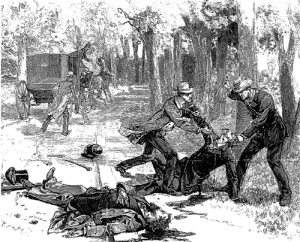
A new book about the Phoenix Park murders, “The Irish Assassins” is reviewed in The Times Today. The revelations are shocking and the story is illustrative of what repression and illiberalism can lead to. The Empire was peppered with protest and Ireland was just the closest to home example of the fact that if you suppress the human rights of a people some of them will rise up against you.

The murders in Phoenix Park in 1882

One man’s terrorist is another’s freedom fighter. The consequences of Britain’s total failure to keep the Union together are, of course, still with us. Justifying the violence of Phoenix Park leads us down some very dark byways – but understanding the reasons for it, as this new book seems to do, is another matter.

The eventual triumph of the Irish was real, but partial. The north of the island of Ireland remains a quasi-imperial possession. Whilst the south has become a successful and principled independent European state the north still lingers in sectarianism. The bitter bigotry and the provocative marches remain. The stench of imperialism lives on.

32 years on from Tiananmen Square my memories of Hong Kong

From my 1989 diary:

Protests in Hong Kong in June 1989 after Tiananmen Square


“In the middle of April 1989 I visited Beijing again and coincidentally was there on April 15th when Hu Yaobang died and set in motion a momentous train of events (Another coincidence of April 15th was that that was the day chosen by Life Magazine to photograph one of their “Day in the Life” books. They had hundreds of photographers throughout China recording just this one day in China’s history. I commend the book to you as a vivid picture of the extraordinary diversity of the country).

I flew back to Hong Kong from Beijing on April 15th and returned a couple of weeks later for another business trip. By then students had begun to mass in Tiananmen Square to mourn the death of Hu but also to demonstrate in favour of democracy. I saw some signs of the protests but not did actually visit the Square.

One evening I was in my hotel room watching CNN (The Cable News network which was received by satellite in many of the top hotels in the city). The newsreader said something like “And now over to CNN news reporter X in Tiananmen Square, Beijing for an update on the Student protest movement …” at this point the screen on my TV went blank. A few minutes later the picture returned but by then, of course, the report on China was over. It was my first experience of censorship in action. What a futile gesture that censorship was, incidentally, as the news reports continued to go to the West over the following weeks – particularly during Gorbachev’s visit.

That visit to Beijing was my last (to date) – you will understand why. After the Tiananmen massacre our business in China was temporarily halted and our people were brought out of Beijing. “My” documentary, although finished, has not been transmitted.

During May we watched the developing situation in China with fascination. Interest in Hong Kong was, of course, intense. Tens of thousands of Hong Kong people took to the streets to march in support of the protesting Students. Actually the protestors in Beijing, Shanghai and other cities were by no means only students. Many of Shell’s business contacts in the Chinese institutions were seen by our Beijing staff taking part in the marches. In Hong Kong most of my staff joined in. There was one extraordinary day towards the end of May when hundreds of thousands took to the streets in Hong Kong with a Typhoon nearby. There was an strange sense of foreboding, tension you could cut with a knife as martial law was declared in Beijing and the troops began to approach the Square, only to be turned back by the peaceful protesters. The news reporting from Beijing was excellent, the Hong Kong media, the American networks and the BBC (Kate Adie) were all very good. The last week in May saw the erection of the Goddess of Democracy statue in Tiananmen Square, a naïve copy of the Statue of Liberty but all the more poignant for its naivete.

On Sunday June 4th Ann and I were due to have a day out on the Shell boat with our friends Jerry and Isabel Wood. At around 7.30 our clock radio woke us with the awful news about the movement of troops and tanks into the centre of Beijing and the terrible carnage that was taking place. Sleeping protestors had been run over by tanks, troops were firing indiscriminately into the crowd. Death and destruction. The radio brought a message of condemnation from President Bush and from the British Government. The Governor of Hong Kong eventually joined in. We joined our friends in a shell shocked state. We went ahead with the boat trip but the mood was sombre as more news came over a portable radio. When we returned to Queens Pier thousands of Hong Kong citizens were massing in the streets. Black armbands had appeared. There was a feeling of disbelief, and of fear. In eight years Hong Kong will be handed over to these murderers!

Our office in Beijing closed and our people managed to get flights out. We welcomed them to the office with relief. One secretary had been staying in the Beijing Hotel which is close to the Square. A bullet came through her window. She spent the rest of the night under her bed! None of our staff was hurt and all managed to get out soon after June 4th.

Ann and I were still deeply under the impression from these events when we started our “Home Leave” holiday later that week. It was impossible not to feel emotionally involved. We had both visited Beijing many times and had met with some young people who we were sure would have been involved in the demonstrations. Only a few months earlier we had entertained a visiting party of CCTV people in Hong Kong, taking them out for the day on the Shell boat. One of the party had been heavily involved in a CCTV programme called “River Elegy”, a partly political fictional tale which dealt honestly with some of the excesses and failures of the Chinese Communist Party. What would happen to him now? What would happen to the young economist that I worked with in one of our projects; he was urbane and western in his outlook – he had been educated for two years at Berkeley California; was he involved in the protests, was he still alive?”

Little England has triumphed over Global Britain – it won’t be rolled back in my lifetime

“ A country controls its borders and should be able to kick out those who govern it. The arrogant European Commission is an affront to democracy.” Iain Martin in The Times today.

Same old, same old. We are back in the Free trade and tariff debate of the mid 19th Century. The world moved on over the decades, sadly in Europe having to endure two ghastly Wars before Churchill’s maxim that Jaw Jaw was better than War War eventually won.

If you want open borders for trade as, for example, Margaret Thatcher enthusiastically did, those borders have to be open otherwise as well. The greatest triumph of European unity was the negotiation of the Four Freedoms – something that the United Kingdom was very much party to.

To call the European Commission “arrogant” is just ignorant abuse. The Commission is empowered by a democratically elected Parliament. What it does it is authorised by that Parliament to do it. And if a member state objects it generally has a right of veto.

Churchill argued for unity – he had seen twice in his lifetime what raw nationalism could do. International cooperation is infinitely preferable to go-if-alone faux-patriotism with all its dangers of grandiose flag-waving self-regard.

Cooperation requires compromise, and rules. We are in the world of the “greater good” here. Not everything in a Treaty such as Maastricht could be equally beneficial to all its signatories. But overall the benefits for all, jointly and severally, outweighed the downsides for some. And Britain even negotiated opt outs that gave it a preferential position.

The acid test of any proposed action is to compare it with what others in a similar position do. Of the then 28 nations of the European Union Britain was the only nation to leave, indeed the only nation to contemplate it. The world has moved on from closed borders and closed minds. Except in this sceptered isle. Here Little England triumphed over Global Britain and sadly it won’t be rolled back in my lifetime.

The new yacht is just bombast – a childish salute to the past which, it seems, HMQ wants no part of.

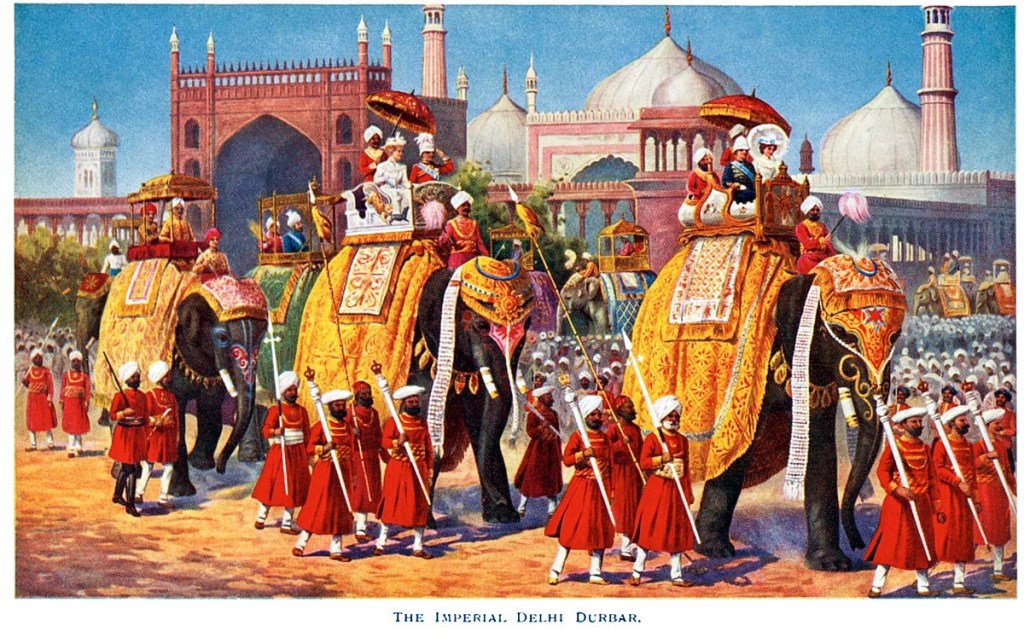
Tin-pot regimes always indulge in vulgar and extravagant symbolism. Criticise Idi Amin for his viciousness and genocidal tendencies but you have to admit that he could put on a show. The more extravagant a dictator’s uniform the more vicious his crimes. When the British Empire ruled across the globe we always had lots of events to demonstrate our power. An elephant could have a good career in India just being part of parades.

As we have entered the stage of terminal decline to tin-pottery more and more flags have been unfurled. They even wanted to brand the “Oxford” vaccine with a union flag for a while until it was realised both that its British component was limited – and that it wasn’t as good as the alternatives.

So the new yacht is just bombast – a childish salute to the past which, it seems, HMQ wants no part of. Can’t see Charles fancying it much either. Not his thing at all. Can you imagine a serious nation wanting to preen around on a boat thinking it would “host trade fairs, ministerial summits and diplomatic talks”. They’d hire the function rooms at the nearest Hilton Hotel instead.

This is tax-payers money (there’s no other sort) and could be better spent – not least on overseas aid where the budget has been decimated. Will you tell the African hospital denied funding that if they go to the harbour than can see a British yacht setting out its stall – like Del Boy in Peckham.

In Johnson’s pecking order of influences on decision-making “Will it be popular” is on its own at the top.

“Be clear: we could have saved many lives by effecting a more complete shut-down of the economy while sealing ourselves off from the world but we chose (arguably rightly) not to do that.” Matthew Parris in “The Times” today.

“Arguably rightly”? Well that’s an argument I’d like to see. But I won’t, of course, because it’s nonsense. This is not 20/20 hindsight. At the time some other countries were doing just that. Locking down more comprehensively and much earlier. And Britain? Off to Cheltenham races in our tens of thousands.

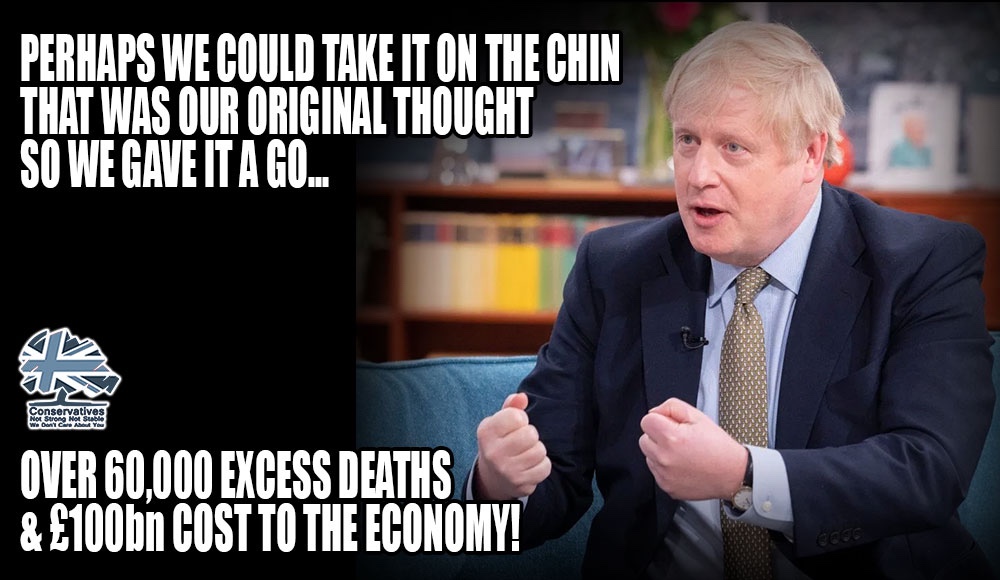
Arguably rightly ?

The insouciance of Boris Johnson shaking hands and arguing in favour of “taking it on the chin” killed people. Not a few – but in droves. Including nearly him we were told. The mad men and women of the Barmy Right were denying the extent of the threat. And Johnson listened to the Hannans and the Hartley-Brewers and delayed.

What we witnessed was a clash between populism and science. In Johnson’s pecking order of influences on decision-making “Will it be popular” is on its own at the top. “Doing the unpopular thing” is nowhere in his list of options. And if it has to be done he’ll let the experts take the rap. Then there’s the blame culture. If it all goes wrong Macavity wasn’t there.

Cummings in his committee appearance told us nothing we didn’t know or strongly suspect. There was a “If they die, they die” attitude seen at its most venal in the Care Home saga. Was that “arguably right”? I don’t think so. It was mostly the little people and the old who died. Boris was one of the very few of the not yet geriatric rich and famous who suffered. Odd that.

Populism is extraordinarily effective because people believe what they want to believe. It’s like drink or comfort food. We know it’s dodgy but we still do it. That’s why so much snake oil has been sold over the years and why malignant ideologues often survive in power as long as they do. Stalin and Franco died in office, and quietly in bed. And Boris Johnson is still in office. Another Teflon man.

Johnson is under no threat despite his mendacity and ineptitude

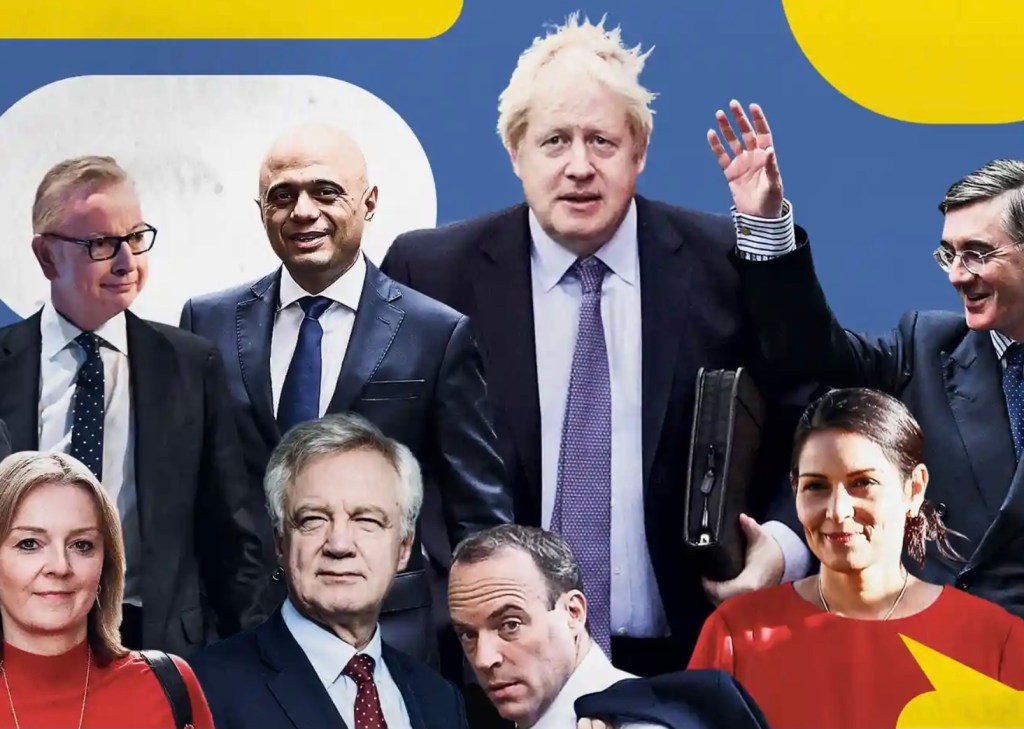
We don’t expect balance from James Forsyth (the Times today) or from The Spectator and the Hard Right think tank world he inhabits. In the shadows to the vast majority of the population these people, largely unelected, do more than pull the puppet’s strings – they provide cover for him to shelter in. Dominic Cummings was for some time part of the conspiracy. Now he is a Trotsky type figure – once at the centre now in exile. He’d do well to look out for pickaxes.

The Conservative Right’s hard line ideologues are the masters new – and Johnson is under no threat despite his mendacity and ineptitude

Students of history know that revolution doesn’t require people actually to take to the streets, just to vote when you need them. To get the vote in image management is much more important than policy. This doesn’t mean you don’t need ideology-driven policy. It’s there in spades, but you don’t need to use it when attacking the Red Wall.

If image management requires lies and cover-up so be it. You don’t need conventionally able people even in the highest offices of State, just those that are compliant. There are not only no dissidents in the Cabinet – there are none in Parliament nor the Conservative Party at large either. You don’t have to be very good – just very loyal.

One trick is to get the opposition to descend to abuse. Every cry of “Fascist dictatorship” reinforces the governing cabal’s power rather than threatening it. But, ironically, painting opponents as extremists is part of the Rightist strategy. Remember the attacks on Corbyn as a “Marxist” spread, of course, by the lickspittle media that has been a crucial element in the Making of Johnson.

Keeping it simple is the key. Issues as complex as Britain’s role in Europe or the management of the Pandemic cannot be reduced to binary you would think – but the evidence of the last five years challenges that. If there’s opposition bulldoze it – after you’ve prepared the ground first by lying of course. The battle between Johnson and Cummings? The same ! Only one winner. Take cover Dom, and stay clear of Mexico City.

The boasting about “British Values” is as delusional as it is pompous

Writing in The Times today Culture (sic) Secretary Oliver Dowden, predictably, uses the “British Values” banality to tell the BBC what it should do. This is yet another bit of flag- waving idiocy from a Government that daily proves Dr Johnson’s truism that patriotism is the last recourse of the scoundrel.

That there are “values” at the heart of a civilised society – any civilised society – is of course true. That any nation, let alone Britain, has a unique value set which sets it apart is highly questionable.

In reality if we check the United Kingdom against a template of generic values it has, for some time , fallen short – woefully so in many cases. Take overseas aid. If a value of a rich country is generosity to those in need Britain’s swingeing cuts to its international development budget are shameful. A modern British Value seems to be to do not what is generous but what is popular. Whatever positive values we may once have had are absent in today’s “Broken Britain”.

Another value that we seem to have discarded is the understanding that no country is an island entire in itself. Brexit was the apotheosis of this. Aside from the self harm it was a profoundly selfish and arrogant act. The arrogance was the presumption that we know best – better than twenty-seven other nations whose values are to work together cooperatively rather than drive themselves apart.

Across British society privilege and advantage set the rich apart – in healthcare, education and employment opportunities the more money you have the better the services you can buy. “Levelling up” is a chimera. Social division is a venal British Value that these days our leaders entrench rather than attack. To those that have more is given – the allocation of Government contracts and Honours to cronies shows that a British Value today is moral corruption.

If honesty in action and in reporting are worthwhile national values we fall woefully short on both. We have the gruesome double whammy of a lying government and lying media. How can you hold your leaders to account when fawning mendacity and bias is inculcated in much of the media?

British Values ?

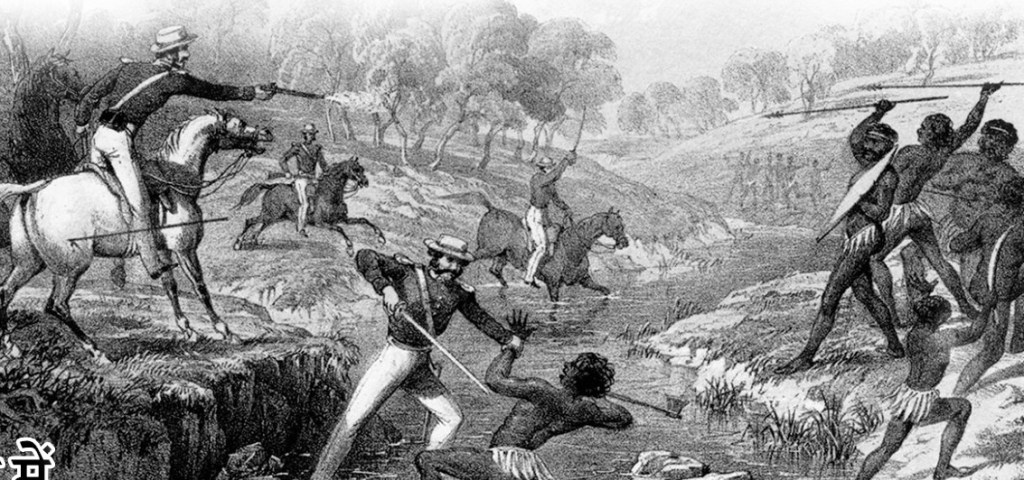
How we are as a nation is as much a reflection of our past as our present. One of the key elements of our past was a predilection for cultural destruction. It is sometimes forgotten that our imperial adventures killed off first nation cultures and supplanted them with our own. Aboriginal societies – from native Americans to first nation Australians – were marginalised, infected and eventually destroyed by we Brits and some of us, Dowden included, have the audacity to boast about it !

A commitment to democracy, a drive to have equality of opportunity, an acknowledgment that we don’t have a monopoly of wisdom or morality in our past or present are values I would endorse. A fair society cannot be an institutionally divided one. But above all a society that aspires to set standards for others needs to be open and international not closed and inward looking. We fall so far short that we are now at best a laughing-stock at worst deserving of contempt.