If you look at the map of Israel over the years since 1948 you will see a gradual expansion of territory and a consequential decline in the size of Palestine. It’s an uncomfortable fact but in effect Israel has been seeking, and seizing what in another context was called Lebensraum.
Benjamin Netanyahu has made no secret of his wish to increase further Israeli settlement. Other than the desert of Sinai, which they didn’t want, no Arab land sequestered militarily has been returned. And the task of creating ever greater Israel continues.
Violent protest and terrorism cannot be condoned even in opposition to land grabs – but nor can the extreme violence of war on the people of Palestine and those who support them.
Starmer is right that a two state solution is the only one. But can you see Israel returning any Palestinian land, including now Gaza? A few years ago I was in Bethlehem in the West Bank and talked with a Palestinian shop owner and his daughter. They were sad, but not strident. No doubt the hopelessness they felt then will be all the greater.
That the descendants of people who were victims of mankind’s worst ever crime are now perpetrators of destruction and murder themselves is beyond belief. When will we ever learn?
The was first published ten years ago in June 2014
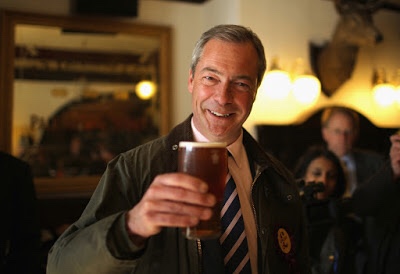
Aided by a compliant media much of the political noise over the past year or so has come from the mad insurgents of UKIP. Now before anyone accuses me of intemperate language let me stress that I use the adjective “mad” and the charge of insurgency advisedly. We are observing here a popular movement with an appeal to between a quarter and a third of the population – an appeal sufficient to win them the EU Parliament elections and potentially be major spoilers in next year’s General Election. I do not charge the voters who have supported them with madness – but I do direct that charge at Nigel Farage and his co-conspirators.
History, particularly that of the Twentieth Century for which we have so much archive film, shows the power and the danger of the demagogue – and that is what Farage is. His oratory is effective in the same way that that of Hitler, Mussolini, Franco or even Oswald Mosley was effective. He appeals, as they did, to the basest emotions of his audience. That is the way it works with these men. Farage has no manifesto of substance and no coherent political ideology. Compared with the Social Democratic Party (SDP) – the last real challenge to the established order in British politics – he is shallow and single issue driven. That single issue is, of course, an obsessive opposition to multiculturalism and to anything that limits Britain’s power (as he sees it) to govern ourselves. So the Anti EU stance (preceded of course by UKIP’s anti Euro campaign) combined with an anti immigration polemic is what you get.
Farage rages and most of the time against the dying of the light. I am sure that many of the voters who support UKIP do so because they object to the way their environment has changed. I would like to quote anonymously here from a message to me from quite a well-known sportsman about his friend’s mother’s decision to vote UKIP in a Northern town. He also expresses his own opinions fairly emphatically:
“My best friend from school’s mother taught in local schools for 30 years and has just retired. She lived in a nice cul-de-sac in Blackburn. She is now the only person in that cul-de-sac who celebrates Christmas. She has been a Liberal Democrat voter for most of her life but has now changed completely. This is not cultural improvement. She no longer feels part of her own community. The other fact is that we are not in a a financial position as an economy to be able to allow non skilled or low skilled labour into the U K. We cannot afford the benefit system we have currently never mind letting new people in who can access NHS/Welfare etc. Maybe what is needed is a five year gap between moving here before being eligible for welfare….”
And so on ! This is essentially the sportsman feeding back to me the UKIP message. Nigel Farage told a story a short while ago about being on a train to London on which nobody was speaking English. He was mocked for making this remark but he knew exactly what he was doing ! This was a small rage against the dying of the “white”. Against the change that means that whereas 50 years ago the 8:15 from Orpington was full of people just like Nigel it no longer is. The change that the quoted sportsman comments on in simple code “… the only person who celebrates Christmas” means, of course, the only white person of traditional British origins. The lady doesn’t, not to put too fine a point on it, like living close to non-white British Asians with a different culture.
UKIP’s voter support comes I think substantially from people like the lady in Blackburn. People of a certain age who feel uncomfortable with the changes that have happened and who seek scapegoats. But it is a rage “…against the dying of the light” in that multicultural change cannot be unwound.Nigel Farage in power could do nothing about that cul-de-sac in Blackburn even if he wanted to – nothing, that is, unless he indulged in Nazi style ethnic cleansing !
Metropolitan liberals like me argue that multicultural Britain is a far better place than the mono cultural Britain we grew up in. I believe this emphatically and so, I am pleased to observe, do most young people who have never known a non-diverse Britain. But UKIP’s appeal is not to me or to them. It is to those like the Blackburn schoolteacher and to a predominantly working class target group. In “Revolt on the Right” the authors show that those most likely to vote UKIP are angry old white men – older, less skilled, less educated working-class voters who have been “written out of the political debate”. This was the group, remember, who also supported Oswald Mosely and Enoch Powell whose messages were not dissimilar to that of Farage.
In his infamous “Rivers of Blood” speech in 1968 Enoch Powell said this:
“We must be mad, literally mad, as a nation to be permitting the annual inflow of some 50,000 dependants, who are for the most part the material of the future growth of the immigrant descended population. It is like watching a nation busily engaged in heaping up its own funeral pyre.”
I suspect that the retired teacher in Blackburn and the “left behind” group identified in “Revolt on the Right” would say that Enoch was right. And I have little doubt that Nigel Farage would as well – although whether he would admit it directly is another matter! Farage rails against “immigration” because this is a coded way of railing against “multiculturalism”. Immigration, in theory, is something that Britain can do something about – multiculturalism is a fait accompli. Enoch Powell predicted this:
“For reasons which they could not comprehend, and in pursuance of a decision by default, on which they were never consulted, they [the British people] found themselves made strangers in their own country. They found their wives unable to obtain hospital beds in childbirth, their children unable to obtain school places, their homes and neighbourhoods changed beyond recognition…”
Nearly fifty years on it is these fears that Farage and UKIP pander to. There is little or no difference between Powell and Farage in beliefs or rhetoric. Indeed Farage has said recently:
“I would never say that Powell was racist in any way at all. Had we listened to him, we would have much better race relations now than we have got,”
Powell was, of course, also a fervent anti-European. He said in 1971:
“The very use of the word ‘Europe’ in expressions like ‘European unity’, ‘going into Europe’, ‘Europe’s role in the world’ is a solecism which grates upon the ear…”
There is little doubt that Farage would agree with that as well! However the anti European Union message that launched UKIP would be insufficient to sustain it without the anti-immigration message as well. Europe is low down the list of issues of concern of the population at large, but immigration is high up. So Farage finesses his opposition to the EU to opposition to immigration from EU countries – a movement of labour that membership of the Union encourages. If you oppose this immigration you have to oppose Britain’s membership of the Union because the only way to stop it would be to withdraw.
If we believe that the message of UKIP is a deranged message we have to admit that there is method in Farage’s madness. Nigel Farage is, give or take a detail or two, Enoch Powell’s representative on Planet Earth today. He is an anachronism living in a time (or at least hankering after it) which is long gone. But as “Revolt on the Right” shows, and the UKIP electoral support proves, there is a strong minority in Britain that rejects the modern structure of our society and naively belives that Farage has a message that has practical options attached to it. But in truth the cul-de-sacs’s in Blackburn are not going to change and multicultural Britain is here to stay – much to our collective benefit many of us would say. Similarly the free movement of labour in Europe is unlikely to be significantly changed, although there may be some tinkering on the edges. It is, I suppose, possible that the political class may so mess things up that we find ourselves after a referendum withdrawing form the EU. But that is pretty unlikely as well. In the meantime Farage will carry on tilting at windmills and making us feel uncomfortable.
As with Enoch Powell Nigel Farage appeals to our basest fears and he simplifies unbelievably complex matters into banal slogans. The intellectual challenge to UKIP is robust and unchallengeable. But can those of us convinced of this translate this challenge into simple messages that combat UKIP’s polemics? That’s is much more difficult.
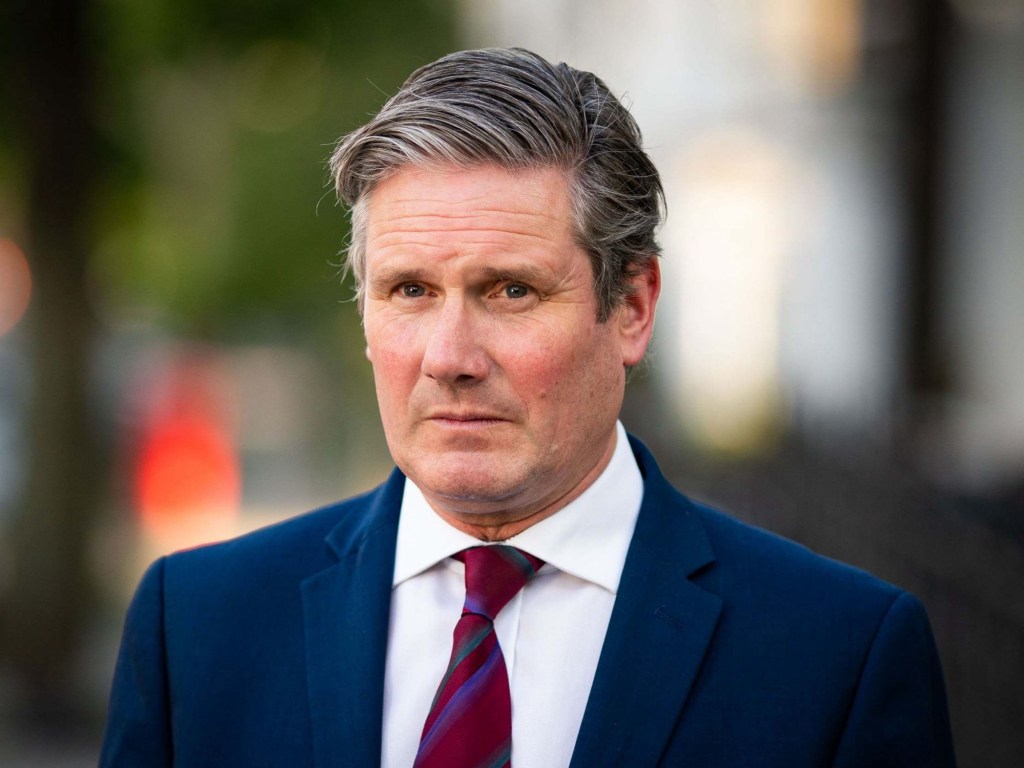
The term “Starmerite” used by Lara Spirit in The Times today suggests that the man has an ideology that we are invited to follow. If he has he’s kept it well hidden, and all the better for that. He’s the ultimate political pragmatist, certainly in his pre election persona which concentrated , understandably, on Opposition – the job the nation actually paid him to do.
But governing is different – now he has to deal with “events” , and they are unpredictable. The last Labour Prime Minister had to deal with the event of the American sub prime economic collapse which became global. He did it exceptionally well, much good it did him electorally! His Tory successor created his own “events” , not least two wholly unnecessary referendums. Scotland was close to being lost – Europe was. A disastrous premiership caused by cowardice and the failure to take on the extremists as a predecessor John Major had.
The term “Blairite” is still commonly used – generally by the Hard Left to abuse “centrists”. They ignore the fact that to succeed as a Labour Prime Minister you have to “govern from the centre” as Harold Wilson put it. Starmer knows that.
Wilson managed to have good relations with the United States despite shrewdly refusing Lyndon Johnson’s plea to send British troops to Vietnam. Earlier Attlee had not done this in Korea and later Blair also committed troops to Iraq and Afghanistan, equally disastrously. Starmer needs, again, to learn from Wilson.
There was no such thing as a “Wilsonite” ideology. Sir Keir is the same. Good.
Back in 1980 I read about the rumblings about an emerging “third way” in British politics called the “Campaign for Social Democracy” (CSD) lead by four Labour politicians of which David Owen was one. I liked it because it was perfectly consistent with the modern socialism espoused in Tony Crosland’s “The Future of Socialism” – internationalist, pro mixed economy, pro social reform, pragmatic.
I wrote to Bill Rodgers (one of the four) and when quite rapidly the CSD morphed into a political party, the SDP, I was an early recruit. In early Thatcherite Britain those of us who were Croslandite (now really Jenkinsite) needed a new home with Labour under the cosh of Michael Foot , an anachronistic Bevanite relic. The SDP offered it.
The “Gang of Four”
I take the view that the SDP , in alliance with the Liberals, would have won an election in 1983/4 had the Falklands War not happened. But it did and the Blessed Margaret never looked back. And that was the end for the SDP. I was an Owenite refusing to join the new Liberal Democrats. I was living in Hong Kong at the time and we had a small group of hard core SDP members who formed an Owenite local branch. We invited Owen to meet with us (he was en route to Peking) and he did.
I hadn’t met Owen before and at our meeting I found him the rudest person I’d ever met! Far from welcoming our support he dismissed us. He was ineffably arrogant. Never meet your heroes they say!
Blair’s Labour was the SDP in all but name. So , I think, is Starmer’s. Hooray !
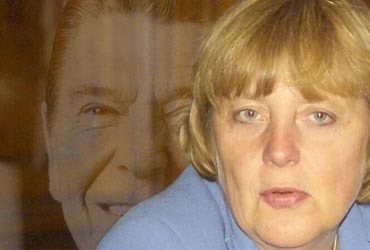
The models for the next Conservative Party leader to follow? How about Angela Merkel and Ronald Reagan. The former flew the banner of moderate, sensible Christian Democracy for years. She was economically of the Right, but the pragmatic, electable, internationalist Right. She wasn’t particularly charismatic but hugely respected. Ronnie R didn’t have Merkel’s intellectual depth , though he was no fool. What he had was charisma in spades. You didn’t have to be conservative to vote for Ronnie.
Britain is at heart a conservative nation but not normally of the Farage or Jenrick type. The archetypical conservative politician who succeeds is a mixture of Ken Clarke – affable but a solid man of the centre Right – and John Major. Not screamingly posh but decent with down to the earth solid Tory values.
Post John Major the Conservatives flirted with three leaders of the ideological Right. They all failed. Cameron was much closer to the electable Conservative model. The disastrous Referendum aside Dave might have eventually morphed into a decent conservative leader – not Merkel or Reagan perhaps but to an extent in their mould. That’s the model. For now none of the leading candidates meet it.
“Would’st thou have that Which thou esteem’st the ornament of life, And live a coward in thine own esteem, Letting “I dare not” wait upon “I would,” Like the poor cat i’ th’ adage?”
Ask Iain Macleod or Denis Healey or Roy Jenkins or Michael Portillo. You can get to the brink of power driven by your talent and ambition. But that final step may be denied you. In Liz Truss’s case, remarkably, it wasn’t. The last thing the late lamented HMQ did was appoint her Prime Minister!
When Truss arrived in Number 10 she’d achieved what far more talented aspirant Prime Ministers had failed to do. At that point a period of thoughtful review would have been appropriate. But instead of angelically fearing to tread too precipitously she foolishly and impatiently rushed in. She really didn’t need to do that!
She seemed determined not to be a coward in her own esteem by letting “I dare not” wait upon “I would”. Nobody, not even her greatest opponents across the floor of the House, would have criticised her if her first action had been to ask for time to assess the post Johnson maelstrom she’d inherited.
Macmillan famously said “events dear boy events” when asked what knocks governments off course. Truss created her own “events” within hours of forming her government. She had no mandate to do what she, with undue haste, actually did. Or tried to do. There had been no election manifesto commitment to introduce the measures she did.
Truss’s belief in the power of the market, deregulation and lower taxation was akin to the view that too often previous governments had intervened to prevent the market getting things right. So less regulation, less government and less tax is always the cure. Margaret Thatcher, broadly, believed the same. But the blessed Margaret took her time! Truss coined the preposterous phrase “Anti Growth Coalition” to describe enemies which were invisible spectres. Nobody knew what it meant.
There is a fine line between not having self-doubt and recklessness. Like her predecessor, but in a different way, she crossed that line. And paid the price. She’s still trying to wipe the blood from her hands.
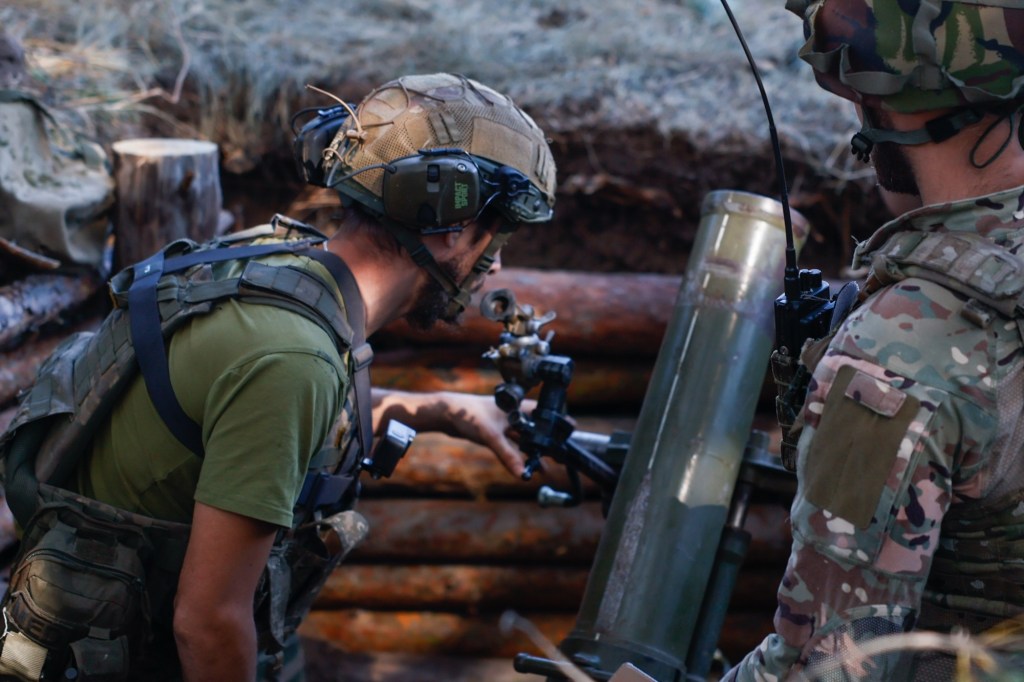
What I’m seeing is the West fighting a proxy war with everything except boots on the ground or planes in the air. The latter are provided by Ukraine, but everything else seems to be being provided by the West. Echoes here of Korea and Vietnam where America armed and funded the anti Communists before, inevitably, sending troops herself because it wasn’t enough.
History teaches us that in the end its boots on the ground that wins, or at least achieves a score draw. Korea seems to me the parallel. The United States and its allies were winning that war easily until the Chinese arrived. Then years of battle leading to deadlock. Russia increasing its on the ground forces against Ukraine is the equivalent of the Chinese supporting North Korea.
Notwithstanding our addiction to flying the blue and yellow flag and spending , unasked, taxpayers money on arming Ukraine we would not accept NATO troops actually grappling directly with Russians. Which means, it seems, that ultimately Russia will win. It may be a somewhat Pyrrhic victory – a “score draw” on the Korean model. A new border will be negotiated giving Russia some Ukrainian territory. Which, it has to be said, is an outcome a fair number of Russian speaking and Russian leaning Ukrainians will be happy with. As will Vladimir Putin.
OK the headline might be a little OTT but Wordsworth’s famous next line perhaps less so “But to be young was very heaven!” For Labour’s victory was very much a win for the young and therefore for the future.
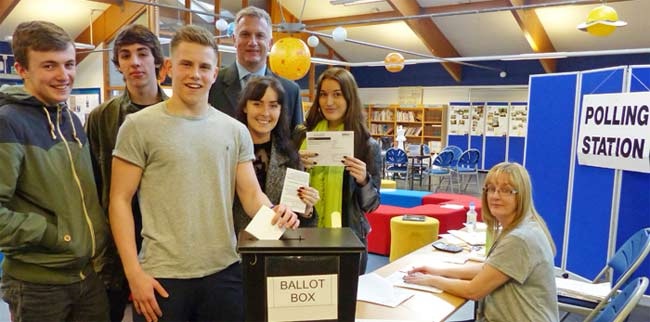
That we are governed by old (mostly) men is not contradicted by the defeat of the 44-year-old Rishi Sunak by the 61-year-old Keir Starmer. The choice of the young was overwhelmingly for Labour or the LibDems. Less than ten percent of the electorate under 24 voted Conservative (over 65 it was 40%).
If you’ve most of your adult life ahead of you you don’t want to be governed by narrow bitter old men nostalgic for a fictional memory of the past. John Major got it wrong when he pitched this nostalgia. Thirty years ago he said this:
“Fifty years on from now, Britain will still be the country of long shadows on county [cricket] grounds, warm beer, invincible green suburbs, dog lovers, and—as George Orwell said—old maids bicycling to Holy Communion through the morning mist.”
We are not that country and, arguably, we never were. If you are 20 you are surely grateful that with twenty years to go Major’s promise won’t be fulfilled, Even more you are likely to reject Reform’s coded support for “British culture and values” and its leaders’ rejection of multiculturalism. The likelihood is that your education to date, at school and afterwards, will have been in a mixed heritage environment. Indeed you are quite likely to be from a minority yourself.
So a young voter will have looked at what was on offer and rejected gloom and pessimism as the mindset of people with whom they have little in common. They will have rejected the blame culture that was grist to the mill for the defeated Tory government.
We are where we are and it’s not been a happy place. But we can now look forward not back. It won’t be easy. Wordsworth was disappointed with the outcome of the French Revolution. We must ensure that our children and grandchildren are not disappointed by ours. For revolution is what it is ! Over to you Sir Keir. No pressure!
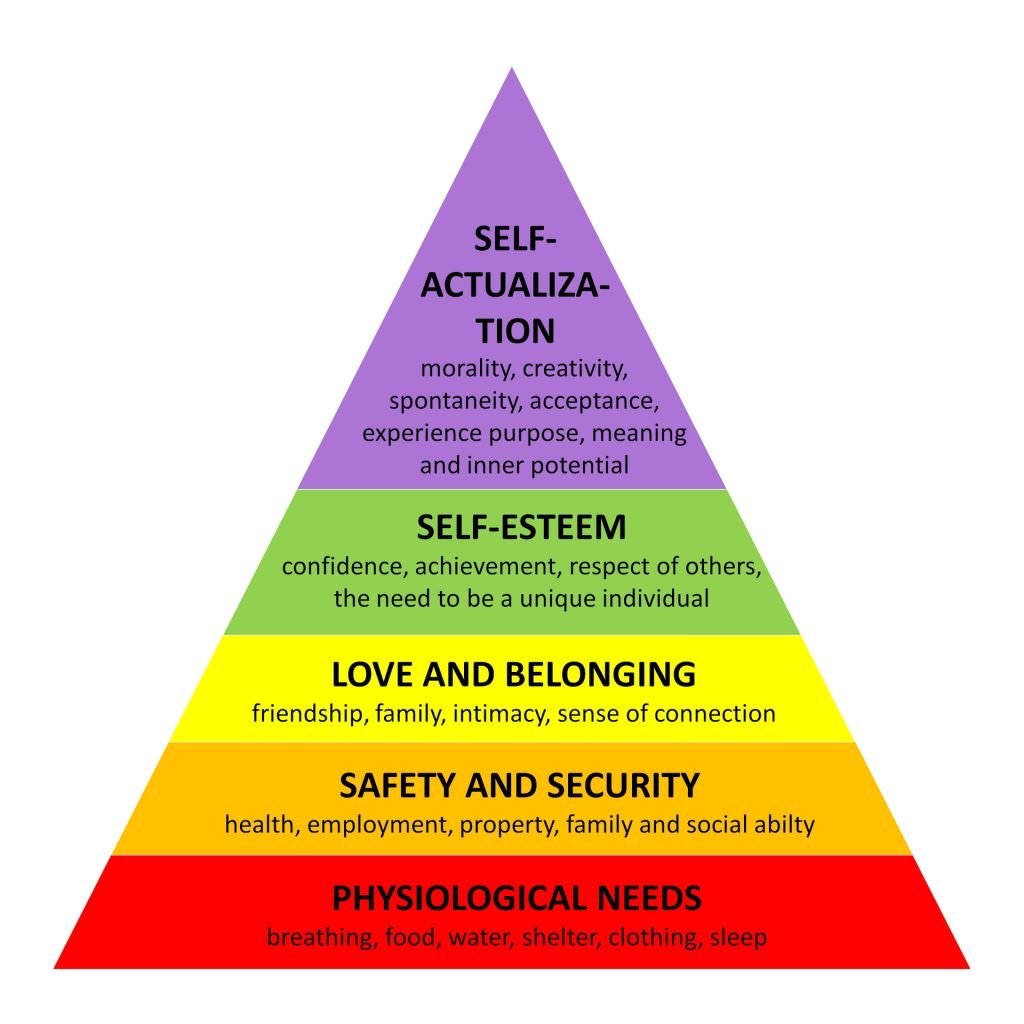
It’s the economy, stupid” said Bill Clinton, and up to a point he was right. But it is not “growth” – rather an abstract concept – that most of us want but a reasonable amount of comfort. That comes from being able to afford the basic things at the lower tiers of Maslow’s “Hierarchy of Needs” and occasionally things higher in the triangle. A holiday. A bottle of wine. A trip to the theatre or the seaside.
Maslow’s “Heirachy of Needs”
Most of us can’t explain the much peddled link between growth in GDP and personal/family welfare. That is because it is at best technically complex, at worst cultishly spurious. Macroeconomics is not just the science of growing the economy but of how its product is distributed.
China’s steel industry has grown enormously, but at huge environmental cost
More than fifty years ago E.J.Mishan in his seminal “The Costs of Economic Growth” clearly described the downsides of untrammelled growth. Environmental damage was a key, but not the only one. The more we grow the more we pollute. There are legions of examples of this, not just in the Industrial Revolution but today.
If a country is like Norway, rich in valuable hydrocarbon resources, it can run a generous welfare state. Britain did this for a while as well but the resources have dwindled. So where’s the Growth and wealth creation and redistribution to come from? Our industrial base is reduced and where our economy is strong, in London in particular, the distribution of wealth is patchy at best.
The economic debate needs to be about more than a simplistic attachment to “growth”. We could benefit from revisiting Keynes and studying the successes of the “New Deal” in Roosevelt’s America. Yes public works underpin growth but a full employment society shouldn’t need foodbanks.
“Tax and Spend” gets a bad press but actually what modern economies have to do it to offer adequate welfare and investment . Austerity and spending cuts affects those who can least afford it. Unemployment may be low but zero hours contracts (etc.) mean that the quality of employment can be poor for many. Cancellling desirable public investment, like HS2 north of Birmingham, damaged our future transport infrastructure and employment.
The panacea of “Growth” is something of a myth. When in his first speech as Prime Minister Keir Starmer said “…we will rebuild Britain with wealth created in every community,” he was understandably vague about how that wealth could be created. And indeed about what “wealth” actually is. He should read Keynes, and Mishan !
An uncharacteristically binary pro Conservative view of politics from Matthew Parris in The Times today, which ignores the reality that over his lifetime Britain has been a mixed economy. With one exception that I’ll come on to. That mixed economy was created by the, in retrospect, astonishing achievements of Clement Attlee’s post war government. True that administration had a mild Clause 4 mindset which led to one or two inappropriate nationalisations. But the Welfare State they created has just about remained intact.
The mixed economy, the efficient working of both the public and the private sectors, was largely a British creation though it became ubiquitous across Europe. It is absolutely mutually dependent – public services need private companies to support them and private companies need efficient public services. In short some things are better publicly owned and run and some things demand the competition that private enterprise brings.
The interruption to the continuity of the mixed economy was in the 1980s when an ideologically driven Margaret Thatcher took an axe to public ownership. Some of her actions were necessary but grotesquely insensitively handled (the mines obviously). Some were scandalously corrupt – the railways and water for example – culpable errors from which we are still suffering.
Rishi Sunak, who Parris’s Conservative vote will help, is by his own admission an unreformed Thatcherite. Others around him are not supporters of the mixed economy at all. Does he really want these Tufton Street terrors to stay?