I was nearly on an Old Bailey jury for a knife attack murder case. I was called up for Jury service a few years ago for the trial of individuals accused of the murder of a young adolescent, Levi Ernest Morrison, knifed in South London in April 2021. In the Jury selection process fourteen potential jurors were chosen. One opted out and I became the thirteenth on the list and would have been on the Jury had one other been unable to take part. But this didn’t happen. Nevertheless I attended the first day of the Trial when preliminary statements were made describing the crime, the accused and the key factors – both the Prosecution and the Defence cases were outlined. The BBC reporting of the outcome of the case is here.
The victim in the case I reference here
In this case there was a motive, of sorts, and it was not a random attack. But the key issue was the appalling increase in knife crime that it illustrates. The killers deliberately chose to arm themselves with machetes on the way to seek out their victim. Clearly the easy availability of knives that could be used as weapons was a major factor.
If we compare gun crimes the post-Dunblane laws on gun ownership have contributed to a net reduction in gun crime and especially murders, primarily by eliminating legal handgun misuse and preventing diversion to criminals. Long-term data shows firearm homicides 50/60% lower than pre-ban peaks at roughly 30 per annum. By comparison there are around 200-300 knife homicides every year.
The case I have referred to here featured in a BBC Documentary (no longer available) and later in a video made by the Metropolitan Police. The initial stages of the police investigation are here. Subsequently, after the trial was over, there was an interview with the young victim’s incredibly articulate and objective parents. I urge you to view this videohere:
In understanding knife crime it is shocking to see just how common it is and how random killings can be. Sadly the banning of knives that could be used as weapons is impossible – such knives are ubiquitously available in shops and by mail order. Other actions at community and school level are urgently needed.
A majority Government in The Netherlands requires 76 or more seats in the Tweede Kamer (lower House). This means that there will always be a coalition between two or (usually) more parties. The seeking of coalition partners generally rests initially with the largest Party by seats. At present the PVV (Partij voor de Vrijheid) (despite losing seats) or D66 will emerge as the largest Party. .
The main parties (the top seven in the table above) have distinctive political positions which can be described in British political party terms as follows:
PVV The party, led by Geert Wilders, is anti immigration and, particularly, anti Muslim. The parallel with Reform is strong as it is with Trump’s Republicans in the US. Its economic policies are more centrist. “On certain themes such as healthcare, social services, LGBT rights and elderly care the PVV can be seen as left-leaning and social democratic”. (As Wikipedia puts it). 26 Seats.
D66 rose to prominence when I lived in The Netherlands in the early 1980s. Its philosophy is profoundly centrist in terms of policy and it attracts support in particular from university educated voters. It has been a regular coalition partner more often with Leftist parties though on occasion with the soft Right. Its current position is its best ever and its leader Rob Jetton may become the Party’s first ever Minister President (Prime Minister). In British terms D66 is close to the LibDems. 26 Seats.
VVD was The Netherlands’ main secular conservative Party until the rise of the PVV. The comparison is with moderate One Nation Conservatives in the UK. Pro free enterprise but unlike its British equivalent it has never drifted towards Euroscepticism. It boasts that it is centre Right mainly to distinguish itself from the PVV. Mark Rutte, who led the party from 2006 to 2023, became Minister President after the 2010election serving in the position until 2023. The decline in numbers of centrist Conservatives in Britain means that the old VVD/Tory synergies are much less valid than before. 22 Seats.
PvdA is a traditional Social Democratic Party with policy and structural similarities to the Labour Party in Britain and Germany’s SPD. It has been frequently in Government and there have been many PvdA Minister Presidents. In recent times it has been in close electoral alliance with the Green Party (Groene Links) and it is expected that the two parties will merge in 2026. 20 Seats.
CDA is a Conservative party whose core electorate are church members, both Catholics and Protestants. It was frequently in Government in the past but fell to only five seats in the 2023 election. Part of this electoral decline can be attributed to the secularisation of Dutch society. There is no direct comparison in Britain but the CDA has obvious links with the CDU/CSU In Germany. Polls suggest that the CDA has made a recovery in recent times and it will be a player in the negotiations for a new Coalition. 18 Seats
JA21 was a breakaway from the FVD (see below) and is a Hard Right nativist party seeing itself comprising “moderates” fleeing FVD’s radicalisation. Its mission was to capture disillusioned FVD voters seeking “credible” right-wing politics. 9 Seats.
FVD (Forum voor Democratie) was established as a Party for those who saw Geert Wikders and his PVV as too liberal (!). It is anti immigration and nativist.(FVD) and in the election positioned itself as a hard-right, anti-globalist alternative emphasizing repatriation leaving the European Union, scrapping climate policies, and drastic government shrinkage. 7 Seats
Where now ?
The Dutch Parliament in The Hague
Every shade of opinion will be represented in the Dutch Parliament, as it usually is. There will likely be a small but vocal group of strongly socialist MPs from the Socialist Party who will have three seats. but their influence will be limited by their modest seat count and the broader centrist/progressive lean of the leading Centre/Left parties like D66 and PvdA..
The Hard Right (PVV+JA21+FVD) will have no more than 42 seats and none of the traditional parties would enter a Coalition with them. So the next Dutch Government is likely to be a Centre/Left combination of D66 and PvdA with VVD and CDA to keep them honest ! Not a bad outcome !
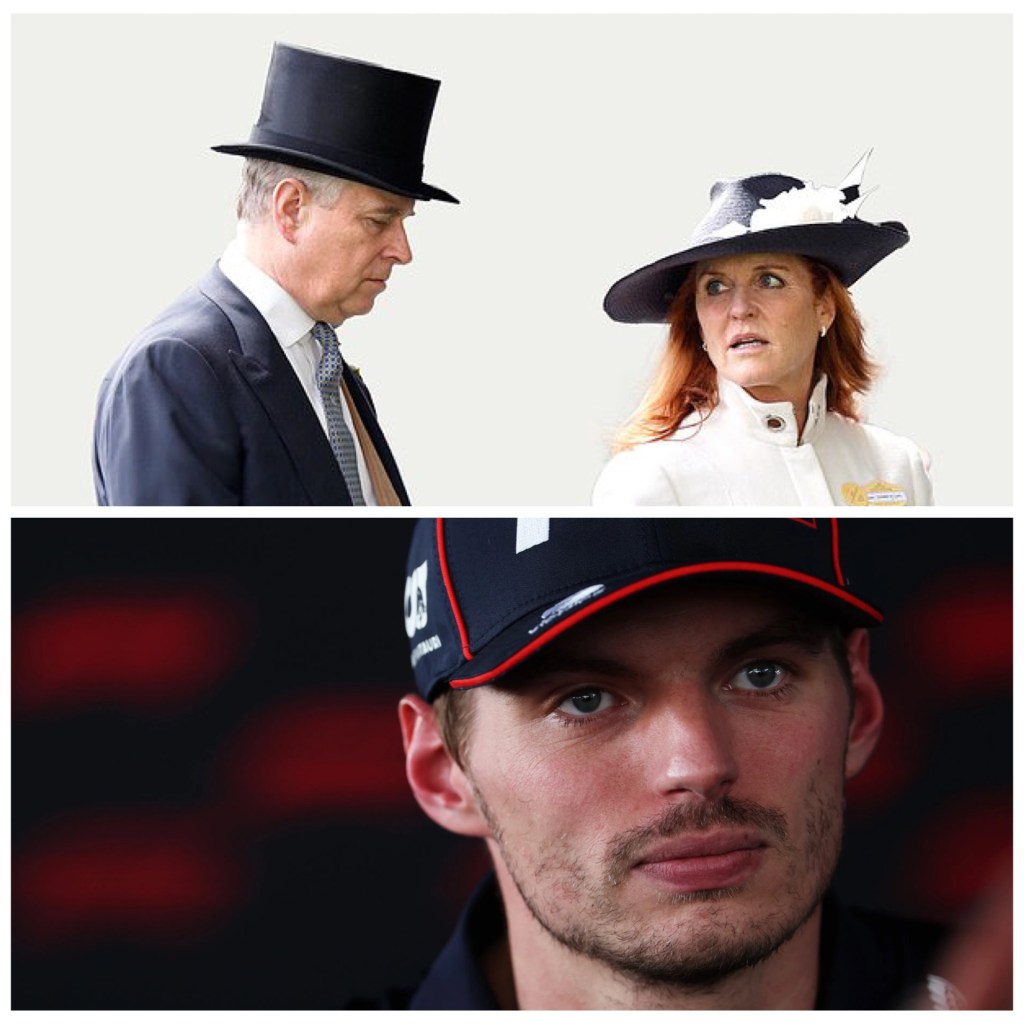
The main point is the contrast between the respect we are supposed hold for these people (the Royals) and the reality that they are a dysfunctional bunch of pompous, privileged prats.
The moral improprieties reach their apogee in Andrew Windsor but from the King and his consort downwards they are an unappealing family. There is a “droit de seigneur” imperative which means that virtually all the male members have had liaisons galore.
The whole edifice is preposterously phoney. The presumption that accident of birth should give one power, respect, money and and rights is repellent. And they parade their privileges in a way that is medieval. And to say that the Emperor and his crew have no clothes (which is often true) is challenged by the shameless royalists amongst us who kowtow and genuflect at every contrived opportunity.
We only have ourselves to blame. Andrew gave good service in the Falklands but later in his twenty year naval career his deficiencies meant that his earned promotions were few. So his mother made him a Rear Admiral! It would be comical if it was not so offensive.
It’s a while since we beheaded a King and I’m not suggesting we do so now. But surely at last the pantomime is over?
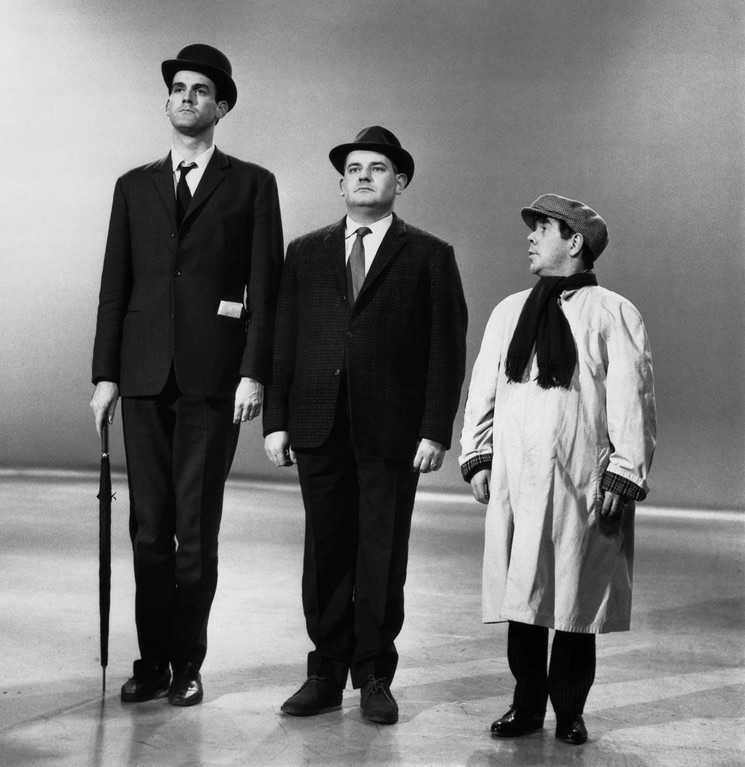
The analogy between the Profumo affair and the Andrew scandal (today’s Times) is weak. John Profumo was a highly regarded Minister with an admirable record of service. A future Prime Minister held in high regard. His brief fling with Keeler was out of character and silly rather than serious. But the times were a-changing. Satire had been born and the baby boomer generation, of which I was part, had the courage to laugh at its elders. Macmillan was the first Prime Minister to be portrayed on the stage (by Peter Cook in “Beyond the Fringe” ) and Private Eye had been launched.
Macmillan was a decent and able man, but a Victorian in a modern age. His own wife Dorothy was unfaithful but it didn’t greatly worry him and he ignored it. Before Profumo he was feeling low and contemplating standing down. The scandal might have accelerated the process but it wasn’t its primary cause.
Andrew Lownie’s biography of Andrew and his wife reveals a man who couldn’t hold a candle to Profumo. His admirable service in The Falklands aside Andrew is revealed as a dysfunctional serial adulterer and a pompous snob full of self-regard. The encounters with Virginia Roberts and the links with Epstein were far from exceptional lapses of morals and good taste. Profumo’s liaisons with Christine Keeler, by comparison, were in truth pretty harmless.
You only have to look at the maps of Israel in 1948 and Israel today to see that the Zionists have won every battle and that Lebensraum has been militarily achieved. (I use these highlighted words not as abuse but as accurate terminology). Hamas did not exist before 1987 – there was 40 years of Arab/Israeli conflict before that.
That Israel has always had settlement ambitions way beyond its original borders is not in dispute. And nor is the fact that the victims of these ambitions are mainly the Palestinian people. To the victors have gone the spoils, as they always do. Let’s be clear. It’s not just Hamas that has been defeated but the people of Palestine. Thousands of them dead, their homes destroyed, their future obliterated.
Dresden 1945 (above). Gaza today (below)
In 1945 the Allied nations who destroyed Hitler and Hirohito said “never again” and lead the reconstruction. The Soviet Union did it differently from the United States and Britain, but it happened. At the end of the war Hamburg and Dresden, Tokyo and Hiroshima looked very like Gaza does now. Does Israel want, would it permit, the reconstruction of Gaza as a Palestinian state? What do you think?
The Hamas terrorism of October 7th was Israel’s casus belli for destroying not (just) an armed enemy but also a nascent state that it doesn’t want as a neighbour. In short whilst Hamas presumably knows that it has been defeated there are over five million Palestinians in the West Bank and Gaza who are understandably concerned that Israel holds their future in their hands.
This is broadly true as well as being funny! A definitive test is to see which European countries export their cuisines in Restaurants. You find Italian, Spanish, French, Portuguese, Greek restaurants all around the world. You won’t find an English or a German one anywhere! You can eat well in Amsterdam, but it will be Indonesian not Dutch cuisine.
There are distinctive dishes above the line – The herrings in The Netherlands and Scandinavia for example. And you can eat well in Michelin starred restaurants in Hamburg or Copenhagen. But the cuisine will be international not local.
The division applies to beverages as well. The orange countries produce and drink wine, the green beer and spirits. Wine accompanies good food – beer a pretzel or a bowl of peanuts.
The other difference is choice. There are twenty or more distinctive Italian cuisines. Spain has wide range of regional variations as of course does France. In Britain the food as well as being undistinguished is ubiquitous- the fish and chips is the same everywhere.
Iain Dale’s adoration for Margaret Thatcher in these books (above) takes him into a world where his normal political nous is buried by cultish hero worship. Mind you he’s not alone in this. How often do we hear the preposterous and ignorant claim that she was “the best thing that happened to this country” . It’s balderdash.
Thatcher got lucky in 1982 with the Falklands War without which she would be a footnote in history. Rightly. I say this not as an opponent of the decline of deep mining nor as a defender of excessive Trades Union power. No, I criticise the mindless and uncaring way she approached these necessary changes.
And remember she was opposed by her last Cabinet over Europe. The faux-patriotism she union-flagged post Falklands turned her into a grotesque Little Englander when out of office. She sowed the seeds of first intellectually bereft Euroscepticism and then the Referendum “Leave” campaign. In no small measure Brexit is attributable to Thatcher.
It’s forgotten that Thatcher was influenced strongly by her Home Counties golf club bore of a husband. Denis was a middle class, well off bigot from central casting. When his wife called Nelson Mandela a “terrorist” that was Denis speak.
After Thatcher her successor John Major cleverly unraveled his inheritance from her , where he could. But the disastrous privatisations she did were too much for him or even Blair/Brown to undue. Our filthy beaches, polluted rivers and chaotic railways are directly Thatcher’s legacy. Our gas and electricity services rewarding investors and Directors rather than serving customers are more of the same. As is our lone man of Europe isolation which makes us an outlier on the international stage.
Thatcher was no feminist either. Her politics had more Testosterone in them than Estrogen ! There were few female Ministers in her Governments and she did little for women’s Rights.
It is a political Age without heroes, an Age which started with Brexit which, as I say, has strong causal links to Thatcher. The irony is that people like Iain Dale, whilst acknowledging today’s lack of politicians of substance, look at Thatcher as a golden Age by comparison. The truth is that the Blessed Margaret was the original cause of our problems!
Coherent critique” – you have to be joking ! It was an offensive ramble by a man for whom diplomacy means screaming abuse. He involved himself in his rant in matters about which he has no right to comment (the governance of London for example) and in matters like climate change about which he has neither the knowledge nor the intellect to speak.
His whole life and persona is a historical aberration. Near 80 years without a scintilla of moral underpinning and full of excess. Once seen as a New York liberal (really!) he has morphed into a clueless parody of a real politician. And yet we do have to take him seriously – there’s a nuclear button on his desk.
Students of American history will describe how the Presidents can be ranked from “Great” through”Good” to “Bad” – but never before has their been downright “Ugly” nor a felon in the White House.
Trump should not have been lavishly welcomed to Britain, and our Prime Minister should not have kowtowed to him. But the moment when the King visibly sniggered at one of Trump’s inanities in his speech was to be treasured. Charles can spot a fraudulent fool when he meets one – he’s had a few in his own family.
Having lived in the Middle East for six years and travelled widely in the Region I think that the routine description of Israel being the only democracy there is overdone. Yes Israelis vote and (say) Emiratis do not. But, frankly, I’d rather live in Dubai than Tel Aviv!
The progress made by Israel over nearly eighty years to expand their borders lies four square behind Netanyahu’s ambition to create Greater Israel. This is pure Lebensraum. Along the way some Arab states made grievous errors with military assaults on the fledgling Israeli state. And Arab terrorist movements like Hamas and Hezbollah have done the same. But over the years, and especially recently, Israel’s response has been disproportionate.
No Palestine in Netanyahu’s “New Middle East”
The Iran/Iraq war, Saddam Hussein’s Iraq, the Human Rights abusing states like Saudi Arabia and Bahrain and many other instances of institutionalised terror show that it is wrong to characterise the region in a binary way – “Arabs good, Israelis bad” (and vice versa) is unhelpful. But when push comes to shove the Arabs (and the Persians) will oppose Israel (sometimes collectively).
In this continued tinder box situation Israel’s expansionism feeds the fire. They may by force acquire Gaza and settle there, as they have done elsewhere. But does anyone seriously think that will contribute positively to the resolution of conflict? Rather the reverse surely ?
Tobias Elwood in The Times today has contributed a very good piece, and I say that as someone who has never voted Conservative in my life! I particularly like the call for consensus. Margaret Thatcher was the first mould-breaking party leader of my lifetime. Attlee created the Welfare State but it was World War 2 that spurred that. Attlee’s reforms were largely unchanged by governments of either Party. Until Thatcher came along. She did some good, some bad and some downright ugly things. But Major, Blair and Brown restored the centrist norm and a fair degree of consensus.
So what’s gone wrong – in one word it was Brexit. Cameron was a consensus politician – he even formed the first peacetime coalition of modern times. The Referendum screwed him, and then the country. We haven’t been polite to one another since !
The decline of the Tories was directly attributable to the “Leavers” in the Party and then to the grotesque Hard Brexit which, astonishingly, leaves us as the only country in Europe with no formal economic, commercial or social alliances. Except for Belarus. Strange company.
The Conservatives have morphed into “National Conservatives” , and they’re not very good at it. Reform has seen the nationalist drift on the Right and captured it. There’s probably only room for one “Hard Right” Party and Mr Farage’s “fruitcakes, loonies and closet racists, mostly”. have taken over.
There are some decent One Nation Conservatives still around but they are leaderless, unrepresentated in Parliament, and rare as red squirrels.