Boris Johnson is unhinged, but defining the nature of his obvious lack of balance is more difficult

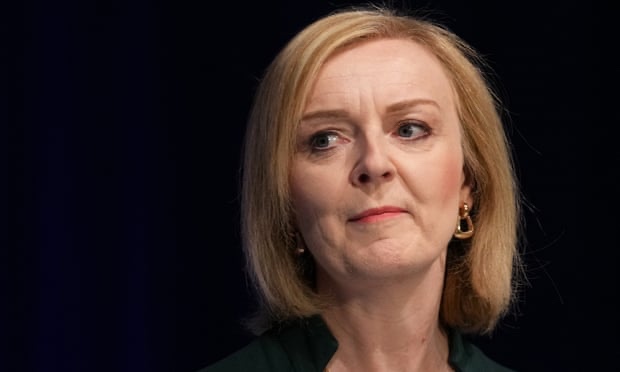
We have (almost) rid ourselves of the turbulent priest – though what religion Boris Johnson is a priest of remains a mystery. There are few signs in his past of an intellectual struggle deciding which political belief he should embrace. He’s not Cardinal Newman, or even Liz Truss !

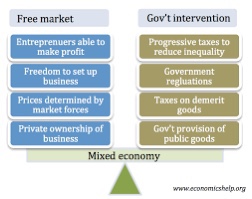
The “isms” are very confused these days. Socialism, Liberalism and Conservatism mean what the user wants them to mean, especially the latter. It’s partly because of the post war triumph of the “mixed economy”. Occasionally a politician pokes his or her head above the parapet and demands that we privatise, or nationalise, everything. They soon go away though and the norm toddles on.

On the Left one of the lesser terms of abuse is “centrist” by which term the user means Tony Blair. Jeremy Corbyn hated Blair and the “Centrists” far more than he hated the Conservatives. But Corbyn’s statist socialism went away – which is a bit of a shame because there was, and is, a pretty good case for tighter state control of many public services like gas and electricity, the railways and water. Victims of Margaret Thatcher’s anti state ideologies.

Jeremy Paxman refers in his Sunday Times article today to “Johnsonism” – I suspect that he is being ironic because he knows that there is no such thing. Of course Boris is a Tory in the sense that, for example, every home counties golf club bore is also a Tory. What else would they be? And posh people as well – I doubt that many in that infamous Bullingdon photograph became roaring Marxists, or even social democrats.

The populist John Ball appealing to the rebels of the Peasants Revolt

There has never been a Johnson ideology. His chance was to be a modern day John Ball and to appeal over the heads of conventional leaders and politicians with a populist message. Thereby the “Red Wall” was broken. Without Europe Johnson wouldn’t have made it to number 10! The “ism” of choice for Boris’s Conservatives became a xenophobic “Nationalism” the principal driver of Brexit.

The political world pre Thatcher was cosy. And to a large extent the cosiness returned after the Blessed Margaret’s reign. Major, Blair and Brown were not revolutionaries. And nor would David Cameron have been without Nigel Farage and Douglas Carswell. The former scared the pants off Dave and his complacent gang and the latter, and others, emphasised that the threat was within the Conservative Party as well as the “fruitcakes”, “loonies” and “closet racists” outside it.

In segueing to the Right by calling the disastrous EU Referendum in 2016 Cameron inadvertently changed Britain more than any other leader of modern times, not excluding Thatcher. And so Conservatives and Nationalists became the same thing. As Chris Patten has put it the Tories are now an ‘English Nationalist Party” – the “One Nation” Conservatives walked away or were sacked.

The years after the referendum paved the way for Boris Johnson. He had seen that a populist, nationalist movement of the Right could be his route to power. The Tories became UKIP Lite – and not that “Lite” either. Britain is traditionally a conservative nation with a nostalgia for the past and a love of patriotism and its symbols. The Union Flag became mandatory for every government minister on every occasion.

Boris Johnson is irredeemably shallow with no consistency in either his private or public behaviour. That he is unhinged is obvious but defining the nature of the obvious lack of balance is more difficult. I’ll leave that to others more qualified in mental health than me!

We are (or soon will be) well rid of Johnson. This is not a time for “Après moi, le déluge” for unlike Louis XV (who he much resembles) Boris’s successor cannot possibly be worse than him. Can they ?

What we need now is calmness and competence – the fittest for the job in today’s parlous Johnson-wrecked circumstances

”And my friends in politics, no-one is remotely indispensable and our brilliant and Darwinian system will produce another leader, equally committed to taking this country forward through tough times.” Boris Johnson

“Equally committed” ? Well we are seriously in trouble if “equally” is what we get. The missing words here (apart from even a hint of apology) is less commitment than ability. Being Prime Minister of the United Kingdom is not an easy job – the last four we’ve had (over just twelve years) have all failed , but none as catastrophically as Boris Johnson.

Is the system “Darwinian” ? Here Johnson is indulging in customary boastfulness. What Charles Darwin actually said was “This preservation of favorable variations and the rejection of injurious variations, I call natural selection or the survival of the fittest.” so what Johnson is actually saying is that the process that placed him in Number 10 did so because he was the “fittest” for the job. Nothing could be further from the truth.

Politics is a jungle and in the jungle Darwinian natural selection certainly takes place. The bigger or faster or smarter the beast the better his chance of survival. Johnson obviously sees himself as a superior primate swinging through the trees leaving his rivals behind.

The reality is more prosaic, it’s about judgment calls. David Cameron made the worst judgment call of modern times in calling a YES/NO referendum on Europe, which he then lost. In the jungle his species would have died out after that howler. And, in a way, it did, The “One Nation” Tories became an endangered species and under Theresa May, and especially Boris Johnson, they faded away. Arguably the “injurious variations” triumphed over the “favourable variations” if we hold on to the Darwinian analogy.

Otto Von Bismarck famously said that “Politics is the art of the possible, the attainable — the art of the next best.” Three successive Conservative Prime Ministers have tried to do the impossible and failed, but none as disastrously as Johnson. His approach was symbolised by the video of him on a bulldozer during the 2019 election. This was reducing politics to the pragmatic lowest common denominator.

The economist JK Galbraith expressed a negative view of political pragmatism when he said, “politics is not the art of the possible. It consists in choosing between the disastrous and the unpalatable.” Johnson didn’t want to be “unpalatable”, he genuinely wants to be liked. But, as Max Hastings shrewdly observed “The only people who like Boris Johnson are those who haven’t worked with him”. Only “disastrous” was left.

Serendipity and chance gives us Prime Ministers not Darwinian selection. John Smith’s sudden and premature death gave us Tony Blair (he might still have made it of course, but much later). Major was not Heseltine , he wielded no big stick and went to the dentist until the hurly burly was done. Brexit gave us Johnson.

So what now ? Surely what we need is calmness and competence – a choice (Darwinian if you like) of the fittest for the job in today’s circumstances . That would be the likes of Jeremy Hunt, dull and diligent. We could do with a bit of “dull” ! But the ideologues of the Gestapo-like “ERG” are still around. Sinister men in dark suits who will surely try and finesse one of their own into the top job.

After the fall of the undeniably charismatic Margaret Thatcher the “system” gave us John Major. In 1945 the great War leader Churchill was replaced by Attlee, the man who famously “got out of an empty taxi” . That’s what we need now. If it can’t be Keir Starmer, who fits the bill perfectly but we’ve got to wait for an election, then Hunt will do nicely. Will the Conservatives in Parliament see this ? I doubt it.

Our Royal “leaders” are as corrupt and sordid as the rest

Our country, visibly crumbling around us, is suffering from the actions of those with an overweening sense of entitlement. They inherit or acquire power and wealth and use it capriciously to their own advantage. They are all at it. Vulgar entrepreneurs with yachts and non domicile status. Corrupt politicians “rewarding” those who have helped them with contracts and peerages. Elected members of Parliament claiming massive expenses or employing members of their own family in sinecures. And now the Royals.

The Queen’s second son had to be bailed out to avoid his having to testify in a sordid court case. Her grandson plays the “Celeb” card for all its worth to fund a Californian lifestyle of wealth and privilege. And now the heir to the throne takes money laundered in a suitcase and uses honours to help bail out his failed business. Allegedly !

We have a Prime Minister with the morals of an alley cat, the attention span of a knat and the behaviour of a pre-revolutionary French aristocrat. He and truth have never been bedfellows – there was probably never room. 

And yet despite the institutionalised dysfunction all around us we still muddle on waving our preposterous flags and celebrating our “glorious” past. They’ll be at in again hailing a mythical land of hope and glory and a phoney green and pleasant land at the Albert Hall in September.

The evidence of our fall from grace is all around us. Whatever reputation we once had as a credible player on the world’s stage is gone. We sit somewhere between laughing stock and pariah sad at our loss of Empire and desperate to find something to cheer. Pageantry is the best we can do. But behind the gloss of the golden coaches and the Gilbert and Sullivan uniforms it seems that our regal leaders are as corrupt and sordid as the rest of the grossly over-entitled mob in positions of authority and power. No surprise there then.

Hong Kong was sold down the river, there is nothing to celebrate

Twenty-five years on from the infamy of the handover of Hong Kong there is nothing to celebrate and much to mourn. Was the repression inevitable and could Britain have avoided it ? Undoubtedly so in my opinion.

My years in Hong Kong in the 1980s we’re very happy indeed. But it is delusional to think that even then anyone thought that “One Country two systems” could work. My Chinese Hong Konger friends certainly didn’t think so. In large numbers they sought and gained overseas Passports. Not from Britain, which sold them down the river, but predominantly from Australia, Canada and New Zealand. Or America, if they had the right connections.

It was in 1989 that Britain’s perfidy was seen for what it was. I was in Peking when the students gathered in Tiananmen Square. But I was back in Hong Kong when the tanks rolled in. Bedraggled escapers started arriving with horrific stories of Chinese atrocities. And what did we and the rest do ? Absolutely nothing, apart from a bit of hand wringing.

In the decades that followed Tiananmen there was a series of faustian pacts on an enormous scale between British and other western companies and the Chinese. The scale was huge and human rights played not one tiny part in it. China became the world’s manufacturer on a giant scale. This trickled down in the People’s Republic and a consumer society emerged buying from the West, which salivated at the money to be made.

Hong Kong was Britain’s last significant withdrawal from Empire but we botched it like we botched all the others. The irony is that it didn’t have to be such a balls up. Britain had a right to Hong Kong Island and Kowloon in perpetuity but we hardly played that card in the negotiations. Thatcher wanted out and she certainly didn’t want to offer the people of Hong Kong a home in Britain. Imagine the headlines!

The Chinese didn’t move to repress the Hong Kong people immediately – they are far too pragmatic for that and they famously take a long term view. But now they’ve nothing to lose. Their economic strength is unchallengeable. Some ignorant commentators say we should boycott Chinese goods and services. Ha !

I was privileged to be in Hong Kong for a while and have happy memories. It was a unique place, benevolently governed and a shining example of the potential and success of multiculturalism. I keep in touch with my HK friends, but they are now in Melbourne or Vancouver or Auckland. Who can blame them ?

The new Establishment is based on patronage not class.

Anthony Sampson described the then “ Establishment” in a book called “Anatomy of Britain” back in 1962. The commanding heights of post war Britain were occupied then by the old school – officer class, public school, silver spoon types. They had been mocked by the bright young things from Amis to Osborne to Pinter and Braine. But they were still in charge.

When “ Beyond the Fringe” opened it was the first time a Prime Minister had been parodied on stage – poor old “Supermac” , that most establishment of Prime Ministers. Peter Cook and Co. invented satire and the status quo was gently rocked. Their characters were not exaggerations , they held up a mirror to society.

But in a society in which Boris Johnson is Prime Minister, Jacob Rees-Mogg in the Cabinet and Nadine Dorries is Secretary of State for Culture, Media and Sport surely satire is dead ? The governing class satirises itself daily. But it is as incestuous as that which Sampson described.

The new Establishment is based on patronage not class. Of course honours and preferment have always been used as rewards by those in power but today it is so naked. If you catch Boris’s eye, and were sound on Brexit, a seat in the House of Lords is yours, Buller or not.

It’s hard to know what anyone in authority really thinks any more. Perhaps they don’t think, just parrot what those they aspire to join say. When one breaks cover, as JK Rowling did, she is cold-shouldered despite being indisputably right.

Nothing works in Johnson’s Britain and our patience is running out

Matthew Parris renews his call for the defenestration of Boris Johnson in The Times today. Of course he’s right – it’s Johnson. But it isn’t only Johnson. He is surrounded in Cabinet by sycophantic incompetents a number of whom – Patel, Dorries, Raab, Truss and the rest – only in the fictional dark recesses of a satirist’s mind wouod be anywhere near high office.

The earthquake that was Brexit changed the Conservative Party from top to bottom into a Faragist cult. Faragist without Farage, maybe, but there are plenty of alter egos for our Nigel. Scan through UKIP’s manifestos of ten years ago and Boris Johnson’s Conservative Party will be revealed to you.

Successful political parties need to be popular to win but Johnson’s approach has been populist – not the same thing. From Rwanda to Human Rights it’s as if the Government’s policies were dreamed up in the saloon bar of a pub in Colchester late in the evening.

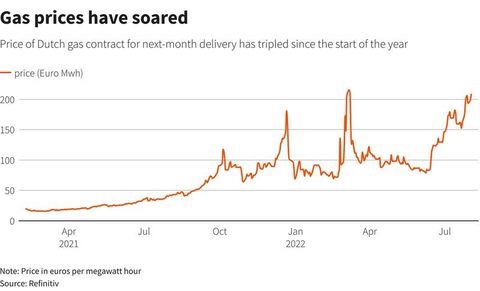
In Wakefield and Devon they rumbled what’s up. And surely across England the same applies. Maybe Essex Man will still be loyal but the cult is shrinking. When nothing works – try getting a driving licence or a passport in a hurry – our patience wears thin. When our electricity and gas bills go through the roof and the next appointment at our GP is two months away we slip into blame mode – and ultimately we know where the buck stops – where the parties were held and the vomit had to be cleaned up.

Of course Johnson must go, but to be replaced by who? Has the cupboard ever been so bare ? Our nation really should be better than this – can anyone tell me how it can be ?

Retail petrol and diesel is a perfect market with vibrant competition

There are few more perfect markets than that for petrol and diesel – at least in urban areas. The pump price is market driven with retailers constantly monitoring competitive prices in a trading area and responding to changes. Petrol stations which increase prices above their area’s norms lose business and those which reduce prices gain it – its as simple as that.

Petrol stations visibly display prices on roadside signage helping the motorist to make a choice. If you don’t like one site’s price you can find another. There are no restraints on fuel prices other than those of the market. Fuel is a commodity with little or no product differentiation. Convenience plays a part in choice as does service and the presence, or not, of shops and convenience stores. But it’s primarily a price driven market.

There is often a time lag between falls or rises in wholesale prices and pump prices but it isn’t for long as market forces cut in. Where competition is weaker, in rural areas or on motorways, prices are higher. But in towns and cities the market and competition generally works well.

Keir Starmer has caved in to the Little Englanders – Nigel Farage’s triumph is complete

And so the victory of Nigel Farage is complete. His anti-foreigner prejudice infected the Conservative Party and killed its open trade imperative once so proudly espoused by Margaret Thatcher. And now Keir Starmer’s Labour Party, once internationalist and modern, is becoming Faragist in erecting permanent barriers to trade and people.

Across Europe you will see 30 independent sovereign nations linked by their commitment to the single market and enjoying the benefits of freedom of movement of capital, labour and enterprise. But Little England, having erected a fence around its shores, stumbles on in a fantastic belief that faux-patriotic flag-waving can replace openness and common sense.

We have turned the clock back more than a hundred years to a time when Britain had thought it was a land of hope and glory and that it ruled the waves. The ships and the glory have mostly gone and the flags just look like sad relics of a distant time.

Freedom of Movement was, of course, a two way street. Across the Channel an eighteen-year-old contemplating his or her future has those 30 countries to choose from with no barriers in the way. A Brit now has far narrower horizons because a political class dominated by Farage types of his or her grandfather’s age has removed their freedom of movement. What a pathetic runt of a nation we’ve become.

Priti Patel – dumb, dangerous and degenerate

To argue that in days of yore Politics attracted the very best of these islands would be stretching credulity. But overall it was a decent profession and those treading the political boards, whether you agreed with them or not, were mostly able, smart, decent and principled. In the last ten years or so that has disappeared almost completely.

The present Cabinet is decried daily by political observers – this is a randomly selected exposé of the “Worst Cabinet in History” there are dozens of similar diatribes around.

Worst Aming Equals”

Priti Patel is arguably the “Worst Among Equals” in the Cabinet though perhaps not head and shoulders above the rest (an improbable assertion about our vertically challenged Home Secretary). But she really is awful.

There is a video on YouTube of Ian Hislop destroying Patel for her support for the Death Penalty. I have always thought that Capital Punishment is the acid test of anybody’s personality. Before abolition the hangers and floggers were a vile tribe and those of us who campaigned against them were tested not to grab them by the lapels and nut them. We mostly did apply restraint.

Patel as a “Hanger” could be dismissed as an eccentric throwback were she not Home Secretary and were her views on this subject not genuinely illustrative of her views on everything else. That she bullied her staff should be no surprise – one Civil Servant stated bluntly: “She hates us and we all hate her.”Another official said: “What’s become abundantly clear is that she is out for herself and only interested in how this plays out publicly.”

Well ambition is the fatal flaw of not just Priti Patel but most around her at the Cabinet table and certainly of the man at its head. But with Patel the ambition is combined with stupidity and wickedness. A menacing combination. She is dumb as well as dangerous and degenerate.

The “Rwanda solution” for refugees seems not to have been dreamed up in a debate at some modern day “Wannsee” type conference but in the dark recesses of Ms Patel’s head. It is an idea so transparently evil that the fact that it is being attempted says as much about our Government’s absence of checks and balances as it does about Patel’s malignancy.

Whether the populism that drives all of Patel’s actions will slip her up we will see. Her comments on the ECHR ruling were beyond shameful, but that is what she does and what she is.

The Falklands War was a symbol of failure

Max Hastings, who probably knows more about The Falklands War than anybody, writes about it 40 years on in The Times today.

The Falklands, 1982

I was living and working in The Netherlands during the Falklands War. My Dutch colleagues and friends thought that we were mad, but they admired us. Working in the oil industry I knew that there was a possibility of there being exploitable hydrocarbon resources in the South Atlantic. But there was insufficient certainty about this to justify sending in the fleet.

No – the War was about sovereignty and nothing else. The Dutch who thought that we were mad were mercantile pragmatists. The Falklands had no resources to speak of, cost a lot to supply, were miles from anywhere. Fewer people lived there than on a housing estate in Utrecht. “You Brits must love penguins” one said to me. “Why not give the 2000 residents a Scottish island” said another. He had a point.

But in 1982 I backed the War. There seemed a nobility about it and a moral logic to defending “our” people. In Holland my views were tolerated and even admired, though the quizzical looks suggested that the people thought that I was unhinged. On reflection I now think that I was.

Forty years before The Falklands the nation was in a life or death struggle. Eighty years on my admiration for those in that war, my own father included, is undiminished. But the skirmish in 1982? Not really. The loss of life in the South Atlantic was horrific and for what ? British honour ? Hmm. I am now convinced, though I wasn’t at the time, that a negotiated settlement was possible. That there was a war was a symbol of failure.