Liz Truss should have let “I dare not” wait upon “I would”

“Would’st thou have that
Which thou esteem’st the ornament of life,
And live a coward in thine own esteem,
Letting “I dare not” wait upon “I would,”
Like the poor cat i’ th’ adage?”

Ask Iain Macleod or Denis Healey or Roy Jenkins or Michael Portillo. You can get to the brink of power driven by your talent and ambition. But that final step may be denied you. In Liz Truss’s case, remarkably, it wasn’t. The last thing the late lamented HMQ did was appoint her Prime Minister!

When Truss arrived in Number 10 she’d achieved what far more talented aspirant Prime Ministers had failed to do. At that point a period of thoughtful review would have been appropriate. But instead of angelically fearing to tread too precipitously she foolishly and impatiently rushed in. She really didn’t need to do that!

She seemed determined not to be a coward in her own esteem by letting “I dare not” wait upon “I would”. Nobody, not even her greatest opponents across the floor of the House, would have criticised her if her first action had been to ask for time to assess the post Johnson maelstrom she’d inherited. 

Macmillan famously said “events dear boy events” when asked what knocks governments off course. Truss created her own “events” within hours of forming her government. She had no mandate to do what she, with undue haste, actually did. Or tried to do. There had been no election manifesto commitment to introduce the measures she did.

Truss’s belief in the power of the market, deregulation and lower taxation was akin to the view that too often previous governments had intervened to prevent the market getting things right. So less regulation, less government and less tax is always the cure. Margaret Thatcher, broadly, believed the same. But the blessed Margaret took her time! Truss coined the preposterous phrase “Anti Growth Coalition” to describe enemies which were invisible spectres. Nobody knew what it meant.

There is a fine line between not having self-doubt and recklessness. Like her predecessor, but in a different way, she crossed that line. And paid the price. She’s still trying to wipe the blood from her hands.

Russia is heading for a Pyrrhic victory in Ukraine – Putin will settle for that

What I’m seeing is the West fighting a proxy war with everything except boots on the ground or planes in the air. The latter are provided by Ukraine, but everything else seems to be being provided by the West. Echoes here of Korea and Vietnam where America armed and funded the anti Communists before, inevitably, sending troops herself because it wasn’t enough. 

History teaches us that in the end its boots on the ground that wins, or at least achieves a score draw. Korea seems to me the parallel. The United States and its allies were winning that war easily until the Chinese arrived. Then years of battle leading to deadlock. Russia increasing its on the ground forces against Ukraine is the equivalent of the Chinese supporting North Korea.

Notwithstanding our addiction to flying the blue and yellow flag and spending , unasked, taxpayers money on arming Ukraine we would not accept NATO troops actually grappling directly with Russians. Which means, it seems, that ultimately Russia will win. It may be a somewhat Pyrrhic victory – a “score draw” on the Korean model. A new border will be negotiated giving Russia some Ukrainian territory. Which, it has to be said, is an outcome a fair number of Russian speaking and Russian leaning Ukrainians will be happy with. As will Vladimir Putin.

“Bliss was it in that dawn to be alive”

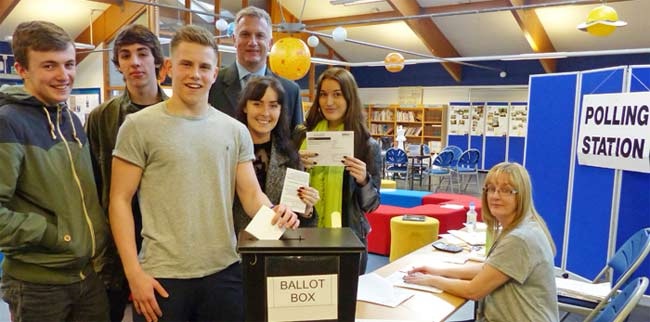
OK the headline might be a little OTT but Wordsworth’s famous next line perhaps less so “But to be young was very heaven!” For Labour’s victory was very much a win for the young and therefore for the future.

That we are governed by old (mostly) men is not contradicted by the defeat of the 44-year-old Rishi Sunak by the 61-year-old Keir Starmer. The choice of the young was overwhelmingly for Labour or the LibDems. Less than ten percent of the electorate under 24 voted Conservative (over 65 it was 40%).

If you’ve most of your adult life ahead of you you don’t want to be governed by narrow bitter old men nostalgic for a fictional memory of the past. John Major got it wrong when he pitched this nostalgia. Thirty years ago he said this:

Fifty years on from now, Britain will still be the country of long shadows on county [cricket] grounds, warm beer, invincible green suburbs, dog lovers, and—as George Orwell said—old maids bicycling to Holy Communion through the morning mist.”

We are not that country and, arguably, we never were. If you are 20 you are surely grateful that with twenty years to go Major’s promise won’t be fulfilled, Even more you are likely to reject Reform’s coded support for “British culture and values” and its leaders’ rejection of multiculturalism. The likelihood is that your education to date, at school and afterwards, will have been in a mixed heritage environment. Indeed you are quite likely to be from a minority yourself.

So a young voter will have looked at what was on offer and rejected gloom and pessimism as the mindset of people with whom they have little in common. They will have rejected the blame culture that was grist to the mill for the defeated Tory government.

We are where we are and it’s not been a happy place. But we can now look forward not back. It won’t be easy. Wordsworth was disappointed with the outcome of the French Revolution. We must ensure that our children and grandchildren are not disappointed by ours. For revolution is what it is ! Over to you Sir Keir. No pressure!

Economic Growth is no panacea in a society that is institutionally divided in its wealth

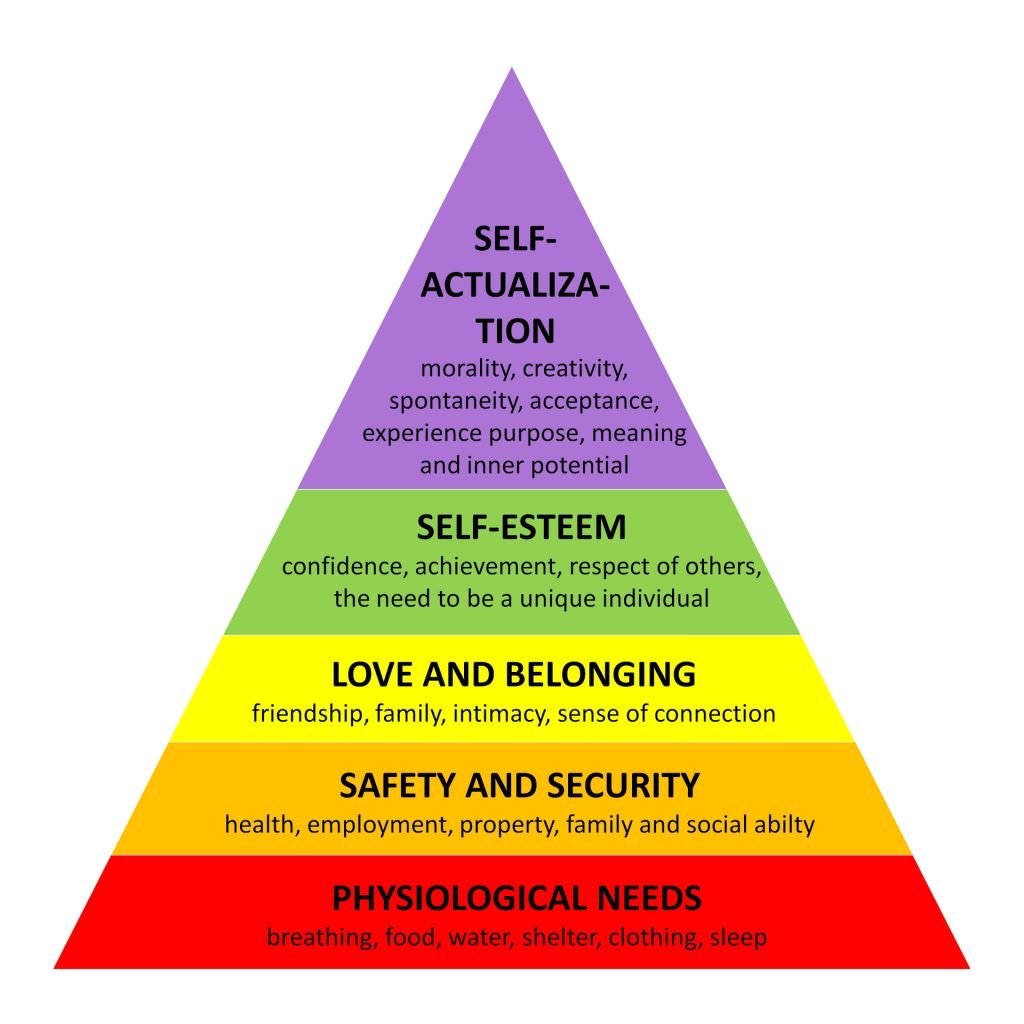
It’s the economy, stupid” said Bill Clinton, and up to a point he was right. But it is not “growth” – rather an abstract concept – that most of us want but a reasonable amount of comfort. That comes from being able to afford the basic things at the lower tiers of Maslow’s “Hierarchy of Needs” and occasionally things higher in the triangle. A holiday. A bottle of wine. A trip to the theatre or the seaside.

Maslow’s “Heirachy of Needs”

Most of us can’t explain the much peddled link between growth in GDP and personal/family welfare. That is because it is at best technically complex, at worst cultishly spurious. Macroeconomics is not just the science of growing the economy but of how its product is distributed.

China’s steel industry has grown enormously, but at huge environmental cost

More than fifty years ago E.J.Mishan in his seminal “The Costs of Economic Growth” clearly described the downsides of untrammelled growth. Environmental damage was a key, but not the only one. The more we grow the more we pollute. There are legions of examples of this, not just in the Industrial Revolution but today.

If a country is like Norway, rich in valuable hydrocarbon resources, it can run a generous welfare state. Britain did this for a while as well but the resources have dwindled. So where’s the Growth and wealth creation and redistribution to come from? Our industrial base is reduced and where our economy is strong, in London in particular, the distribution of wealth is patchy at best.

The economic debate needs to be about more than a simplistic attachment to “growth”. We could benefit from revisiting Keynes and studying the successes of the “New Deal” in Roosevelt’s America. Yes public works underpin growth but a full employment society shouldn’t need foodbanks.

“Tax and Spend” gets a bad press but actually what modern economies have to do it to offer adequate welfare and investment . Austerity and spending cuts affects those who can least afford it. Unemployment may be low but zero hours contracts (etc.) mean that the quality of employment can be poor for many. Cancellling desirable public investment, like HS2 north of Birmingham, damaged our future transport infrastructure and employment.

The panacea of “Growth” is something of a myth. When in his first speech as Prime Minister Keir Starmer said “…we will rebuild Britain with wealth created in every community,” he was understandably vague about how that wealth could be created. And indeed about what “wealth” actually is. He should read Keynes, and Mishan !

Parris’s intention to vote Conservative is , by his admission, tribal. Disappointingly so.

An uncharacteristically binary pro Conservative view of politics from Matthew Parris in The Times today, which ignores the reality that over his lifetime Britain has been a mixed economy. With one exception that I’ll come on to. That mixed economy was created by the, in retrospect, astonishing achievements of Clement Attlee’s post war government. True that administration had a mild Clause 4 mindset which led to one or two inappropriate nationalisations. But the Welfare State they created has just about remained intact.

The mixed economy, the efficient working of both the public and the private sectors, was largely a British creation though it became ubiquitous across Europe. It is absolutely mutually dependent – public services need private companies to support them and private companies need efficient public services. In short some things are better publicly owned and run and some things demand the competition that private enterprise brings.

The interruption to the continuity of the mixed economy was in the 1980s when an ideologically driven Margaret Thatcher took an axe to public ownership. Some of her actions were necessary but grotesquely insensitively handled (the mines obviously). Some were scandalously corrupt – the railways and water for example – culpable errors from which we are still suffering.

Rishi Sunak, who Parris’s Conservative vote will help, is by his own admission an unreformed Thatcherite. Others around him are not supporters of the mixed economy at all. Does he really want these Tufton Street terrors to stay?

What the hell is Badenoch talking about?

Kemi Badenoch, who is expected to run for the Conservative leadership if her party loses the election, has said, as reported in the Financial Times :

“Labour’s proposals divide the country into black/white, rich/poor, old/young — because they see people as target groups, not as individuals.

I think classifying your workforce by race and having this influence their salaries is morally repellent. It’s what they did in apartheid South Africa and what they do now in China and Myanmar,”

We are used to refuting nonsense in today’s irrational political world but this reaches new lows of stupidity. If we are to right wrongs and help those in need we have to identify who the people are and treat them as a cohort. In other words put people together – create target groups.

The comparison with “apartheid South Africa” is as offensive as it is absurd. There racial divisions were a tool of repression. Here if you want to help minorities you have to know who they are and what they need in order to assist them. Colour, Race, Age etc. are social characteristics that we need to understand and classify. It’s ignorant nonsense to suggest otherwise.

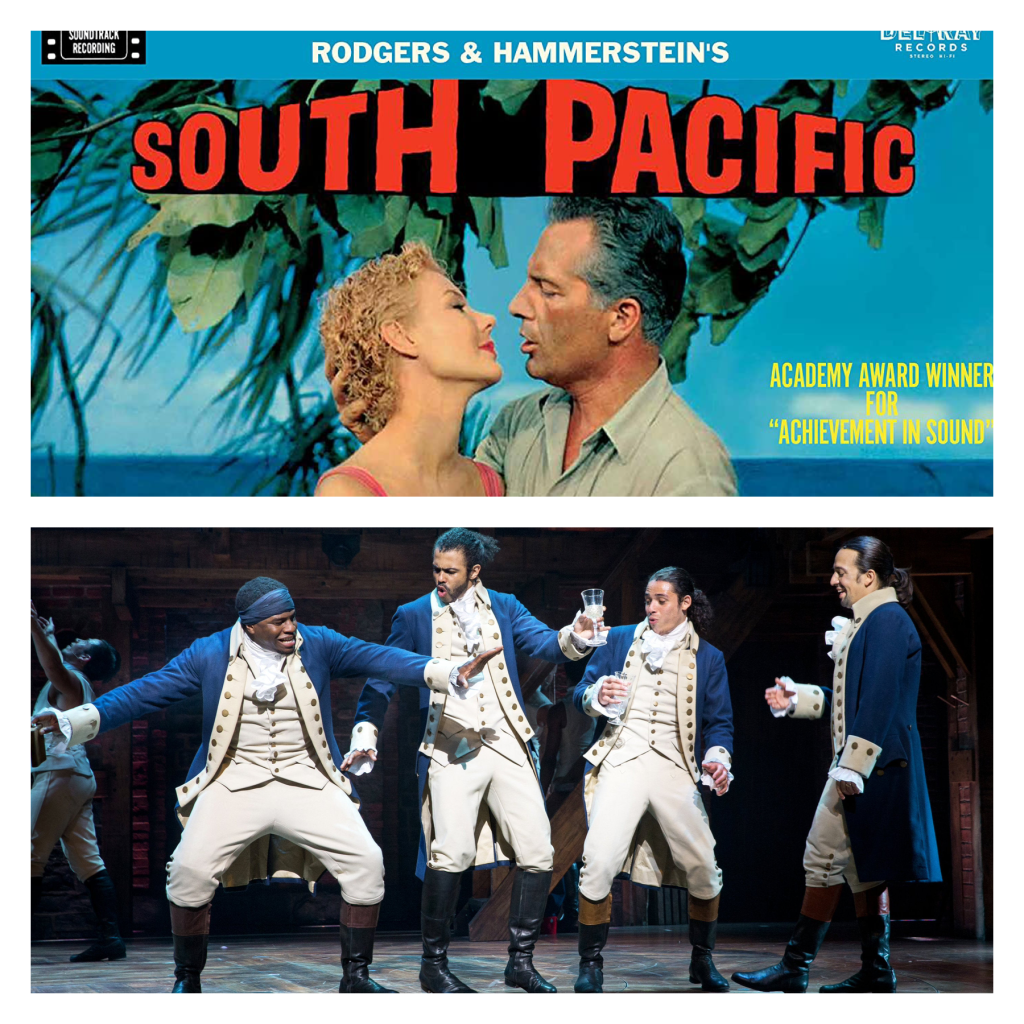
“Hamilton” is in a good tradition of liberal musical theatre

Musical theatre had a good track record of taking liberal positions. Rodgers and Hammerstein, especially, were courageous in their themes and characters. Take this plea for tolerance from “South Pacific” back in 1949:

You’ve got to be taught to hate and fear

You’ve got to be taught from year to year

It’s got to be drummed in your dear little ear

You’ve got to be carefully taught

You’ve got to be taught before it’s too late

Before you are six or seven or eight

To hate all the people your relatives hate

You’ve got to be carefully taught”

“Hamilton” stands out today partly because all too many new musicals are shallow “juke box” confections. Blame the puffery of those dancing in the aisles to Mamma Mia for that. But they do get bums on seats.

Musicals, at their best, are proper theatre with stories that matter and thought-provoking themes. R&H did it, as did Sondheim and Lerner and Loewe. And many others. “Caberet”, “Guys and Dolls”, “Les Miserables”…. So “Hamilton” is far from unique, good though it is.

In the British General Election campaign reason has lost out to emotion 

“ The liberal who is rationally committed is more reliable than the liberal who is emotionally committed.” 

Ted Sorensen, who said this, was despite the eloquence of the language in the speeches he wrote for John Kennedy, something of a pragmatist. “Fine words” he might have written for JFK, “butter no parsnips”.

Walter Mondale, an unsuccessful candidate for the Presidency in 1984 challenged a rival by borrowing (from Wendy’s hamburgers) the question “Where’s the beef ?” Again it was a call for solid facts rather than emotion.

There is an underlying truth here that is disconnected from ideology. You could, I think, substitute the word “conservative” for “liberal” in Sorensen’s remark without damaging that truth.

Which brings me to the British General Election campaign in which, so far, reason has lost out to emotion – proper plans to uncosted and ill-thought-through promises. On both sides Sunak versus Starmer has become a battle of insults and unsubstantiated allegations (raw emotion) rather than rational argument.

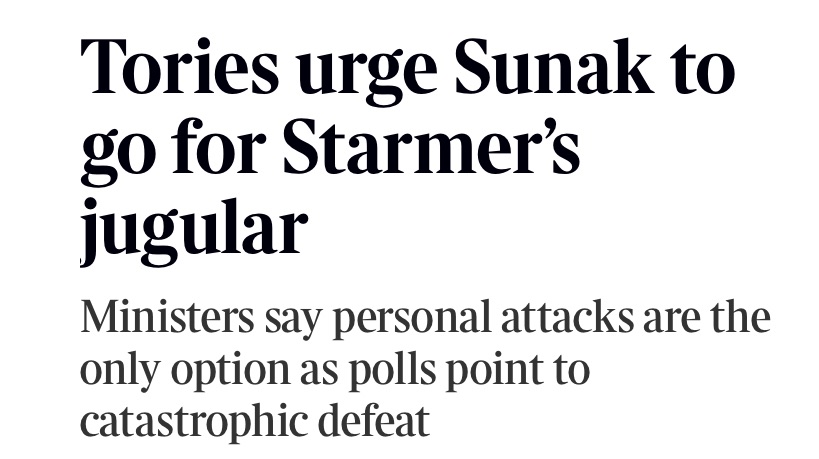
And now we are told that Tories are being encouraged to make “Personal attacks” on Keir Starmer – in other words to turn Sorensen’s maxim on its head and resort to the rawest of emotion rather than rational argument.

It’s not a golden era is it ?

“Schindler’s List” – thirty years on

It is now thirty years since Steven Spielberg’s extraordinary “Schindler’s List” was released – I watch it every few years and see something new every time. The film is not an overtly campaigning or political movie and nor was Thomas Keneally’s non fiction novel, “Schindler’s Ark” on which it was based. They both tell a fundamentally true story.

One of the challenges of artistic creation is to be subtle even in the face of history that is horrific. War films rarely achieve this. “All Quiet on the Western Front” was an exception and there have been a few others but all too often they have been blood and guts hero stories rather than giving genuine insights into the human condition. “Schindler’s List” isn’t really a “war film” at all – in essence it symbolises the depths to which citizens of “civilised” countries can plunge.

The myth is that The Holocaust was an aberration flowing from the genocidal madness of Germany’s leaders. It was that, but never forget how many thousands were complicit in implementing “Sonderbehandlung” (“special treatment”) as it was euphemistically called. In the film a group of officers discuss this in a matter of fact way as if the gas chambers were perfectly normal. It is a morality free zone at Auschwitz.

Oskar Schindler is the contrasting phenomenon to the norm of time and place. He succeeded because he left no evidence that the Nazis could use to prosecute him – he was once locked up by them but was cunning enough to get out. He established a pragmatic “friendship” with the grotesque Austrian Amon Göth who was Commandant of the Kraków-Płaszów concentration camp. The Light and Dark contrast of Schindler and Göth is a key theme of the film.

The messages of “Schindler’s List” are , I think, personal rather than being overt. For me “challenge the norms” is one. Mind you to be effective in that challenge in Kraków in the 1940s took a special type of cleverness and courage which Schindler had.

There is no hierarchy of horror in history. The family murdered in Auschwitz is the same as one slain in Gaza. The quantum makes The Holocaust exceptional but at a personal level it’s the same. Otto Frank lost his daughter Anne and his wife Edith in Bergen-Belsen. Over the past eighty years from Stalin’s Gulags to Mai Lai to Tiannamen Square to Netanyahu’s attacks in Palestine families have continued to be bereaved. Not “collateral damage” but as targets.

Where have all the graveyards gone, long time passing?
Where have all the graveyards gone, long time ago?
Where have all the graveyards gone?
Gone to flower, every one!
When will they ever learn, oh when will they ever learn?”

You cannot decouple wealth creation from wealth distribution.

A commitment to Growth is fine, but Starmer needs also to address what he plans to do with the output of a growing economy

A Labour leader embracing the benefits of Growth is all very well. But you cannot decouple wealth creation from wealth distribution. Obviously a growing economy is better than a stagnant one. But the product of growth generated mainly in the private sector can only be redistributed via corporate and personal taxation.

Growth is measured in “Gross Domestic Product “ (GDP). Key word here is “Product” , this includes tangibles (manufactured goods) and intangibles (services, especially financial services).

In a mixed economy the private sector is the primary driver of growth – they, in classic terms, use the factors of production (Land, Labour, Capital and Enterprise) to make goods and services.

But along with these goods and services the economy needs public services most of which are, or should be, provided under the control of national and local government. We have seen that “control” absent or ineffective in recent decades. Look no further than the Water sector to see overwhelming evidence of this. Water and other private sector monopolies have, scandalously, been run with shareholders and board directors as the primary beneficiaries not the public.

Healthcare is a key “public service” – the benefits of having a healthy population go beyond moral ones. The economy will grow better and be more productive is people are healthy. How often do we forget or even fail to measure these pragmatic benefits of the NHS?

Certain public services like public transportation are, and mostly should be, paid for by users. But again proper Cost/Benefit Analysis would show that some public subvention is beneficial and justified.

There is no “Magic Money Tree” in that rather hackneyed phrase. Investment in infrastructure and employment in the essential public services sector has to be paid for either by taxation or borrowings, or by instituting payment in relation to use. Road pricing can generate income from motorists but is unpopular (eg ULEZ). Charging for some healthcare is also unpopular and extending that is unlikely to be politically viable.

No potential government can truthfully rule out increased taxation if public services are to be maintained or improved. What Labour should be doing is arguing for a shift from regressive to progressive taxation. It’s not Marxist to argue that a wealthy modern state should follow the “from each according to his ability, to each according to his need” principle . That means taxing , mainly, wealth and income not consumption.