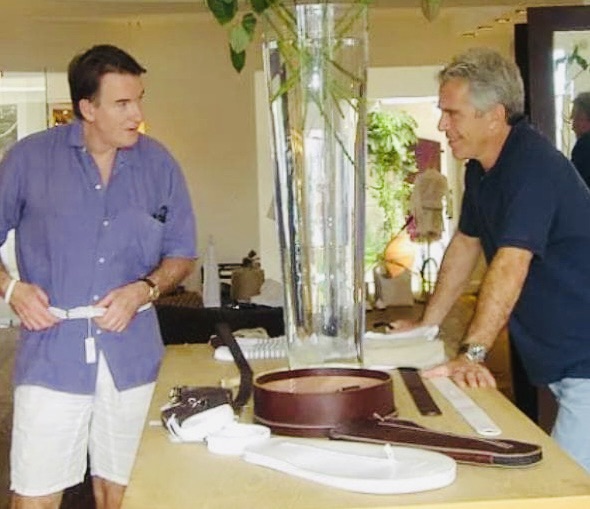
America must build on the success of getting the Epstein files released and impeach Trump and rid themselves of this turbulent fool

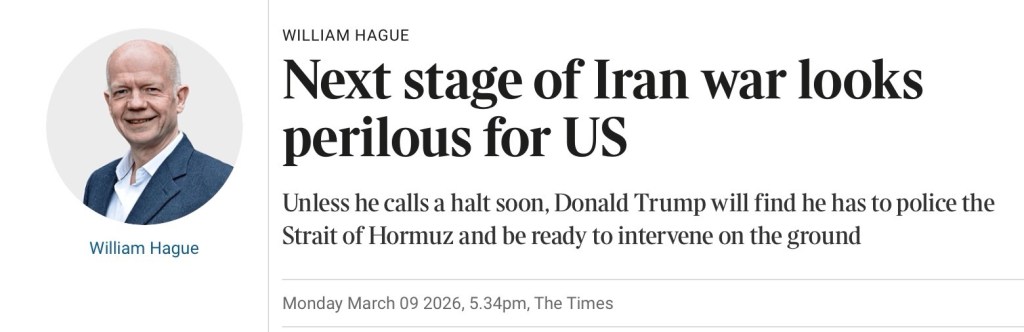
“Yet others see Trump’s pivot as a sign of weakness. Second-term presidents become labelled lame ducks — victim to events as their authority ebbs.” The Times today.

Trump is not even close to being a conventional “second-term President”. Thr four year break destroyed any continuity there might have been from his first term. Independent commentators placed that term as the worst presidency in America’s long history. His second term is infinitely worse.

What authority Trump has comes from his use of the Executive Order to create what is close to a dictatorship. Compare post Weimar Germany and their suspension of democracy. But Trump’s defeat on the Epstein files shows that there is a glimmer of hope that Congress might be prepared to call a halt to his madness.

Authoritarian leaders do succeed to power in previously democratic administrations – there are plenty examples of this in twentieth and twenty-first century history. But America is different. Nixon pushed the limits of the possible and paid the price. Trump is infinitely worse than tricky Dicky. America must act. 

Top 100 People on the Right 2014

For some years Political Commentator Iain Dale used to do a blog “Top 100 People on the Right” . He doesn’t do it now and seems to have deleted the past blogs. Looking for something else I came across his blog for 2014 in which he placed Nigel Farage, then of UKIP, at the top! Prescient or a punt in the dark ? You decide! The blog makes interesting often hilarious reading.

Iain Dale

“As our panel met there was only one thing on their minds, UKIP! The rise and rise of UKIP has baffled many in the media, and UKIP surpassed all expectations at this European Elections by topping the poll and bagging 24 MEPs. For this reason, we see a big influx of UKIPers on the bottom half of our list. We’ve got policy guru and MEP Tim Aker, Deputy Leader Paul Nuttall, Eastleigh by-election candidate Diane James, and Suzanne Evans, Deputy Chairman of the party. Not to mention Raheem Kassam, Managing Editor of Breitbart London, a popular blog which often supports UKIP. The question is whetherUKIP can keep up this momentum. Will we really see UKIP MPs on the list next year?  Well a large part of that depends on the election coffers, and for UKIP with have the self-made millionaire Paul Sykes who is giving millions to help fight the General Election. And in the blue corner we have Michael Farmer, the Conservatives biggest individual donor.

As the election approaches the parties will once again start thinking about policy and what to put in their manifestos. The people helping with this will be the think tanks. Dean Godson, the head of David Cameron’s favourite think tank Policy Exchange, makes an entrance onto the list. He is also joined by Emma Carr of Big Brother Watch, Jonathan Isaby of the TaxPayers’ Alliance, and Ryan Bourne of the Institute of Economic Affairs. All three will all be making the case for their various policy proposals to be included in the manifestos. With things heating up in Iraq and Syria, the foreign policy expert Douglas Murray re-enters the list after a few years’ hiatus.

Another trend our panel have spotted is the fall of middle aged, white men on the right. We see sharp drops for Owen Paterson, Liam Fox, and Andrew Mitchell, while David Davis, John Redwood and John Hayes continue their slow decline down the list. We don’t expect to see any of these men become leader of the Conservative Party in the future, but we are agreed that all of them will play an important and influential role in choosing the next leader. On the other hand, it seems to be the girls who’ve got the power with Anna Soubry, Priti Patel, Claire Perry, Andrea Leadsom, and Penny Mordaunt all shooting up the list. None of them have reached the Cabinet yet, but it can only be a matter of time.

Talking of glamorous women, Baroness Brady of The Apprentice fame enters the list for the first time. It’s well known that George Osborne is a big fan of hers, and despite denying she wants to be London Mayor she could be persuaded. Maybe. The other potential Conservative Mayoral candidate is James Cleverley. He’s spent years at the London Assembly beavering away and gaining a name for himself among the grassroots. Could the Mayoral contest be a match of glamour against experience?

We couldn’t go without saying a welcome hello to the inveterate clown of Lichfield Michael Fabricant, who enters the list, twanking away at number 69.

There are 26 new entries in this year’s list, which also means 26 departures. They include Michael Howard, Simon Burns, Nigel Lawson, Maria Miller, Damian Green and perhaps rather surprisingly, John Major. The highest new entry is Nicky Morgan at 19. Our panel are expecting great things of her.  UKIP’s Patrick O’Flynn is the second highest new entrant. Time will tell if he lives up to his reputation as Nigel Farage’s most likely successor.

The bottom half of the Right power list saw an influx of UKIP members, and our panel decided after much discussion that it should be Nigel Farage and not David Cameron who should top this year’s list. Some of you may think this absurd, a man representing a party with no MPs has more influence than the Prime Minister? Well yes. Farage and his party UKIP have single handedly driven the debate on the right this year, and this will only continue as we get closer to the General Election next year. It was the success of UKIP that forced the Prime Minister’s hand into offering an in-out referendum on Europe. As somebody once said there is nothing more dangerous than a backbencher who fears losing their seat. Backbenchers will be pushing Cameron to get hard on the issues that people care about as we approach May 2015. For some reason the public has warmed to Nigel Farage’s bolshie attitude to the Westminster parties. He’s the kind of guy people can imagine going for drink down the pub with. Let’s face it, how many politicians could have done that Paddy Power advert on the Ryder Cup and come out of it smelling of roses?

The man who will be masterminding the Tories battle against UKIP will be the party’s Election Director, Lynton Crosby. The so called Wizard of Oz has a big fight on his hand, and is now sitting in all the top meetings with Cameron and Osborne. Alongside him in this gargantuan campaign are the Party Chairman Grant Shapps, who scored his first big victory at the Newark by-election. He will be the guy assembling the ground troops.  

Of course there is something more pressing than the General for David Cameron at the moment, and that is the upcoming by-election in Clacton. Douglas Carswell’s surprising defection to UKIP sent shockwaves through Parliament, and he shoots up the list to number 33.  It now seems a certainty that Carswell will be UKIP’s first elected Member of Parliament – quite an achievement. With rumours of more defections to follow these will be an interesting few months

The Top Ten of this list is dominated by potential Cameron successors. Could it be his Chancellor George Osborne? Or maybe the competent, but seemingly dull combination of Theresa May and Phillip Hammond? Boris Johnson seems to be the bookies favourite, but could he really convince Conservative MPs that he should be the man with his finger on the nuclear button? The Conservative Party may well skip a generation and opt from the young, working class newbie Sajid Javid.

There’s little doubt that next year’s list will change far more than this years’s regardless of whether the Tories win the election. Politics has rarely been so fluid or exciting.

1. (+1) NIGEL FARAGE MEP

Leader, United Kingdom Independence Party

Last year we said: “What a year it has been for UKIP leader Nigel Farage”. Well, double that for this year. His every utterance is covered by the media –quite something for a party leader with no MPs – and his influence over the ConservativeParty grows by the day. Or so it seems. Why is he number one on this list? Because he is the man who can singlehandedly decide whether David Cameron can win a majority in seven months’ time, and who dominates policy discussions in Number Ten. Tory strategists are desperate to win back party supporters who have defected to UKIP and hours are spent answering the question: “Just how will this policy announcement play with the Kippers?”.  Farage has a huge opportunity to shaft David Cameron on English devolution. And he will enjoy every minute of it.

2. (-1) DAVID CAMERON

Prime Minister & Leader of the Conservative Party

Another difficult year, but just when you think he might be finished (cf the Scottish Referendum) he bounces back and grabs the political initiative. However, the backbenches are very restless and any goodwill the Prime Minister has gone out the window after botched European elections, a less than perfect reshuffle, his dithering over how to respond to ISIS and his lamentable failure to take on Alex Salmond in any meaningful way in Scotland. That list could go on.  Cameron will now be judged on how he delivers English devolution, but his party shouldn’t expect much. It’s an issue he has never shown any interest in.

3. (+2) GEORGE OSBORNE

Chancellor of the Exchequer

George Osborne has had by far the best year as Chancellor since the 2010 election. The economy is coming right just at the right time and he has softened his image somewhat too. His influence in the Tory Party is all pervasive as he has placed his own people in virtually every arm of government. His challenge now is to enhance his popularity among Tory backbenchers who remain suspicious of him, and question why they would want to vote for another arch-Cameroon in a future leadership contest. But in four years he hasn’t had a single, serious falling out with his neighbour in Number Ten, and bearing mind the record of previous chancellors, that is some achievement.

4. (-) BORIS JOHNSON

Mayor of London

Now entering his twilight years as London Mayor, Boris Johnson is going to find the next seven months very tough going, as he tries to juggle his mayoral responsibilities with those of a prospective candidate. The media will exploit any gaffe he makes, but knowing Boris he will get away with it. Expect him to start wooing fellow candidates and Tory MPs because he knows that in May 2015 his chance to be ‘called from the plough’ may well come.

5. (+5) LYNTON CROSBY

Political Strategist

In the next seven months Lynton Crosby’s iron grip on Tory strategy will become ever tighter. He’s at the centre of every decision made by David Cameron and has taken on much of the roles which Andy Coulson and Steve Hilton used to perform for David Cameron. There are rumours of a little competition between him and George Osborne. After Cameron’s English devolution announcement it was Osborne’s aides who were pointing out to journalists that it was the chancellor, not Crosby who was behind the tactic.

6. (-3) THERESA MAY

Home Secretary

Last year we asked  “who are the ‘Mayites’ on the Tory benches? She needs to up her profile even further over the next twelve months. If she does, she may well be Boris Johnson’s main rival.” We still don’t know the answer to the first question, but Theresa May is now a well-established leadership candidate if there is a vacancy. She will promote herself as “the sensible candidate” with a proven record of achievement. And she can be justly proud of her record as Home Secretary.

7. (+1) PHILIP HAMMOND

Foreign Secretary

His first few weeks as Foreign Secretary have not been without the odd mistake, but Philip Hammond is the usually a very safe pair of hands. A good media performer, if he is to become a real candidate to succeed David Cameron he needs to unleash his human side and well developed sense of humour. He is wrongly seen as a rather grey figure. His first task as Foreign Secretary will be to ensure that he, not Number 10, is in charge of foreign policy.

8. (+18) SAJID JAVID

Secretary of State for Culture, Media & Sport

Sajid Javid hasn’t put a foot wrong since his promotion to the Cabinet and is being used by Number 10 as a frontline media spokesman. He has emerged as the senior member of the 2010 intake and has been endorsed by none other than Lord Tebbit as David Cameron’s successor. If the Tory Parrty wants to jump a generation then a Javid leadership candidacy would provide them with the opportunity to do so. But he remains relatively unproven when under fire, and would do well to think how he can achieve something meaningful in a relatively

9. (-9) JEREMY HUNT

Secretary of State for Health

Jeremy Hunt has enjoyed a good two years as Health Secretary. The job is normally a bed of nails for any Conservative, but Hunt has quietly carried on with the Lansley reforms. He may have a good bedside manner, but he has displayed an inner steel which some people wondered if he possessed. Hunt enjoys a lot of support among the 2005 and 2010 intake of MPs, but his challenge in the next seven months is to tell the Tory Party what his inner credo is.

10. (+2) LORD ASHCROFT

Former Deputy Chairman of the Conservative Party

Michael Ashcroft’s influence remains strong, and because of his polling it is on the increase, and not just by Conservatives. He is also writing a biography of David Cameron with former Sunday Times political editor Isabel Oakeshott. His growing political media empire, which includes Total Politics, Biteback Publishing, ConservativeHome and a large stake in Dod’s means that his political influence will continue for some time to come. He has also become an addict of the social media website Twitter. His tweets @LordAshcroft are often humorous and chiding to friends and enemies alike.

11. (-) SAMANTHA CAMERON

Wife of the Prime Minister

There’s little doubt that SamCam is used as a key sounding board by her husband and that her views are a great influence on him. She has now emerged from her shell and has established herself as a public figure in her own right via her fashion and charity work. It’s been a quiet year for her, but her influence on her husband and his team is unarguable.

12. (-5) MICHAEL GOVE

Chief Whip

It was difficult to place Gove in this list, but the circumstances of his move from Education inevitably meant a small slip, even though it is arguable that his influence in government more generally has increased with his new appointment. Unusually for a chief whip, he will play a big role in promoting the Conservative case in the media. If the Tories win in 2015 he will merit one of the three top jobs.

13. (-) WILLIAM HAGUE

Leader of the House of Commons

Having announced his departure from politics at the next election readers might have thought William Hague would slip down the list this year, but far from it. His appointment by the Prime Minister to head up the Conservative response to English devolution demonstrates demonstrates that he is still central to Tory plans in the runup to the election. Still hugely popular with the party’s grassroots, Hague remains a key player.

14. (+7) MICHAEL FALLON

Secretary of State for Defence

Quite why it took so long for David Cameron so long to promote Michael Fallon to the cabinet is anybody’s guess. He’s made a quiet start at the Ministry of Defence, but he is bound to be a frontline voice for the Tories up until the election as he is one of their most effective and authoritative media performers. If military action is taken against ISIS expect his profile to be sky high.

15. (-) GRANT SHAPPS

Chairman of the Conservative Party

Grant Shapps is unlucky not to rise a few places in this year’s list. He has had a good year, the highlight of which was the Newark by-election victory. He works well with Lynton Crosby and continues to act as a brilliant lightning rod for Cameron and Osborne and that’s why his job was never really in jeopardy in the last reshuffle.

16. (-10) EDWARD LLEWELLYN

Chief of Staff, Number 10 Downing Street

A close friend of Cameron since their days at Eton and Oxford, Llewellyn also worked with him in the Conservative Research Department in the early 1990s. He has responded to criticism that he keeps Tory MPs remote from their leader, but he was severely criticised for the conduct of the last reshuffle where some ministers were needlessly slighted or humiliated, hence his demotion in this year’s list. Tipped by some to become an Ambassador overseas if Cameron wins the election. The chumocracy at work…

17. (+2) CHRIS GRAYLING

Secretary of State for Justice

Chris Grayling is the Norman Tebbit of 2014 politics. Everyone on the left hates him. And therein lies his strength as an attack dog. Temperamentally, he’s a pussycat but he knows how to get under the skin of every leftie, and that’s a real skill. He has burnished his right wing credentials this year by undertaking various reforms to the prison system, which got under the skin of the Howard League for Penal Reform. Job done.

18. (-9) IAIN DUNCAN SMITH

Secretary of State for Work & Pensions

Last year we said “from the “bedroom tax” to universal credit he has had to fight tooth and nail for every reform in the media and in his own department. He appears to be winning and must be allowed to finish the course.” There were rumours that he was to be moved in the recent reshuffle, but he insisted on staying put. Quite right too. It’s a pity that the Treasury continues to brief against him and his reforms. But as the election draws nearer, it’s difficult to imagine IDS retaining a cabinet seat in a future Tory government, hence his fall this year.

19. (NEW) NICKY MORGAN

Secretary of State for Education

Nicky Morgan has had a meteoric rise having only joined the government as a junior whip two years ago. The rise is, however, merited. In our view Morgan has it in her to go all the way, but the next seven months are crucial to her future. She can’t just be seen as ‘Gove with a human face’, she needs to articulate her kind of conservatism and do it very vocally. And she needs to show the left wing education establishment that although she is a conciliator, she won’t be a pushover. We expect her to be in the top ten when this list is published next year.

20. (-4) ERIC PICKLES

Secretary of State for Communities & Local Government

It was a mystery to many as to why Eric Pickles was being tipped for the sack by many pundits before the last reshuffle. As we said last year, “by common consent, Eric Pickles has been one of the star performers of the coalition so far. He has gripped his department like few other ministers and implemented a dizzy array of eye-catching reforms which have led to massive cuts and efficiencies in his own department’s budget”. We see no need to revise that view a year on.  

21. (+3) OLIVER LETWIN

Minister for Government Policy, Cabinet Office

The great strength of Oliver Letwin is that no one knows exactly what he does all day, apart from think great thoughts. He’s never on the media, he’s the ultimate ‘backroom boy’ who has a single goal now – to write the next Tory manifesto. That’s why he rises a little in this year’s list. However, everyone knows that the ultimate arbiter of what is included in the manifesto is not Letwin, it’s the man who’s resides at number 5 on this list.

22. (-3) GRAHAM BRADY

Chairman of the 1922 Committee

A slight fall for Brady this year, purely because the importance of the 1922 Committee diminishes slightly as an election grows closer. The question is whether Brady will stand for re-election after the election or is offered a front bench position in government if the Tories win. The odds are on the former.

23. (+6) MATTHEW HANCOCK

Minister of State for Business

A rising star in the Tory firmament, Hancock is ubiquitous in the media. It’s as if there’s no one else qualified to do TV interviews sometimes. A very competent and enthusiastic minister, Hancock attracts a lot of jealousy from colleagues who view him as too clever by half. The truth is, it is his talents which have got him promoted, not just his closeness to George Osborne. We do wish he’d smile more on TV, and allow his well-developed sense of the ridiculous to out itself occasionally on screen.

24. (-1) FRANCIS MAUDE

Minister for the Cabinet Office and Paymaster General

Francis Maude is one of the unsung heroes of the government. His reforms have saved the taxpayer billions and the changes he has made to government procurement procedures will stand the test of time. He has achieved all this without too much counter reaction from the public sector unions. Maude has walked the walk, without talking the talk. Perhaps he ought to blow his own trumpet a little more loudly.

25. (-8) PATRICK McLOUGHLIN

Secretary of State for Transport

Like being Health Secretary, one of the definitions of success in Transport is never to hit the headlines. McLoughlin hasn’t really put a foot wrong in this job. He eschews the limelight and makes comparatively few media appearances, which is a shame, as he presents a very different face of the government. No one could accuse him of being part of the ‘chumocracy’, unless he forms a double act with Eric Pickles.

26. (-1) RUPERT HARRISON

Special Advisor to George Osborne

As Chief of Staff to George Osborne, Harrison is the most important of the four Treasury Spads. He and his colleagues Ramesh Chhabra, Thea Rodgers and Neil O’Brien form the most powerful part of the government ‘spadocracy’ and they have certainly served their master well over the last year, helping transform his reputation. Harrison will surely enter Parliament at the next election, and if he doesn’t it will be a waste.

27. (+4) JO JOHNSON

Minister at the Cabinet Office  & Head of the Policy Unit

Jo Johnson heads up a group of MPs who have been deputed by the Prime Minister to help Oliver Letwin draft the Conservative manifesto. Johnson is in many ways the antithesis of his brother, Boris, in that he has an eye for detail. Some think that Jo Johnson would be a better bet for party leader than his brother. Could they be the latter day Milibands? But would Jo have the cojones to do what Ed did?

28. (NEW) LIZ TRUSS

Secretary of State at DEFRA

Long tipped to join the Cabinet, not least by herself, Liz Truss is one of the new generation of Tory women who are challenging the male dominance of the cabinet table. A former LibDem, Truss is bright, sassy and isn’t shy about her ambitions. She had wanted to succeed Michael Gove at Education, where she was a junior minister, but it wasn’t to be. She has seven months to make her mark in Cabinet. 

29. (+4) ANDREW TYRIE

Chairman of the Treasury Select Committee

A former full-time adviser to successive Chancellors, Nigel Lawson and John Major, Tyrie is a gifted economist with an impressive academic background. Nicknamed by senior Tory circles as Andrew Tiresome, he has proved to be a highly effective chairman of the Treasury Select Committee. By rights, he ought to be a Treasury Minister (having once been a SPAD there), but you don’t always get your just desserts in politics. His reputation as a leftish Tory and a Europhile has counted against him, perhaps.

30. (-3) CATHERINE FALL

Deputy Chief of Staff, Number Ten Downing Street

Catherine Fall is one of the few members of David Cameron’s backroom staff who have managed to keep out of the limelight. But she is the glue which holds his office together. Fiercely efficient, and very protective, she is one of the few people implicitly trusted by the Prime Minister.

31. (-9) LORD FINKELSTEIN

Times columnist & Former Chairman, Policy Exchange

Very close to George Osborne, Finkelstein treads a fine line between opinionated columnist and Tory adviser. Now in the House of Lords he is as close as ever to the centre of Conservative decision making and policy making. His slight fall in this year’s list is entirely due to him giving up the chairmanship of Policy Exchange, still the loudest think tank on the right.

32. (+10) LORD HILL

European Commissioner

Jonathan Hill is one of the nicest people in politics. He has few enemies and is a great conciliator, a skill which he will need in abundance in his new job at the European Commission. A former political secretary to John Major he was a leading adviser to David Davis in the 2005 leadership election. A man of the ‘thinking right’ it will be interesting to see if he moderates his euroscepticism in his new job. By which we mean, will he ‘go native’?

33. (+19) DOUGLAS CARSWELL

Former MP for Clacton

Carswell caused political uproar when he announced his defection to UKIP earlier this summer. Next week we will find out whether he will become an even more significant player in British politics or is likely to fall off this list altogether next year. If he wins his by-election he automatically becomes one of UKIP’s big beasts. He will add some much need beef to their policy development.

34. (+5) PAUL GOODMAN

Editor, ConservativeHome.com

As the election draws ever nearer the influence of ConservativeHome grows. Paul Goodman had a hard act to follow when his predecessor, Tim Montgomerie, left the site. Goodman deliberately avoids the media spotlight which Montgomerie revelled in, but his influence lies with his former parliamentary colleagues.

35. (+5) JESSE NORMAN

Conservative MP for Hereford

Jesse Norman has spent the last year burnishing his credentials as one of the Conservatives’ leading intellectual thinkers. It’s a travesty that he has never been made a minister. If merit had anything to do with it, he’d be in the cabinet by now.

36. (RE-ENTRY) TIM MONTGOMERIE

Conservative commentator

Tim Montgomerie re-enters this list having dropped out of this list due to leaving ConservativeHome and becoming Times Comment Editor. This appointment naturally led to him doing fewer media appearances as a Tory commentator. However, in April he decided to return to the freelance world and while he still writes a weekly piece for The Times he is now also free to return to his position as the pre-eminent commentator on Tory politics. We anticipate a further rise next year.

37. (-3) DANIEL HANNAN

Conservative MEP

As Dan Hannan concentrated on his re-election, it was a quieter year for him this year, but he remains a hugely influential figure on the Eurosceptic right. His brand of conservative libertarianism has succeeded in changing aspects of official party policy. He will have been devastated by the defection to UKIP of his close friend, co-author and ally Douglas Carswell.

38. (+8) MARK LITTLEWOOD

Director General of the Institute of Economic Affairs

Formerly Chief Press Spokesman for the Liberal Democrats, he is one of the best free market voices on the media. Never knowingly on message, the IEA has blossomed under his leadership. One of the few think tanks which is coming up with genuinely innovative ideas, their influence is at last on the increase, especially among young people on the libertarian right.  

39. (-1) STEPHEN GILBERT

Political Secretary, Number Ten Downing Street & Head of Campaigning at CCHQ

As predicted in this list last year, Gilbert has moved his office to Conservative Campaign Headquarters as he takes charge of the party’s general election campaigning. Hugely respected by the party’s professional constituency agents, he knows the party and its personalities like the back of his hand.

40. (NEW) PATRICK O’FLYNN

UKIP MEP

Patrick O’Flynn gave up a highly paid job as the Daily Express’s chief political commentator to enter politics. He took on the role of UKIP’s Director of Communications and successfully increased UKIP’s media profile. He is seen as the most likely successor to Nigel Farage if the election campaign goes disastrously wrong.

41. (+7) ESTHER MCVEY

Minister of State for Employment at the DWP

Esther McVey has had a good year, but missed out on being appointed as a full member of the cabinet by a whisker. Her media performances have been outstanding and if she retains her marginal seat on the Wirral, great things can be expected of her next year. She’s a no-nonsense politician who speaks her mind. Maybe that’s why the Cameron entourage didn’t want her to get a full cabinet post.

42. (+43) RUTH DAVIDSON

Leader of the Scottish Conservatives

A meteoric rise for Ruth Davidson, who became one of the stars of the Scottish referendum campaign, when most other politicians were hardly covering themselves with glory. She now has the opportunity to really stamp her personality and authority on the Conservatives in Scotland. Could she oversee the beginning of a renaissance in Tory fortunes north of the border? 

43. (-2) GREG CLARK

Minister for Universities & Science

A promotion in government this year for Greg Clark, who is seen as a quietly confident safe pair of hands. If ever a politician and a portfolio were well matched it is these two. Following on from David Willetts, the cerebral Clark will continue a non-confrontational approach in his dealings with the universities, who ought to be glad to have him batting for them in government.

44. (+1) NICHOLAS BOLES

Minister of State for Education

Perhaps slightly too outspoken for his own good, Nick Boles was promoted in the reshuffle to a Minister of State job at the Department of Education, where he also deputises for Nicky Morgan on equalities issues, and he’s overseeing the implementation of the equal marriage act. Many felt it a pity that was moved from the planning portfolio, where he proved himself to be an original (and sometimes highly controversial) thinker.

45. (+2) MATTHEW ELLIOTT

Chief Executive of Business for Britain

A serial setter-upper of successful campaigns – the TaxPayers’ Alliance, Big Brother Watch and No2AV were all his doing – Elliott launched his latest venture, Business for Britain, in April last year. Bringing together business leaders seeking a renegotiation of the UK’s relationship with the EU, he will be in a powerful position to judge the merits of any deal Cameron can secure from Brussels. And after his success with No2AV, he’s the obvious choice to run a future EU referendum campaign – but will he be backing In or Out? If anyone had any doubt of his influence within right of centre circles, one only had to study the array of conservative glitterati who attended his recent nuptials.

46. (-19) JOHN WHITTINGDALE

Chairman, DCMS Select Committee

‘Whitto’, as he is affectionately known, made his name as Political Secretary to Margaret Thatcher. His work as chairman of the DCMS select committee on the Murdoch inquiry was second to none, but this year has been a quieter one for him and his committee. If Graham Brady moves on to other things after the election, Whittingdale would be his  most likely successor as chairman of the 1922 Committee.

47. (NEW) ZAC GOLDSMITH

MP for Richmond Park

One of the most charming and nicest MPs, Goldsmith enters the list this year for his work on ‘Recall’. Almost singlehandedly he has forced Cameron and Clegg to meet their coalition agreement commitment to introduce the power of recall. He has also been vocal on airport capacity issues, holding Camerons’s feet to the fire on Heathrow expansion.

48. (-18) CRAIG OLIVER

Director of Communications, 10 Downing Street

Lobby journalists still complain about the way they are treated by Craig Oliver, who stands accused of believing that getting the PM on the BBC ten o’clock news is his number one (and only) priority. It’s a caricature, but with an element of truth. Cameron is a huge fan of his and won’t hear a word against him, though. His deputy, Graeme Wilson, formerly of The Sun, has smoothed over relations with print journalists, who have always felt unloved by Oliver.

49. (-6) ROBERT HALFON

Conservative MP for Harlow

A hugely successful campaigner from the backbenches on fuel duty and bingo tax, he has now been somewhat neutered by his appointment as PPS to George Osborne. One of the nicest MPs in the House of Commons he hasn’t got a single enemy on either side of the House. If he can hold on to his seat in May he is a shoo-in to be appointed a junior minister if the Tories win.

50. (+20) DONAL BLANEY

CEO of Conservative Way Forward, the Margaret Thatcher Centre & Young Britons’ Foundation

Donal Blaney revels in his reputation as a slightly shadowy, guru-like figure. The YBF is his baby and it’s the nearest thing the Conservative Party has to a ‘madrassa’. It does what Conservative Future should be doing and trains young activists in campaigning and media management. Blaney is a kind of Godfather figure to the young conservative movement. He’s also the man behind the creation of The Margaret Thatcher Centre and has raised a huge amount of money to get the project off the ground. He’s behind the Conservative Party’s RoadTrip organisation, which has basically become the activist wing of the party. Many believe that Grant Shapps kept his job in part because of the 200 RoadTrip activists sent to the Newark by-election

51. (NEW) TIM AKER

Member of the European Parliament & Head of UKIP’s Policy Unit

Aker may be UKIP’s youngest MEP at 29, but he is also one of their most talented. He stands a better than evens chance of becoming a Westminster MP at next year’s election, in his home seat of Thurrock. He has got real campaigning nouse, and is not afraid to play on his Essex wide boy image. His influence, however, comes from the fact he is the man writing the UKIP manifesto.

52. (NEW) LORD FARMER

Donor

One of the few Tories with a mining background. In Farmer’s case he owns them, making him a billionaire. He has donated to the Conservative Party for a number of years, and has already given over half a million pounds this year, making him the single biggest individual donor. Just this month he was raised to the peerage making him Baron Farmer of Bishopsgate. Sheer coincidence, we’re sure. 

53. (NEW) DEAN GODSON

Director, Policy Exchange

A former Chief Leader Writer, last year Godson took over the role of Director of Policy Exchange after Neil O’Brien left for the Treasury. Many were surprised when Godson got the job as he had previously focussed on security issues, and not their raison d’etre of public service reform. However, Policy Exchange is still David Cameron’s favourite think tank. This was only emphasised when the Prime Minister hosted their summer party this year. Their publications will have huge influence over the Conservative manifesto.

54. (NEW) PAUL SYKES

Donor

Another donor on the list, but this time not for the Conservatives, but instead for UKIP. Sykes made his fortune by building shopping centres and creating internet providers in the 80s and 90s. Nowadays he gives it away, with over £4 million so far donated to UKIP. His money bankrolled UKIP’s successful European elections, and will do the same next year at the General. UKIP need his money, but it comes with strings attached. He has to have a say in where every penny is spent.

55. (+6) NADHIM ZAHAWI

MP for Stratford-upon-Avon

Born to Kurdish parents in Iraq, Zahawi cut his political teeth as Wandsworth councillor in the 1990s. Although he doesn’t talk up his stint working for Jeffrey Archer, it was through the disgraced peer that he met Stephan Shakespeare, with whom he went on to co-found the highly successful polling company, YouGov. Ensconced in a safe seat, many have been surprised that he has not yet been given a job by the Prime Minister, despite Zahawi’s ambition and loyal instincts.

56. (-12) STEVE HILTON

Former Director of Strategy, Number 10 Downing Street

After abandoning Downing Street for a year’s sabbatical to a Californian university Hilton was expected to come back to his full-time role. Instead he is advising Number 10 on a more part-time basis. Many bemoaned the lack of creative policies during his time away. Still living in the United States, Hilton has recently launched Crowdpac a website that helps US voters find their ideal candidate to vote for. He may be only a part-time adviser, but when he speaks the Prime Minister listens and herein lies his influence.

57. (-3) NEIL O’BRIEN

Special adviser to George Osborne

In 2012 George Osborne poached O’Brien from Policy Exchange to join his team as Special Adviser. It may have been a huge loss for Policy Exchange, but his blue-collar focus will prove invaluable for the government in the run-up to the election. He was hired to help win the next election, so we will have to wait until next May to judge him as a strategist.

58. (-5) ANNA SOUBRY

Defence Minister

A constant source of amusement, Soubry’s indiscreet nature has made her a favourite with journalists. This year she has been conspicuously less outspoken and was promoted from Health to Defence. In her younger days she was the soap correspondent for This Morning, even standing in for Judy Finnigan on one occasion. If she can hang on to her marginal seat, we expect great things of her in the next parliament.

59. (-3) LORD FELDMAN

Co-Chairman, Conservative Party

Feldman is one of David Cameron’s close personal friends from his university days, and was treasurer of his leadership campaign. Grant Shapps is front of house, while Feldman is tasked with reshaping the party’s finances and headquarters organization. Last year Feldman denied that it was he who called certain members of his party “swivelled-eyed loons”. He was lucky to keep his job.

60. (-40) OWEN PATERSON

Member of Parliament for North Shropshire

The most right wing member of Cameron’s Cabinet, this year Paterson was sacked as Environment Secretary to make way for a less controversial appointment. He immediately hit out at the Prime Minister stating that he had only been sacked to appease “the green blob”. He has continued to criticise the Prime Minister telling him he will lose unless he adopts “genuinely conservative policies”. Paterson has a whole host of conference events lined up, and is undoubtedly going to create a media storm. 

61. (-4) DOMINIC RAAB

MP for Esher & Walton

One of the thinkers of the Class of 2010, Raab is a former aide to David Davis who has taken on his ex-boss’s mantle as a champion of civil liberties. He has contributed to several policy-oriented books including After The Coalition, The Future of Conservatism, and Britannia Unchained, calling for radical cuts to regulation. He clearly values his independence as it was reported he turned down a role in the Whips’ Office in last year’s reshuffle.

62. (-2) GUIDO FAWKES

Blogger

Paul Staines pulls the strings as Guido Fawkes but it is Harry Cole who does the legwork. Since his early days running the blog Tory Bear Cole has built a reputation as a bit of a cad. His list of jobs include Contributing Editor at The Spectator, monthly writer at GQ, Columnist at the Sun on Sunday, and most importantly News Editor at the Guido Fawkes website. Guido still has the largest following of any political blog in the UK, and can often destroy careers. It sends shivers down the spine of all the politicians in Westminster, and that is just how he likes it.

63. (+34) PRITI PATEL

Exchequer Secretary to the Treasury

One of the feistiest of the 2010 intake, Patel wowed Essex man with her Thatcherite rhetoric to win a seat where she doesn’t fit the typical demographic. The embodiment of upward social mobility as envisaged by the Iron Lady, she is the daughter of Ugandan refugees and worked for Sir James Goldsmith and the Referendum Party in 1997, before being recruited to Tory HQ by William Hague when he was leader. After four years slogging it on the backbenches she was finally rewarded with a job at the Treasury in this year’s reshuffle.  

64. (-) PAUL NUTTALL

Deputy Leader of UKIP

A solid working-class Scouser, Nuttall is the perfect antidote to the middle-class pin stripes of Nigel Farage. His brilliant performances on Question Time only add to his reputation as a strong media performer. He has risen through UKIP’s ranks to become Deputy Leader, and proven that Farage is trying to broaden out the party from the one-man band it has been for a long time. It is Nuttall who is credited with winning over large swathes of the ex-Labour working class to vote UKIP.

65. (+4) CLAIRE PERRY

Transport Minister

Another feisty member of the Conservative team, the gobby Perry finally got what she has been waiting for – a red box. She brought a smile to the faces of the Downing Street paparazzi when she choo chooed her way out of the famous black door, indicating her appointment to transport. Not known for her shy and retiring ways, she has hit back at the Prime Minister’s funding pledge for Scotland in the wake of the Independence referendum. She makes Edwina Currie look like a shrinking violet, and we love her for it.

66. (-11) SIR EDWARD LISTER

Deputy Mayor of London

A vital member of the Johnson team running London, he was appointed as Deputy Mayor for Planning and Chief of Staff to the London Mayor in 2011. Previously Sir Edward had served as Leader of Wandsworth Council from 1992-2011, making him the longest-serving council leader in the country. His reputation as a fearsome cost cutter in Wandsworth has continued at the Greater London Authority, making £150 million spending cuts to pay for a council tax cut each year for Londoners.

67. (NEW) STEPHEN CRABB

Secretary of State for Wales

Stephen Crabb became the first Conservative cabinet minister to sport a beard since 1905, when the Prime Minister appointed him as Secretary of State for Wakes back in July. He replaced right winger David Jones, who was seen as a bit too mouthy for the Prime Minister’s liking.  As Crabb has spent the last few year’s working his way up the ranks in the Whips’ Office we expect him to be more disciplined. He will be a key figure in talks for further devolution in Wales.

68. (NEW) EMMA CARR

Director, Big Brother Watch

In June this talented Geordie lass became Director of Big Brother Watch, Britain’s leading civil liberties organisation from the right. She is a welcome antidote to some of the views promulgated by Shami Chakrabarti’s ‘Liberty’.  Not only is she an effective campaigner, but she also performs well in the many media interviews she does. David Davis’s long time staffer Renate Samson recently joined the Big Brother Watch team, strengthening their already growing output. They have a big presence at the party conferences with their TechCentral tent, with supporters including EE, Microsoft and Facebook.

69. (NEW) MICHAEL FABRICANT

Member of Parliament for Lichfield

There aren’t many MPs who have created a word, but Fab has and it is all down to Twitter, a medium in which he has become somewhat of a phenomenon. The word is a verb and it is to ‘twank’, which means to retweet praise about yourself. Our panel have long believed Fabricant to be an inveterate twanker, and we doubt whether few would disagree. Indeed, he is such a notorious twanker that Grant Shapps sacked him from his post as Vice Chairman of the Tory Party for it. Thus the growth of his political career became stunted.

70. (NEW) DIANE JAMES

UKIP MEP

James made her name as the UKIP candidate in the Eastleigh by-election. She put in a cracking performance on the airwaves and the ballot box, beating the Tories into second place.  Since then she has been elected one of UKIP’s 24 members of the European Parliament. Her new role as their Justice and Home Affairs will make her one of UKIP’s stars as we edge closer to the election. A possible successor to Nigel Farage as party leader.

71. (NEW) BARONESS BRADY

Businesswoman

Some high heeled glamour in the form of Karren Brady who was made Conservative peer earlier this year. The businesswoman who made her name as the first lady of football is still vice-chairman of West Ham, but has expressed for a while an ambitions to be involved in politics. Is she the superstar candidate that the Tories need to replace Boris as London Mayor? Who knows, but we expect to hear a lot more from her over the next year. She and George Osborne have formed a mutual admiration society.

72. (-13) JOHN REDWOOD

Conservative MP for Wokingham

John Redwood continues his renaissance. His Economic Competitiveness Report was a model of its kind and Redwood’s blog has attracted a large and influential readership. His media profile is increasing and his waspish sense of humour is finally being shown in public. He led the call for an English Parliament during the Scottish referendum campaign, and will continue to put pressure on the Prime Minister until he delivers. Redwood is one of a small group of MPs who has first-hand experience of working in Margaret Thatcher’s government.

73. (-6) GREG HANDS

Deputy Chief Whip

Despite being overlooked for a ministerial position, Hands has remained a loyal part of Team Osborne and is well regarded by the party. In the last couple of years he has made a quick rise through the ranks of the Whips’ Office to become Gove’s Deputy. A devotee of both Thatcher and Reagan (he was born in the US and campaigned for Rudy Giuliani when he lived in New York), a departmental ministerial red box ought to be his before too long.

74. (+2) ANDREA LEADSOM

Economic Secretary to the Treasury

After four years Cameron finally saw some sense and appointed Andrea Leadsom to the post of Economic Secretary to the Treasury. A former Director at Barclays Bank, she has all the qualifications to perform well in the role. She may have got into a bit of fuss about family connections and her own tax affairs, but she quickly bounced back. Supremely competent, many have spotted something of the Margaret Thatcher about her. She will be in the Cabinet before long.

75. (-1) THERESA VILLIERS

Secretary of State for Northern Ireland

It is said that when Villiers joined the Cabinet she acted like a teenage girl full of excitement. The Northern Ireland brief is something of a poisoned chalice where ministers are put out to pasture, but Villiers has performed solidly. Despite several testing issues such as street violence, political marches and a G8 summit, she has dealt with them competently.

76. (+5) DR SARAH WOLLASTON

Chair of the Commons Health Select Committee

Wollaston is one of only two Tory MPs who were selected via a proper primary, where every voter in the constituency gets a ballot. It is a sign of her dogged independence of mind that there have been no more of these primaries since. Not your typical rebel, she doesn’t go out of her way to upset the Prime Minister. As a former GP she took a stand against the health care reforms which earned her lots of media coverage, and was this year elected to chair the Commons Health Select Committee by her fellow MPs.

77. (-6) DAVID DAVIS

Former Shadow Home Secretary

David Davis has a great ability to capture the media’s attention with whatever his latest campaign is. Whether he is having a go at David Cameron or a civil liberties based iniquity he manages to find a ready platform. It is a measure of Davis’s continuing influence that he is likely to play the role of ‘kingmaker’ in any future leadership contest after the next election. Each candidate would be desperate to seek his endorsement.  

78. (-20) LIAM FOX

Former Secretary of State for Defence

Liam Fox was treated appallingly by David Cameron in the last reshuffle when he was insultingly offered a junior ministerial job at the FCO, a position the PM must have known he would turn down. It was a bad move by the PM and typically inept by the No 10- operation. Fox is angry, and rightly so. It’s something Cameron may well live to regret as he still has a following on the Tory benches. Fox has now been afforded the freedom to position himself as the champion of the Right and to try and build a power base. As long as he remains on the back benches he will be a permanent thorn in Cameron’s side.

79. (-44) JOHN HAYES

Transport Minister

Many were surprised when John Hayes was appointed as Senior Parliamentary Adviser to the Prime Minister in 2013, with one Minister commenting that he thought it was an April Fools’ joke. After a year in the post he was moved to the Department for Transport, and as such falls dramatically in this list. Utterly shameless at times, he used this legendary line on the PM programme: “My kind of Conservatism is the Prime Minister’s kind of Conservatism.” Eddie Mair might have observed the Hayes nose growing an inch longer.

80. (NEW) SYED KAMALL

Chairman of the European Conservatives and Reformists in the European Parliament

The acceptable face of Euroscepticism, Kamall is one of the most effective Conservative MEPs. After Martin Callanan’s defeat in the Euro elections, Kamall replaced him as Leader of the Conservatives in the European Parliament. He was also elected Chairman of the European Conservatives and Reformists, which brings together the centre right parties of Europe. The addition of 12 new parties to that group is in large part down to him. He has a Phd in Economics making him one of the best brains in the party.

81. (NEW) MARTIN DURKIN

Filmmaker

The ever controversial filmmaker Martin Durkin enters the list for the first time. His documentaries from Britain’s Trillion Pound Horror Story to the Great Global Warming Swindle have made him compulsory viewing. The Michael Moore of the right, his film on Margaret Thatcher titled Death of a Revolutionary is a must see for anyone interested in politics. He has a unique ability to put politics in plain speaking language, which is probably why he choose Nigel Farage as the star of this year’s documentary.

82. (NEW) DOUGLAS MURRAY

Associate Director, Henry Jackson Society

Perhaps the only neo-conservative left in Britain, Murray has built himself up as the go-to commentator on all things foreign policy. For many years he headed the Centre for Social Cohesion, until its takeover by the Henry Jackson Society. With the rise of Islamic State in Syria and Iraq, Murray has been making even more media appearances than usual. His articles in The Spectator are always incisive, but never dull. 

83. (-4) DAVID GAUKE

Financial Secretary to the Treasury

Described by many as “Osborne’s safe pair of hands”, David Gauke kept a steady calmness as Exchequer Secretary for three years before his promotion to Financial Secretary earlier this year. However, any future promotions might be thwarted by the talented female ministers at the Treasury, Andrea Leadsom and Priti Patel. He was awarded Tax Personality of the Year at the Taxation Awards. What an accolade!

84. (NEW) BARONESS STOWELL

Leader of the House of Lords

Few had heard of Baroness Stowell before her appointment to Leader of the House of Lords during the recent reshuffle. The unprecedented number of people who attend Cabinet, makes her the first Leader of the Lords not to be a full member of the Cabinet instead taking a Minister of State salary. A long history working for the Conservative Party, she cut her political teeth working in John Major’s press office. After steering Equal Marriage through the House of Lords, the PinkNews website awarded her Politician of the Year.

85. (NEW) RYAN BOURNE

Head of Public Policy, Institute of Economic Affairs

This young, bright economist has only been in Westminster for a few years and has already made a big impact. Joining the Centre for Policy Studies in 2011, Bourne was poached by Mark Littlewood at the Institute of Economic Affairs this year.  He remains the only person to have debated socialist economist Thomas Piketty, after a sparky debate on Channel 4 News in June. He works closely with the Free Enterprise Group of Conservative MPs, ensuring the IEA’s influence in Parliament. We expect to see a lot more of him in the future.

86. (NEW) PENNY MORDAUNT

Local Government Minister

Penny Mordaunt makes a splash as she enters the list for the first time after being appointed Local Government Minister in the reshuffle. Before becoming an MP in 2010, she worked for John Major, William Hague and even George W Bush. This year she had the Commons in stitches as she became the first woman in over 40 years to propose the Queen’s speech. Recalling her naval training, she told the House how she was given a guide on how to look after her penis and testicles. Boys will be boys.

87. (NEW) JONATHAN ISABY

Chief Executive, Taxpayers’ Alliance

Isaby has been a fixture in Westminster for over decade, making his name as a journalist for the Telegraph before joining the Conservative Home blog as co-editor in 2008. A well connected figure, he left the world of journalism to join the Taxpayers’ Alliance in 2011 as their Political Director. Using his political contacts he built up the reputation of the TPA amongst parliamentarians, and was made Chief Executive of the organisation in January. As the biggest campaigning organisation on the right, they have significant influence.

88. (NEW) JAMES CLEVERLEY

Member of the London Assembly

Likeable and down-to-earth, Cleverley isn’t your usual politician. His barnstorming speeches to Conservative Party grassroots members have made him a darling of the right. This man has serious ambitions to be the next Mayor of London, and is said to be increasingly infuriated that with less than two years to go to the next London elections the Conservatives have made no effort to find a candidate. If you were a gambling man, you might put a small wager on him.

89. (-37) OLIVER DOWDEN

Deputy Chief of Staff to the Prime Minister

Dowden, nicknamed Olive, has yo-yoed between being a party apparatchik and the world of public relations. Prior to the election he headed up the political section of the Conservative Research Department. In 2010 he became Cameron’s Political Director, where he was based at Number 11, working closely with CCHQ. In 2012 he was promoted to Deputy Chief of Staff to the PM. His judgement was questioned when he gave an interview to an American TV Station and revealed that most of his time was spent on “crisis management”. He’s seen by many as the ‘Conservative conscience’ inside Number 10.

90. (-28) ANDREW MITCHELL

Former Chief Whip

The Plebgate scandal continues to plague Andrew Mitchell. Cameron wants to bring him back but that can’t happen until his libel trial has happened. It scuppered the PM’s plans to appoint him as Britain’s European Commissioner. But Mitchell has recovered his ‘mojo’ after a very difficult time and will play a significant role in Tory politics in 2015. We expect to rocket up this list next year.

91. (-14) LORD TEBBIT

Former Conservative Cabinet Minister

Norman Tebbit is a figurehead of the Tory Right and inspiration to many. When he speaks he reminds people of the heady days of Thatcher rule. He still has the knack of getting to the nub of an issue with a soundbite designed to cause maximum effect. His Telegraph blog has given him a new lease of life and is required reading in the Westminster Village and beyond. He is major thorn in Cameron’s side, which pleases the old bruiser no end. The massive applause he got as he walked up the steps of St Paul’s for Margaret Thatcher’s funeral shows the affection he is held in by the public.

92. (-4) JUSTINE GREENING

Secretary of State for International Development

Another bad year for Justine Greening. Some felt she was promoted too early when she moved into the Cabinet as Transport Secretary following the mini-reshuffle after Liam Fox’s departure. Her opposition to Heathrow expansion, among other things, led to her demotion to International Development Secretary. Many believe that the only reason she wasn’t dumped from the Cabinet in the last reshuffle was because of her gender.   

93. (-4) DAVID LIDINGTON

Minister for Europe

David Lidington has now been Minister for Europe for more than four years. In the previous two years before that there were four holders of the post, so he must be doing something right. One of the few Tory MPs liked by virtually all his colleagues, Lidington was chosen for the role of Minister for Europe precisely because of his party-wide popularity. Neither seen as a Eurospectic nor a Europhile, he is a pragmatist. Many on the right find it amusing to see this once staunch opponent to an EU referendum having to argue for a referendum on the airwaves.

94. (-3) SIMON RICHARDS

Chief Executive of the Freedom Association

Dubbed by many as “the nicest man in politics”, Richards has brought the Freedom Association back to life over the last few years. It is now one of the most valued pressure groups on the Right, acting as a forum of communication between those on the Right of the Conservative Party and those in UKIP. Their regular Westminster Pub quizzes have gained cult status, as well as their annual Freedom Zones at Conservative Party Conferences. The Director of the TFA Rory Broomfield is in charge of Better Off Out, and together they will play a key role during the future in-out referendum.

95. (NEW) MARK WALLACE

Executive Editor, Conservative Home

This former archaeologist got his first job in politics from Simon Richards, joining The Freedom Association in 2005 as their Campaign Manager, and then the TaxPayers’ Alliance in 2007. He later became a spinner for Portland and then the Institute of Directors. His CrashBangWallace blog was one of the most read on the right, before Conservative Home appointed him as Executive Editor last year. As a proud Tynesider, he could give the Prime Minister a few tips on how to win votes  in the North.

96. (NEW) RAHEEM KASSAM

Managing Editor, Breitbart London

Earlier this year Kassam and James Delingpole launched the UK version of the influential US blog Breitbart that rallied the Tea Party. Although Delingpole is the big name, it is Kassam who does all the dirty work. Breitbart has created a niche for itself as the home of the ‘swivelled eyed loons’ with its fiercely pro-UKIP editorial line. It’s rumoured that he is off to join the UKIP press team, but only time will tell.

97. (NEW) SUZANNE EVANS

UKIP Deputy Chairman

UKIP’s new Deputy Chairman, Evans is a former Conservative Councillor who defected to UKIP last year. Immediately she made a big impact with several impressive performances on the Daily Politics, Newsnight and Question Time. Evans has recently written a book titled Why Vote UKIP, and will spend much of the next year on our screens telling us exactly why. She faces a tough fight against the Tories in Shrewsbury, but if anyone can beat them it is her.

98. (-8) STUART POLAK

Director, Conservative Friends of Israel

CFI has established itself as a highly effective lobby group. Polak regularly takes leading Conservatives on trips to Israel to educate them. The sceptics invariably return, if not indoctrinated, better informed. A familiar face around the corridors of the Houses of Parliament, he has done more than most to promote Israel’s case to the right of British politics. For those who place influence on numbers, their Annual Lunch this year attracted more than 100 Conservative MPs.

99. (NEW) RORY STEWART

Chairman, Defence Select Committee

This softly spoken former diplomat has an understanding of the peoples of Iraq and Afghanistan that many had thought no longer existed. Like his hero Lawrence of Arabia, he spent has spent time walking through the deserts of Afghanistan even writing a book about the experience. He won a heavily contested fight to become Chairman of the Defence Select Committee against the likes of Keith Simpson and Colonel Bob Stewart. He is regularly called upon by the media to offer nuanced analysis of the unfolding saga in the Middle East.

100. (NEW) GAVIN WILLIAMSON

PPS to the Prime Minister

Despite the appearance of a teenager, Williamson is a shrewd political operator and was made the Prime Minister’s Parliamentary Private Secretary at the reshuffle. The PM is said to be very impressed with this Northern MP who has an understanding of the blue collar voter.  Comprehensive school educated, Williamson is just the kind of person Cameron needs on his team to deflect accusations of being out of touch.

About Iain

Iain Dale presents evening show on LBC Radio and is the author or editor of more than 50 books.

Text of original Blog Copyright © Iain Dale.

The Last Night of the Poms has passed

Towards the end of the Second World War it was clear that the strategic balance, militarily, had changed. At Yalta in February 1945 Churchill sat with Stalin and Roosevelt as an equal. But it was a chimera. The War was ultimately won by the big two (significant and courageous though Britain and the Empire’s contribution was).

The “Cold War” reached a stalemate with the nuclear balance the ultimate deterrent. Britain lost a thousand troops , the United States over 30,000 in the Korean War – a symbolic representation of the changed power balance. Suez confirmed the reality that Britain alone, without America, was powerless on the big stage both militarily and diplomatically.

The Falklands was the last hurrah of Empire. The United States and other Allies stood aside as Britain defended one of its last pink bits of the map. Our friends looked on with bewildered admiration at Britain’s final flourish – but that was it. As an Australian described it to me that was “The last night of the Poms”. We could not and will not do anything like it again – even if the pragmatic Argentine President Milei changes his pragmatic posture and becomes aggressive. 

NATO partners

Our military role in the future has to be only as a major player in NATO or in a European Defence Force which given America’s apparent move to military isolation may succeed it. We should spend what this role costs – not a penny more. 

Knife crimes, including murder, are incredibly difficult to prevent and the cult of carrying knives as weapons is all too common

I was nearly on an Old Bailey jury for a knife attack murder case. I was called up for Jury service a few years ago for the trial of individuals accused of the murder of a young adolescent, Levi Ernest Morrison, knifed in South London in April 2021. In the Jury selection process fourteen potential jurors were chosen. One opted out and I became the thirteenth on the list and would have been on the Jury had one other been unable to take part. But this didn’t happen. Nevertheless I attended the first day of the Trial when preliminary statements were made describing the crime, the accused and the key factors – both the Prosecution and the Defence cases were outlined. The BBC reporting of the outcome of the case is here.

The victim in the case I reference here

In this case there was a motive, of sorts, and it was not a random attack. But the key issue was the appalling increase in knife crime that it illustrates. The killers deliberately chose to arm themselves with machetes on the way to seek out their victim. Clearly the easy availability of knives that could be used as weapons was a major factor.

If we compare gun crimes the post-Dunblane laws on gun ownership have contributed to a net reduction in gun crime and especially murders, primarily by eliminating legal handgun misuse and preventing diversion to criminals. Long-term data shows firearm homicides 50/60% lower than pre-ban peaks at roughly 30 per annum. By comparison there are around 200-300 knife homicides every year.

The case I have referred to here featured in a BBC Documentary (no longer available) and later in a video made by the Metropolitan Police. The initial stages of the police investigation are here. Subsequently, after the trial was over, there was an interview with the young victim’s incredibly articulate and objective parents. I urge you to view this video here:

In understanding knife crime it is shocking to see just how common it is and how random killings can be. Sadly the banning of knives that could be used as weapons is impossible – such knives are ubiquitously available in shops and by mail order. Other actions at community and school level are urgently needed.

Thoughts on the Dutch election

A majority Government in The Netherlands requires 76 or more seats in the Tweede Kamer (lower House). This means that there will always be a coalition between two or (usually) more parties. The seeking of coalition partners generally rests initially with the largest Party by seats. At present the PVV (Partij voor de Vrijheid) (despite losing seats) or D66 will emerge as the largest Party. .

The main parties (the top seven in the table above) have distinctive political positions which can be described in British political party terms as follows:

PVV The party, led by Geert Wilders, is anti immigration and, particularly, anti Muslim. The parallel with Reform is strong as it is with Trump’s Republicans in the US. Its economic policies are more centrist. “On certain themes such as healthcare, social services, LGBT rights and elderly care the PVV can be seen as left-leaning and social democratic”. (As Wikipedia puts it). 26 Seats.

D66 rose to prominence when I lived in The Netherlands in the early 1980s. Its philosophy is profoundly centrist in terms of policy and it attracts support in particular from university educated voters. It has been a regular coalition partner more often with Leftist parties though on occasion with the soft Right. Its current position is its best ever and its leader Rob Jetton may become the Party’s first ever Minister President (Prime Minister). In British terms D66 is close to the LibDems. 26 Seats.

VVD was The Netherlands’ main secular conservative Party until the rise of the PVV. The comparison is with moderate One Nation Conservatives in the UK. Pro free enterprise but unlike its British equivalent it has never drifted towards Euroscepticism. It boasts that it is centre Right mainly to distinguish itself from the PVV. Mark Rutte, who led the party from 2006 to 2023, became Minister President after the  2010 election serving in the position until 2023.  The decline in numbers of centrist Conservatives in Britain means that the old VVD/Tory synergies are much less valid than before. 22 Seats.

PvdA is a traditional Social Democratic Party with policy and structural similarities to the Labour Party in Britain and Germany’s SPD. It has been frequently in Government and there have been many PvdA Minister Presidents. In recent times it has been in close electoral alliance with the Green Party (Groene Links) and it is expected that the two parties will merge in 2026. 20 Seats.

CDA is a Conservative party whose core electorate are church members, both Catholics and Protestants. It was frequently in Government in the past but fell to only five seats in the 2023 election. Part of this electoral decline can be attributed to the secularisation of Dutch society. There is no direct comparison in Britain but the CDA has obvious links with the CDU/CSU In Germany. Polls suggest that the CDA has made a recovery in recent times and it will be a player in the negotiations for a new Coalition. 18 Seats

JA21 was a breakaway from the FVD (see below) and is a Hard Right nativist party seeing itself comprising “moderates” fleeing FVD’s radicalisation. Its mission was to capture disillusioned FVD voters seeking “credible” right-wing politics. 9 Seats.

FVD (Forum voor Democratie) was established as a Party for those who saw Geert Wikders and his PVV as too liberal (!). It is anti immigration and nativist.(FVD) and in the election positioned itself as a hard-right, anti-globalist alternative emphasizing repatriation leaving the European Union, scrapping climate policies, and drastic government shrinkage. 7 Seats

Where now ?

The Dutch Parliament in The Hague

Every shade of opinion will be represented in the Dutch Parliament, as it usually is. There will likely be a small but vocal group of strongly socialist MPs from the Socialist Party who will have three seats. but their influence will be limited by their modest seat count and the broader centrist/progressive lean of the leading Centre/Left parties like D66 and PvdA..

The Hard Right (PVV+JA21+FVD) will have no more than 42 seats and none of the traditional parties would enter a Coalition with them. So the next Dutch Government is likely to be a Centre/Left combination of D66 and PvdA with VVD and CDA to keep them honest ! Not a bad outcome !

“The Firm” under attack as Andrew squirms in the gutter

The main point is the contrast between the respect we are supposed hold for these people (the Royals) and the reality that they are a dysfunctional bunch of pompous, privileged prats.

The moral improprieties reach their apogee in Andrew Windsor but from the King and his consort downwards they are an unappealing family. There is a “droit de seigneur” imperative which means that virtually all the male members have had liaisons galore. 

The whole edifice is preposterously phoney. The presumption that accident of birth should give one power, respect, money and and rights is repellent. And they parade their privileges in a way that is medieval. And to say that the Emperor and his crew have no clothes (which is often true) is challenged by the shameless royalists amongst us who kowtow and genuflect at every contrived opportunity. 

We only have ourselves to blame. Andrew gave good service in the Falklands but later in his twenty year naval career his deficiencies meant that his earned promotions were few. So his mother made him a Rear Admiral! It would be comical if it was not so offensive. 

It’s a while since we beheaded a King and I’m not suggesting we do so now. But surely at last the pantomime is over?

The John Profumo / Prince Andrew analogy is weak

The analogy between the Profumo affair and the Andrew scandal (today’s Times) is weak. John Profumo was a highly regarded Minister with an admirable record of service. A future Prime Minister held in high regard. His brief fling with Keeler was out of character and silly rather than serious. But the times were a-changing. Satire had been born and the baby boomer generation, of which I was part, had the courage to laugh at its elders. Macmillan was the first Prime Minister to be portrayed on the stage (by Peter Cook in “Beyond the Fringe” ) and Private Eye had been launched. 

Macmillan was a decent and able man, but a Victorian in a modern age. His own wife Dorothy was unfaithful but it didn’t greatly worry him and he ignored it. Before Profumo he was feeling low and contemplating standing down. The scandal might have accelerated the process but it wasn’t its primary cause.

Andrew Lownie’s biography of Andrew and his wife reveals a man who couldn’t hold a candle to Profumo. His admirable service in The Falklands aside Andrew is revealed as a dysfunctional serial adulterer and a pompous snob full of self-regard. The encounters with Virginia Roberts and the links with Epstein were far from exceptional lapses of morals and good taste. Profumo’s liaisons with Christine Keeler, by comparison, were in truth pretty harmless. 

Hamas has been defeated. Good. But so have the people of Palestine

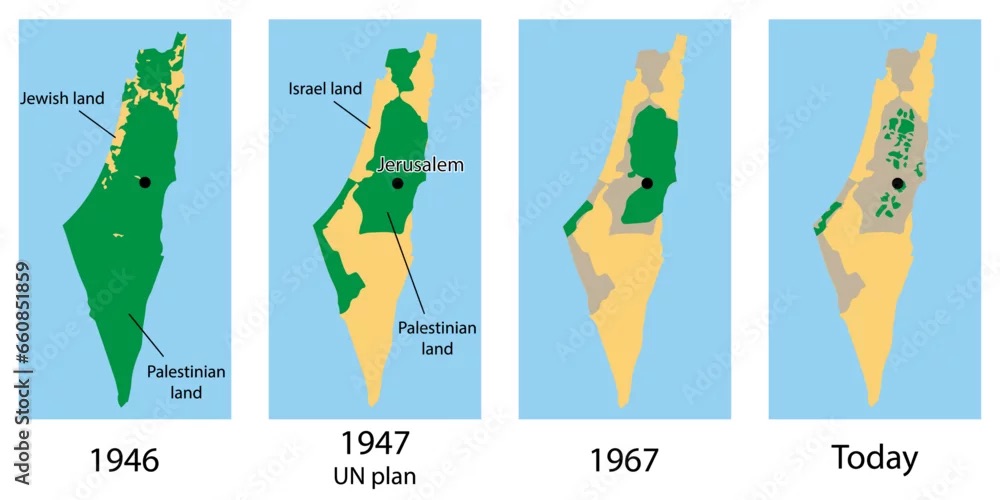
You only have to look at the maps of Israel in 1948 and Israel today to see that the Zionists have won every battle and that Lebensraum has been militarily achieved. (I use these highlighted words not as abuse but as accurate terminology). Hamas did not exist before 1987 – there was 40 years of Arab/Israeli conflict before that.

That Israel has always had settlement ambitions way beyond its original borders is not in dispute. And nor is the fact that the victims of these ambitions are mainly the Palestinian people. To the victors have gone the spoils, as they always do. Let’s be clear. It’s not just Hamas that has been defeated but the people of Palestine. Thousands of them dead, their homes destroyed, their future obliterated.

Dresden 1945 (above). Gaza today (below)

In 1945 the Allied nations who destroyed Hitler and Hirohito said “never again” and lead the reconstruction. The Soviet Union did it differently from the United States and Britain, but it happened. At the end of the war Hamburg and Dresden, Tokyo and Hiroshima looked very like Gaza does now. Does Israel want, would it permit, the reconstruction of Gaza as a Palestinian state? What do you think?

The Hamas terrorism of October 7th was Israel’s casus belli for destroying not (just) an armed enemy but also a nascent state that it doesn’t want as a neighbour. In short whilst Hamas presumably knows that it has been defeated  there are over five million Palestinians in the West Bank and Gaza who are understandably concerned that Israel holds their future in their hands.

Stay South if you want to eat well!

This is broadly true as well as being funny! A definitive test is to see which European countries export their cuisines in Restaurants. You find Italian, Spanish, French, Portuguese, Greek restaurants all around the world. You won’t find an English or a German one anywhere! You can eat well in Amsterdam, but it will be Indonesian not Dutch cuisine.

There are distinctive dishes above the line – The herrings in The Netherlands and Scandinavia for example. And you can eat well in Michelin starred restaurants in Hamburg or Copenhagen. But the cuisine will be international not local.

The division applies to beverages as well. The orange countries produce and drink wine, the green beer and spirits. Wine accompanies good food – beer a pretzel or a bowl of peanuts.

The other difference is choice. There are twenty or more distinctive Italian cuisines. Spain has wide range of regional variations as of course does France. In Britain the food as well as being undistinguished is ubiquitous- the fish and chips is the same everywhere.

Bon Appétit !

Margaret Thatcher – a very tarnished “heroine“

A very tarnished heroine

Iain Dale’s adoration for Margaret Thatcher in these books (above) takes him into a world where his normal political nous is buried by cultish hero worship. Mind you he’s not alone in this. How often do we hear the preposterous and ignorant claim that she was “the best thing that happened to this country” . It’s balderdash.

Thatcher got lucky in 1982 with the Falklands War without which she would be a footnote in history. Rightly. I say this not as an opponent of the decline of deep mining nor as a defender of excessive Trades Union power. No, I criticise the mindless and uncaring way she approached these necessary changes. 

And remember she was opposed by her last Cabinet over Europe. The faux-patriotism she union-flagged post Falklands turned her into a grotesque Little Englander when out of office. She sowed the seeds of first intellectually bereft Euroscepticism and then the Referendum “Leave” campaign. In no small measure Brexit is attributable to Thatcher.

It’s forgotten that Thatcher was influenced strongly by her Home Counties golf club bore of a husband. Denis was a middle class, well off bigot from central casting. When his wife called Nelson Mandela a “terrorist” that was Denis speak.

After Thatcher her successor John Major cleverly unraveled his inheritance from her , where he could. But the disastrous privatisations she did were too much for him or even Blair/Brown to undue. Our filthy beaches, polluted rivers and chaotic railways are directly Thatcher’s legacy. Our gas and electricity services rewarding investors and Directors rather than serving customers are more of the same. As is our lone man of Europe isolation which makes us an outlier on the international stage.

Thatcher was no feminist either. Her politics had more Testosterone in them than Estrogen ! There were few female Ministers in her Governments and she did little for women’s Rights.

It is a political Age without heroes, an Age which started with Brexit which, as I say, has strong causal links to Thatcher. The irony is that people like Iain Dale, whilst acknowledging today’s lack of politicians of substance, look at Thatcher as a golden Age by comparison. The truth is that the Blessed Margaret was the original cause of our problems!