Keir Starmer is struggling because he has decided that he cannot do what deep down he knows is necessary.

Moya Lothian-McLean ‘s diatribe against Keir Starmer in the New York Times today is unbalanced and unfair. After fourteen years of increasingly incompetent Conservative rule and five Prime Ministers – and the absurd decision to quit the European Union – there was an Augean Stables for him to clean up. That task would be a challenge to any leader and especially to one comparatively new to politics. And Sir Keir has had to cope with a hostile media environment the mendacity of which was on display from the start.

Like the United States Britain is a lone wolf internationally. Dean Acheson told us what to do as a post Imperial medium sized country more than fifty years ago. Look to Europe, and for a while we did. But a hard “Brexit “ has destroyed that and is gradually destroying much more. Starmer has refused to countenance strengthening our European ties anything other than superficially. But in time we , or what’s left of us, will have to return to Europe again. Trump’s America can survive as an international pariah. Starmer’s Britain cannot.

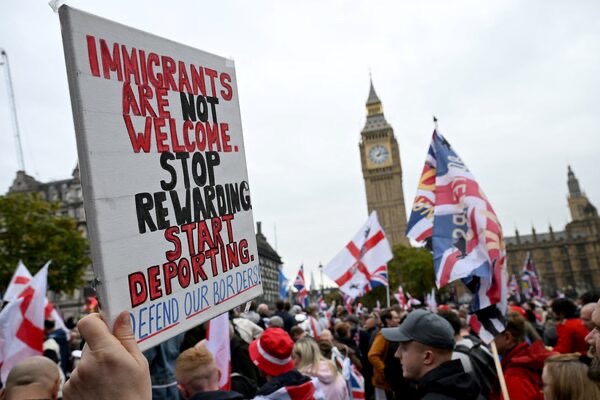
Brexit has damaged us economically but more importantly it has driven us towards a toxic National Conservatism. This is backward looking with every opportunity taken to celebrate past triumphs and to wave our flag. Meanwhile our infrastructure is crumbling and even to build a modest High Speed Train line linking London to our second city Birmingham seems a challenge too far. 

The National Conservatism is present in Nigel Farage’s Hard Right “Reform” party which is riding high in the polls. Our electoral system is such that for Reform to win an election, as suggested by this article, is highly unlikely. That election is four years away. Farage was once seen regularly with Trump – it was almost hero worship. That love-in suggests the choices Britain must make. Segue towards the increasingly authoritarian United States or reestablish our place as a significant democratic and liberal European power. 

Keir Starmer is certainly struggling in part because he has decided that he cannot do what deep down he knows is necessary. Culturally, economically, geographically and emotionally we Brits are Europeans. Let’s start acting again like we are.

It is not antisemitic to oppose Israel’s military assault on Gaza

It is certainly true that all antisemites oppose Israel’s actions in Gaza but it does not follow that all of us who oppose the actions are antisemites. I am not Jewish but have always regarded myself as a Zionist – the word needs rescuing from those who have turned it into a term of abuse. I support the principle of a Jewish homeland in Palestine. But what Israel has done is closer to Lebensraum – a chilling irony.

Pogrom against Jews in Russia in 1905, and against Palestinians in Gaza in 2025

The problem was originally of Arab making. Arab nations opposed Zionism in successive conflicts. The West supported Israel, as did I. Israel had every right to defend itself and did, with our help. But there was no right to the expansionism that followed – the settling on land militarily acquired had no justification in international law. In short it was theft.

To oppose Israel’s expansionism and the organised planting of settlers is not Jew hatred nor antisemitism. It is not unreasonable to believe that Israel’s borders should be determined by negotiation not by war.

It is clear that Israel’s goal in Gaza is to incorporate the territory in Greater Israel. And that what is effectively ethnic cleansing is the strategy chosen. The irony that this has a direct parallel with the all too many pogroms Jewish people have suffered over the centuries is another irony.

The IDF is the legitimate Armed Forces of the State of Israel. It operates solely under political control. It is possible to oppose what it is doing (I do) – but that opposition needs to be directed at Netanyahu. He’s in charge, the IDF is his means.

The toxic legacy of Mein Kampf. A warning from history

John Kampfner in The Times reflects on the significance of Hitler’s “Mein Kampf” . Here is my view:

There is a direct comparison between Mein Kampf and today’s politics – the overwhelming presence of a blame culture. Politicians of almost all persuasions, and their followers, see a problem and seek someone to blame. Hitler’s rise was constructed on this premise. His early political life, for which Mein Kampf was the instruction manual, told Germans to hate – and to blame the Jews for everything.

Donald Trump uses the blame culture all the time and, like Hitler, links it to an overt narrow nationalism. This nationalism, again like in the Third Reich, is strongly promoted by symbolism. The two tall flagpoles on the White House are modern vestiges of Nuremberg Rally symbols.

The interwar years presented strong challenges to all nations but especially to Germany. In fact the Weimar Republic could probably have succeeded had it not been for the Wall Street crash of 1929. But economic collapse was just the evidence Hitler needed. The “What have we got to lose” imperative propelled Hitler to power, as it has twice for Trump. 

The blame culture is driven by mendacity. Goebbels knew that if you keep repeating a lie people will come to believe it. So did, and do, the promoters of Brexit – another example of the blame culture. Those who spread the pro Brexit lies always did so in a Union Jack displaying situation. The raw nationalism did persuade sufficient voters. As it had for the author of Mein Kampf.

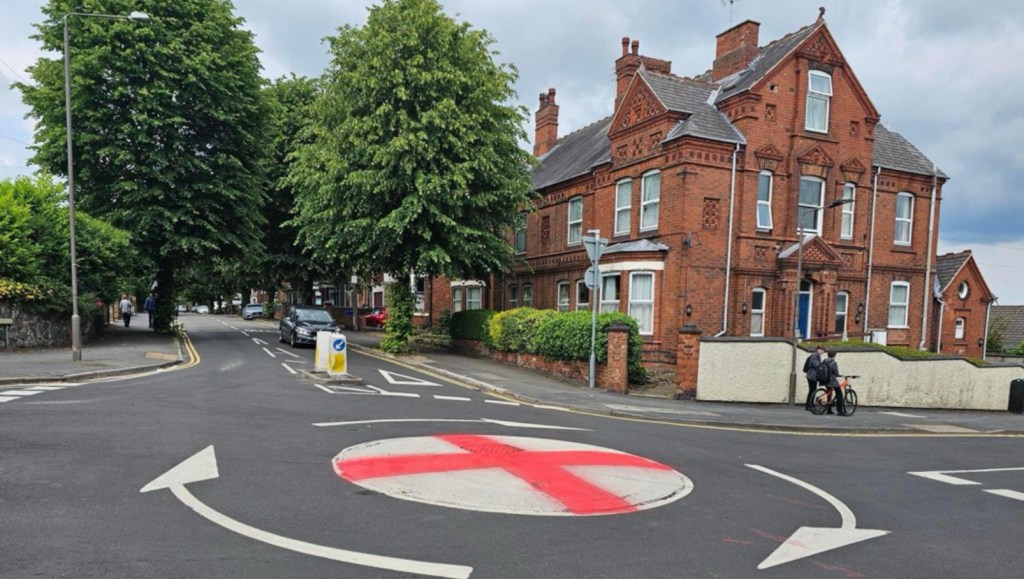
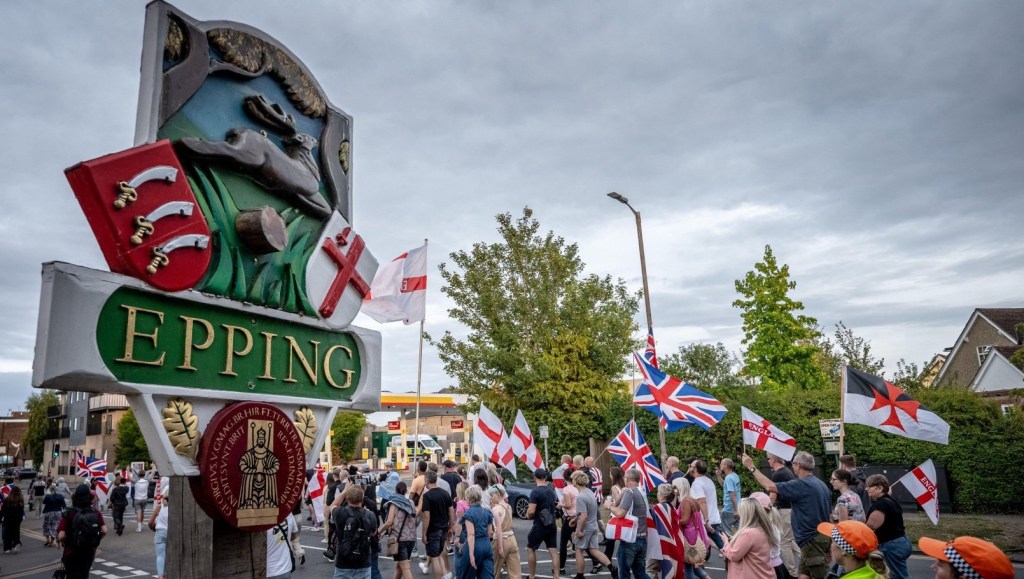
The apparent rise of Reform , untested as yet in a national election, is another example of overwhelmingly negative campaigning and the blame culture. And of a Goebbels type mendacity. As with Trump those who are culturally and racially different from the White Anglo Saxon Protestant majority are blamed. And symbolism. Reform chairman Zia Yusuf announced that “Reform-controlled English councils will move at speed to resolve that the only flags permitted to be flown on or in its buildings will be the Union Jack and St George’s flag”.

In 1997 the BBC documentary “The Nazis: A Warning from History” examined Adolf Hitler and the Nazis rise to power in Germany. The title was unequivocal. Don’t imagine that history cannot repeat itself.

Why Trump? An explanation from the past

In Britain we’ve had the Labour Party taken over by Jeremy Corbyn and the Conservatives by Liz Truss – neither could be described as being of their party’s One Nation/centrist traditions (or fit for high office). We have flirted with the extremes. And we still are. Reform is very much in the Trump disruptive mould and “Leave” in the 2016 Referendum campaign appealed to the gut not the brain, and won. “Reform” , incidentally, takes its name from the third Party in the US formed by Ross Perot and which got nearly 20% of the vote in the 1992 US Election. His influence lingers on.

Trump has the late Ross Perot in his corner

Francis Fukuyama around the same time as the 1992 US Election argued in “The End of History and the Last Man” that the progression of human history as a struggle between ideologies was largely at an end, with the world settling on liberal democracy. With Clinton in the White House and Blair in the wings to move into Number 10 this seemed, Perot aside, a good call. They called it the “Third Way” to emphasise the difference with the binary ideological past.

The search for an explanation as to why the Third Way, and to an extent liberal democracy itself, has collapsed is fraught because it seems to defy common sense and conventional political logic. The causes are complex but if we look for one defining event I suggest that it was 9/11.

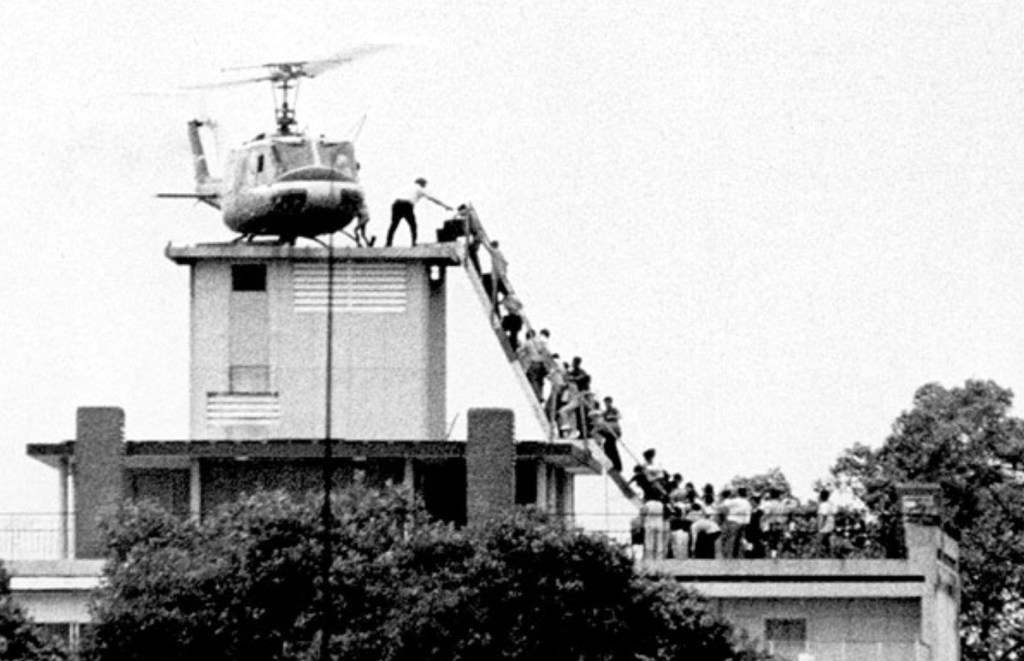
America, Pearl Harbor aside, had before 9/11 never been attacked. We Europeans knew what it was like – they didn’t. The subsequent lost wars in Iraq and Afghanistan were based on the presumption that overwhelming military power will always prevail. The lessons of Korea and Vietnam were ignored. Losers can be dangerous, they often, as now, segue to the extremes. (See also Germany in the 1920s and 1930s).

Trump is, like Perot, a protest against liberal democracy. As is Farage’s Reform. Whilst the Right generally likes military adventures in the name of “Freedom” it doesn’t like losing them. The reasons for America’s longstanding support for Israel are politically complex but resolute. In a macro political climate that is confrontational and binary the US will, rightly or wrongly, keep supporting and arming Netanyahu.

Opponents of Trump might object to the idea that his election in 2016 was a consequence of military failure but the “MAGA” slogan has an unmistakable militaristic ring about it. His election in 2024 was qualitatively different – here the underlying “failure” , as presented, was domestic. Ross Perot had reduced arcane and highly complex technical arguments about quotas, tariffs, and regulation down to simple “truths”. Like Trump, Perot harkened back to a golden age of U.S. industrial manufacturing. He was an unashamed economic nationalist, as is Trump.

Macroeconomic management in an economy as large as that of the US requires a subtle hand on the tiller. Trump’s inconsistent vacillations on tariffs just cause confusion and, unlike Perot, there is no intellectual underpinning for them whatsoever. However a political manifesto which includes knee-jerk positioning on populist issues like immigration will, and did, have mass appeal. Combine that with tax and other benefits (like patronage for government contracts) for the rich elite of Mar-a-Lago (and similar) and you’ll get enough Electoral College votes – as Trump did.

Whether there is a prospect of Fukuyama’s liberal democracy returning may depend mainly on Europe. There are challenges from the Right in many member countries of the European Union but the Union itself is holding firm. Churchill saw a “United States of Europe” as being a guarantor of avoiding descending into the deadly conflicts that had so scarred the first half of the Twentieth Century. That unity may be facing its biggest test.

For some Right Wing European politicians Donald Trump in the White House was a godsend giving some legitimacy to their nationalist and populist positioning. But in the main Europe remains democratic and liberal and the institution of the EU is designed to keep it that way. Trump may well have left the G7 early because he felt outnumbered by those who think transnational cooperation (anathema to Trump) and liberal democracy (likewise) is worth preserving. But it’s fragile and nothing is certain.

Fish rotting from the head down…

There is a curious parallel between the Ayatollahs’ rule and that of Trump. In neither case are there effective checks on power and in both cases there is insidious patronage throughout the administration that rewards the loyal. And whilst Trump doesn’t (yet) hang his opponents from cranes in public, dissent is treated with harsh sanctions.

Rotten at the core

Meanwhile in the “Middle East’s only Democracy” (sic) dictatorship no less venal has committed atrocities that are not only not condemned by Western powers but they provide armaments to facilitate them to be carried out.

A fish, they say, rots from the head down. Iran replaced the decidedly rotten Shah with something infinitely worse. And then dictators’ repression has eliminated opposition using religious texts and imperatives to justify their actions. Similarly in Israel the Lebensraum driver in pursuit of a “Greater Israel” is given a phoney legitimacy by references back two thousands years to Old Testament times. And Trump is not averse to justify his social repression (and kowtowing to the Religious Right) with biblical references.

The absence of effective democratic leadership in the tinder box world of the Middle East has brought the region into peril. The greed of the Arms supplying western countries and the blinkered support for Israel ignores the complexity of the status quo and makes it “Good Guy v Bad Guy” binary – which it isn’t.

“The bad thing of war is, that it makes more evil people than it can take away.“ (Emanuel Kant). We’ll see.

Elon Musk faces Brand reality

It’s fair to assume that the remarkable Elon Musk knows a thing or two about Brand Management. The success of Tesla is one of the great brand success stories of modern times. The cars are prestigious, original and confer practical and emotional benefits on the user. Almost the Holy Grail for a branded consumer product. Or they did! As we know Tesla sales have nose-dived recently even though the cars haven’t changed. What has changed is that Musk seems to have forgotten that, as Sameena Ahmad wrote in The Economist nearly twenty years ago, brands – even the best ones – are vulnerable. As she put it “… a brand must be cosseted, sustained and protected… a hint of scandal can all too quickly send customers fleeing. The more companies promote the values of their brands the more they will need to seem ethically robust and environmentally pure. “

In his 2010 seminal book “Brand Society” Martin Kornberger said “… there is more and more scrutiny not only on what a company is doing but how it is doing business. Ask Nike or Shell or McDonalds – they can tell you how external parties try to change internal process”. Don’t they just! In my Shell days we had a raft of those “External parties” commenting on us – about Brent Spar, Nigeria, the Environment and a host of other things. Today Shell and the other oil/gas multinationals have achieved almost pariah status. And, it seems, they don’t know what to do about it. They’ve lost sight of the fact that brand and reputation are not a given.

Back to Mr Musk. Perhaps he thought that his brand pre-eminence (at the upper end of the electric vehicle category) was so strong that he was fireproof. Well pride goes before a fall. Musk’s romance with Donald Trump has done the brand significant harm everywhere. Consumers have choice and you ignore tham at your peril. As David Ogilvy once memorably said “The customer is not a moron. She’s your wife”. And the automobile is one of the most visible manifestations of your personal identity. Where once to drive a Tesla was cool and conveyed prestige now it suggets that you support the Orange twerp’s best buddy!

Shopping is seen as a form of Surrogate voting. The consumer is sovereign, as Kornberger reminds us. Ask the Sun Newspaper how sales in Liverpool are going! Whilst it is quite rare for a brand to go from hero to zero overnight (though those with long memories will remember Gerald Ratner doing it) Musk has a long haul ahead to re-establish his position – not least because he and the Tesla brand are inextricably linked.

What to do about Water

The governments of Margaret Thatcher and John Major created utterly dysfunctional models for some public services. Private sector monopolies. If you give a privately owned company monopoly rights and duties in a geographical area it will exploit its rights and ignore its duties. Exploiting means putting dividends and executive remuneration before investment and good service. That’s human nature.

We saw with Railtrack what happens when a privatisation ideology damages what was clearly an essential national asset. Indeed across the railway system as a whole commercial rather than public service considerations dominate.

The Water sector is an essential public service. This is not necessarily an argument for nationalisation. London buses, for example, offer good service despite being privately owned and operated. But this is within the context of an integrated public transport system in the capital run in the public interest.

Public interest is the key. It may be, as for the London buses, that a public/private partnership would work for Water. I have my doubts about this. Regulation has comprehensively failed and there has been underinvestment and borderline corrupt practices along the way. Fiddling on the margin with improved regulation whilst the whole model is defective won’t take the sector forward.

Why has the Conservative Party collapsed ?

It was Brexit wot did it. As a fervent Remainer you’d expect me to say that but it’s 100% true. Cameron was in the One Nation Tory tradition, even moving almost Centre-Left in coalition with the LibDems. The Tory Right didn’t like that – look at their anger on Lord Ashcroft’s “Conservative Home” website during the coalition years.

In 2015 Cameron employed the brilliant Australian political guru Lynton Crosby to ditch the LibDems (the “barnacles on the boat” Crosby called them). The trick was to appeal to the mostly Eurosceptic Right Wing Conservatives by offering a Referendum on EU membership. This united a fracturing party, the LibDems were obliterated and Cameron got his majority. Thanks Lynton mate…!

But Dave had to honour his Referendum promise, blew it and walked off into the sunset. Party and governance chaos followed the Referendum disaster. But the Conservatives had two huge bits of luck. Labour had chosen the unelectable Jeremy Corbyn as Leader and Johnson, having pragmatically chosen the “Leave” campaign in the Referendum, plotted to oust the struggling Theresa May and succeeded.

The 2019 Boris election win, substantial though it was, became a Pyrrhic victory. One Nation Tories were driven from the Party. Ambitious pro Europe ministers like Truss and Hunt became unconvincing Brexiteers. Labour finally got rid of Corbyn. Johnson’s personality weaknesses couldn’t survive Covid where he was centre stage. But après Boris there was one heck of a deluge.

Liz Truss was a freak. She worked hard to become Leader and then imploded. It was completely unprecedented. I still find it hard to understand how a politician could reach the highest office and then explode so spectacularly.

Rishi Sunak was a political neophyte and was on a hiding to nothing. He had supported Brexit in the Referendum – a decision which reeked of opportunism. Neither before nor after the vote did he make a credible case for leaving the European Union. He was not, of course, alone in that ! But it did mean he rocketed up the Tory pecking order becoming Chancellor well before he was ready. He wasn’t a disaster so when Johnson was unceremoniously discarded it became him or Truss. Hobson’s choice you might think.

Sunak was in the right place at the right time when the men in white coats came for Truss. A man who less than ten years before had no political record at all was in Number 10. The rest is history. Sunak couldn’t win in 2024 but then no other Conservative leader could have won either. And in Opposition under the bizarre Badenoch the natural Party of Government isn’t even the natural Party of Opposition. Out thought on the flanks not just by the impressive revitalised LibDems but by the successors to what David Cameron called “fruit cakes and loonies and closet racists”

Badenoch’s Tories may be struggling but to be undermined by Farage and Co. is the ultimate humiliation. There is no substance at all to Reform. No policies. No political experience. No gravitas. But they from the pig-headed Right and the LibDems from the thoughtful Centre Left are making life very difficult for the Conservative Party.

Getting real about Britain’s Defence expenditure

There is no military threat to Britain that is not also a threat to Europe as a whole. We have alliances because of this fact. The Falklands was the last time we needed to defend our interests (as we saw them) unilaterally and nothing has materialised in the decades since that we will need to arm ourselves against on our own.

Let’s stop pretending that for Britain to determine a Defence budget is a decision we can make in separation from (at present) our NATO partners. Whilst we have NATO there is an obvious need is to revise its funding mechanism more fairly. The United States does bear a disproportionate burden and other members, including Britain, do need to pay their way more fairly.

It may be that an increasingly isolationist US will lead to the disappearance of NATO. This is not necessarily a bad thing. A united Europe does need to defend itself and the emergence of a European Defence Force (EDF) seems likely and logical.

The funding of an EDF is obviously open for discussion but a GDP related mechanism is a start point for these discussions. Similarly there will need to be agreement on bilateral deals between the EDF and friendly allies hopefully, but not necessarily, including the US. Other non European NATO partners like Canada will certainly be candidates for mutually beneficial alliances.

Seeking truth in the tragedy of Israel and Palestine

If one is seeking truth about the tragedy of Israel and Palestine and Gaza and the Settlers, and the dispossessed and the death and the destruction Lord Finkelstein , in The Times, tells it here. He eschews the binary. He avoids the “I’m a Jew, therefore…” almost entirely. He tells it as it is. And who can not share in his despair?

Bethlehem, and Israel’s wall “protecting” it

It had long been an ambition of mine to visit Israel and before that became impossible I managed it. I walked on the Mount of Olives. Climbed the Via Dolorosa. Saw the Jordan at Galilee. Bethlehem. Nazareth…

The thing abut the New Testament stories for me is that they represent a positive historical break. Above all by replacing “An Eye for an Eye” with “Turn the other cheek”.

But now the Holy Land is besmirched with revenge, other cheeks are not being turned. Israel needed to respond to the vile assault it suffered. But nobody, including Daniel F, can truly say that that response was proportionate. It just has not been.

I make no charge of genocide but understand why some do. I do, however, make a charge of opportunism.

Netanyahu did not, we must assume, directly incite the Hamas attack. But he sure has taken the opportunity to make part of his response to it to promulgate the goal of Greater Israel. And some of his compatriots go back two thousand years to justify their ambition, a denial of two millennia of history – including the emergence of a third Abrahamic religion!

A charge of Israel seeking Lebensraum, for that is what it is, is the most chilling irony.