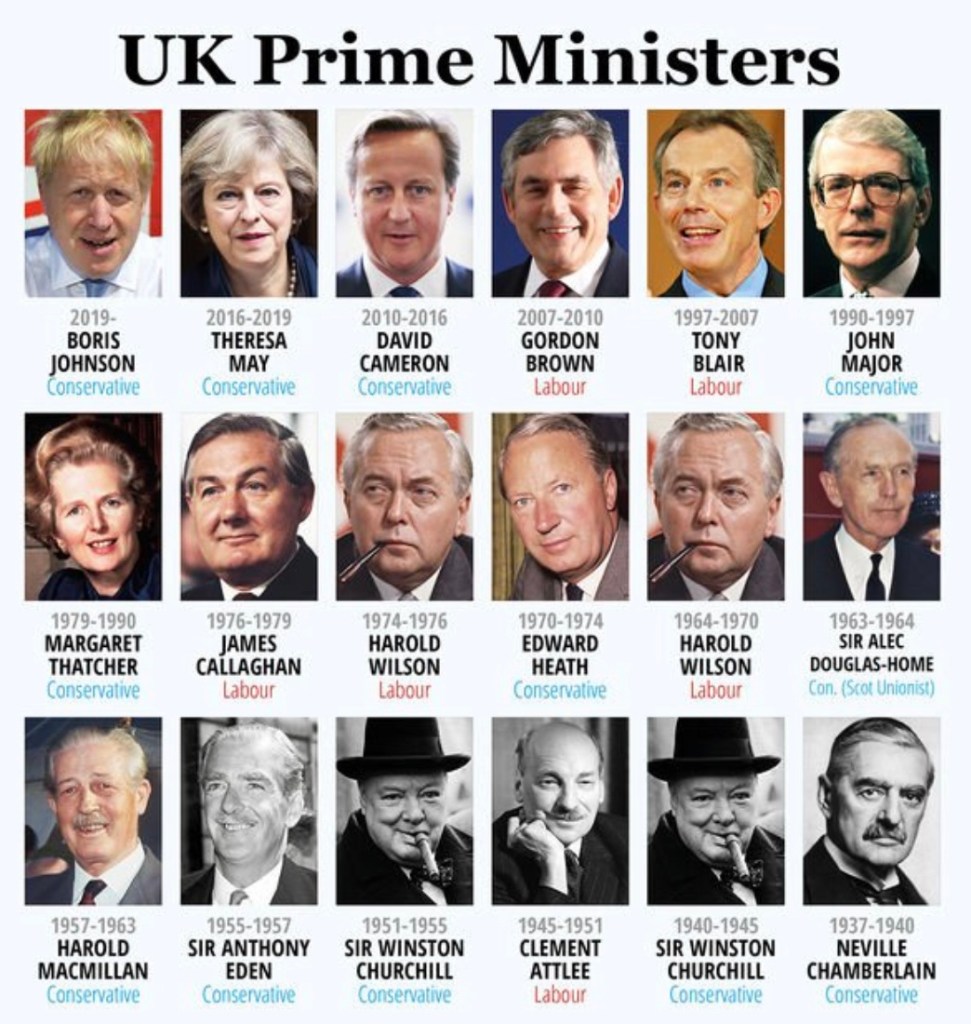
“So which is to be preferred: saviour or cynic, preacher or pragmatist, believer or blusterer?” aaks Melanie Phillips in The Times today in an article about leadership (or the lack of it) among recent British Prime Ministerd.
The missing word here is “competence”. Harold Macmillan famously said that the main challenge was to deal with “events dear boy” and to do this you above all need to be competent. Not least in handling the unexpected. Frankly anyone should be able to do any job if it only takes place in the world of the familiar. You do the same as worked in the past. It’s theunexpectedevents that test you.
Margaret Thatcher did some things her ideology told her to do. But once or twice she did them incompetently – the privatisation of the railways or the Poll Tax for example. The Falklands was the opposite. Her ideology (patriotism aside) had not prepared her for this “event”. Or anyone else for that matter. Nobody had heard of this distant bit of the detritus of Empire. Thatcher unhesitatingly launched a task force. High risk, a bit of luck along the way but resolutely competent.
In the competence rankings Gordon Brown scores for me the highest of all. The financial crisis tested him and he was not found wanting at home or at an international level. David Cameron is at the other end of the competence scale. Threatened, as John Major had been , by the barmy bigot wing of the Conservative Party, augmented (in his case) by the preposterous populist Nigel Farage, Cameron buckled where Major had stood firm. Britain’s current traumas significantly attributable to Cameron’s incompetent weaknesses.
On the competence scale Boris Johnson is nowhere. Worse even than his schoolmate and Bullingdon chum Dave. Couldn’t run a whelk stall let alone a nation. Whilst politicians sometimes yearn for ostentatious ideology there’s rather more to be said for competence. The worst of all worlds is ideological malevolence combined with incompetence. Sadly that’s where we are now.
It was early evening, a little after 6:30pm on Friday 22nd November 1963. I was at my boarding school (The Leys School) in Cambridge sitting with friends in our study (a small room four of us shared). There was a commotion outside and we heard our Head of House Dave Carter limping noisily along the corridor. Dave had been disabled by polio and had a calliper on one leg so he didn’t move quietly. “Have you heard? Have you heard? Kennedy’s been shot !”
Now they say we all remember where we were when JFK was assassinated . We had a large steam radio in the study and it was often tuned to AFN – the American Forces Network which had a strong signal in the Cambridge area because of the US Forces stationed nearby. We turned it on. AFN had a reporter in Dallas and commentators in Washington. We were plugged right in to the American media.
In my lifetime only 9/11 has equalled the shock of that moment. We said little and just listened. I had been preparing for a trip to London the following day visiting the “Leysian Mission” , the schools charity. The trip went ahead. It was my seventeenth birthday.
The Sixties were a time of change and though in 1963 they weren’t quite “swinging” yet young people often only a few years older than my friends and me were full of confidence and irreverence. Some of us had seen “Beyond the Fringe” a couple of years earlier. We had also welcome the brilliant, acerbic and iconoclastic “That Was The Week That Was” that had been running for about a year. TW3 challenged our parents generation, and we loved it.
John Kennedy seemed to symbolise change. He was actually only a year younger than my father but his image was more my generation than Dad’s. TW3 responded to the assassination brilliantly with a measured but unsentimental tribute and Millicent Martin sang the swiftly put together “A Young Man Rode with his Head Held High under the Dallas sun”. It had echoes of “High Noon” but was no parody.
I went to London as planned on the Saturday and phoned home when I was there and spoke to my mother. We never mentioned the assassination, it was just too painful I think.
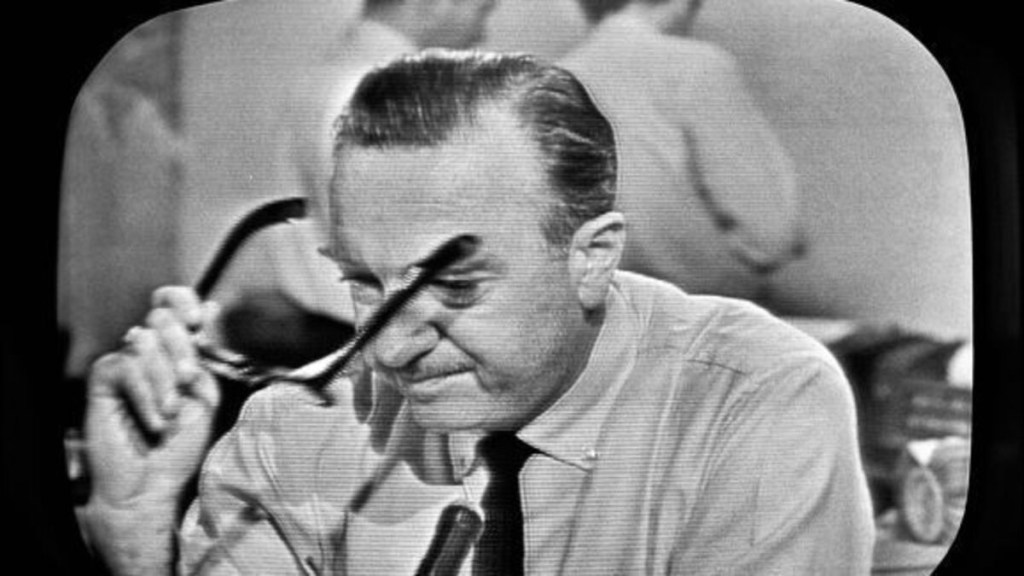
Walter Cronkite announces that Kennedy has died
It’s pretty rare for the world to pause in shock and maybe it’s only been possible in the television age. The images hold our attention and the commentators, like the great Walter Cronkite, who announced Kennedy’s death, are our link to the existential moment. The immediacy was shocking – again paralleled only by 9/11 I think.
Conspiracy theories only flourish when the truth is too difficult to believe. There was no social media on 11/22 and the crazy theories took a while to emerge. The truth was more prosaic. A complex and confused lone killer had a rifle and a place by a high window in a tall building. And changed the course of history.
James Marriott has an interesting piece on Status and Class in the Times today. Class is largely inherited, which does not of course mean that there is no movement at all. But such movement is generally driven by wealth, or lack of it, than anything else. Those at the top of the pile or close to it may inherit wealth as well as social position, they usually do, and this then facilitates the protection of privilege for themselves and their children.
The “Frost Report” on Class
For most of us the journey we take is determined by our own efforts, and luck ! If we are smart and work hard the greasy pole becomes less slippery, but it’s still there. The pursuit of wealth is mostly to acquire possessions and activities that are the symbols of status – the house, the car, the luxury holidays. But also to do our duty, as we see it, to our offspring. Notably education where the richer you are the better independent (or indeed State) school you can buy.
Location is important to status. I grew up near a small suburban town where to live one side of the railway line was much higher status than the other.My education at a Public School conferred status on my parents who were “upwardly mobile” – mainly through their own efforts though my Dad did have quite well-off parents which helped.
Popular culture reinforces class and status stereotypes. Decades ago “Upstairs Downstairs” , “The Good Life” and “Til Death Do Us Part’ characterised “Upper, Middle and Lower” for us. It was accurate and it hasn’t gone away. Today employment is one of the ultimate determinant of Class. Jobs in the professions have a special status that sets a doctor, a lawyer or a teacher somewhat apart.
You hear the term “Nouveau Riche” less often these days but it was common when I was young. The presumption was that “Old money” was more prestigious than “New money”. It was characterised hilariously by Alan Clark’s snobbish remark about Michael Heseltine that he was “…the sort of man who bought his own furniture”!
The lives of the Upper Classes are remote and incomprehensible to most of us. At a reception once I was talking to a mesmerisingly beautiful and “classy” young woman. An elderly man approached and she said to me “Do you know my grandfather?”. I shook his hand. It was the Duke of Kent.
The Duke is at the top of the pile of course and seemed nice. Come down a rung and you meet the Etonians some of whom are charming – then there’s Johnson and Rees-Mogg. Privilege doesn’t always confer true class which surely has noblesse oblige somewhere in it.
True class is the privilege to be able to do good, and then to do it. My grandparents’ generation’s lives were forever touched by the Great War. In the trenches the likes of Old Etonian Harold Macmillan were transformed by their exposure to ordinary soldiers who in peacetime they would not normally have met. The problem with David Cameron, Boris Johnson and Jacob Rees-Mogg is that they were never in the trenches, or anything like them. Privilege has carried them comfortably through a life narrowed by its lack of social variety.
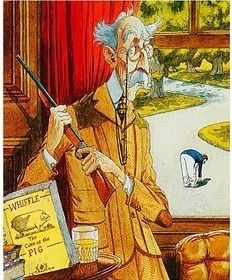
Jeremy Paxman has an excellent piece in The Sunday Times today condemning the House of Lords. But, sadly, it is not only the Lords that makes Britain look preposterous. The Lords is a Wodehousian world of nonsense behaviour, ludicrous dress and hubris. If it didn’t exist you’d be hauled off to the funny farm if you suggested it should be created. Rightly.
But the Lords, venal though it is, is just one manifestation of a nation that eventually decided that the best way to replace the lost Empire was to send in the clowns. We have had brief periods post war when it looked as if we knew what we were doing. But mostly we’ve blundered along in a thick haze of sentiment and confusion.
Our electoral system is one of the least democratic in the free world and vast numbers of voters cast their vote knowing it won’t count. Patronage is used to reward whoever the Prime Minister wants to – not just with ermine but with Government contracts.
Our educational system favours those with money and discriminates against the children of the poor The difference in attainment between wealthy and poor students has been reported as up to 40% and the figure is growing. Some Conservatives like Jacob Rees-Mogg hail the proliferation of food banks as an achievement…
Our healthcare system is a classically British mix of underfunded lack of grip and structure and sentiment where clapping on our doorsteps was supposed to compensate for low pay, budget cuts and lack of fitness of purpose. Even in rich areas let alone behind the red wall.
And then there’s Brexit…🙀 As the FT puts it “ Boris Johnson cannot escape the costs of Brexit”. But the Chancellor can ignore these costs completely in his delusional Budget statement.
PG Wodehouse was a gentle soul who smiled at the fact that Britain had pig-loving buffoons in the House of Lords and that the Establishment was full of Eggs, Beans and Crumpets running things from their Clubs. I doubt that he’d be so sanguine today about how far we’ve fallen. A toxic mix of venality, stupidity, corruption, vanity and greed has reduced Britain to pariah status. It’s not funny any more.
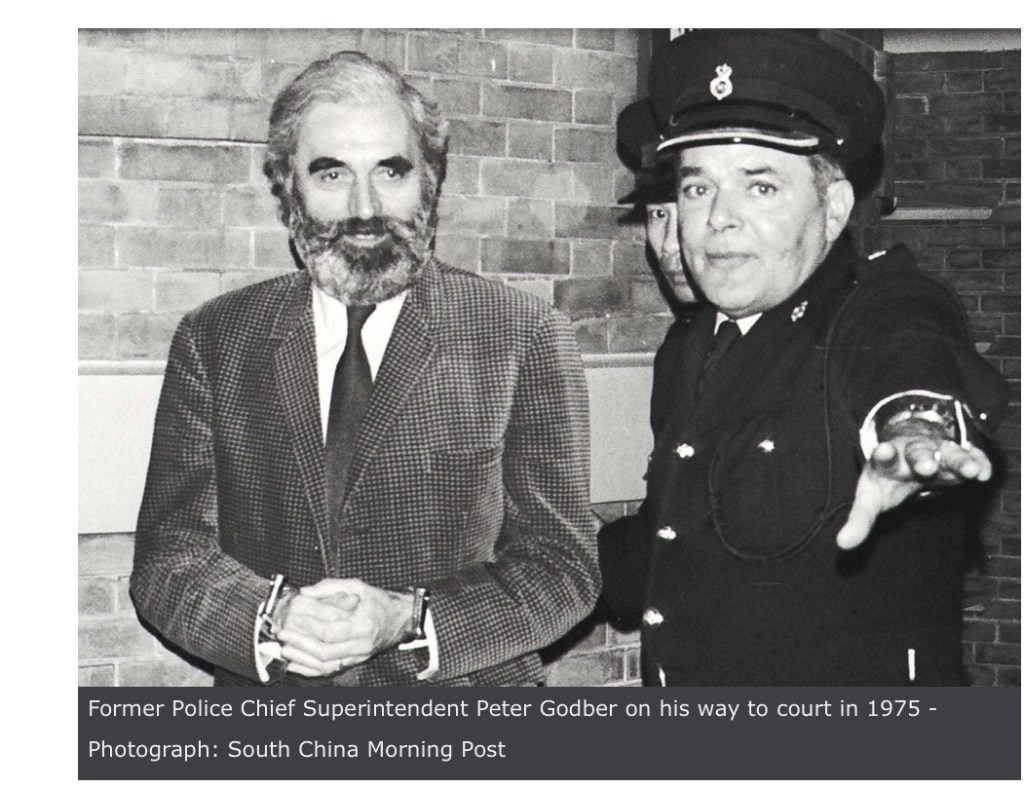
I was living in Hong Kong not long after “The Independent Commission Against Corruption “ , established by Governor Sir Murray MacLehose in 1974, completed its work. Dozens of corrupt policeman, civil servants and other officials had been prosecuted and/or expelled from the colony. The ICAC had teeth and the cosy corruption among the (mostly) British ex-pats was brought to light and acted upon.
The ICAC rooted out institutionalised corruption in Hong Kong – we need something similar in Britain today.
Roll forward to today in Britain and you will find something which in reality, if not in scale, is not unlike colonial Hong Kong. There is corruption in Government and it’s suppliers on an industrial scale. There is patronage, the selling of honours, the rewarding of Brexiteer loyalty which has placed some very unsuitable people in our Upper House. Contracts go to buddies whether they are otherwise qualified suppliers or not.
The freedom to act that this Government assumes for itself comes from a grossly unfair electoral system that gives them unprecedented power despite the majority of voters having rejected them at the last election. Corruption is institutionalised. The Upper House is unelected and the Lower House unfair. It’s an undemocratic shambles.
We need an ICAC to investigate this benighted political system and reveal for all to see just how venal it is. The key word in the ICAC was “Independent”. Internal enquiries don’t work. If we want to restore our self respect and international reputation there is no alternative. Gloves off.
The “Sunday Times” today says that Boris Johnson’s “safety is assured”. As a nation we are divided on most things including the Prime Minister where the “Good Old Boris” numbers seem still to be ahead of those who believe “Johnson must go”. Opinion polls show voters would reject the Conservatives if we had a fair electoral system – but we don’t, so they won’t.
Johnson’s persona seems a mixture of stupidity and cunning. The latter delivered Tory MPs in some constituencies that had never had them before. He did this with a unique gut feel approach driving a bulldozer through a wall – a prescient metaphor as it turned out. Never underestimate the capacity of the British public to ignore facts and vote with prejudice and emotion. Johnson didn’t.
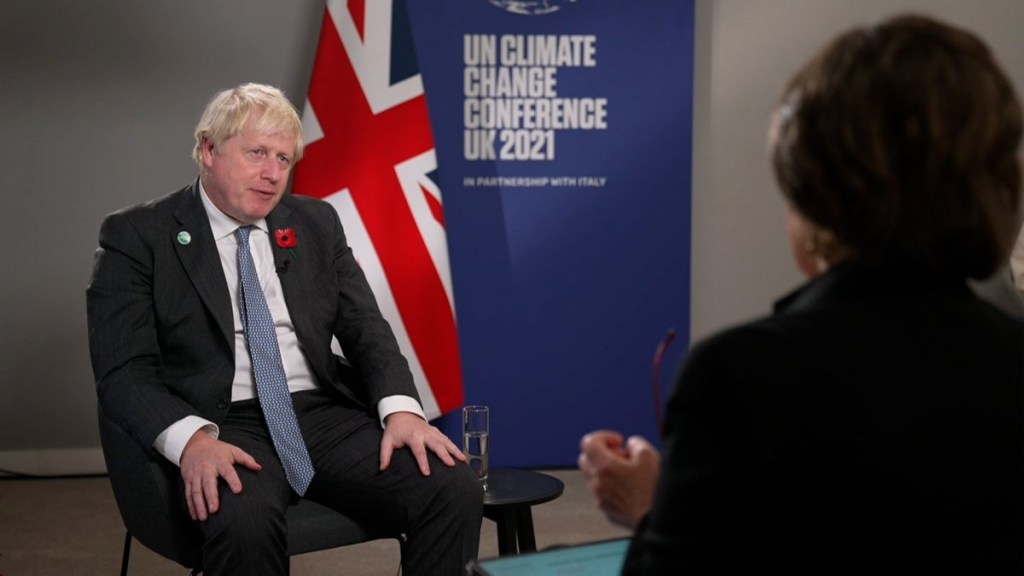
The stupidity is daily on view. Telling lies is stupid – as Johnson showed when he denied the truth to Christianne Amanpour on CNN about Britain’s abject performance on COVID. But he gets away with it in part because a servile media fails to hold him to account. This may be in the process of changing, but don’t hold your breath.
Britain, in embracing the politics of UKIP in today’s Conservative Party, has moved from the sometimes cerebral, and moderate, to the rarely coherent and extreme. There is no other explanation for Boris Johnson. It’s frankly our own fault – a breakdown of common sense as well as ignorance. It seems to be an Anglo-Saxon thing. The appalling Donald Trump was rejected by a smaller majority than the bare figures suggest – and he hasn’t gone away.
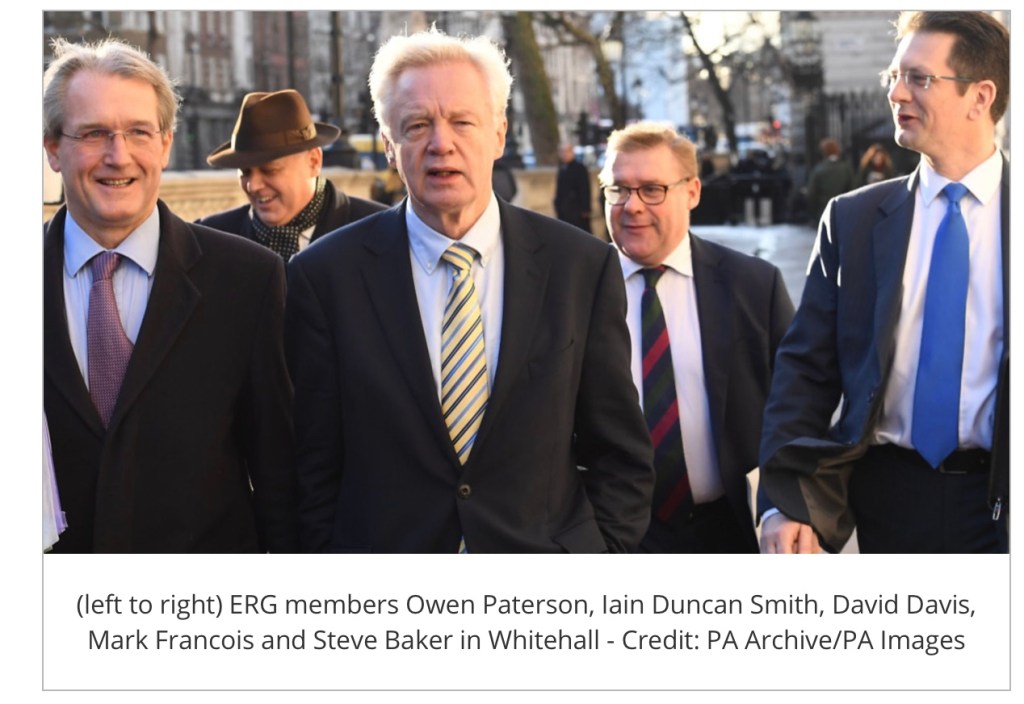
The pro Paterson vote in the House yesterday was an outcome entirely consistent with these times. We knew that we were in trouble when it became clear that any challenge to the hegemony of the Right would not be tolerated in Boris Johnson’s Conservative Party. Any opposition in the ranks even from distinguished parliamentarians like Ken Clarke or Dominic Grieve would be crushed. What Theresa May once called the “Nasty Party” re-emerged as the new normal.
Standard bearers of the Tory Right who call Boris Johnson’s tune
The rebels this time are small in number but high on principle. Contrast them with those who are no more than lobby fodder – not least the 2019 first elected cohort. Mr Paterson was a standard bearer for the powerful vast majority of Tory MPs who follow a populist, nationalist line at all times. He spoke an extraordinary brand of claptrap but the backbench sheep baa-d in approval.
Labour is polarised within its parliamentary ranks and in the country in a way that the Conservatives appear not to be. The debates are shouty and not very edifying but at least they are there. There is little debate among the Tories but maybe – just maybe – this issue will change that. Will an opposition to the ERG norm emerge? Will a leader to challenge Johnson appear? I’m not holding my breath but it’s possible.
The One Nation Tories of yore may not all be dead, just sleeping. The Party I observed over the decades had its eccentrics and its Enochs. But it was generally lead by pragmatic centre ground moderates. Even the blessed Margaret had her Willy.
There is an article in the Financial Times today which presents the increasingly conventional view that Royal Dutch Shell should concentrate its business future on non hydrocarbon energy – Renewables. This assertion, I’m afraid, ignores the reality of Shell’s business profile and, in particular, how it became what it is and the core competencies it developed along the way. Let’s look back at this history. I should declare an interest. I was a small cog in this journey and am currently a Shell pensioner!
Oil and Gas replace Coal.
The elimination of coal burning in the home and in industry and countless other sectors came because oil and eventually gas replaced solid fuel. This had major environmental benefits but it wasn’t why Shell did it – the benefits were collateral to the oil/gas companies expansion and marketing. In those days Shell had an active coal to oil conversion plan. I was there ! We also invented central heating in Britain. The earlier home heating initiatives were driven by the oil companies – especially Shell-Mex and B.P. – it was later that gas came along. It’s a fascinating story – google “Mrs 1970” for the background.
I mention the past of the switch from coal to make the point that energy consumption did indeed change in its mix because of oil company initiatives. However the cleaner air benefits were a response to Government actions. The Clean Air Acts of the 1950s and 1960s for example made a reliance on coal in the sitting room grate or in an industrial boiler unacceptable and in most cases kerosene, gas oil or fuel oil replaced them – to the benefit of the environment and our lungs.
The switch from oil and gas to cleaner alternatives.
We are now, rightly in my view, making progress in the switch from oil and gas to cleaner alternatives. However this is and has to be a response to Government action and legislation not because the oil/gas giants are driven by altruism. Shell and the rest are not involved, as once they were, in creating demand for their products but only in supplying it. The consumption of hydrocarbons is not a consequence of Shell creating markets any more. The markets are there. Shell supplies its customers. In expanding its customer base Shell may seek to take business away from its competitors. That’s competition. But it is not seeking to create new demand.
Shell’s products pollute. But it’s the customers who do it.
Those who lambast their oil/gas corporations for what they do have the wrong target. It’s the customers that need to be persuaded and encouraged. The move into renewables by Shell or BP is unpersuasive and, in my opinion largely inappropriate. Businesses prosper because they build successful strategies based on their collective corporate memories. Shell’s memories on renewables are ones of failure. In short the various failed diversification initiatives over the years (Nuclear, Coal, Forestry, Power Generation, Solar…) were because we did not understand these industries. We should have stuck to our knitting.
Shell should communicate its message better
Shell should be much proactive in it’s corporate communications. The world needs oil and gas and will do for generations to come. Many uses are oil specific (aviation, marine and much of road transport for example) and there is no realistic alternative in the short to medium term. Shell does not need to be defensive in acknowledging that it supplies this customer demand. It should explain the real situation – there is no need to be apologetic. Hospitals across the country have boilers and power generators running on gas. Again there is no realistic alternative – if Shell produced that gas in one of its offshore fields it does not need to say “sorry” for doing so.
Shell deserves and should demand a voice at the table
Shell’s Planning activities were cutting edge. We used Scenario techniques to analyse alternative futures. The corporation has the capability to participate in the Energy debate. It should be encouraged to do so. In the meantime it is frankly ignorant to blame the corporation for supplying demand it in no way creates.
Most of the Kippers, including Farage, were originally Powellite/Thatcherite conservatives. In 2010, when Cameron got into bed with Nick Clegg , the traditional hard Right wing of the Tory party was horrified and some shifted to UKIP. Their unique selling proposition policy was, of course, extreme Euroscepticism.
As with Enoch Powell right wing Tories, now in UKIP or contemplating it, linked anti-Europeanism with a toxic mix of xenophobia and anti Immigration, Islamaphobia and flag-waving nationalism. In 2014 this mix won UKIP the European elections.
David Cameron responded to the threat from the Right in two ways. Firstly, with Lynton Crosby’s help, he destroyed the LibDems in the 2015 General Election. Second he promised a referendum on EU membership. Both actions shifted the Conservative Party in the direction of their hard core dissidents and of their UKIP deserters.
The 2016 referendum win, financed and substantially organised by the extra-Conservative Right, eventually led to Boris Johnson’s rise to power and to the destruction of One Nation Conservatism which a few short years earlier had been the mainstream and in power. Johnson was not seen by the Right as “One of Us” – it was quite clear that he wasn’t one of anybody, except himself. But he was seen as a potential election winner. Rightly as it turned out.
The Kipper mindset had always been economically free enterprise and small state favouring. The Cameron/Osborne austerity policies had recognised the attraction of Thatcherite neoliberalism to many Tory MPs and voters. Boris Johnson is ideology free and is a populist. But around him are Ministers, including the Chancellor, who are not!
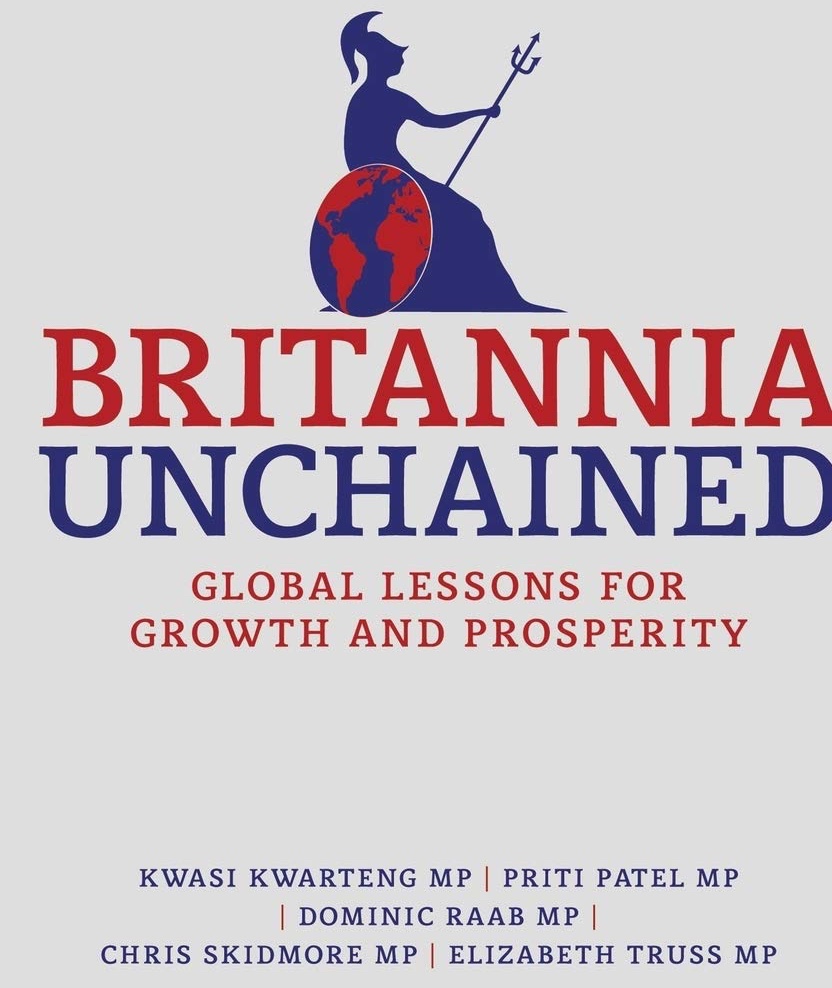
Having defeated Cameron over Europe the overwhelmingly Hard Right (economically) senior ministers (Sunak, Raab, Truss, Patel and the rest) may well feel emboldened to try and rein Johnson in over public expenditure and higher taxes. They declared their intent some years ago in “Britannia Unchained” .They are flexing their muscles.
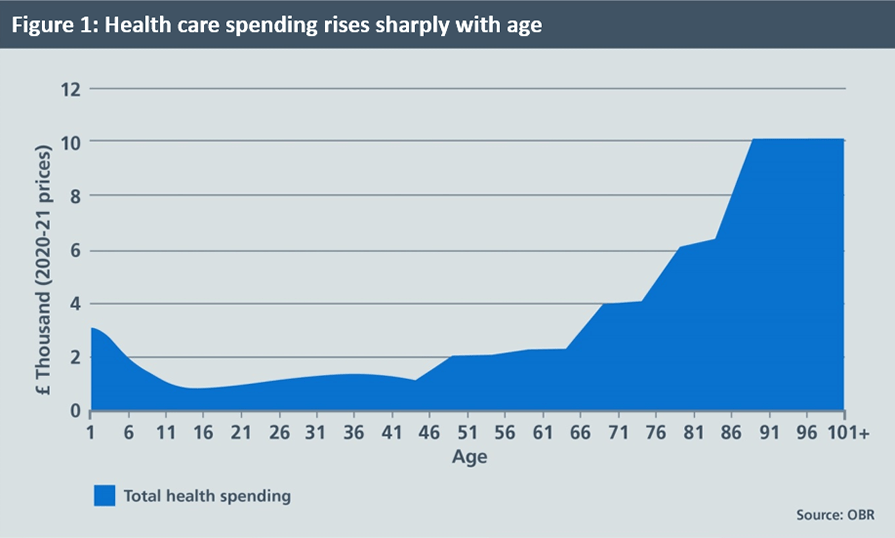
For Sixty years I wasn’t much of a burden on the Health Service. Then as I moved out of middle age never to return I began to be more of one. The older you are the more you need care and treatment. And that costs.
The blood thinning drugs I take for Atrial Fibrillation are expensive, but they work and enhance my life. The medication I take for my fairly recently diagnosed epilepsy likewise. My NHS provided hearing aid and the service alongside it enhances my quality of life as well.
I’m pretty sure that my situation is matched by millions. I paid my taxes for forty years a significant part of which was allocated to healthcare I didn’t need. Now I pay much less tax but draw on my “free at the point of use” healthcare rights rather a lot. The NHS says “It costs three times more to look after a seventy five year old and five times more to look after an eighty year old than a thirty year old …today, there are half a million more people aged over 75 than there were in 2010.”
Somewhere in my common story there is a solution trying to get out. Of course my taxes were general including Trident as well as my Grandpa’s teeth. I didn’t pay them in in order to draw on my money pot later when I needed. But maybe I should have? Not to the private sector but to the NHS? Do we need to rethink National Insurance so that it is more specific in its use and more personal?