Only when you know where you are, where you want to go and what this will cost can you look at how you pay for it

Prominent story in The Times today about how Rishi Sunak is planning large tax cuts. Suspect it’s a dead 🐱 as our Government has hugely increased both expenditure and tax (NI). The Conservative dream of a lower tax economy is a long way away.
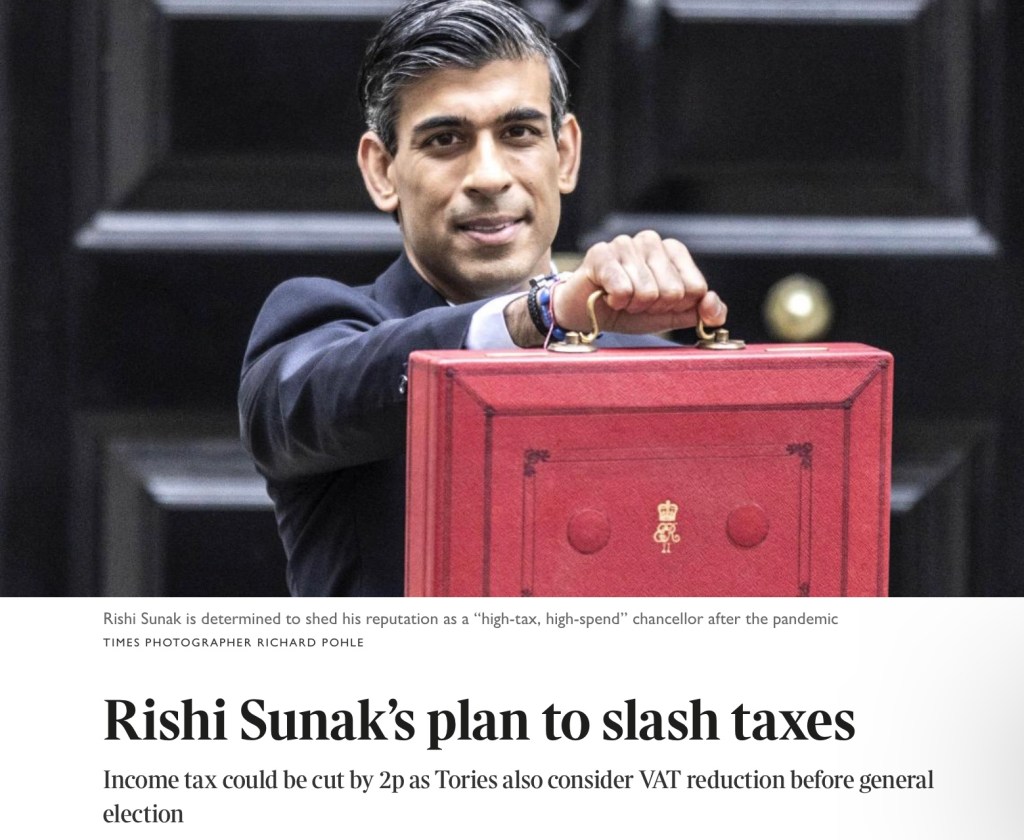
You cannot cut tax without cutting what it pays for

It is intellectually and economically illiterate to predicate tax cuts without simultaneously addressing public expenditure – in detail. Indeed you have to start with the latter. The main public debate (if there is to be one) needs to be on what we as a nation want to provide in the way of public services.

Major areas of expenditure like the Health Service and Social welfare have inbuilt cost escalations determined by the ageing and increasingly longer living population. They also underdeliver because of historic cuts mostly from the austerity of administrations since 2010. There is catch up necessary to reach an acceptable standard of public services now before you commit to cover the inevitable higher costs of demographics in the future.

As well as the need to fund higher running costs there is the need to make capital expenditure commitments to replace old and inadequate infrastructure. Especially transport where, for example, our rail system is tired and failing.

The public/private debate is often simplistically ideological. It really doesn’t matter who provides public services so long as they are well run, affordable and accountable. That is clearly not the case with nearly all of the privatisations of the 1980s and 1990s. New partnership models are needed to address this iniquity.

Only when you know where you are, where you want to go and what this will cost can you look at how you pay for it. Public expenditure and tax are two sides of the same coin.
Unless we provide a safe route, we are complicit with the people smugglers

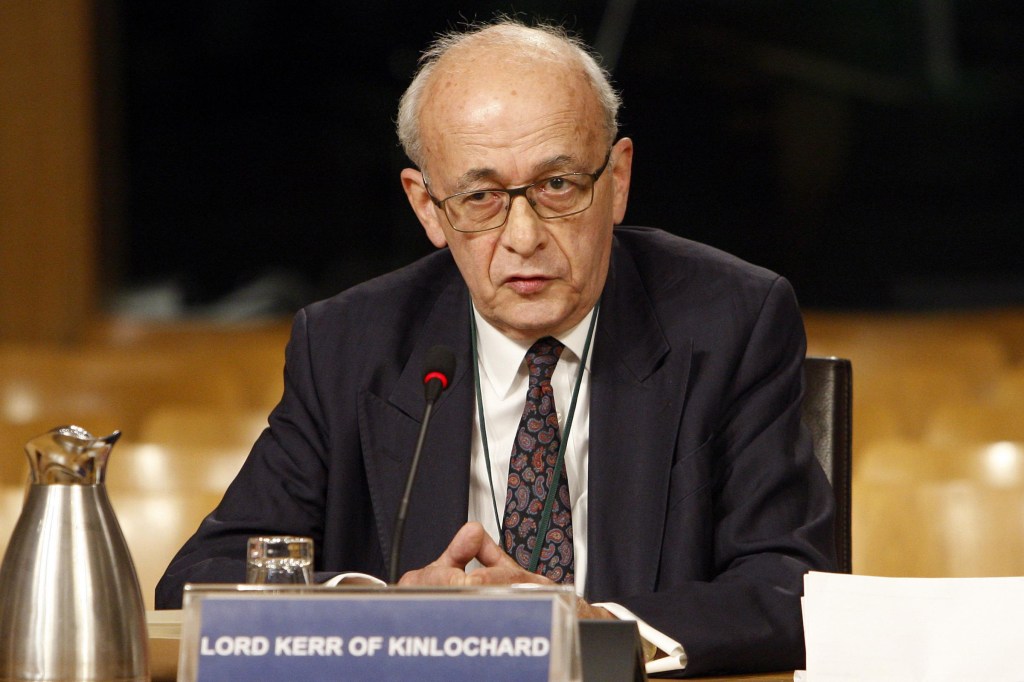
Lord Kerr of Kinlochard – former Deputy Chairman of Royal Dutch Shell

“…would just like to contribute three sets of facts. First, overall refugee numbers are currently running at about half of where they were 20 years ago. We are not the preferred destination in Europe. We are, as the noble Baroness, Lady Hamwee, said, well down the list of preferred destinations.

Secondly, yes, small boat numbers are up, partly for the reason the noble Lord, Lord Berkeley, adduced—the fences, patrols and heat sensors around the train tracks and marshalling yards mean that people are now driven to the even more dangerous sea route. But the principal reason clandestine numbers are up is that official resettlement routes are shut. Our schemes, in practice, no longer exist. We have closed the Syrian scheme, we have scrapped the Dubs scheme, we have left Dublin III and we have not got an Afghan scheme up and running. The largest group crossing the channel in the last 18 months, by nationality, were Iranians. In the last 18 months, 3,187 Iranians came. In the same period, one got in by the official route. How many came from Yemen in these 18 months? Yemen is riven by civil war and famine. None came by the official route —not one.

My third set of facts is as in the point made by the noble Baroness, Lady Bennett. The Home Secretary [Priti Patel] says that 70% of channel crossers are

economic migrants … not genuine asylum seekers”.

That is plainly not true. Her own department’s data show that, of the top 10 nationalities arriving in small boats, virtually all seek asylum—61% are granted it at the initial stage and 59% of the rest on appeal. The facts suggest that well over 70% of asylum seekers coming across the channel in small boats are genuine asylum seekers, not economic migrants.

That is hardly surprising because the top four countries they come from are Iran, Iraq, Sudan and Syria—not Ghana, I say to the noble Lord, Lord Lilley. These people are fleeing persecution and destitution, and the sea route from France is the only one open to many of them. Why not have a humanitarian visa, as the noble Baroness, Lady Hamwee, said? The noble Viscount, Lord Waverley, gave the answer to the objection of the noble Lord, Lord Lilley. Those who had a valid claim for asylum would not be at peril on the sea.

Unless we provide a safe route, we are complicit with the people smugglers. Yes, we can condemn their case and we mourn yesterday’s dead, but that does not seem to stop us planning to break with the refugee convention. Our compassion is well controlled because it does not stop us planning, in the borders Bill, to criminalise those who survive the peril of the seas and those at Dover who try to help them. Of course, we can go down that road. But if we do, let us at least be honest enough to admit that what drives us down that road is sheer political prejudice, not the facts, because the facts do not support the case for cruelty.”

Blair’s descent into populist insult damages his mostly sensible advice to Labour

We should openly embrace liberal, tolerant but common-sensical positions on the “culture” issues, and emphatically reject the “wokeism” of a small though vocal minority.” So says Tony Blair in The Times today

The Sun

For Tony Blair to use use the facile term “wokeism” suggests we truly are lost. To glue together liberal attitudes under the simplistic insult “woke” is what the Express and Mail reading illiterati do. The lack of precision and the clear intent of the use of the word – to abuse – ought to be avoided by someone of Blair’s eminence.

Oversimplification kills discourse. Our beliefs and attitudes ought to be complex, changeable and distinctive. I subscribe to nobody’s manifesto but my own and that is a moveable feast. Some of my views may be describable as “woke” others certainly not. I follow no template nor bible.

Years ago Blair debated with Christopher Hitchens about Christianity. The battle was in part about Faith. Blair approved of it, Hitch didn’t. Hitchens was rational man, Blair bought the fairy tales. The presumption that you can group attitudes together into some woke guidebook is a very religious one which is perhaps why Tony Blair apparently believes it.

The problem , of course, is that the use of “wokeism” is of our binary age – the Age of the lack of nuance you might call it. Are you for us or against us ? The middle ground, the admittance of uncertainty are condemned. It’s black and white innit ? So we have reductio ad absurdum all around us. The premise is that you can group views together under a composite label which you then stick on people you don’t like.

Blair’s descent into populist insult damages his mostly sensible advice to Labour. He rightly regrets the swing to the ideological Left that happened under Corbyn. But to condemn “wokeism” is a cheap shot. He ought to be above it.

We could learn from the Germans. We won’t.

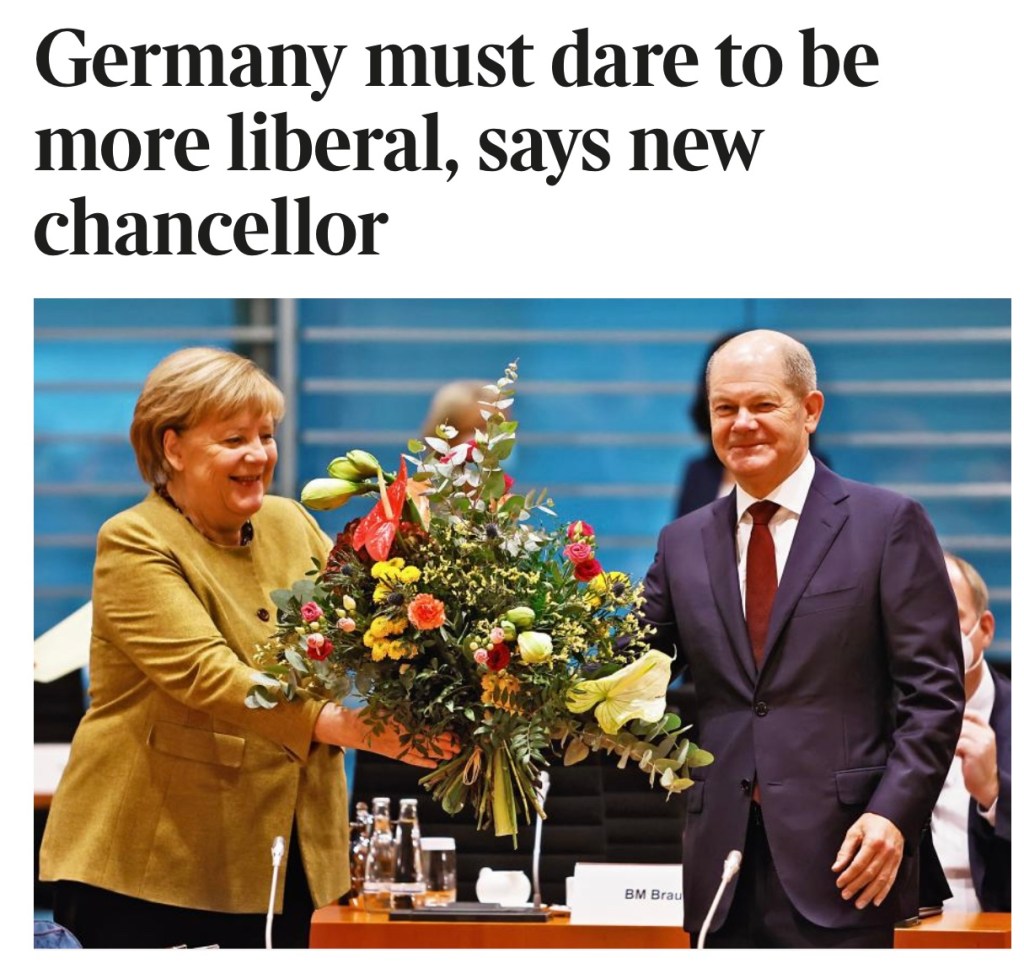
Oh to be German. After 16 years of outstanding leadership from Angela Merkel, who never put petty partisanship before her national and European goals, there will now be a modest change of tack. The timing of a subtle shift in a liberal direction is perfect. But Germany will not move from the centre ground nor will it cease to play a leadership role in Europe.

Compare this with binary Britain where we have invented a new insult (“Woke”) to describe beliefs and character that perfectly match those of Merkel and Olaf Scholz. And where dimwitted ideologues with gormless nationalist rhetoric drive us daily into ignominious irrelevance.

As Germany takes another confident step forward we have disappeared into a sentimental cloud of post imperial confusion. What we have traditionally done well (The City, The Arts, Tourism) is threatened by our economic travails and our unique insularity. We could learn from the Germans. We won’t.

Most of us have a complex personal portfolio of beliefs (and prejudices) all our own

Fine article by Alice Thompson in The Times today about, among other things, the use of “Woke” as an insult . As with so many areas in our divided society we are daily assaulted with binary judgments and if we are perceived to be “for” or “against” something someone will abuse us. There is little room for nuance.

JK Rowling is a liberal, decent, talented woman who presents a perfectly coherent and balanced view of sex and gender. And yet because her view is nuanced rather than strident she is traduced by those for whom theirs is the only truth.

I suspect many of us do have legitimate but a bit dogmatic views on some subjects. “Legitimate” is a value judgment of course and a tad intolerant. In the public eye at the moment is the so-called “privatisation” of the NHS. This is a binary over-simplification. Healthcare is a classic public/private partnership and always has been – even under Bevan ! Getting the balance right between “in house” and “contracting out” is part of the task of managing the NHS. My excellent local hospital has a large boiler house run for it by a specialist company. Extremists argue because it’s NHS property and on NHS land it should be run only by NHS employees. This is nonsense, but the example can be extended to other areas including the clinical. Say this to a health Union and you get into trouble !

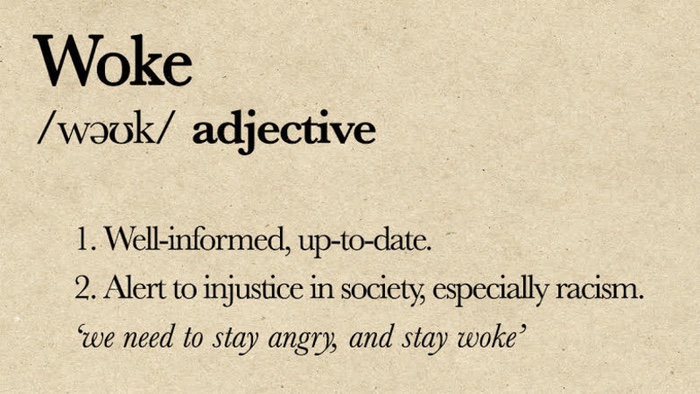
I describe myself as “Woke” on social media as a bit of a provocation. I do it because if you look at the dictionary definition of the word it is highly complimentary. That it has been adopted by the Right as a term of abuse is strange and rather puerile. But in reality reducing one’s beliefs to a single word is a nonsense. Most of us have a complex personal portfolio of beliefs (and prejudices) all our own. I suspect (hope) that there is nobody who quite believes everything that I do! Even if I found one he’d probably be an Arsenal supporter.

Britain has the worst of all worlds – ideological malevolence combined with incompetence

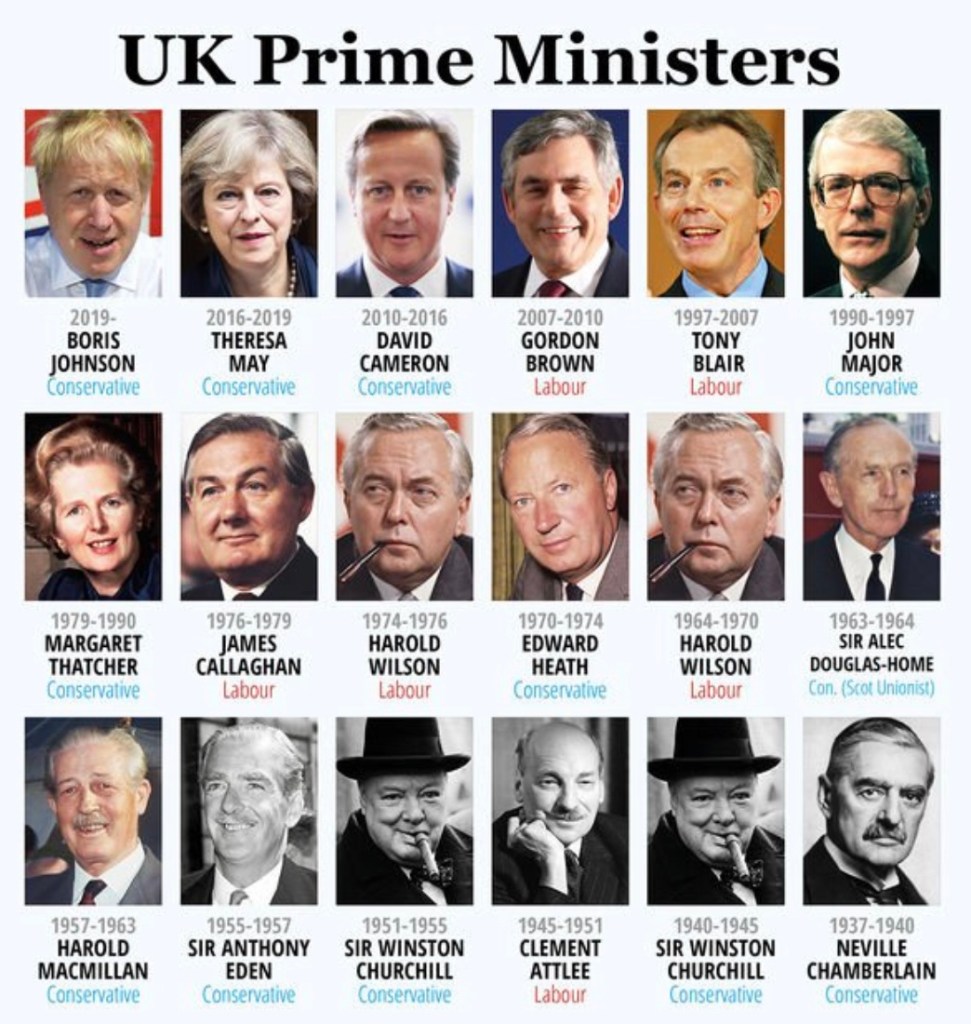
So which is to be preferred: saviour or cynic, preacher or pragmatist, believer or blusterer?” aaks Melanie Phillips in The Times today in an article about leadership (or the lack of it) among recent British Prime Ministerd.

The missing word here is “competence”. Harold Macmillan famously said that the main challenge was to deal with “events dear boy” and to do this you above all need to be competent. Not least in handling the unexpected. Frankly anyone should be able to do any job if it only takes place in the world of the familiar. You do the same as worked in the past. It’s the unexpected events that test you.

Margaret Thatcher did some things her ideology told her to do. But once or twice she did them incompetently – the privatisation of the railways or the Poll Tax for example. The Falklands was the opposite. Her ideology (patriotism aside) had not prepared her for this “event”. Or anyone else for that matter. Nobody had heard of this distant bit of the detritus of Empire. Thatcher unhesitatingly launched a task force. High risk, a bit of luck along the way but resolutely competent.

In the competence rankings Gordon Brown scores for me the highest of all. The financial crisis tested him and he was not found wanting at home or at an international level. David Cameron is at the other end of the competence scale. Threatened, as John Major had been , by the barmy bigot wing of the Conservative Party, augmented (in his case) by the preposterous populist Nigel Farage, Cameron buckled where Major had stood firm. Britain’s current traumas significantly attributable to Cameron’s incompetent weaknesses.

On the competence scale Boris Johnson is nowhere. Worse even than his schoolmate and Bullingdon chum Dave. Couldn’t run a whelk stall let alone a nation. Whilst politicians sometimes yearn for ostentatious ideology there’s rather more to be said for competence. The worst of all worlds is ideological malevolence combined with incompetence. Sadly that’s where we are now.

The day a young man rode with his head held high

It was early evening, a little after 6:30pm on Friday 22nd November 1963. I was at my boarding school (The Leys School) in Cambridge sitting with friends in our study (a small room four of us shared). There was a commotion outside and we heard our Head of House Dave Carter limping noisily along the corridor. Dave had been disabled by polio and had a calliper on one leg so he didn’t move quietly. “Have you heard? Have you heard? Kennedy’s been shot !”

Now they say we all remember where we were when JFK was assassinated . We had a large steam radio in the study and it was often tuned to AFN – the American Forces Network which had a strong signal in the Cambridge area because of the US Forces stationed nearby. We turned it on. AFN had a reporter in Dallas and commentators in Washington. We were plugged right in to the American media.

In my lifetime only 9/11 has equalled the shock of that moment. We said little and just listened. I had been preparing for a trip to London the following day visiting the “Leysian Mission” , the schools charity. The trip went ahead. It was my seventeenth birthday.

The Sixties were a time of change and though in 1963 they weren’t quite “swinging” yet young people often only a few years older than my friends and me were full of confidence and irreverence. Some of us had seen “Beyond the Fringe” a couple of years earlier. We had also welcome the brilliant, acerbic and iconoclastic “That Was The Week That Was” that had been running for about a year. TW3 challenged our parents generation, and we loved it.

John Kennedy seemed to symbolise change. He was actually only a year younger than my father but his image was more my generation than Dad’s. TW3 responded to the assassination brilliantly with a measured but unsentimental tribute and Millicent Martin sang the swiftly put together “A Young Man Rode with his Head Held High under the Dallas sun”. It had echoes of “High Noon” but was no parody.

I went to London as planned on the Saturday and phoned home when I was there and spoke to my mother. We never mentioned the assassination, it was just too painful I think.

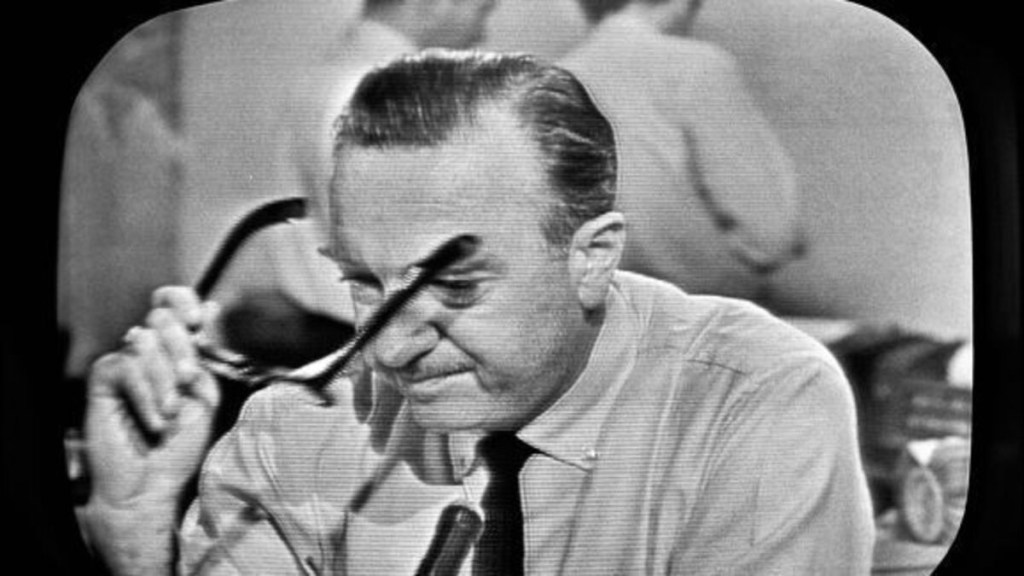
Walter Cronkite announces that Kennedy has died

It’s pretty rare for the world to pause in shock and maybe it’s only been possible in the television age. The images hold our attention and the commentators, like the great Walter Cronkite, who announced Kennedy’s death, are our link to the existential moment. The immediacy was shocking – again paralleled only by 9/11 I think.

Conspiracy theories only flourish when the truth is too difficult to believe. There was no social media on 11/22 and the crazy theories took a while to emerge. The truth was more prosaic. A complex and confused lone killer had a rifle and a place by a high window in a tall building. And changed the course of history.

True class is the privilege to be able to do good, and then to do it

James Marriott has an interesting piece on Status and Class in the Times today. Class is largely inherited, which does not of course mean that there is no movement at all. But such movement is generally driven by wealth, or lack of it, than anything else. Those at the top of the pile or close to it may inherit wealth as well as social position, they usually do, and this then facilitates the protection of privilege for themselves and their children.

For most of us the journey we take is determined by our own efforts, and luck ! If we are smart and work hard the greasy pole becomes less slippery, but it’s still there. The pursuit of wealth is mostly to acquire possessions and activities that are the symbols of status – the house, the car, the luxury holidays. But also to do our duty, as we see it, to our offspring. Notably education where the richer you are the better independent (or indeed State) school you can buy.

Location is important to status. I grew up near a small suburban town where to live one side of the railway line was much higher status than the other.My education at a Public School conferred status on my parents who were “upwardly mobile” – mainly through their own efforts though my Dad did have quite well-off parents which helped.

Popular culture reinforces class and status stereotypes. Decades ago “Upstairs Downstairs” , “The Good Life” and “Til Death Do Us Part’ characterised “Upper, Middle and Lower” for us. It was accurate and it hasn’t gone away. Today employment is one of the ultimate determinant of Class. Jobs in the professions have a special status that sets a doctor, a lawyer or a teacher somewhat apart.

You hear the term “Nouveau Riche” less often these days but it was common when I was young. The presumption was that “Old money” was more prestigious than “New money”. It was characterised hilariously by Alan Clark’s snobbish remark about Michael Heseltine that he was “…the sort of man who bought his own furniture”!

The lives of the Upper Classes are remote and incomprehensible to most of us. At a reception once I was talking to a mesmerisingly beautiful and “classy” young woman. An elderly man approached and she said to me “Do you know my grandfather?”. I shook his hand. It was the Duke of Kent.

The Duke is at the top of the pile of course and seemed nice. Come down a rung and you meet the Etonians some of whom are charming – then there’s Johnson and Rees-Mogg. Privilege doesn’t always confer true class which surely has noblesse oblige somewhere in it.

True class is the privilege to be able to do good, and then to do it. My grandparents’ generation’s lives were forever touched by the Great War. In the trenches the likes of Old Etonian Harold Macmillan were transformed by their exposure to ordinary soldiers who in peacetime they would not normally have met. The problem with David Cameron, Boris Johnson and Jacob Rees-Mogg is that they were never in the trenches, or anything like them. Privilege has carried them comfortably through a life narrowed by its lack of social variety.

A toxic mix of venality, stupidity, corruption, vanity and greed has reduced Britain to pariah status

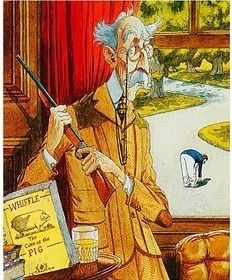
Jacob Rees-Hog

Jeremy Paxman has an excellent piece in The Sunday Times today condemning the House of Lords. But, sadly, it is not only the Lords that makes Britain look preposterous. The Lords is a Wodehousian world of nonsense behaviour, ludicrous dress and hubris. If it didn’t exist you’d be hauled off to the funny farm if you suggested it should be created. Rightly.

But the Lords, venal though it is, is just one manifestation of a nation that eventually decided that the best way to replace the lost Empire was to send in the clowns. We have had brief periods post war when it looked as if we knew what we were doing. But mostly we’ve blundered along in a thick haze of sentiment and confusion.

Our electoral system is one of the least democratic in the free world and vast numbers of voters cast their vote knowing it won’t count. Patronage is used to reward whoever the Prime Minister wants to – not just with ermine but with Government contracts.

Our educational system favours those with money and discriminates against the children of the poor The difference in attainment between wealthy and poor students has been reported as up to 40% and the figure is growing. Some Conservatives like Jacob Rees-Mogg hail the proliferation of food banks as an achievement…

Our healthcare system is a classically British mix of underfunded lack of grip and structure and sentiment where clapping on our doorsteps was supposed to compensate for low pay, budget cuts and lack of fitness of purpose. Even in rich areas let alone behind the red wall.

And then there’s Brexit…🙀 As the FT puts itBoris Johnson cannot escape the costs of Brexit”. But the Chancellor can ignore these costs completely in his delusional Budget statement.

PG Wodehouse was a gentle soul who smiled at the fact that Britain had pig-loving buffoons in the House of Lords and that the Establishment was full of Eggs, Beans and Crumpets running things from their Clubs. I doubt that he’d be so sanguine today about how far we’ve fallen. A toxic mix of venality, stupidity, corruption, vanity and greed has reduced Britain to pariah status. It’s not funny any more.

If we want to restore our self respect and international reputation there is no alternative but to have an independent enquiry into institutionalised corruption

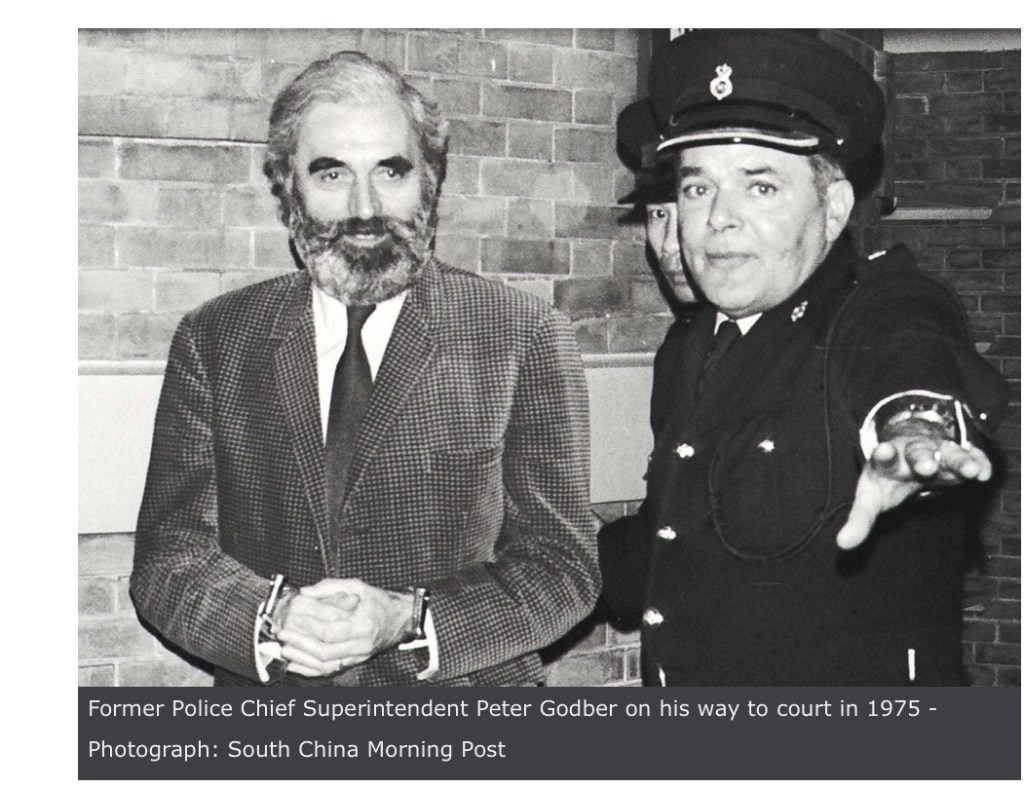
I was living in Hong Kong not long after “The Independent Commission Against Corruption “ , established by Governor Sir Murray MacLehose in 1974, completed its work. Dozens of corrupt policeman, civil servants and other officials had been prosecuted and/or expelled from the colony. The ICAC had teeth and the cosy corruption among the (mostly) British ex-pats was brought to light and acted upon.

The ICAC rooted out institutionalised corruption in Hong Kong – we need something similar in Britain today.

Roll forward to today in Britain and you will find something which in reality, if not in scale, is not unlike colonial Hong Kong. There is corruption in Government and it’s suppliers on an industrial scale. There is patronage, the selling of honours,  the rewarding of Brexiteer loyalty which has placed some very unsuitable people in our Upper House. Contracts go to buddies whether they are otherwise qualified suppliers or not.

The freedom to act that this Government assumes for itself comes from a grossly unfair electoral system that gives them unprecedented power despite the majority of voters having rejected them at the last election. Corruption is institutionalised. The Upper House is unelected and the Lower House unfair. It’s an undemocratic shambles.

We need an ICAC to investigate this benighted political system and reveal for all to see just how venal it is. The key word in the ICAC was “Independent”. Internal enquiries don’t work. If we want to restore our self respect and international reputation there is no alternative. Gloves off.