James Kirkup’s piece in The Times today is a classic example of normative thinking that presumes that our way in the West is best. The reality is rather different.
When I lived in Hong Kong, and frequently visited China, in the 1980s the comforting platitude was that China would not take over Hong Kong but that Hong Kong would take over China. The logic, such as it was, was that the Western way, economically and politically, was so vastly superior to that of the People’s Republic that it could not but prevail. Economically China has indeed adopted a Hong Kong type model – economic freedom but without democracy. (It’s worth recalling that colonial Hong Kong was never an elective democracy).
Modern Beijing
As we have seen after Tiananmen Square in 1989 there have been no moves towards a liberal democracy in China at all. Economically, however, the Chinese have abandoned the failed socialism of the first post revolution forty years and replaced it with pragmatic market-driven capitalism. They have shown that the dearly held conventional wisdom that to be economically successful you needed to be democratic was a myth.
In truth Asia overall is not very politically democratic or free. It varies from the insanity of North Korea to the superficial democracy of Singapore. But countries like Thailand (especially), Indonesia, Malaysia, Burma, The Philippines, Taiwan are hardly beacons of democratic freedoms. Even Japan’s genuine democracy places political debate and activism well below economic and cultural issues.
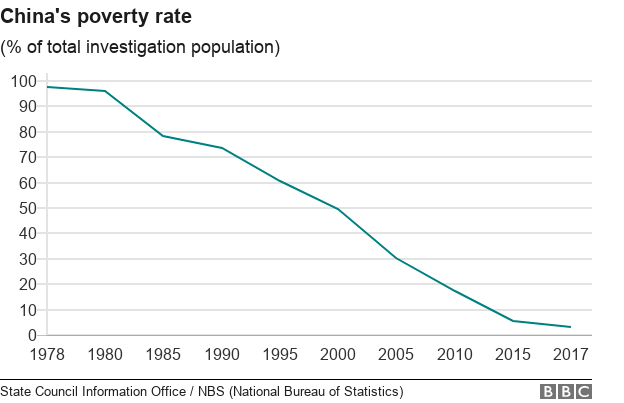
In the West we look at systems elsewhere through the filter of our own experience and norms. The people of China have, overall, vastly benefited from the nation’s extraordinary economic progress. Where under the directed economy of Mao peasants often starved since the 1980s the rice bowls have been full. They settle happily for that.
Matthew Parris today: “When did government ministers start insisting on being photographed next to outsized Union flags? The phrase “wrapping yourself in the Union Jack” used to be regarded as derogatory…but today you’d deserve a prize for any sighting of Liz Truss, the PM or even the parliamentary under-secretary for paperclips separated from swathes of the red white and blue.”
Symbols proliferate to cover up lack of substance. Or when the substance is malignant and a whitewash is necessary. Look at images of the Nuremberg rallies. But symbol display can be revealing. Glance at footage of England’s world cup win at Wembley in 1966. Union Flags everywhere – the waving of the flag of St George came much later.
The Union Flag is de rigueur for our leaders today (especially, but not only, the Cabinet) because, unlike in 1966, the Union is under threat. In Scotland it is supposed to be flown above the cross of St Andrew. Good luck with that !
As Chris Patten recently pointed out this Government is an English Nationalist one – so perhaps in an attempt to deny this they mandate the Union Flag for their ministers. The cross of St George is a bit down market anyway. Johnson was seen with one on the day of the EURO 2020 Final. But normally the Jack it is.
Quite what the gratuitous use of the Union Flag says about us I really don’t know. You’re quite likely to see it on a pack of carrots in Sainsbury’s. In America “Old Glory” is often on flagpoles outside the houses of the middle class. They have a long history going back to the Civil War – when the Union was in peril they waved the Stars and Stripes. Boris Johnson is no Abraham Lincoln but his flag display is similar.
If you’re confident in who you are, what you do, and how you do it you let your behaviour speak for itself. But if you’re insecure you need symbols of class or power or “loyalty”. 🇬🇧
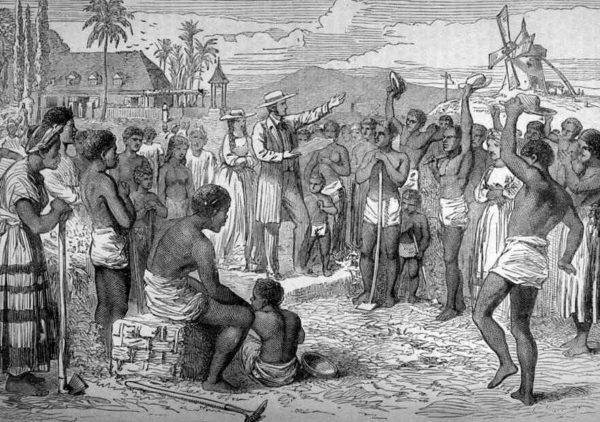
“…the vogue for cancellation of history threatens to wipe out that link with the past as quickly as we can restore it.” writes Trevor Philips in The Times today. His ancestors were from Guyana brought as slaves from Africa. Their story needs to be more not less prominently told.
Slaves in the colony of British Guiana
For me the need is not to “cancel” the facts of Britain’s history but more extensively to reveal them. Arguably the creation and operation of the British Empire was the most significant aspect of our post medieval history. Colonies were established around the world. The slave trade provided much of the labour force to exploit them. Indigenous peoples were destroyed. Land was sequestered. Religion and culture was imposed. And the rest.
Imperial history is increasingly revealed in literature (history as well as fiction). The best writing is not polemical but balanced. But nowhere in these islands is there a “Museum of Empire”. We now have extensive displays commemorating The Holocaust but none doing the same for Slavery. Our imperial record is sketchily on display, at best.
The late Desmond Tutu’s way of dealing with the recent horrors of Apartheid was to aim for reconciliation via truth. The cancel culture does not do that. It is arbitrary and selective lacking in nuance creating more heat than light. Only by telling the truth, warts and all, can we address our past. The past may be a foreign country but we should visit it and display what we find.
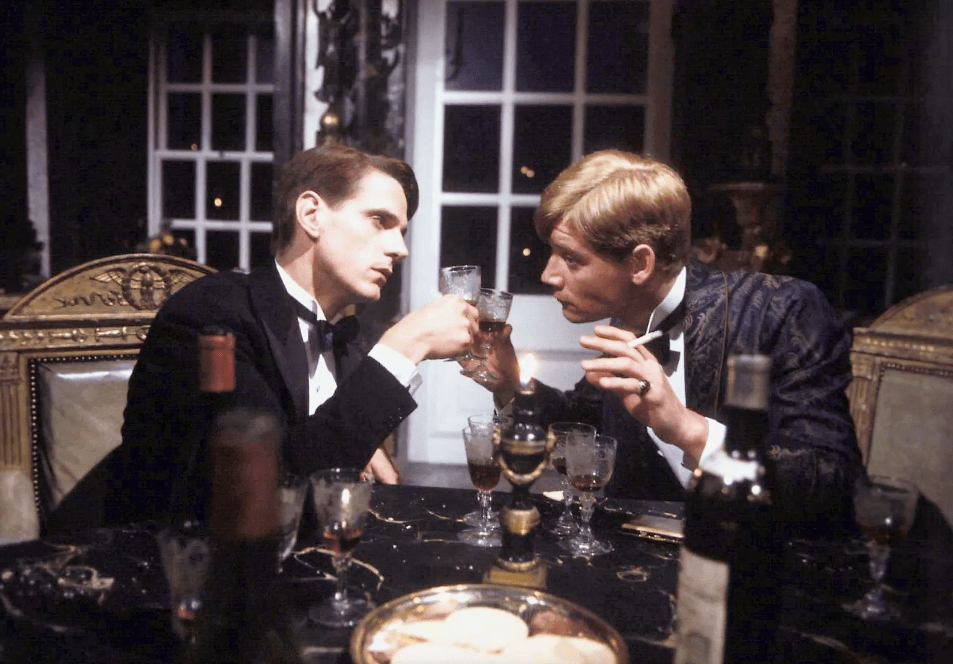
“But, my dear Sebastian, you can’t seriously believe it all.” “Can’t I?” “I mean about Christmas and the star and the three kings and the ox and the ass.”“Oh yes, I believe that. It’s a lovely idea.” “But you can’t believe things because they’re a lovely idea.” “But I do. That’s how I believe.”
Brideshead Revisted
The above conversation between Charles Ryder and Sebastian Flyte is a superficially light exchange made over rather a lot of wine from the Brideshead cellar. The Brideshead family is very Catholic and religion is perhaps the key theme of the book. Sebastian is their most wayward member but, as we see, he is nevertheless a believer.
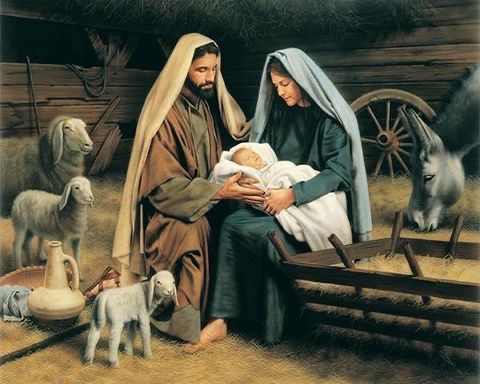
Evelyn Waugh was, I think, here postulating the idea of the Nativity story as a parable – the “lovely idea” as Sebastian calls it. Parables feature quite a lot in Christ’s teachings and why should his birth not be another one?
There is a symbolism about the birth in a manger and no room at the inn that has clearly had resonance across the ages. To find something of value in it does not require us to believe that it is in any way authentically true history. The message transcends the reality.
A dogmatic belief in the truth of religious texts leads to absurdity in discourse, and worse. The story of the Creation in the Old Testament is clearly another metaphor showing only that for the faithful everything is God’s will and of his manufacture. There are plenty of Christians who work in science who can prove that the planet and the Universe took rather longer than six days to be made! It doesn’t damage their faith, and nor should it.
What is morally right is subjective and the codification of rightness in commandments is not only a feature of Judaism and Christianity. Most religions have their Moses.
I am not a Believer in any conventional sense of the word but like Sebastian I too like a “lovely story”. So the idea of a displaced family seeking and finding shelter has a resonance with me – not least in a time of asylum seekers.
I don’t think you need to be a Christian to relate to the Sermon on the Mount as a useful checklist. The beatitudes bless the poor in spirit, those who mourn, the meek, those who hunger, the merciful, the pure in heart, those who are persecuted and ask for tolerance when people insult you, persecute you and “falsely say all kinds of evil against you” Above all the “peacemakers” are especially “blessed”. Amen to all that.
I’m happy to send my Christmas greetings to believers and non believers alike. But in doing so I would argue that belief is not binary. To find something useful in a “lovely story” does not mean you have to sign up to the whole caboodle. Some would preach its “all or nothing” – that the Bible or the Koran or the Torah are God’s word and non negotiable. Well that’s their call, but it’s not mine. Happy Christmas.
Rather a long time ago (! – isn’t everything ?) I commissioned in a Shell Company Market Research into motorist behaviour. It was mostly about fuel brand choice but we bunged in a few questions about car brands as well.
Results showed the contrast between “rational man” and “emotional man” – between head and heart if you like. Car buyers overwhelmingly gave “rational man” choice answers – comfort, safety, fuel efficiency, carrying capacity , that sort of thing. So we did a follow up where we took the latest Skoda which ticked all of the rational choice boxes. Then we created two matched groups of respondents. One group got a photo of the car undoctored with all the data about the car. The other group got the same except that we replaced the Skoda symbol with a BMW one. We asked the two groups to describe what they had seen.
Well the car with the BMW logo outscored the one with the Skoda one overwhelmingly. The BMW group valued the “BMW” car around $7000 more than the “Skoda” one. Both groups had identical data about their car. The only thing that was different was the brand.
The point of course is that emotions drive brand choice for cars, above all status. A car is for most of us our most valuable consumer durable. We want more than just the ability to get from A to B – and a “smart” car confers status on us. We will probably rationalise our choice with hard benefits ( frequently comfort and safety). But in truth most new cars these days are comfortable and safe – even a Skoda !
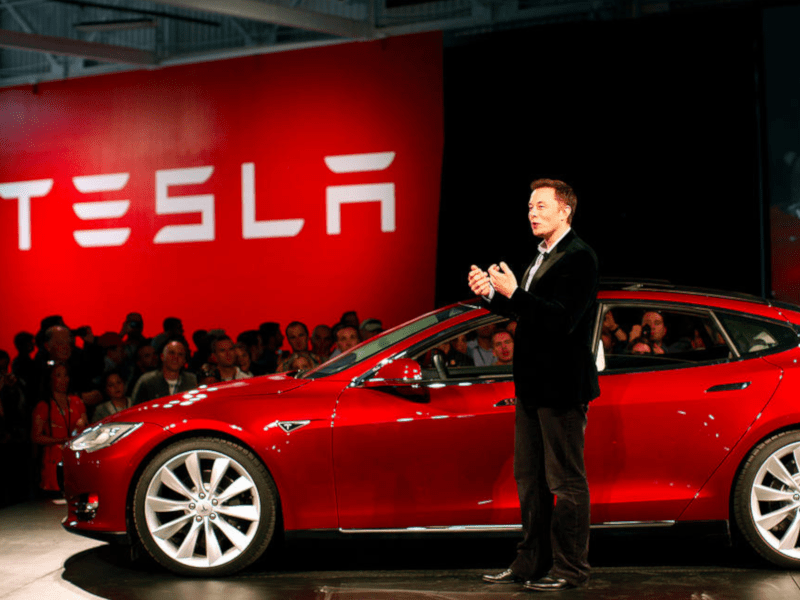
The electric car phenomenon is remarkable. A Tesla (especially) confers massive status on the owner/driver. Rationally it makes little sense. It costs much more than the petrol/diesel equivalent. “Refuelling” is much more problematic and much more frequent. But watch the neighbours faces when you first park it on your drive. It cries out prestige and shouts how environmentally conscious you are.
Down the hierarchy the other electric cars are similarly low performers compared with the liquid fuel alternative. But people buy them – it’s (frankly) a boast. Nothing wrong with that of course – where would we be without added value brands? People buy £10,000 watches but if all you want to do is to tell the time you can buy one for a tenner!
Britain is the greatest country on Earth.” according to Liz Truss. When I last checked I found that I had lived in, worked in or holidayed in 65 different countries. A function of career, luck and preference and I enjoyed every moment. Some I enjoyed more than others, of course, and I suppose I could rank them according to that personal preference. But I won’t because it would be utterly subjective and a waste of time.
The claim that “greatness” can be objectively ranked when it comes to nations underlies Ms Truss’s bombastic nonsense. If Karen from Croydon did it we might be saddened and perhaps gently mock her faux-patriotism. For the Foreign Secretary to do it defies belief.
“There’s no place like home” is a platitude that people of all nationalities share. It’s harmless and understandable. We grow up in a place and a culture and it becomes our norm. When we lived in The Netherlands we had a boat which we took around the inland waterways – the canals, rivers and lakes. One summer we had visitors who came out with us for a particularly sunny day trip. One said to me how lovely it was, but (he said) it “wasn’t England”. Of course it wasn’t, but that rather missed the point didn’t it !
You cannot objectively measure national “greatness” though some have tried – “Deutchland Uber Alles” springs to mind. But then so does “Land of Hope and Glory” – most nations do it a bit. It’s mostly harmless bluster , except when it slips over into nationalism and we think we have a right to conquer. That leads to wars and empires.
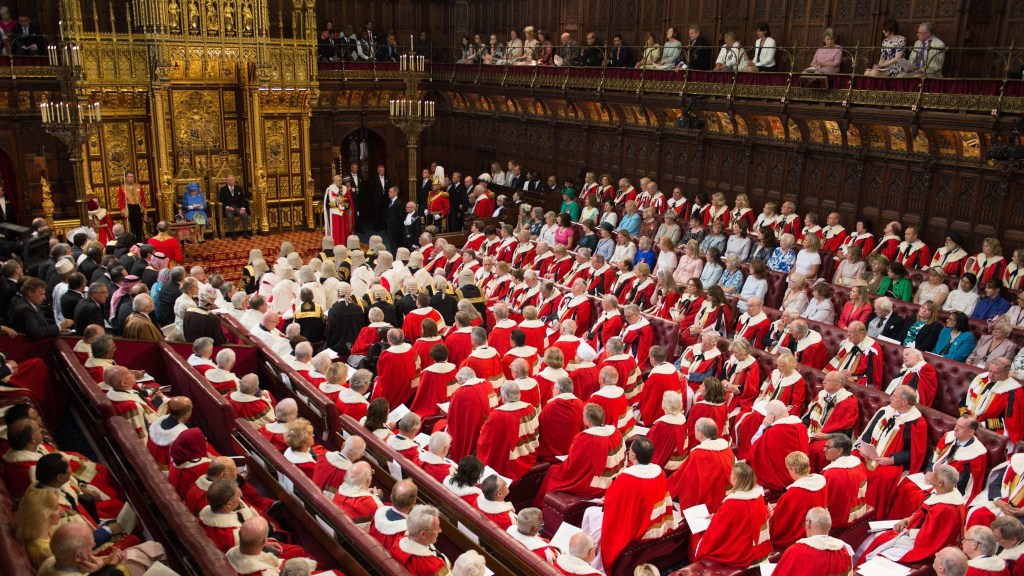
Democracy” can mean what you choose it to mean. The opportunity for “we the people” to choose those that govern us might be a reasonable place to start. But if that’s the test Britain looks decidedly dodgy. Our Head of State is hereditary, our Upper House is unelected and our Head of Government has only the shakiest of personal electoral mandates to be in the job.
Democracy is arguably much more about protections against repression than anything else. Important freedoms like those of speech, the press and of action (within a mostly benign set of laws) are crucial. Here, though, we are subject to the judgment calls of others. We don’t (thank goodness) have the ancient Greek system of decisions being made by a show of hands in a public square.
So when we elect a representative to a Parliament or a Council we elect not a delegate but someone who we hope will vote according to their conscience and with our needs in mind. Sadly the Party whips often tell our representative what to do, not us. Hardly democratic.
I have lived in a couple of benign dictatorships – colonial Hong Kong and modern day Dubai. There were rather more freedoms in the former than the latter but no elections in either. And if you behaved reasonably you could live comfortably in both. The contrast between Hong Kong and the totalitarian Super State across the border was enormous. But so was the contrast between Dubai and the grotesque human rights abusing Saudi Arabia not far away.
Democracy is a fragile flower and the fact of elections does not necessarily protect us. Britain’s current autocracy has a huge parliamentary majority but only just over four in ten of those who voted actually voted Conservative. Hitler came to power in 1933 with only a third of the vote.
So Democracy and Free Elections are inseparable but holding the latter does not guarantee the former. We need to define Democracy much more widely than (just) elective democracy. Here a written constitution would help. In Britain to say something is “unconstitutional” has an element of value judgment in it. There’s no document to refer to to check. Even apparently permanent changes to our democratic systems, like the introduction of fixed time parliaments, can be changed at will.
Is democracy under threat in Britain? Or is a Government with a big majority simply using its power to make changes. Are any changes legitimised by that big majority? We have no constitutional court to refer to or to provide checks and balances. Parliament is sovereign – though the courts can rule on Judicial review. There are three main grounds of judicial review: illegality, procedural unfairness, and irrationality. But if a law is properly drafted and passed by a vote in Parliament a review is unlikely to succeed.
Sometimes, as someone once said, it’s helpful to go “Back to Basics” and if we do that to audit the effectiveness of our “democracy” it’s not encouraging:
▪️Can we refer to a document to check whether a proposed new law (etc.) is constitutional? We cannot.
▪️Do we choose all who pass laws and govern us ? We do not.
▪️Does every vote count equally? It does not. Some don’t count at all.
▪️Are there adequate and enforceable checks on the decisions of our Government? There are not.
▪️Is the aggregate vote for political parties approximately matched by the number of Members of Parliament they have. It is not.
In short our government system is profoundly undemocratic and unaccountable. Many strands of public opinion are underrepresented in Parliament. Grace and Favour rather than elections determines the composition of our Upper House. The constraints on the freedom to act of our Government are feeble at best. We are close to being an elective dictatorship.
Truth has many faces. People presumably lie to advantage themselves in some way. But the use of selective truths can achieve the same outcome. The idea of the “Whole Truth” is established in our dialectic, as is the “White lie”. Some of us are sometimes accused of being blunt or insensitive when we tell a “home truth” – that is to say when we eschew the lie to tell the “uncomfortable truth”.
Should we always peel it back ?
So truth though it should be binary in reality is not – there are shades of veracity that we manage every day. Your child sings you an excruciatingly untuneful rendition of “Away in a manger” – do you tell her it was terrible ?
But for some lying becomes a habit. And these are the people about whom we say “You cannot believe a word he says”. You get to know them and then you discount their stories. But again it’s quite subtle. The liar who tells the truth occasionally can confound us as much as the honest man who under duress tells a lie.
Accidental lying through ignorance is another variation. As is the telling of lies that all religious promotion requires. Not least the promulgation of the idea of the “life hereafter”. You lose a parent and someone tells you that they have been reunited in heaven with your other parent who died earlier. It may be comforting to hear this, but it’s untrue. It’s a lie.
The great cathedrals were built on a lie and great men did great things driven by a belief and “Faith” in fairy tales. And kindnesses are shown by sometimes withholding hard truths. Many faced indeed.
Danny Finkelstein writes more in sorrow than in anger in The Times today about the collapse of cordial relations across the Channel. The bipartite nature of this silly spat may ring a few bells – Trafalgar, Waterloo and all that – but it’s all old hat. It ain’t like that any more. Britain may have accidentally slipped into a lonely vigil of remembrance of things past, but France certainly hasn’t.
The triumph of the EU is that, as intended, old enmities have been buried. No more so, of course, than in the alliance between France and Germany. Twice in the first half of the twentieth century the former was invaded by the latter. That’s why from 1945 they decided “never again”. Encouraged, ironically in retrospect, by Winston Churchill.
The modern world requires some surrender of sovereignty to be peaceful and to work. As the Disunited Kingdom stands aside and impotently throws fuseless grenades across the channel the big boys on the other side get on with the task of building a Europe for our children, and theirs.
I’m too old, sadly, to have any expectation of seeing Britain fully back as a leading member of the European family of nations. But it will happen. Over the years our childish, sentimental, outdated, nationalist rhetoric will fade and we will remember who our friends are. The Entente Cordiale will be rebuilt and sanity restored. But it will take a leader of imagination and skill to do it. There’s a vacancy.
A book reviewed in The Sunday Times today suggests that the United States and its allies, including Britain, could have won the war in Afghanistan. This is a delusion, as history teaches us.
The ghost of General MacArthur still haunts us. He wanted to win another unwinnable war (in Korea) by blasting the Chinese into submission with nuclear weapons. The learning from that misadventure was swiftly forgotten and soon the GIs were off on another mission they couldn’t win in Vietnam. Even deadlier. But heigh ho let’s try again. A continuing mess in Iraq and the return of the Taliban to power in Afghanistan were to follow.
In seventy years have they learned nothing ? The problem was that whilst massive power and conventional weaponry worked in Europe in 1940-1945 for the allied forces that is the only theatre in which that worked. The war in the Far East was much more difficult and the island hopping (MacArthur again) was deadly and much more problematic. It took the obscenity of the Atomic bomb to win that one.
The wars of the second half of the twentieth century , and beyond, have not leant themselves to American strengths – bombing of civilians and tank and infantry battles. The enemy has had the good sense to stay flexible and flee to the jungle or the hills and regroup as necessary. You can’t defeat an enemy who won’t come out and fight.
The war in Afghanistan was never winnable and it’s hubristic to suggest it was. We should never have been there in the first place and never have stayed as long as we did. Where have all the soldiers gone – gone to graveyards every one…? 🌺 🌺







 Paddy’s Blogs in a crazy world