
Castrol was one of the world and Britain’s great Lubricants brands. Initially an independent then (after 1966) in alliance with Burmah its only rival was Shell. The two brands battled for leadership across both the Industrial and Automotive Lubricants sectors. Castrol’s huge advantage over most of its competitors was that it could be seen as a specialist lubricants company. There was no confusion in its offer.
For twenty-five years Castrol has been part of BP. The brand found itself part of a largely alien environment. BP had never been a leader in branded marketing and the consumer focused Castrol had little strategic fit within an overwhelmingly upstream multinational.
Castrol traditionally had brand value and undoubted technical and production competence. BP could add nothing to this and wisely kept the BP brand well away from Castrol’s identity (mostly, there were a few exceptions!)
Upstream dominated oil multinationals have steadily moved away from the “Well head to Petrol station” vertical integration of the past. The money is in finding and producing oil and gas not in refining and marketing it. BP’s sale of Castrol is evidence of this.
Oil companies are good at commodity management but struggle with the “Downstream”. I remember a senior Exploration and Production man in Shell asking “Remind me again, what is the difference between marketing and trading?” I’m not sure he understood the answer we gave!
A venture capital purchase of Castrol would seem likely and one that allows the brand the freedom to reassert itself. Multinational oil/gas companies don’t do diversification well and for Lubricants there is little or no benefit in being linked to an upstream operation.
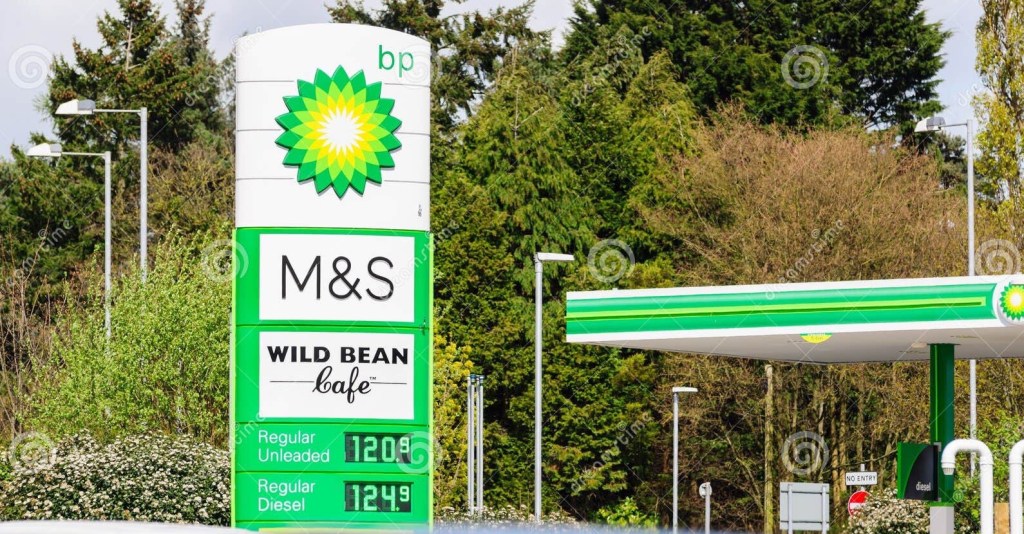
BP’s move away from Lubricants may signal a retreat to their comfort zone of the Upstream. In many ways this would be a shame. Their partnership with Marks and Spencer has been well handled and looks good on their top range sites. But it must be a strange world to the Geologists and Petroleum engineers!
 Paddy’s Blogs in a crazy world