
It’s now nearly twenty five years since the publication of “Riding the Waves of Culture: Understanding Diversity in Global Business” by Fons Trompenaars and Charles Hampden-Turner

Trompenaars was a Shell executive and many of us working for the corporation at the time read the book because of this. This was particularly so for those of us who had lived outside our home country and/or travelled extensively on Shell’s behalf, of which I was one.
That doing business in countries as culturally different as (for example) Japan and Kenya, which I did in one project, brings the need for sensitivity and understanding is obvious. But this is not, just, about realising that what will work in country “A” won’t in country “B”. True even in a company as increasingly centralised as Shell. It runs much deeper than just appreciating differences in customs and practice. “Riding the Waves” is an exhilarating thing to do and though your personal values and culture are inate to come to realise that they are not “better” than others, just “different” is the key.
Many times I made successive trips between utterly different countries with the goal of securing the same outcome in each. I once flew from Vancouver to Bangkok for example. The Canadians challenged everything and needed hard facts. The Thais needed to trust me. But they were not in any way deferential and they could spot the key variables just like the Canucks. They were gentler and kinder and more trusting. It was for me to adapt and ride the waves.
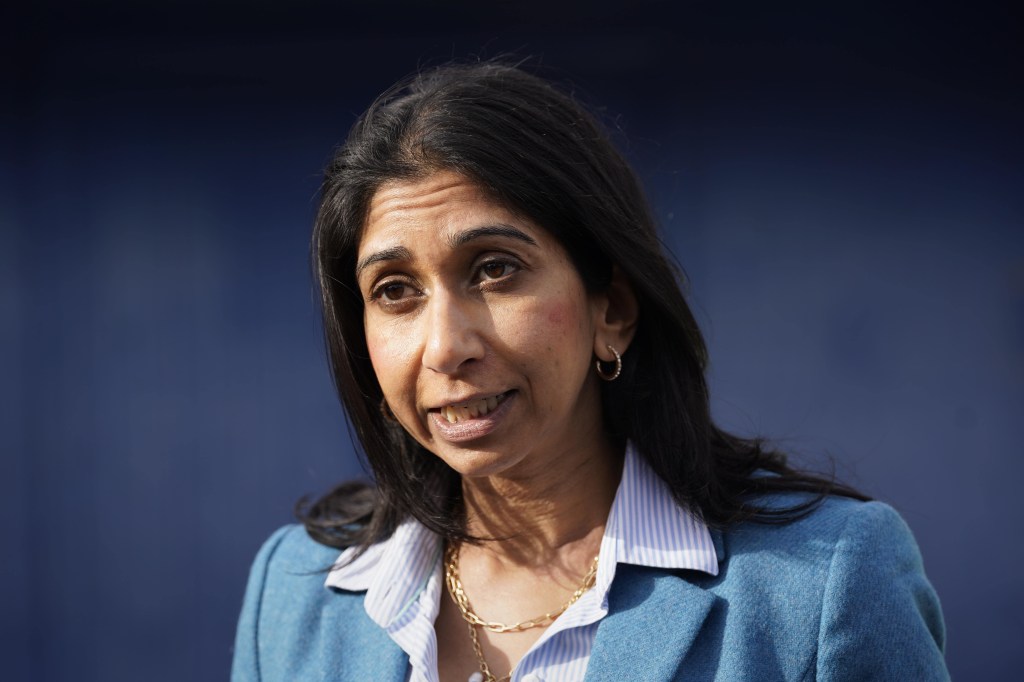
Which brings me to Suella Braverman. She has said that multiculturalism “has failed because it allowed people to come to our society and live parallel lives in it”. The assumption behind this is that the natural order is White, Anglo-Saxon, Christian – ironic, you might think, given that the Home Secretary is none of these things.
Rishi Sunak, Suella Braverman, Priti Patel and other BAME Tory Ministers are surely visible evidence that a civilised society is comfortable with the idea of “parallel lives”. Sunak clearly is. He has said, speaking about his hindu faith and hindu identity “It gives me strength, it gives me purpose. It’s part of who I am. I am now a citizen of Britain, but I proudly say that I am a Hindu.”
So Braverman’s boss lives a “parallel life” according to Braverman’s characterisation and nobody cares, nor should they. The same applies to many parts of Britain – both Bradford and Birmingham, for example, have populations that are 30% Muslim.
It is reasonable to expect that those from minority groups understand the majority cultural norms. But vice versa as well. When I lived in Dubai the Emirate’s leader, Sheikh Mohammed, launched an outreach programme to ex-pats like me to explain Islam. He wasn’t seeking to convert us but to help us understand cultural differences.
Braverman is trying to assert that because minorities are different (Colour, Race, Religion) therefore they are some sort of threat. Instead of encouraging those of us from the majority to “ride the waves of culture” she is stirring up prejudice.
 Paddy’s Blogs in a crazy world
Riding the culture wave I believe is necessary if you emigrate to live in another country for the rest of your days. That is if you seek to integrate and get the most out of the experience. Sadly so many Brits do not. They regard Spain and France as simply Britain with better weather and uncongested roads. Parallel lives again. I have always tried to contribute something, small things to leave a place better than when you found it. Sharing and appreciating cultural values is part of that.
Braverman inhabits another place. A lousy politician and I suspect a worse human being.
LikeLike